


Assam, the gateway to India’s enchanting Northeast, is a land of rolling tea gardens, the mighty Brahmaputra River, one-horned rhinoceroses and warm, welcoming people. The largest and most accessible of the northeastern states, Assam offers travellers a rich blend of wildlife, spirituality, culture and natural beauty. From the world-famous Kaziranga National Park to the sacred temples of Guwahati and the endless emerald tea estates, this guide covers everything you need to plan a memorable journey through the heart of the Northeast.
Quick Facts: Assam
| Detail | Information |
|---|---|
| Capital | Dispur (within Guwahati, the largest city) |
| Famous for | Tea, one-horned rhinoceros, Brahmaputra River, silk |
| Key national park | Kaziranga (UNESCO World Heritage Site) |
| Major festival | Bihu (celebrated three times a year) |
| Best time to visit | October to April |
| Nearest major airport | Lokpriya Gopinath Bordoloi Intl., Guwahati |
The Land of the Brahmaputra
Assam is defined by the Brahmaputra, one of the great rivers of the world, which flows through the state in a vast, braided course, nourishing its fertile plains and shaping its way of life. In Guwahati, the state’s largest city and commercial hub, the river is at its most majestic. A sunset cruise on the Brahmaputra, with the temple-crowned Peacock Island (Umananda) in view, is one of the most memorable experiences the state offers. The river is also home to the rare Gangetic river dolphin, which lucky visitors may glimpse.
Kaziranga: Home of the One-Horned Rhinoceros
The jewel in Assam’s crown is Kaziranga National Park, a UNESCO World Heritage Site and one of the greatest conservation success stories in the world. This vast expanse of tall elephant grass, marshland and dense forest along the Brahmaputra is home to roughly two-thirds of the world’s population of the great Indian one-horned rhinoceros, an animal once on the brink of extinction. Today Kaziranga shelters well over 2,000 rhinos, along with tigers, wild elephants, swamp deer and Asiatic water buffalo.
Visitors can explore the park on thrilling jeep safaris or, in some ranges, on the back of an elephant, gliding through the grasslands at close range to the wildlife. Kaziranga is also a paradise for birdwatchers, recognised as an Important Bird Area with a spectacular variety of migratory and resident species. The park is generally open from November to April.
The Tea Gardens of Assam
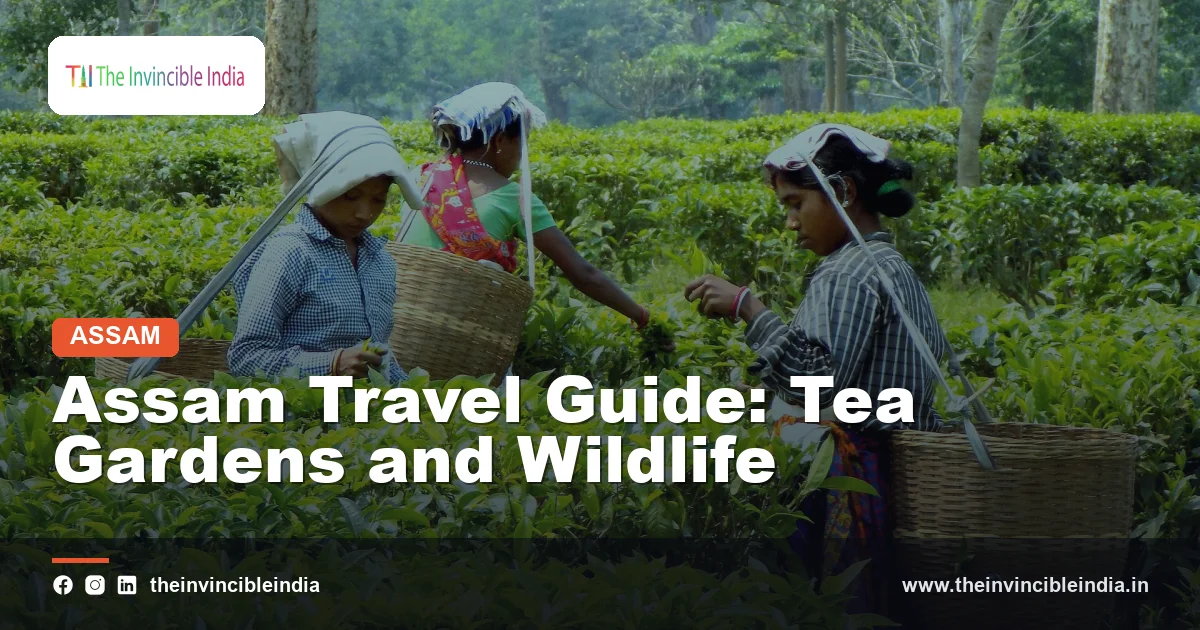
Assam is synonymous with tea, producing a large share of India’s total output and famous worldwide for its strong, malty, full-bodied brew. The rolling tea estates, with their neat rows of bushes stretching to the horizon and shaded by tall trees, are among the most beautiful sights in the state. The tea industry here dates back to the 1830s, when the British established the first commercial plantations after discovering tea plants growing wild in the region.
Many heritage tea estates around Jorhat and Dibrugarh, the “Tea City of India”, now offer plantation tours and stays in charming colonial-era bungalows. Visitors can watch the plucking and processing of tea, sample fresh brews, and learn about the fascinating history of this global commodity while enjoying the serene beauty of the gardens.
Majuli: The River Island
One of Assam’s most extraordinary destinations is Majuli, one of the largest river islands in the world, set in the middle of the Brahmaputra. Majuli is the cultural and spiritual heart of Assam’s Vaishnavite tradition, home to numerous satras, monastic centres founded by the 15th-century saint-reformer Srimanta Sankardeva. These satras preserve unique traditions of dance, drama, music and mask-making that have continued for centuries.
Reached by ferry from Jorhat, Majuli offers a glimpse of a peaceful, traditional way of life amid stunning natural surroundings. The island is also a haven for migratory birds and is known for its distinctive pottery and handloom weaving.
Temples and Spiritual Sites
Assam is a deeply spiritual land. The most important shrine is the Kamakhya Temple, perched on Nilachal Hill in Guwahati, one of the most revered Shakti Peethas in India and a major centre of Tantric worship. The annual Ambubachi Mela draws hundreds of thousands of devotees. Other significant sites include the Umananda Temple on Peacock Island and the Navagraha (nine planets) Temple, an ancient centre of astronomy and astrology.
Culture, Festivals and Silk
The vibrant culture of Assam finds its fullest expression in Bihu, the state’s most important festival, celebrated three times a year to mark the different phases of the agricultural calendar. Rongali (or Bohag) Bihu in April, welcoming spring and the Assamese New Year, is the most joyous, marked by energetic Bihu dance, folk songs and feasting. Assam is also famous for its exquisite silks, particularly the golden Muga silk, found almost nowhere else in the world, along with Eri and Pat silk, prized across India.
Best Time to Visit and How to Reach
The best time to visit Assam is during the cool, dry season from October to April, when the weather is pleasant and the national parks are open. Guwahati is well connected by air to major Indian cities and by rail and road, serving as the main gateway to the entire Northeast. From there, road and rail links reach Kaziranga, Jorhat, Majuli and the tea districts of Upper Assam.
Wildlife Beyond Kaziranga
While Kaziranga is the star, Assam is blessed with several other outstanding wildlife reserves. Manas National Park, a UNESCO World Heritage Site set against the Himalayan foothills on the border with Bhutan, is renowned for its scenic beauty and rare species such as the pygmy hog, golden langur and hispid hare, alongside tigers, elephants and rhinos. Nameri National Park is a haven for birdwatchers and offers gentle river rafting, while Pobitora Wildlife Sanctuary, a short drive from Guwahati, boasts one of the highest densities of rhinoceros in the world. Together these parks make Assam one of the finest wildlife destinations in India, suitable for both dedicated naturalists and casual visitors.
The Cuisine of Assam
Assamese cuisine is subtle, wholesome and distinct from the rest of India, characterised by minimal use of spices and a focus on fresh, seasonal ingredients. Rice is the staple, accompanied by fish from the rivers, and dishes are often flavoured with the tangy khar and the sour tenga preparations that are hallmarks of the local table. Fermented fish, bamboo shoots, and an abundance of fresh herbs and greens feature prominently. A traditional Assamese thali offers a delicious introduction to these flavours, while the region’s famous tea, taken strong and often with a dash of milk, accompanies every part of the day.
Handloom and Handicrafts
Assam has a proud tradition of handloom weaving, and it is often said that almost every household in the villages has a loom. The state’s silks — the golden Muga, the warm Eri and the elegant Pat — are woven into the traditional mekhela chador worn by Assamese women, prized across India for their beauty and quality. The town of Sualkuchi, on the banks of the Brahmaputra, is famous as the weaving capital of Assam, where visitors can watch master weavers at work and purchase exquisite silks directly from the source. Bamboo and cane craft, pottery and the distinctive Jaapi (a decorative bamboo hat) are other notable handicrafts.
Planning Your Assam Itinerary
A well-rounded Assam trip of about a week typically begins in Guwahati, exploring the Kamakhya Temple, the Brahmaputra riverfront and the city’s markets and museums. From there, travellers head to Kaziranga for wildlife safaris, before continuing to the tea districts of Jorhat and Dibrugarh and, for those with more time, taking the ferry to the serene river island of Majuli. Roads within Assam are reasonable, and hiring a car with a driver is the most convenient way to cover the distances comfortably while enjoying the scenic countryside of tea gardens, rice fields and river views along the way.
The People and Diversity of Assam
Assam is home to a remarkable diversity of communities, languages and traditions, making it one of the most culturally rich regions of India. Alongside the Assamese-speaking majority live numerous indigenous groups such as the Bodo, Mishing, Karbi and Rabha, each with their own customs, festivals, attire and crafts, as well as communities descended from tea-garden workers brought from other parts of India during the colonial era. This mosaic of peoples has created a syncretic, tolerant culture in which many faiths and traditions coexist. For the traveller, this diversity translates into a wealth of festivals, cuisines, dances and handicrafts to discover, and a genuine warmth of hospitality wherever one goes.
Practical Tips for Visiting Assam
A few practical points make travelling in Assam smoother. Carry cash for rural areas where card facilities and ATMs may be limited, and keep a valid photo ID handy, as it may be required for certain permits and park entries. Pack light cottons for the warm, humid climate along with a light jacket for cool winter mornings and monsoon protection if travelling in the wet season. Book national park safaris in advance during the peak season, respect local customs at religious sites, and allow generous travel time, as distances can be long and roads sometimes slow. With a little planning, Assam rewards visitors with unforgettable encounters with wildlife, culture and nature.
Why Visit Assam
Assam offers a travel experience that is both exhilarating and soul-stirring. Where else can you watch a one-horned rhinoceros graze in the morning mist, sip the world’s finest tea straight from the garden, cruise the mighty Brahmaputra at sunset, and explore a serene river island steeped in centuries of spiritual tradition, all within a single journey? Combining spectacular wildlife, lush landscapes, deep spirituality, vibrant culture and genuine warmth, Assam is the perfect introduction to the wonders of Northeast India and a destination that stays with travellers long after they return home.
Getting Around Assam
Travelling within Assam is easiest by road, with a network of highways connecting the major destinations, though journeys can be slow due to terrain and traffic, so it is wise to allow ample time. Hiring a car with a local driver is the most comfortable and flexible option for covering the distances between Guwahati, Kaziranga, the tea districts and Jorhat. Trains connect the larger towns and offer a scenic, economical alternative, while ferries provide the memorable crossing to Majuli island. For longer hops within the state and to other parts of the Northeast, domestic flights from Guwahati and a handful of smaller airports save considerable time.
Frequently Asked Questions
What is Assam famous for?
Assam is famous for its tea, the one-horned rhinoceros of Kaziranga National Park, the mighty Brahmaputra River, the sacred Kamakhya Temple, its silk and the joyous Bihu festival.
What is the best time to visit Assam?
The best time is from October to April, during the cool, dry season, which is also when Kaziranga and other national parks are open to visitors.
How many rhinos are there in Kaziranga?
Kaziranga National Park is home to well over 2,000 one-horned rhinoceroses, representing roughly two-thirds of the entire world population of this species.
How do I reach Assam?
Guwahati is the main gateway, well connected by air, rail and road to the rest of India. From Guwahati, you can travel onward to Kaziranga, the tea districts and Majuli island.