


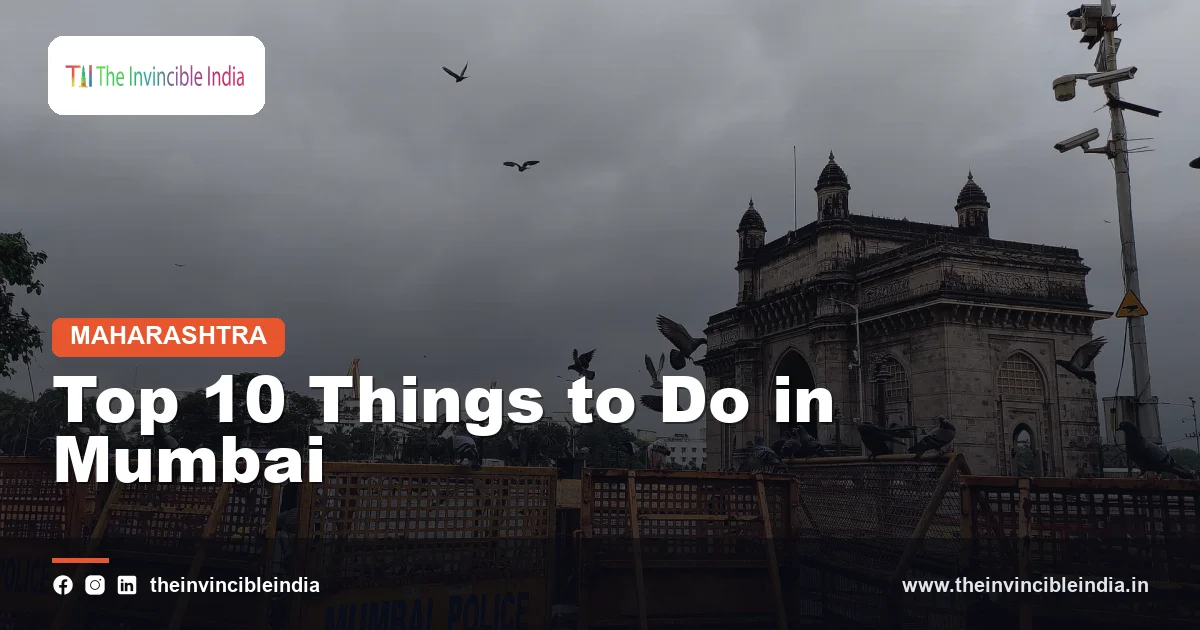
Mumbai, the “City of Dreams,” is India’s financial capital, the home of Bollywood and the country’s most populous city. Built on what were once seven islands joined over centuries of land reclamation, it is a fast-paced, cosmopolitan metropolis that never sleeps — a place of grand colonial architecture, buzzing bazaars, a vibrant coastline, world-famous street food and boundless energy. This detailed guide covers the top things to do in Mumbai, plus food, festivals and travel tips.
A City of Contrasts
Mumbai captures the extremes and the spirit of modern India. Gleaming skyscrapers and colonial-era landmarks stand alongside sprawling markets and communities; Bollywood dreams meet daily hustle; and people from every corner of India come here to make their fortune. This blend of ambition, resilience and diversity gives Mumbai its unmistakable character.
Quick Facts
| State | Maharashtra (capital) |
| Known as | City of Dreams, financial capital of India |
| Famous for | Bollywood, Gateway of India, street food |
| Best time to visit | October to March |
1. Gateway of India
Mumbai’s most iconic landmark, this grand basalt arch overlooking the Arabian Sea was completed in 1924 to commemorate the visit of King George V and Queen Mary. It is the perfect starting point for exploring the city and the departure point for ferries to Elephanta Island.
2. Marine Drive
This 3.6-kilometre seafront promenade along the Arabian Sea is known as the “Queen’s Necklace” for the way its street lights curve like a string of pearls at night. It is the perfect place for an evening stroll, watching the sunset or simply soaking up the city’s atmosphere.
3. Chhatrapati Shivaji Maharaj Terminus
A UNESCO World Heritage Site, this magnificent railway station, completed in 1888, is a stunning example of Victorian Gothic Revival architecture fused with Indian influences. One of the busiest stations in India, it is an architectural masterpiece worth admiring.
4. Elephanta Caves
A short ferry ride from the Gateway of India takes you to Elephanta Island, home to these UNESCO-listed rock-cut cave temples dedicated mainly to Lord Shiva. Dating back over a thousand years, the caves are famous for the magnificent three-headed Trimurti sculpture.
5. Colaba Causeway
A lively market street perfect for shopping, street food and people-watching, Colaba Causeway sits near the famous Leopold Cafe and the historic Taj Mahal Palace Hotel, one of India’s grandest hotels.
6. Juhu Beach
A popular beach known for its spectacular sunsets, sizzling street food stalls serving pav bhaji, bhel puri and pani puri, and its association with the many Bollywood stars who live nearby.
7. Siddhivinayak Temple
One of the city’s most revered temples, dedicated to Lord Ganesha, it draws huge crowds of devotees, including many celebrities and cricketers, especially on Tuesdays.
8. Dharavi
Guided tours offer an eye-opening and respectful look at one of Asia’s largest and most enterprising communities, home to thriving small-scale industries in leather, pottery, recycling and textiles, and a remarkable spirit of entrepreneurship.
9. Bandra-Worli Sea Link
An engineering marvel and a symbol of modern Mumbai, this cable-stayed bridge over the Arabian Sea offers spectacular views and dramatically cuts travel time across the city.
10. Sanjay Gandhi National Park and Kanheri Caves
A rare expanse of protected forest within a major city, this national park in the northern suburbs is home to leopards, deer and rich birdlife, as well as the ancient Buddhist Kanheri rock-cut caves.
11. Haji Ali Dargah
A striking white mosque and tomb set on an islet in the Arabian Sea, connected to the shore by a causeway accessible at low tide, Haji Ali is an important spiritual and architectural landmark.
12. Bollywood and Film City
As the heart of the Hindi film industry, Mumbai offers Bollywood studio tours at Film City, giving visitors a glimpse into the world’s most prolific film industry.
Street Food and Markets
No visit is complete without tasting Mumbai’s legendary street food — vada pav (the city’s beloved “burger”), pav bhaji, bhel puri, sev puri and Frankie rolls — and exploring markets like Crawford Market, Chor Bazaar (the “thieves’ market”) and Zaveri Bazaar for jewellery.
Festivals of Mumbai
Mumbai celebrates with gusto. Ganesh Chaturthi is the city’s grandest festival, when giant idols are worshipped and then immersed in the sea, with the Lalbaugcha Raja pandal drawing millions. Navratri, Diwali, Christmas and the Kala Ghoda Arts Festival also fill the calendar.
Best Time to Visit and Getting Around
October to March offers the most pleasant weather, while the monsoon (June to September) brings dramatic rain and lush surroundings. Getting around is easiest by the iconic local trains (the city’s lifeline), app-based cabs, black-and-yellow taxis, auto-rickshaws (in the suburbs) and the expanding metro network.
A Brief History of Mumbai
Mumbai’s history is as layered as the city itself. Originally a cluster of seven islands inhabited by Koli fishing communities, the islands passed from local rulers to the Portuguese in the 16th century, and then to the British as part of Catherine of Braganza’s dowry in 1661. The British East India Company developed the natural harbour into a major trading port, and a massive land-reclamation project gradually merged the seven islands into a single landmass. The opening of cotton mills in the 19th century and the boom during the American Civil War transformed Bombay into a thriving industrial and commercial hub, laying the foundation for the financial powerhouse it is today. The city was renamed Mumbai in 1995, after the goddess Mumbadevi.
The Victorian and Art Deco Ensemble
One of Mumbai’s most remarkable features is its architecture. The city is home to a UNESCO World Heritage ensemble of Victorian Gothic and Art Deco buildings, the second-largest collection of Art Deco structures in the world after Miami. Around the Oval Maidan, grand Victorian public buildings such as the High Court and University face rows of elegant 1930s Art Deco apartments and cinemas. Together with the Gateway of India, Chhatrapati Shivaji Maharaj Terminus and the Prince of Wales Museum (now CSMVS), they tell the story of the city’s colonial and early-modern growth, and a heritage walk through this district is one of the best ways to appreciate Mumbai.
Day Trips From Mumbai
Mumbai is a springboard for several rewarding excursions. The Elephanta Caves, an hour away by ferry, are the classic day trip. The coastal town of Alibaug, reached by ferry or road, offers beaches and forts. The twin hill stations of Lonavala and Khandala, in the Western Ghats about two hours away, are green and misty in the monsoon, famous for their viewpoints, caves and the sweet treat chikki. Matheran, a car-free hill station reached by a heritage toy train, offers a peaceful escape, while the ancient cave temples of Karla and Bhaja and the vineyards of Nashik make for excellent longer weekend trips.
Shopping and Nightlife
Mumbai is a shopper’s and night-owl’s city. From the designer boutiques of Kala Ghoda and the malls of Lower Parel to the bargain-filled lanes of Colaba Causeway, Linking Road, Fashion Street and the antique-laden Chor Bazaar, there is something for every budget. As night falls, the city comes alive with rooftop bars, live-music venues, breweries and clubs across Bandra, Lower Parel and Colaba, alongside historic Irani cafes serving bun maska and chai. The city’s vibrant theatre, comedy and arts scene rounds out its famous nightlife.
Where to Stay in Mumbai
Mumbai offers accommodation for every traveller. South Mumbai (Colaba, Fort, Marine Drive) is ideal for first-time visitors, placing you near the major sights and heritage architecture, and home to iconic hotels like the Taj Mahal Palace. The Bandra-Juhu belt in the western suburbs is trendy and close to beaches and the airport, popular with those wanting a livelier, more contemporary base. Business travellers often prefer the corporate hubs of Lower Parel and the Bandra-Kurla Complex. Booking in advance is wise, as Mumbai is a busy, in-demand destination year-round.
Bollywood and Film Culture
Mumbai is the undisputed capital of Bollywood, the Hindi-language film industry that produces hundreds of films a year and is one of the largest in the world. Film is woven into the fabric of the city, from the studios of Film City and the historic single-screen cinemas to the star homes of Bandra and Juhu that fans gather outside. Visitors can take Bollywood tours, watch a film at the grand art-deco Regal or Eros cinemas, or simply feel the industry’s energy in a city where a chance encounter with a film shoot is always possible.
The Food of Mumbai
Beyond its famous street food, Mumbai offers an extraordinary culinary range that reflects its diversity. The Parsi community has given the city its beloved Irani cafes, serving bun maska, keema and berry pulao, along with dishes like dhansak. Fresh seafood, especially Koli and Malvani cuisine from the coast, features prawns, pomfret and bombil (Bombay duck). Muslim-dominated areas like Mohammed Ali Road come alive during Ramadan with kebabs and rich Mughlai fare. From humble tiffins delivered by the legendary dabbawalas to fine dining, Mumbai eats well at every level.
The Koli Heritage
Long before skyscrapers rose, Mumbai belonged to the Koli fishing community, the city’s original inhabitants. Their colourful fishing villages (koliwadas) still cling to parts of the coast, and their culture, cuisine and festivals remain an important, if often overlooked, part of Mumbai’s identity. Visiting a koliwada or trying authentic Koli seafood offers a glimpse of the city’s roots that stretch back centuries before it became a global metropolis.
Experiencing the Monsoon
Mumbai’s monsoon, from June to September, is a defining experience. The city is transformed as heavy rains sweep in from the Arabian Sea, turning the surrounding hills lush green and filling waterfalls. While the rain can disrupt travel, there is a special romance to Mumbai in the monsoon — hot bhajias and chai at a seaside stall, the dramatic waves crashing over Marine Drive, and day trips to the green hills of Lonavala and Matheran. Many locals consider it the city’s most beautiful and atmospheric season.
Practical Tips for Visitors
Mumbai is generally safe and welcoming, but it is a huge, crowded city, so keep an eye on your belongings in busy areas and on the local trains. Travel outside peak train hours if possible, as rush-hour crowds are intense. Carry water, dress for the humidity, and use app-based cabs or metered taxis. Allow extra time for travel, as traffic can be heavy, and embrace the city’s fast pace with patience and an open mind.
Frequently Asked Questions
What is Mumbai famous for?
Mumbai is famous as India’s financial capital, the home of Bollywood, and for landmarks like the Gateway of India and Marine Drive.
How do you reach the Elephanta Caves?
The Elephanta Caves are reached by a ferry from the Gateway of India, taking about an hour each way.
What street food should I try in Mumbai?
Vada pav, pav bhaji, bhel puri, sev puri and pani puri are among Mumbai’s most famous street foods.
When is the best time to visit Mumbai?
October to March offers the most pleasant weather for sightseeing.
What is the best way to get around Mumbai?
Local trains are the city’s lifeline, supplemented by taxis, app-based cabs, auto-rickshaws and the metro.