

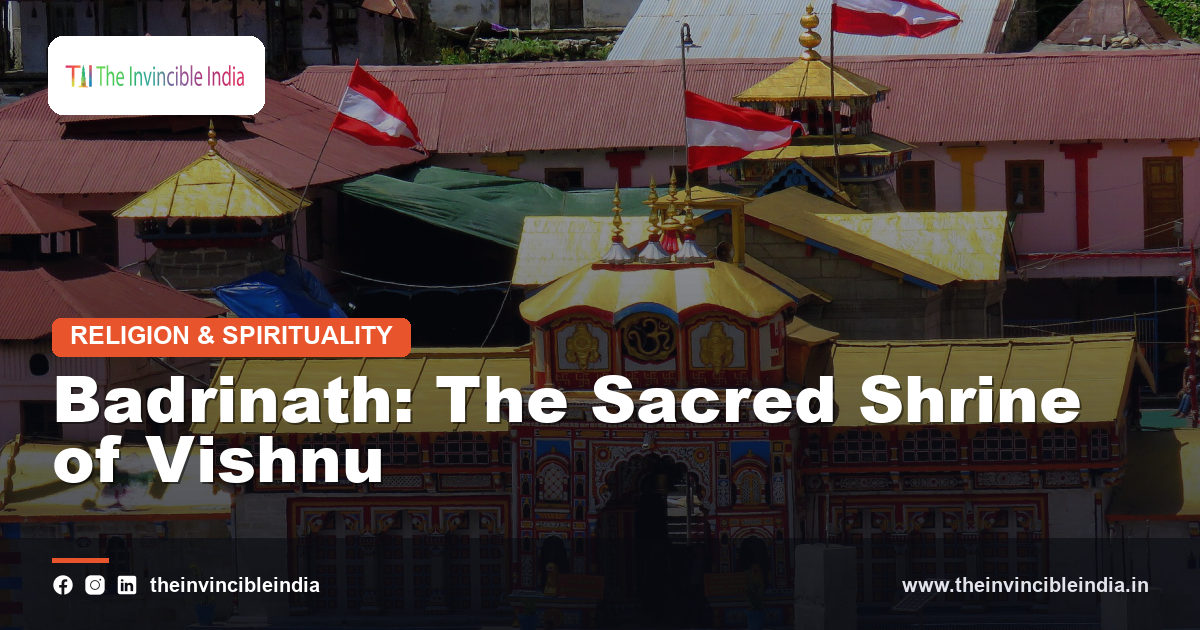
Badrinath is among the most revered pilgrimage destinations in India, a Himalayan shrine dedicated to Lord Vishnu that forms one of the four sites of the Char Dham pilgrimage circuit. Set high in the Garhwal Himalayas of Uttarakhand along the banks of the Alaknanda River, the shrine draws pilgrims from across the country who travel through demanding mountain terrain to seek its blessings. Its dramatic natural setting, framed by snow-capped peaks, has long added to its reputation as a place of profound spiritual significance. Open to visitors for only part of the year due to harsh Himalayan winters, Badrinath embodies a distinctive rhythm of pilgrimage tied closely to the mountain environment that surrounds it, making the journey itself an integral part of the devotional experience.
Quick Facts
| Detail | Information |
|---|---|
| Presiding Deity | Lord Vishnu, worshipped as Badrinarayan |
| Location | Chamoli district, Uttarakhand, in the Garhwal Himalayas |
| Nearby River | Alaknanda River |
| Pilgrimage Circuit | One of the four Char Dham sites |
| Accessibility | Open to pilgrims for a limited season each year |
| Priestly Tradition | Traditionally served by Rawal priests of South Indian origin |
Introduction to Badrinath
Badrinath is one of the most celebrated pilgrimage shrines in India, dedicated to Lord Vishnu and located deep within the Garhwal region of the Himalayas in present-day Uttarakhand. It holds a place of special importance among Vaishnava devotees, who regard a visit to the shrine as a significant act of devotion and spiritual merit. The temple’s remote and dramatic mountain setting has long contributed to its aura of sanctity, with pilgrims traditionally viewing the arduous journey to reach it as part of the spiritual discipline associated with the pilgrimage itself. Badrinath is closely linked with three other major shrines to form the Char Dham, a set of four pilgrimage destinations spread across different regions of India. Together, these sites represent some of the most important pilgrimage traditions within Hindu religious life, and Badrinath’s Himalayan location gives it a particularly striking character among them.
Geographic Setting in the Garhwal Himalayas
The shrine is situated in the Garhwal Himalayas, a rugged mountain region in the northern Indian state of Uttarakhand known for its high peaks, glacial rivers, and dramatic alpine landscapes. Badrinath itself lies at considerable elevation, surrounded by towering mountains that lend the site an atmosphere of remoteness and grandeur befitting its spiritual stature. This high-altitude setting means that weather conditions vary enormously across the year, with heavy snowfall making the region largely inaccessible during the winter months. The surrounding landscape, with its steep valleys and forested lower slopes giving way to bare rock and snow at higher elevations, has shaped both the practical logistics of pilgrimage and the symbolic association of the shrine with transcendence and spiritual elevation. For many pilgrims, the physical journey through this challenging terrain is inseparable from the devotional experience of reaching the shrine itself.
Badrinath and the Char Dham Pilgrimage
Badrinath is one of the four sites that together constitute the Char Dham, a set of pilgrimage destinations located in different corners of the Indian subcontinent and traditionally considered especially sacred within Hindu devotional practice. Completing a pilgrimage to all four sites is regarded by many devotees as a significant spiritual undertaking, often planned as the culmination of a lifetime of religious observance. Within this broader circuit, Badrinath holds a distinctive place both for its association with Vishnu and for its dramatic Himalayan location, which sets it apart from the other three sites. Pilgrims undertaking the wider Char Dham journey frequently include Badrinath as a major stop, often combining it with visits to other prominent Himalayan shrines in the same region. This integration into a larger devotional circuit has helped sustain Badrinath’s prominence as a pilgrimage destination across many generations.
Association with Lord Vishnu
At Badrinath, Lord Vishnu is worshipped in the form known as Badrinarayan, and devotion to this form of the deity lies at the very center of the shrine’s religious identity. Within the Vaishnava tradition, which centers worship on Vishnu and his various forms, Badrinath is regarded as one of the most sacred sites associated with the deity’s presence on earth. Pilgrims visiting the shrine typically undertake rituals of worship and offering directed toward this form of Vishnu, seeking blessings and spiritual merit through their devotion. The shrine’s association with Vishnu also connects it to a broader network of Vaishnava pilgrimage sites across India, each dedicated to a particular form or aspect of the deity. This shared devotional framework situates Badrinath within a much larger tradition of Vishnu worship that spans diverse regions, languages, and local customs throughout the country.
Architecture and Structure of the Temple
The temple structure at Badrinath reflects a style adapted to its high-altitude Himalayan setting, combining a brightly painted facade with a design suited to withstanding harsh mountain weather. Its distinctive colorful entrance is among the most recognizable visual features associated with the shrine, often depicted in photographs and devotional materials. Inside, the temple houses the sanctum where the presiding deity is enshrined and worshipped according to established ritual practice. The architectural approach at Badrinath differs from many temples found in the plains, shaped by practical necessities such as snow load and seasonal accessibility as much as by religious and aesthetic tradition. Over time, the structure has required maintenance and restoration to cope with the challenging environmental conditions of its location. Despite these challenges, the temple has remained a continuously functioning site of worship, preserving its role as a focal point of pilgrimage in the region.
The Sacred Alaknanda River
Badrinath is situated along the banks of the Alaknanda River, one of the principal headstreams associated with the wider Ganga river system that holds deep significance in Hindu religious tradition. The presence of this river adds an important dimension to the pilgrimage experience, as devotees often incorporate ritual bathing or the offering of prayers by the riverside into their visit to the shrine. Rivers hold a central place in Hindu conceptions of sacred geography, understood as purifying and spiritually significant, and the Alaknanda’s proximity to Badrinath reinforces the site’s overall sanctity. The river’s glacial origins high in the Himalayas also connect the shrine symbolically to the mountains themselves, linking water, rock, and devotion within a single sacred landscape. For many pilgrims, the sound and sight of the fast-flowing river form a lasting part of their memory of the journey to Badrinath.
Seasonal Opening and Closing of the Shrine
One of the most distinctive aspects of Badrinath is its seasonal accessibility, as the shrine is open to pilgrims only for a portion of the year due to the severe winter conditions of its high Himalayan location. Each year, the temple opens in the warmer months and closes again as winter approaches, with ceremonies traditionally marking both occasions. During the closed season, heavy snowfall makes the surrounding routes largely impassable, and the resident deity is symbolically cared for through established ritual arrangements observed at that time. This seasonal rhythm shapes the entire pilgrimage calendar for Badrinath, with large numbers of devotees converging on the shrine during the months when access is possible. The practice of opening and closing the temple according to the mountain seasons reflects a long-standing accommodation between religious observance and the practical realities of the Himalayan environment.
Pilgrimage Routes and the Journey to Badrinath
Reaching Badrinath traditionally involves a journey through the mountainous terrain of Uttarakhand, historically undertaken on foot over considerable distances and increasingly today supported by road access that brings pilgrims closer to the shrine before a final approach. The route passes through a series of towns and smaller settlements that have long served as waypoints for travelers, offering rest and supplies along the way. For many devotees, the journey itself carries spiritual meaning, understood as an act of discipline and devotion that prepares the pilgrim for the culminating experience of worship at the shrine. Even with improvements in transportation infrastructure over time, the high-altitude setting and changeable mountain weather mean that the journey to Badrinath remains physically demanding. This combination of natural challenge and religious purpose continues to define the pilgrimage experience for those who undertake it each year.
Religious Significance in Vaishnavism
Within Vaishnavism, the branch of Hindu tradition centered on devotion to Vishnu, Badrinath occupies a position of particular reverence as one of the most sacred sites associated with the deity. Its inclusion among the major pilgrimage destinations recognized by Vaishnava tradition reflects centuries of continuous devotional practice and recognition by religious authorities and communities across India. Pilgrims from diverse regional and linguistic backgrounds travel to Badrinath, reflecting the pan-Indian significance of the shrine within Vaishnava devotional geography. This wide draw illustrates how certain sacred sites can transcend regional boundaries to hold importance for devotees across the subcontinent. The shrine’s continuing prominence within Vaishnava practice underscores the way sacred geography in Hindu tradition often links distant and geographically distinct locations into a single devotional framework understood and revered across many communities.
Traditional Accounts and Historical Associations
Tradition associates the revival and prominence of Badrinath with the philosopher-saint Adi Shankaracharya, who is widely credited within Hindu tradition with reinvigorating several major pilgrimage sites across India, including this Himalayan shrine. While precise historical details from this early period are transmitted mainly through tradition rather than fully documented record, the association reflects the shrine’s long-standing place within organized Hindu pilgrimage practice. Over the centuries, Badrinath has continued to draw devotees and religious scholars, with its reputation as a major spiritual center reinforced through sustained pilgrimage and religious patronage. This historical layering, in which devotional memory and institutional continuity reinforce one another, is characteristic of many of India’s most enduring sacred sites. Badrinath’s continued prominence today reflects this long historical association with organized religious practice and pilgrimage.
Priestly Traditions at the Shrine
Badrinath is traditionally served by priests known as Rawals, whose lineage is notably associated with South India rather than the immediate Himalayan region, a distinctive arrangement that has been maintained for a very long period. This tradition is often cited as an example of the broad, pan-regional character of major Hindu pilgrimage institutions, in which ritual responsibilities can be carried by communities from distant parts of the country. The presence of priests from a different linguistic and cultural region highlights how sacred sites like Badrinath have historically functioned as unifying points within a wider, geographically diverse religious tradition. The specific rituals and daily worship practices at the shrine are maintained according to established custom, passed down through this priestly lineage over successive generations. This continuity of practice contributes significantly to the shrine’s reputation for maintaining long-established forms of worship.
Nearby Sites and the Surrounding Region
The area surrounding Badrinath includes several other locations of religious and natural interest that pilgrims often visit in conjunction with the main shrine. Nearby villages and natural landmarks in the high Himalayan landscape add further dimensions to the pilgrimage experience, offering additional points of devotional or scenic significance along the broader route. The proximity of these sites means that a visit to Badrinath frequently extends into a wider exploration of the surrounding Himalayan region, with pilgrims combining worship at the main temple with visits to smaller shrines and natural features nearby. This pattern of clustered sacred and scenic sites is common in Himalayan pilgrimage regions, where the mountainous terrain naturally groups multiple points of interest along shared travel routes. The result is a pilgrimage experience that engages with both the specific sanctity of Badrinath and the broader spiritual character of the Garhwal Himalayas as a whole.
Badrinath and the Panch Badri Circuit
Badrinath is also understood as the principal shrine within a group of five related temples in the region collectively known as the Panch Badri, each associated with a particular aspect of Vishnu worship in the Himalayan tradition. This grouping reflects a broader pattern in Hindu pilgrimage practice, in which a central major shrine is complemented by a network of related sites that together form a more complete devotional circuit. Pilgrims with sufficient time and means sometimes extend their journey to include some or all of these related temples, deepening their engagement with the regional Vaishnava tradition. The existence of this wider circuit underscores how Badrinath functions not simply as an isolated shrine but as the anchor point of a larger devotional landscape spread across the surrounding Himalayan terrain. This layered structure of pilgrimage sites has helped sustain religious interest in the broader region for many generations.
Role in Hindu Pilgrimage Culture
Badrinath occupies a central place within the broader culture of Hindu pilgrimage, exemplifying how sacred geography, seasonal ritual, and physical journey combine to create a distinctive devotional practice. Its inclusion in the Char Dham circuit situates it among the pilgrimage destinations most commonly associated with a complete devotional life for many practicing Hindus, particularly those following Vaishnava tradition. The shrine’s popularity also reflects broader patterns in Indian religious life, where pilgrimage to distant and often physically demanding locations is valued precisely because of the effort and dedication it requires. Badrinath’s Himalayan setting adds a further layer of meaning to this practice, associating spiritual elevation with physical ascent into the mountains. This combination of accessibility challenges and profound religious significance has helped sustain the shrine’s importance within the wider tradition of Hindu pilgrimage across many centuries.
Environmental and High-Altitude Context
The high-altitude environment surrounding Badrinath shapes nearly every aspect of the pilgrimage experience, from the limited period of accessibility each year to the physical demands placed on visitors traveling through thin mountain air and variable weather. This setting requires careful planning on the part of pilgrims and authorities alike, particularly regarding health precautions associated with high elevation and the unpredictable nature of Himalayan weather patterns. The fragile mountain ecosystem surrounding the shrine has also drawn increasing attention in recent times, with efforts made to balance the needs of large pilgrim numbers against the environmental sensitivity of the region. This ongoing challenge reflects a broader concern shared by many Himalayan pilgrimage sites, where religious significance and environmental preservation must be carefully balanced. Awareness of this high-altitude context remains an important part of preparing for and understanding a pilgrimage to Badrinath.
Modern Development and Pilgrim Facilities
In recent decades, infrastructure supporting pilgrims traveling to Badrinath has expanded considerably, including improved road access, accommodation, and facilities designed to assist the large numbers of visitors who make the journey each season. These developments have made the pilgrimage more accessible to a wider range of people, including elderly devotees and families who might otherwise have found the traditional journey too demanding. At the same time, authorities and religious institutions associated with the shrine have worked to maintain the traditional character and ritual practices of Badrinath even as visitor numbers have grown. Balancing modern convenience with the preservation of long-standing religious custom remains an ongoing consideration for those responsible for managing the site. This evolving relationship between tradition and modern infrastructure reflects broader trends seen across many of India’s major pilgrimage destinations in the present era.
Badrinath Today
Today, Badrinath remains one of India’s most significant pilgrimage destinations, drawing devotees from across the country to its dramatic Himalayan setting each accessible season. As part of the Char Dham circuit, it continues to hold a place of special importance within Vaishnava devotional practice, while its association with the Alaknanda River and the surrounding mountains reinforces its standing within India’s broader sacred geography. The shrine’s seasonal rhythm of opening and closing, its long-maintained priestly traditions, and its role within the wider Panch Badri circuit all contribute to a living religious practice that has been sustained across many generations. Even as infrastructure and accessibility continue to evolve, Badrinath retains its essential character as a place where physical journey and spiritual devotion meet, ensuring its continued place among the most revered shrines in the Himalayan pilgrimage tradition.
Sources & Further Reading
- Ministry of Culture, Government of India (indiaculture.gov.in).
- Uttarakhand Tourism Development Board.
Frequently Asked Questions
What deity is worshipped at Badrinath?
Badrinath is dedicated to Lord Vishnu, worshipped at the shrine in the form known as Badrinarayan.
Why is Badrinath part of the Char Dham?
Badrinath is one of four major pilgrimage sites spread across India that together form the Char Dham, regarded as a significant devotional circuit.
When is Badrinath open to pilgrims?
Badrinath is open only for part of the year, as heavy Himalayan snowfall makes the shrine largely inaccessible during the winter months.
Where is Badrinath located?
Badrinath is located in Chamoli district, Uttarakhand, within the Garhwal Himalayas, on the banks of the Alaknanda River.
What is the significance of the Alaknanda River to the shrine?
The Alaknanda River runs beside Badrinath and is considered sacred, with pilgrims often incorporating it into their rituals during the pilgrimage.


