

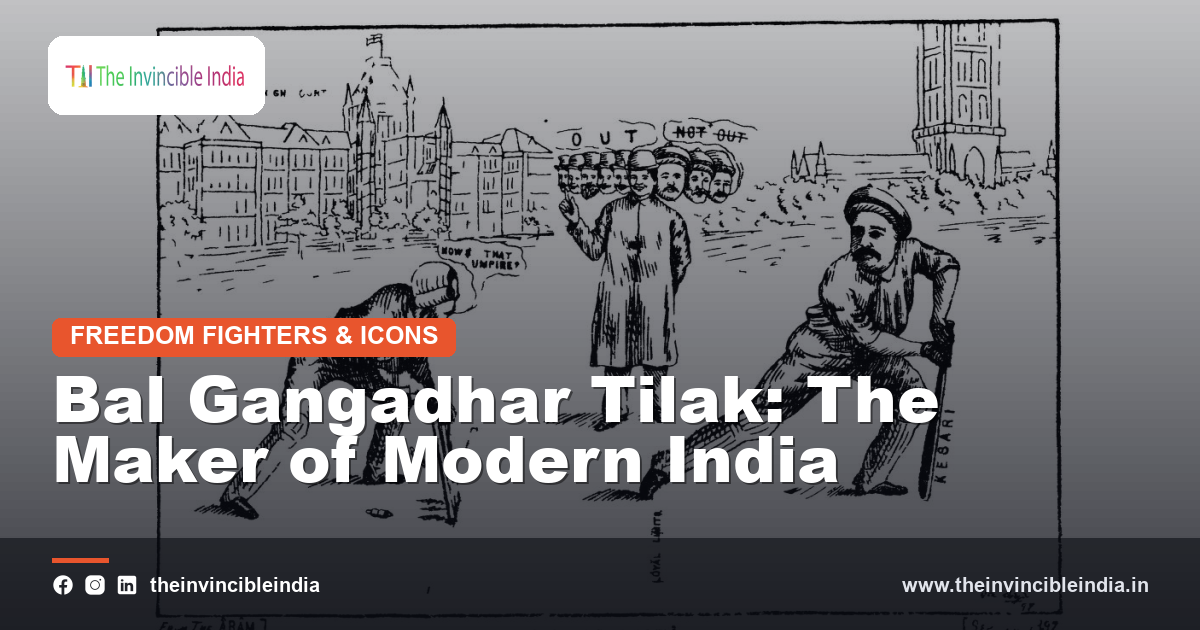
Bal Gangadhar Tilak, honoured as Lokmanya, meaning accepted by the people as their leader, was one of the earliest and boldest leaders of India’s freedom struggle, a fiery nationalist whose call for self-rule stirred the nation. At a time when many sought only modest reforms, Tilak boldly demanded swaraj, self-rule, declaring it the birthright of Indians, and he worked tirelessly to awaken national consciousness and to build a mass movement for freedom. A scholar, journalist and leader of great force and conviction, he was among the first to make the demand for freedom a popular cause. This guide explores the life, fiery nationalism, methods and enduring legacy of Lokmanya Bal Gangadhar Tilak, one of the great pioneers of India’s freedom struggle and national icons.
Quick Facts
| Detail | Information |
|---|---|
| Born | 1856 |
| Known as | Lokmanya, accepted by the people as their leader |
| Famous call | Swaraj is my birthright, and I shall have it |
| Role | A pioneer of the assertive demand for self-rule |
| Methods | Journalism and mass mobilisation through festivals |
| Part of | The Lal-Bal-Pal trio of nationalist leaders |
A Pioneer of Freedom
Bal Gangadhar Tilak, revered as Lokmanya, was one of the great pioneers of India’s freedom struggle, among the first leaders to boldly demand full self-rule and to work to make the cause of freedom a popular, mass movement. At a time when the national movement was in its early stages and many leaders sought only gradual reforms within British rule, Tilak stood out for his fiery nationalism and his uncompromising demand for swaraj, self-rule. His courage, conviction and tireless efforts to awaken the nation made him one of the most influential early leaders of the freedom struggle. As Lokmanya, the leader accepted by the people, and as a pioneer of the demand for freedom, Tilak holds an honoured place among India’s national icons.
Early Life and Education
Bal Gangadhar Tilak was born in 1856 into a scholarly family, and he received a good education, developing into a man of great learning, strong character and firm convictions. A brilliant student with a deep interest in scholarship, mathematics and the classics, he became a teacher and scholar before turning his energies to the cause of the nation. His learning and his strong, independent character shaped the bold and principled leader he would become. This early life, marked by scholarship and the formation of strong convictions, prepared Tilak for his role as one of the great intellectual and moral leaders of the freedom struggle, combining deep learning with a fierce commitment to the cause of national freedom.
Swaraj Is My Birthright
Tilak is above all remembered for his famous and stirring declaration that swaraj, self-rule, was his birthright and that he would have it, a bold assertion that became one of the great rallying cries of the freedom struggle. In an age when many hesitated to demand full freedom, Tilak boldly proclaimed the right of Indians to rule themselves, giving powerful voice to the aspiration for complete self-rule. This famous call captured his uncompromising nationalism and inspired the nation. This stirring declaration that self-rule was the birthright of Indians, one of the most famous slogans of the freedom struggle, is forever associated with Tilak and expresses the bold and pioneering spirit of his demand for freedom.
A Fiery Nationalist
Tilak was a fiery and assertive nationalist, who believed that freedom must be actively demanded and worked for, and who was not content with the moderate approach of seeking gradual reforms. He belonged to the more radical, assertive wing of the national movement, which pressed boldly for self-rule and sought to build a mass movement of the people, in contrast to the moderates who favoured a more cautious approach. His fiery nationalism and his readiness to challenge British rule boldly made him a powerful and inspiring leader. This assertive, uncompromising nationalism, and his belief in the active pursuit of freedom, distinguished Tilak among the leaders of his time and made him a pioneer of the bolder, more determined phase of the freedom struggle.
The Power of the Press
Tilak was a pioneering journalist who used the power of the press to spread the message of nationalism and to awaken the political consciousness of the people. Through his newspapers, he boldly criticised British rule and injustice, spread nationalist ideas, and reached a wide audience, making the press a powerful tool in the cause of freedom. His fearless journalism, which brought him into conflict with the authorities and led to his imprisonment, was a major part of his work as a nationalist leader. This use of the press to spread nationalism and awaken the people was one of Tilak’s most important methods and contributions, and his fearless journalism made him a powerful voice for freedom and a target of British repression.
Mobilising the People
One of Tilak’s most creative and important contributions was his effort to mobilise the masses and build a popular movement, using cultural and religious festivals to awaken national feeling and bring people together. He promoted large public festivals, celebrating a beloved deity and a great historical hero, as occasions to foster unity, national pride and political consciousness among the people, turning them into vehicles for mass mobilisation. These festivals helped to build a sense of national identity and to draw ordinary people into the movement. This innovative use of popular festivals to mobilise the masses and awaken national consciousness was one of Tilak’s most significant contributions, helping to transform the freedom struggle into a movement of the people.
The Lal-Bal-Pal Trio
Tilak was one of a famous trio of assertive nationalist leaders, popularly known by a combination of their names, who represented the bolder, more radical wing of the freedom movement in its early phase. Along with two other great leaders from different parts of the country, Tilak championed a more assertive nationalism and a bolder demand for self-rule, and together these leaders inspired the nation and pushed the movement towards a more determined struggle for freedom. This trio symbolised the rise of a more radical and popular nationalism. Tilak’s place in this famous trio of assertive nationalist leaders reflects his role as a pioneer of the bolder phase of the freedom struggle and his influence in shaping its more determined and popular character.
Imprisonment and Sacrifice
Tilak’s bold nationalism and his fearless criticism of British rule brought him into repeated conflict with the authorities, and he suffered imprisonment for the cause of freedom, including a long term of imprisonment far from his home. He bore these hardships with courage and used even his time in prison for study and writing, producing important scholarly work. His willingness to suffer imprisonment for his convictions won him great admiration and enhanced his stature as a leader. This imprisonment and sacrifice for the cause of freedom, borne with courage and dignity, was an important part of Tilak’s life and added to his moral authority and his standing as one of the great and self-sacrificing leaders of the freedom struggle.
A Scholar and Writer
Beyond his political leadership, Tilak was a distinguished scholar and writer, whose learning and intellectual contributions added to his stature. He was deeply learned in the classics and in Indian scripture and philosophy, and he wrote important scholarly works, including a celebrated interpretation of a great spiritual text, which he composed during his imprisonment. His scholarship reflected the depth of his mind and his devotion to Indian culture and thought. This dimension of Tilak as a scholar and writer, whose learning and works added to his standing, reveals the intellectual depth of a leader who was not only a fiery nationalist but also a man of great learning and a serious thinker devoted to the heritage of his country.
Champion of Indian Culture
Tilak was a proud champion of Indian culture and heritage, and he sought to instil in his people a sense of pride in their own traditions, history and identity as a foundation for the national awakening. He believed that a revival of national pride and cultural confidence was essential to the struggle for freedom, and his promotion of festivals and his celebration of India’s history and heroes were part of this effort to awaken national self-respect. This championing of Indian culture and pride was closely bound to his nationalism. This role as a champion of Indian culture and national pride, seeking to awaken his people’s confidence in their own heritage as a foundation for freedom, was an important part of Tilak’s contribution to the national awakening and the freedom struggle.
Awakening the Nation
The great achievement of Tilak was his role in awakening the national consciousness of the Indian people and in transforming the demand for freedom into a bold, popular cause. Through his fiery leadership, his journalism, his mobilisation of the masses and his uncompromising demand for self-rule, he did much to rouse the nation from passivity and to build a determined movement for freedom. He helped to make the aspiration for swaraj a widespread and passionate demand. This role in awakening the nation and building a bold, popular movement for freedom is at the heart of Tilak’s importance, and it established him as one of the great pioneers who prepared the ground for the mass freedom struggle that would follow.
A Bridge to the Mass Movement
Tilak served as a vital bridge between the early, moderate phase of the national movement and the later mass movement for freedom, helping to transform the struggle into a bold, popular cause. By demanding full self-rule, mobilising the masses, and awakening national consciousness, he prepared the ground for the great mass movement that would later be led by Gandhi and others. His pioneering work in making freedom a popular demand was a crucial link in the development of the freedom struggle. This role as a bridge to the mass movement, transforming the early struggle into a bold popular cause and preparing the ground for what was to come, is one of Tilak’s most important contributions to the achievement of India’s freedom.
The Legacy of Lokmanya
The legacy of Bal Gangadhar Tilak is that of a great pioneer of the freedom struggle, whose bold demand for self-rule and whose tireless efforts to awaken the nation helped to lay the foundations of the mass movement for freedom. His famous call for swaraj, his fiery nationalism, his use of the press and of popular festivals, and his championing of Indian culture and pride left a deep imprint on the national movement, and he is honoured as Lokmanya, the leader of the people. His example inspired later generations of freedom fighters. This legacy, as a pioneer of the demand for freedom and an awakener of the nation, secures Tilak’s place among the great early leaders of India’s freedom struggle.
Tilak Remembered Today
Today Bal Gangadhar Tilak is remembered and honoured as one of the great pioneers of India’s freedom struggle, the fiery leader whose bold demand for self-rule helped to awaken the nation. His famous declaration that swaraj was his birthright remains one of the most celebrated slogans of the freedom movement, his statues and memorials honour his contribution, and his example of courage, conviction and self-sacrifice continues to inspire. He is revered as Lokmanya, the leader accepted by the people. As a pioneer of the demand for freedom and one of the great awakeners of national consciousness, Bal Gangadhar Tilak endures as one of the most important and honoured of India’s freedom fighters and national icons.
Sources & Further Reading
- Ministry of Culture, Government of India, on Bal Gangadhar Tilak and the freedom struggle (indiaculture.gov.in).
- National records and histories of the Indian freedom movement.
Frequently Asked Questions
Who was Bal Gangadhar Tilak?
Bal Gangadhar Tilak, honoured as Lokmanya, was one of the earliest and boldest leaders of India’s freedom struggle, a fiery nationalist who demanded self-rule and worked to awaken national consciousness and build a mass movement for freedom.
What was Tilak's famous slogan?
Tilak’s most famous declaration was that swaraj, or self-rule, was his birthright and that he would have it. This bold assertion of the right of Indians to rule themselves became one of the great rallying cries of the freedom struggle.
Why is Tilak called Lokmanya?
Tilak is called Lokmanya, meaning accepted by the people as their leader, a title of honour and affection given to him in recognition of his leadership, his fiery nationalism and his role in awakening the national consciousness of the Indian people.
How did Tilak mobilise the people?
Tilak mobilised the masses by using cultural and religious festivals, celebrating a beloved deity and a great historical hero, as occasions to foster unity, national pride and political consciousness, turning them into vehicles for mass mobilisation, alongside his fearless journalism.
What was the Lal-Bal-Pal trio?
The Lal-Bal-Pal trio was a famous group of three assertive nationalist leaders, including Tilak, who represented the bolder, more radical wing of the early freedom movement and championed a more determined demand for self-rule.


