

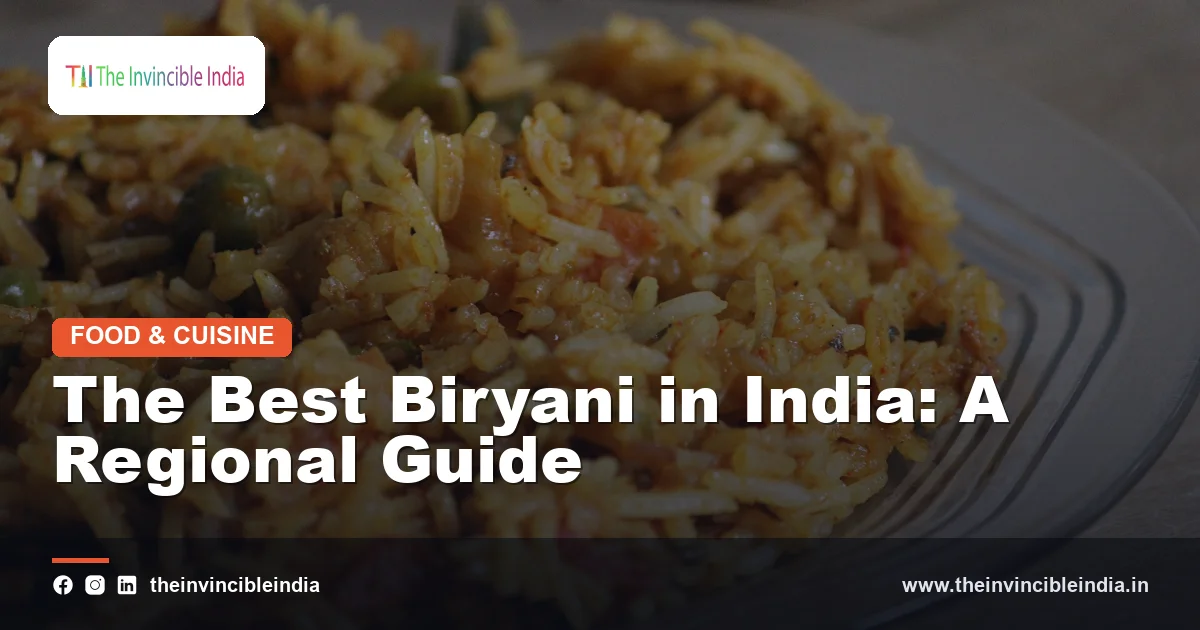
Few dishes capture the imagination and appetite of India quite like biryani. This magnificent one-pot dish of fragrant rice layered with spiced meat or vegetables, slow-cooked to perfection, is arguably the most beloved food in the country, inspiring passionate loyalty and endless debate about which regional style reigns supreme. From the royal kitchens of Hyderabad and Lucknow to the streets of Kolkata and the coasts of Kerala, every region has its own distinctive version. This guide takes you on a delicious journey through the best biryanis of India, exploring their history, flavours and what makes each one special.
Quick Facts: Biryani in India
| Detail | Information |
|---|---|
| What it is | Layered spiced rice with meat, fish or vegetables |
| Origin | Persian/Mughal influence, evolved across India |
| Famous styles | Hyderabadi, Lucknawi, Kolkata, Malabar |
| Key cooking method | Dum (slow-cooking in a sealed pot) |
| Key rice | Long-grain basmati (or short-grain in the south) |
| Served with | Raita, salan, boiled egg, salad |
The Origins of Biryani
The history of biryani is as rich and layered as the dish itself. Its name is believed to derive from the Persian word “birian”, and the dish is thought to have been introduced to India through Persian and Central Asian influences, flourishing in the royal kitchens of the Mughal Empire. As it spread across the subcontinent, biryani was adapted to local tastes, ingredients and traditions, giving rise to the astonishing variety of regional styles we see today. From the courts of the Nawabs and Nizams to the humble roadside eatery, biryani became a dish that transcended class and region to become a true national obsession.
Hyderabadi Biryani
Perhaps the most famous of all is the Hyderabadi biryani, a legacy of the kitchens of the Nizams. Its signature style is the “kachchi” method, in which raw marinated meat and partially cooked rice are layered together and slow-cooked in a sealed pot (dum), allowing the flavours to meld perfectly. Fragrant with saffron, fried onions, mint and a complex blend of spices, and famously spicy, Hyderabadi biryani is traditionally served with a tangy mirchi ka salan (chilli curry) and cooling raita. For many, it represents the very pinnacle of the biryani art.
Lucknawi (Awadhi) Biryani
From the refined kitchens of the Nawabs of Awadh comes the Lucknawi biryani, cooked in the “pakki” style, where the meat and rice are cooked separately before being layered and finished together on dum. The result is a subtler, more delicate and aromatic biryani, gently perfumed with spices, saffron and kewra, rather than fiery like its Hyderabadi cousin. This elegant style, closely related to the pulao tradition, reflects the sophisticated and understated culinary culture of Lucknow, and is prized by those who favour fragrance and finesse over heat.
Kolkata and Other Regional Styles
The Kolkata biryani, which evolved from the Lucknawi style brought by the exiled Nawab of Awadh, has a unique and beloved feature: the addition of a soft, spiced potato and often a boiled egg alongside the meat, with a lighter use of spice and a subtle sweetness. In the south, the Malabar (Thalassery) biryani of Kerala uses a fragrant short-grain rice and a distinctive blend of spices, while Tamil Nadu’s Ambur and Dindigul biryanis, Karnataka’s Donne biryani and the Bhatkali and Sindhi styles each offer their own delicious character, showcasing the incredible diversity of this dish.
The Art of Dum Cooking
At the heart of a great biryani lies the technique of dum, the slow-cooking method that gives the dish its signature depth and aroma. In this process, the layered rice and meat are sealed in a heavy pot, traditionally with a ring of dough around the lid to trap all the steam and flavour, and cooked gently over a low fire, sometimes with hot coals placed on the lid. This allows the meat to become tender and the rice to absorb every nuance of the spices, saffron and herbs, while the flavours meld into a harmonious whole. The moment the sealed pot is opened at the table, releasing a cloud of fragrant steam, is one of the great pleasures of the biryani experience, and mastering the dum is considered the true test of a biryani cook.
The Great Biryani Debate
Few culinary topics inspire as much passionate debate in India as the question of which biryani is the best. Loyalists of the Hyderabadi style champion its bold spice and the kachchi method, while devotees of the Lucknawi biryani prize its delicate fragrance and refinement. Kolkata’s biryani lovers defend the beloved potato, southerners advocate for the aromatic Malabar and Ambur styles, and each city and community fiercely believes its own version reigns supreme. This good-natured rivalry reflects the deep emotional connection Indians have with biryani, which is far more than a meal; it is a matter of regional pride, family tradition and cultural identity, discussed and debated with genuine enthusiasm.
Vegetarian and Other Variations
While biryani is often associated with meat, the vegetarian versions are equally beloved and widespread. The vegetable biryani, layered with an array of vegetables and the same fragrant spices and rice, is a staple across India, and the Hyderabadi vegetable biryani in particular is highly regarded. Other notable variations include the tahiri, a vegetarian biryani popular in the north, egg biryani, prawn and fish biryanis along the coasts, and the soya or paneer versions favoured by many. This adaptability has ensured that biryani can be enjoyed by everyone, regardless of dietary preference, contributing to its universal popularity across the diverse communities of the country.
Biryani as a Cultural Icon
Biryani has transcended its role as a dish to become a genuine cultural icon in India. It is the centrepiece of weddings, festivals and family gatherings, a symbol of celebration and hospitality, and, remarkably, consistently ranks among the most ordered foods in the country. Its history, weaving together Persian, Mughal and regional Indian influences, tells the story of the subcontinent’s cultural exchanges over centuries. From the grand dum biryanis of royal kitchens to the affordable plates served at roadside eateries feeding millions daily, biryani unites Indians across every divide of region, religion and class in shared love, making it perhaps the most quintessentially Indian dish of all.
Enjoying Biryani: Accompaniments and Tips
A great biryani is traditionally enjoyed with a few classic accompaniments that balance and enhance its rich flavours. A cooling raita, made of yoghurt with onion, cucumber or boondi, tempers the spice, while a tangy salan (a peanut and chilli gravy) is the classic partner to Hyderabadi biryani. A simple salad of onion, lemon and green chilli, and sometimes a boiled egg, complete the plate. When seeking out the best biryani, it is worth exploring the legendary establishments of cities like Hyderabad, Lucknow and Kolkata, as well as humble local favourites, for the finest biryani is often found where tradition, skill and generations of experience come together.
The Southern Biryanis
South India boasts a magnificent family of biryanis, each with its own distinct character. The Ambur biryani of Tamil Nadu, made with a short-grain seeraga samba rice and a lighter, tangy spicing, is served with a special brinjal curry known as dalcha and a raita. The Dindigul biryani stands out for its use of tangy curd and a generous hit of black pepper, while the Donne biryani of Karnataka, traditionally served in a bowl made of dried leaves, is renowned for its aromatic, herby, green-hued rice. Kerala’s Thalassery (Malabar) biryani uses the fragrant khaima or jeerakasala rice and is finished with fried nuts, raisins and fried onions. These southern styles reveal a whole world of biryani beyond the more famous northern versions.
Biryani Etiquette and Serving Traditions
Biryani is traditionally a dish meant for sharing and celebration, and its serving carries its own customs. In many households and restaurants, it is presented in a large communal handi (pot) at the centre of the table, from which generous portions are served, often with the most prized pieces of meat carefully distributed. Eating biryani with the hands is considered by many to be the most authentic way to enjoy it, allowing one to appreciate its textures fully. The accompaniments, raita, salan and salad, are added to the plate to complement each mouthful, and the meal is often a leisurely, convivial affair, savoured slowly in good company.
Making Biryani at Home
While the finest biryanis are often associated with legendary restaurants and expert cooks, biryani is also a cherished home dish, prepared with love for special occasions and family gatherings. Making a good biryani at home requires attention to detail: selecting good-quality aged basmati rice, marinating the meat well, frying the onions to a golden crisp (birista), and above all, mastering the layering and the gentle dum cooking that brings it all together. Though it takes time and care, the reward of a fragrant, perfectly cooked homemade biryani, shared with loved ones, is one of the great joys of Indian home cooking, and every family takes pride in its own treasured recipe.
The Enduring Love for Biryani
Biryani’s place in the heart of India shows no sign of fading; if anything, its popularity continues to grow. It consistently tops the lists of most-ordered dishes on food delivery platforms, unites people across every region and community, and remains the definitive dish of celebration and comfort alike. Its genius lies in its versatility and its universal appeal, equally at home at a lavish wedding banquet, a humble roadside eatery, or a family dinner. Whether you favour the fiery Hyderabadi, the fragrant Lucknawi, the potato-laden Kolkata, or one of the many southern styles, biryani offers an unforgettable experience of aroma, flavour and tradition, making it a true and enduring icon of Indian cuisine.
Biryani and Regional Pride
Perhaps no other dish so perfectly captures the diversity and regional pride of India as biryani. Each city that claims a great biryani, whether Hyderabad, Lucknow, Kolkata, Ambur or Thalassery, guards its version with fierce affection, and locals will passionately explain why theirs is the finest. This spirited attachment reflects how deeply food is tied to identity and belonging in India, where a plate of biryani carries memories of home, family and celebration. Far from dividing, this good-natured rivalry adds to the joy of the dish, inviting food lovers to travel, taste and discover the wonderful variety of biryanis the country has to offer.
Frequently Asked Questions
Which is the most famous biryani in India?
The Hyderabadi biryani is the most famous, celebrated for its rich, spicy flavour and the kachchi dum cooking method, though the Lucknawi and Kolkata biryanis are also hugely popular.
What is the difference between kachchi and pakki biryani?
In kachchi biryani, raw marinated meat is layered with rice and cooked together on dum, as in Hyderabad, while in pakki biryani, the meat and rice are cooked separately before being layered, as in Lucknow.
What is the difference between biryani and pulao?
Biryani is typically a layered dish with a stronger, more complex blend of spices and a distinct cooking process, while pulao is generally a simpler, milder dish where rice and other ingredients are cooked together.
What is Kolkata biryani known for?
Kolkata biryani is famous for including a soft, spiced potato and often a boiled egg, with a lighter, subtly sweet and aromatic flavour compared to the spicier Hyderabadi style.


