

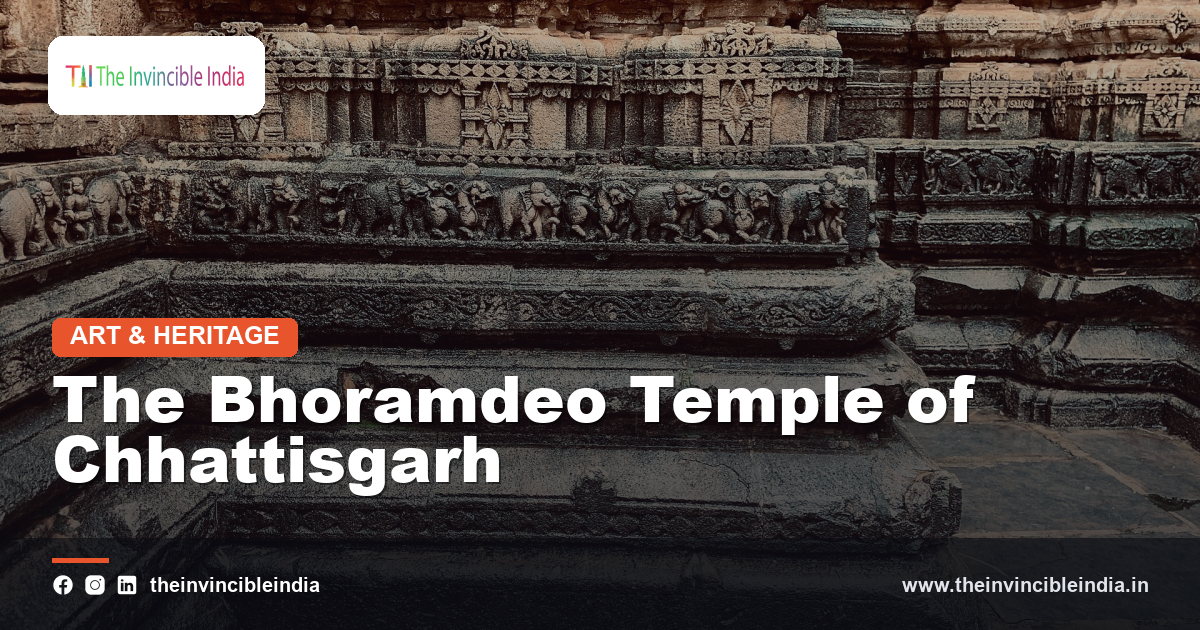
The Bhoramdeo temple, also written Bhoramdev or Bhoram Deo and often called the Khajuraho of Chhattisgarh, is a medieval stone temple of Shiva in the Kabirdham district of the Indian state of Chhattisgarh. It stands near the town of Kawardha, in a quiet valley of the Maikal hill range, beside a small lake and the green slopes of the surrounding forest. The temple is admired for the density and quality of its wall sculpture and is one of the best-preserved monuments of the region’s medieval past. It belongs to the larger story of Indian temple architecture, in which regional dynasties adapted the northern Nagara style to local tastes. This article explains where the temple is, who built it, what it shows and how to understand it.
Quick answer: The Bhoramdeo temple is a medieval Hindu temple dedicated to Shiva in Kabirdham district, Chhattisgarh, India. Built by the Nagavanshi dynasty in the Nagara style, it is known as the Khajuraho of Chhattisgarh because of its finely carved exterior walls. The temple belongs to a small group of nearby shrines and takes its name from Bhoramdeo, a local form of Shiva.
Key Takeaways
- The Bhoramdeo temple is a Shiva temple in Kabirdham district, in the Maikal hills of Chhattisgarh.
- It is generally attributed to the Nagavanshi rulers and dated to roughly the eleventh century CE, though precise dating is debated.
- The temple is built in the northern Nagara style, with a sanctum, a pillared hall and a curved tower.
- Its outer walls carry bands of sculpture, which is why the temple is compared with Khajuraho.
- The name Bhoramdeo is linked to the Gond tradition of worshipping Shiva as Bhoramdeo.
- Other monuments close by include the Madwa Mahal and the Cheri Chhera Mahal, which together form a small heritage cluster.
The sections below describe the setting, builders, architecture and living traditions of the Bhoramdeo temple.
Quick Facts
| Detail | Information |
|---|---|
| Location | Near Kawardha, Kabirdham district, Chhattisgarh |
| Type | Medieval Hindu temple of Shiva |
| Dynasty | Nagavanshi (Naga) rulers |
| Era | Around the eleventh century CE; dating debated |
| Architectural style | Nagara, with a pillared hall and curved tower |
| Main deity | Shiva, worshipped as Bhoramdeo |
| Known as | Khajuraho of Chhattisgarh |
| Nearby monuments | Madwa Mahal, Cheri Chhera Mahal |
What Is the Bhoramdeo Temple?
The Bhoramdeo temple is a medieval stone temple of Shiva that stands as the best-known historic monument of the Kabirdham district. It faces a small lake and is set against the forested hills of the Maikal range, giving the building a calm and secluded air. The temple is made of carefully dressed stone and is raised on a platform, with a sanctum, an entrance porch and a pillared hall. Its walls are covered in bands of figures, ornament and architectural mouldings. Worship continues here, so the temple remains a living shrine as well as a protected monument. It is valued by historians of art for what it shows about the medieval culture of central India, and by pilgrims for its devotion to Shiva. The temple is therefore both a work of art and a place of faith.
Where Is the Bhoramdeo Temple Located?
The Bhoramdeo temple is located in the Kabirdham district of Chhattisgarh, a short distance from the town of Kawardha. The site lies in a valley of the Maikal hill range, a forested highland that forms a natural boundary between the plains of Chhattisgarh and neighbouring Madhya Pradesh. The hills are green in the monsoon and cool in the winter, and the temple is reached by a road that passes through farmland and village settlements. A small lake lies beside the temple, and the water gives the setting a gentle beauty. Because the area is rural and quiet, visitors often find the site peaceful outside festival days. The location in a hill valley explains the long preservation of the monument and the strong bond between the temple and the people of the surrounding villages.
What Does the Name Bhoramdeo Mean?
The name Bhoramdeo is understood to be a form of Bhoram Deo, the name by which Shiva is worshipped in the local Gond tradition. The Gonds are among the largest tribal communities of central India, and their religious life includes the worship of great deities under local names. In this view the temple takes its name from the god it enshrines, rather than from a founder or place. Spellings vary, and the name appears as Bhoramdeo, Bhoramdev and Bhoram Deo in different writings. The use of a Gond name for a Shiva temple shows how Hindu and tribal traditions met and blended in this region. The name therefore points to a shared religious culture, in which one deity could be known by several names and approached by several communities.
Who Built the Bhoramdeo Temple?
The Bhoramdeo temple is generally attributed to the Nagavanshi rulers, a medieval dynasty that governed parts of the Chhattisgarh region. The Nagavanshi kings are traditionally linked with the Kawardha area and are remembered as builders of temples and halls. They ruled at a time when larger powers such as the Kalachuris were active in central India, and their art shows contact with the wider artistic world of the period. The temple is commonly dated to about the eleventh century, though scholars do not agree on a single year, and later repairs may have altered parts of the structure. Inscriptions and local tradition connect the dynasty with the site, but the details of individual patrons remain a matter of study. The temple is best seen as the achievement of a regional court that supported skilled stone workers.
Why Is Bhoramdeo Called the Khajuraho of Chhattisgarh?
Bhoramdeo is called the Khajuraho of Chhattisgarh because its outer walls are carved with bands of sculpture that resemble the celebrated temples of Khajuraho in Madhya Pradesh. Like those temples, Bhoramdeo uses a rich scheme of figures, including divine images, celestial beings, musicians, dancers and couples, arranged in horizontal registers. The comparison is a description of style and richness rather than a claim of equal scale, since Khajuraho is a far larger group of monuments. The nickname helps visitors place the temple in the wider tradition of central Indian temple art, in which sculpture is treated as an essential part of sacred architecture. It also draws attention to a regional monument that deserves wider recognition. The title is thus a way of honouring the craftsmanship of the Nagavanshi period.
What Is the Architectural Style of the Temple?
The Bhoramdeo temple is built in the Nagara style, the northern tradition of Indian temple building. A Nagara temple is recognised by its curved tower, known as a shikhara, which rises above the sanctum and is crowned by a ribbed stone disc and a finial. The temple has a square sanctum, a vestibule and a pillared hall, all raised on a moulded platform that lifts the building above the ground. The walls are divided by projecting and recessed bands, which create a play of light and shadow across the surface. This arrangement gives the building both strength and elegance. The plan follows rules found in ancient craft texts on building, yet the sculptors show a freedom in detail that is typical of regional work. The temple is thus a clear example of Nagara design in a local setting.
What Sculptures Decorate the Temple Walls?
The temple walls are decorated with a wide range of sculpture that covers divine, human and ornamental subjects. Images of Shiva and other Hindu deities occupy the main niches, while rows of smaller figures run along the wall mouldings. Celestial maidens, musicians, dancers and loving couples appear in graceful poses, reflecting the medieval view that the temple is a complete image of the world, in which every aspect of life has a place. Floral scrolls, geometric borders and animal motifs fill the spaces between the figures. The stone is carved with confidence and a good sense of proportion, and many figures still show fine detail in face, jewellery and drapery. This sculpture is the chief reason for the temple’s fame. It records the skill of medieval craftsmen and the broad outlook of the culture that employed them.
What Is Inside the Sanctum and Hall?
The sanctum of the Bhoramdeo temple holds a Shiva linga, the simple rounded stone that is the principal symbol of Shiva in Hindu worship. The sanctum is a small, dim chamber meant to focus the mind of the devotee on the presence of the deity. In front of it lies a pillared hall, where worshippers gather, and the pillars carry carved brackets and decorative bands. The doorway of the sanctum is framed by sculpted jambs that include river goddesses and guardian figures, a traditional feature of temple entrances. The interior is plainer than the exterior, which follows the usual rule that the outer walls show the richness of the world while the inner space is reserved for quiet devotion. The inside of the temple therefore completes the experience that begins with the carved exterior.
What Is the Madwa Mahal?
The Madwa Mahal is a smaller stone temple of Shiva that stands a short distance from the main Bhoramdeo temple. The name means the wedding hall or marriage pavilion, and local tradition connects the building with a royal marriage in the Nagavanshi family. The structure is a modest but handsome temple with a plain plan and a gently curved tower, and its walls carry a number of sculpted panels. It is later in date than the main temple according to most accounts, and it shows how the same tradition of building continued in the region. The Madwa Mahal is often visited together with Bhoramdeo, since the two monuments together give a fuller picture of Nagavanshi architecture. The hall therefore adds a human and historical dimension to the main temple.
What Is the Cheri Chhera Mahal?
The Cheri Chhera Mahal is another small temple in the Bhoramdeo group and is the third monument usually seen by visitors. It is a simple stone building in the same general tradition as the main temple, and it is dedicated to Shiva. Local tradition connects its name with the ritual of the festival of Chherchhera, a harvest celebration observed in Chhattisgarh, although the link between the name and the building is a matter of local belief rather than documented history. The temple is small and quiet, and its plain lines make a pleasing contrast with the richly carved main shrine. Together the three monuments form a compact heritage trail within a short distance of one another. The Cheri Chhera Mahal thus completes the group and invites visitors to look at the range of Nagavanshi building.
What Role Do Gond Traditions Play at Bhoramdeo?
Gond traditions play an important part in the life of the Bhoramdeo temple because the deity is worshipped under a name drawn from tribal belief. The Gond communities of the Maikal hills have long honoured forest, hill and earth deities, and the figure of Bhoramdeo has become a meeting point between these beliefs and the worship of Shiva in the wider Hindu tradition. Local people take part in festivals and offerings at the temple, and the occasions bring together villagers from many communities. This shared devotion is one of the most valuable aspects of the site. It shows that temples in central India were not only royal projects but also living centres for people of different backgrounds. The temple therefore holds both artistic and social significance for the region.
When Do Festivals Take Place at the Temple?
Festivals take place at the Bhoramdeo temple throughout the year, with the largest gatherings linked to Shiva worship. The festival of Mahashivratri, the great night of Shiva, draws devotees who offer water, flowers and leaves to the linga and keep vigil through the night. In the month of Shravan, which falls in the monsoon, many pilgrims visit to honour Shiva. A cultural festival named after the temple is also held in the region, showcasing the music, dance and crafts of Chhattisgarh. The exact dates of festivals vary with the lunar calendar and local arrangements, so visitors should check current announcements. The festivals show that the temple is not a silent relic but an active centre of devotion and community life in the Kabirdham district.
How Does Bhoramdeo Compare with Other Temples?
Bhoramdeo can be compared with other medieval temples of central India, though it keeps its own character. Like the temples of Khajuraho, it uses rich sculpture on a Nagara frame, but it is smaller and more intimate in scale. It also differs from the brick temples of Sirpur in the same state, which belong to an earlier phase and use a different material. The temple shows the influence of wider currents in central Indian art while keeping a regional flavour, particularly in the local deity and surrounding tradition. Seen beside other monuments, it helps to explain how temple styles spread and changed across the subcontinent. Bhoramdeo is therefore best understood as a regional variation within a shared tradition, and its modest scale only adds to its charm.
What Is the Setting Around the Temple?
The setting of the Bhoramdeo temple is one of its greatest assets, since the monument sits in a green valley beside a small lake. The hills of the Maikal range form a backdrop, and the forest around them is home to varied wildlife. The nearby Bhoramdeo Wildlife Sanctuary protects part of this landscape and adds a natural interest to a visit. In the monsoon the valley is lush, and in the cooler months the air is clear and fresh. The temple is reflected in the water on calm days, and the sound of birds and village life gives the area a gentle rhythm. The setting recalls the old Indian idea that a temple should stand in a beautiful and tranquil place. Landscape and architecture thus work together at Bhoramdeo.
How Is the Temple Protected Today?
The Bhoramdeo temple is protected as a historic monument, and care of the site involves government heritage authorities together with local communities. Conservation work on stone temples generally focuses on cleaning, structural repair, drainage, and the control of plant growth that can damage masonry. The humid monsoon climate of the region is a constant challenge, since moisture, moss and roots can weaken old stone. Visitor management is also important, as the carved surfaces are delicate and should not be touched or climbed upon. Signs, pathways and gardens help visitors move around the site with respect. Preservation depends on steady maintenance and on public understanding of the value of the monument. The temple is therefore being cared for as a shared inheritance that belongs to the people of Chhattisgarh and to all of India.
How Can Visitors Understand the Temple Better?
Visitors can understand the Bhoramdeo temple better by approaching it slowly and looking at the building in layers. A good way to begin is to walk around the outside and study the bands of sculpture, noting how figures are grouped and how the wall surface is divided. The next step is to look at the tower and the proportions of the whole structure, and then to enter the hall and sanctum quietly. A visit to the nearby Madwa Mahal and Cheri Chhera Mahal adds depth to the experience. Dress should be modest, shoes are removed before entering sacred areas, and photography should respect the rules of the site and the feelings of worshippers. A thoughtful visit reveals the temple as a place where art, history and living faith meet.
Bhoramdeo Temple Today
Today the Bhoramdeo temple stands as one of the most important cultural landmarks of Chhattisgarh and a rewarding destination for travellers interested in medieval art. It continues to serve as a place of worship and as a centre for regional festivals, and it draws scholars, photographers and pilgrims. The monument shows how the Nagavanshi rulers combined a northern architectural tradition with local belief to create a work of lasting beauty. Its carved walls, quiet valley setting and living ritual life make it a valuable part of India’s heritage. As awareness grows, the temple is increasingly recognised as a treasure of the region and a link to a distant past. Bhoramdeo remains a vivid reminder that the cultural richness of India extends well beyond its most famous monuments.
Sources & Further Reading
- Archaeological Survey of India (asi.nic.in).
- Ministry of Culture, Government of India (indiaculture.gov.in).
Frequently Asked Questions
Where is the Bhoramdeo temple located?
The Bhoramdeo temple is located in Kabirdham district of Chhattisgarh, near the town of Kawardha. It stands in a valley of the Maikal hill range beside a small lake.
Who built the Bhoramdeo temple?
The temple is generally attributed to the Nagavanshi rulers of the Chhattisgarh region. It is commonly dated to about the eleventh century, though scholars debate the exact period.
Why is Bhoramdeo called the Khajuraho of Chhattisgarh?
It is called the Khajuraho of Chhattisgarh because its outer walls carry rich bands of sculpture similar in character to the temples of Khajuraho. The comparison refers to style and artistry rather than to size.
Which deity is worshipped at the Bhoramdeo temple?
The temple is dedicated to Shiva, who is worshipped here as Bhoramdeo. The name reflects the Gond tribal tradition in which Shiva is known as Bhoram Deo.
What other monuments are near the Bhoramdeo temple?
The Madwa Mahal and the Cheri Chhera Mahal are the nearest monuments and are usually visited together with the main temple. The Bhoramdeo Wildlife Sanctuary also lies in the same hill region.
When is the best time to visit the Bhoramdeo temple?
The cooler months from October to February are generally the most comfortable for visiting. The monsoon makes the valley green but can make travel harder, and festival days such as Mahashivratri bring larger crowds.


