

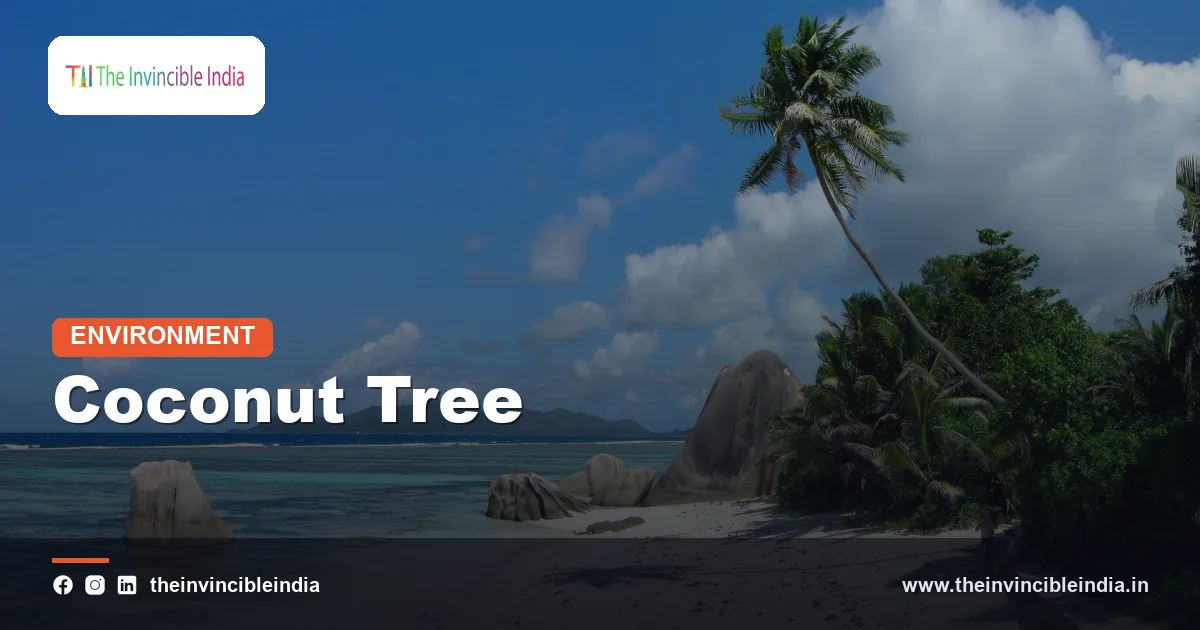
The coconut tree (Cocos nucifera) is a tall, single-trunked palm that grows along India’s coasts and is known as the kalpavriksha, or “wish-fulfilling tree”, because almost every part of it can be put to use as food, drink, fibre, fuel, shelter or ritual offering. The coconut tree is a mainstay of coastal India, most famously in Kerala, and it supports farming, cooking, crafts and religious life across the peninsula and the island territories.
From the sweet water of a tender nut to the coir of the husk and the oil of dried kernel, the coconut tree supplies an unusual range of products. This guide explains what the coconut tree is, where it grows in India, how it is cultivated, what it yields, and why it has such a deep place in Indian cuisine, economy and tradition.
Quick Facts: Coconut Tree
| Common name | Coconut tree, coconut palm; kalpavriksha |
|---|---|
| Scientific name | Cocos nucifera |
| Family | Arecaceae (palms) |
| Height | Commonly 20 to 30 metres in tall varieties; dwarf varieties are much shorter |
| Fruit type | Fibrous drupe (the coconut) |
| Local names | Nariyal (Hindi), thenga (Malayalam), thengai (Tamil), kobbari (Telugu), tengina kayi (Kannada) |
| Main Indian growing states | Kerala, Karnataka, Tamil Nadu, Andhra Pradesh, plus Lakshadweep and other coastal regions |
| Official bodies | Coconut Development Board (Kochi); Coir Board (Kochi); CPCRI (Kasaragod) |
| Observance | World Coconut Day on 2 September |
Key Takeaways
- The coconut tree (Cocos nucifera) is a tall palm that is called kalpavriksha in India because nearly every part of it has a use.
- The coconut tree is grown mainly along the coasts of Kerala, Karnataka, Tamil Nadu and Andhra Pradesh, and Kerala is the state most closely identified with it.
- The coconut tree yields water, kernel, oil, coir fibre, leaves, shells, sap and timber, which feed food, fibre and handicraft industries.
- The coconut tree needs a warm, humid climate with regular rainfall or irrigation, and it begins to bear fruit a few years after planting.
- The coconut is central to Hindu rituals as the shriphala, or auspicious fruit, and is offered in temples, weddings and ceremonies across the country.
- The Coconut Development Board, based in Kochi, promotes coconut cultivation and products, and World Coconut Day is observed on 2 September.
What is the coconut tree and why is it called kalpavriksha?
The coconut tree is a tropical palm, Cocos nucifera, that bears the large fibrous fruit known as the coconut, and it is called kalpavriksha because it provides so many useful products from a single plant. In Hindu mythology the kalpavriksha is a celestial wish-granting tree, and the name was given to the coconut palm as a way of expressing how much people receive from it.
Botanically, the coconut is a fibrous drupe rather than a true nut. It has a smooth outer skin, a thick fibrous husk, a hard inner shell with three soft spots known as “eyes”, a white edible kernel and a pocket of clear liquid called coconut water. The species name nucifera means “nut-bearing”.
A mature coconut tree has an unbranched, slender, slightly curved trunk topped with a crown of long feathery leaves, often several metres in length. The tree flowers and fruits continuously, so ripe nuts, green nuts and new flowers can be seen on the same plant at once.
Where is the coconut tree grown in India?
The coconut tree is grown mainly in the coastal and humid parts of southern India, with Kerala, Karnataka, Tamil Nadu and Andhra Pradesh accounting for the bulk of national production. Smaller but significant plantings exist in Odisha, West Bengal, Maharashtra, Goa, Gujarat, the Lakshadweep Islands and the Andaman and Nicobar Islands.
India is counted among the world’s leading coconut-producing countries, alongside Indonesia and the Philippines. Kerala has long had the highest concentration of coconut trees in the country, and the coconut is the state tree of Kerala. The name Kerala is often explained as a combination of kera, a word for coconut, and alam, meaning land, although the origin of the name is debated.
Some regions are known for particular products. Tiptur in Karnataka is a major market for dried coconut kernel, called copra. Pollachi in Tamil Nadu is a well-known coconut trading and growing centre. Alappuzha and nearby areas in Kerala are known for coir. The Central Plantation Crops Research Institute (CPCRI), headquartered in Kasaragod in Kerala, conducts research on coconut and other plantation crops.
How is the coconut tree cultivated?
The coconut tree is cultivated by planting nursery-raised seedlings from selected mother palms in well-drained soil in a warm, humid climate with good rainfall or irrigation. The tree thrives in coastal sandy loams and tolerates some salinity, which is why it does so well on seashores and backwaters.
Key points in cultivation include:
- Climate: warm temperatures throughout the year and a well-spread annual rainfall, with supplementary irrigation in drier areas.
- Planting material: seed nuts from healthy, high-yielding palms are germinated in a nursery for several months before transplanting.
- Spacing: palms are planted several metres apart so that crowns have room to spread and receive sunlight.
- Time to bearing: dwarf varieties and hybrids tend to begin bearing within a few years, while tall varieties usually take longer.
- Productive life: a well-managed palm can remain productive for several decades.
Farmers often grow other crops, such as banana, pepper, cocoa, turmeric or fodder, beneath and between coconut palms. This practice, known as intercropping or mixed farming, makes better use of land and gives the grower additional income.
What are the main varieties of the coconut tree?
The main varieties of the coconut tree are tall, dwarf and hybrid types, each with different growth habits and uses. The tall types are the most common and long-lived, the dwarf types bear earlier and are often used for tender coconut, and the hybrids combine features of both.
| Type | Examples | Main features |
|---|---|---|
| Tall | West Coast Tall, East Coast Tall | Grow high, live long, bear later, suited to copra and oil |
| Dwarf | Chowghat Orange Dwarf, Malayan Dwarf | Short, bear early, popular for tender coconut water |
| Hybrid | Crosses between tall and dwarf palms | Higher early yield; require good management |
The Chowghat Orange Dwarf, named after a locality in Kerala, is well known for its orange-coloured nuts and sweet tender water. Research institutions continue to develop and recommend improved varieties for different regions.
What products come from the coconut tree?
The coconut tree gives a wide range of products, including coconut water, kernel, copra, coconut oil, milk, coir fibre, shells, leaves, sap and timber. This broad range is the reason for the kalpavriksha title and is also why the coconut supports many small industries.
Main products and uses
- Tender coconut water: a popular refreshing drink sold widely at roadside stalls and markets.
- Kernel and grated coconut: used fresh in cooking and in sweets, chutneys and curries.
- Copra: dried kernel pressed to make coconut oil, used for cooking, hair care and soap.
- Coconut milk and cream: extracted from grated kernel, central to many coastal curries and desserts.
- Coir: fibre from the husk, spun into rope, mats, brushes, geotextiles and mattress filling.
- Shell: used for crafts, ladles, bowls and, when burnt, charcoal.
- Leaves: woven for thatching, baskets and mats; the midribs are bundled into brooms.
- Sap (neera): tapped from the flower stalk and processed into jaggery, sugar or a fresh drink if collected under controlled conditions.
- Trunk: used as timber for rafters, small bridges, furniture and construction in coastal areas.
How important is the coconut tree to Kerala and the Indian economy?
The coconut tree is very important to Kerala and to coastal India because it supports the incomes of a large number of small farmers, processors, traders and workers in coir, oil and handicraft industries. For many households, a few palms in the compound provide both daily food and a cash crop.
The Coconut Development Board, established in 1981 and headquartered in Kochi, works under the central government to improve production, productivity and product development. The Coir Board, also based in Kochi and set up under the Coir Industry Act, 1953, supports the coir sector, which employs many people, particularly women, in spinning and weaving fibre.
Coconut-based exports include coir products, coconut oil, desiccated coconut and, in recent years, value-added items such as virgin coconut oil and packaged tender coconut water. The industry faces fluctuating prices, ageing palms and labour shortages for harvesting. Climbing machines, mechanised dehusking and processing technology are among the responses being used.
What role does the coconut tree play in Indian cuisine?
The coconut tree plays a major role in Indian cuisine, especially along the western and southern coasts, where grated coconut, coconut milk and coconut oil are everyday ingredients. The nut supplies flavour, richness and texture in dishes ranging from vegetable stews to fish curries.
Typical uses include:
- Kerala dishes such as avial, stew with appam, fish moilee and thoran, which rely on coconut and coconut oil.
- South Indian chutneys served with idli, dosa and vada.
- Coastal Karnataka, Goan and Konkan curries made with ground coconut or coconut milk.
- Sweets such as coconut barfi, modak, payasam and laddoo.
- Tender coconut water and malai, the soft tender kernel, eaten as a snack.
Coconut oil is the traditional cooking medium in Kerala and parts of the southwest coast, while other regions use it mainly for flavour, hair care or festive foods.
Why is the coconut sacred in Indian religion and culture?
The coconut is sacred in Hindu practice because it is regarded as the shriphala, the auspicious fruit, and it is offered to deities and used to begin important events. The three markings on the shell are sometimes likened in tradition to the three eyes of Lord Shiva, although this is a devotional interpretation rather than a botanical fact.
Coconuts feature in many ceremonies:
- Temple offerings and pujas, where a coconut is broken or presented to the deity, symbolising surrender of the ego.
- The kalash placed at ceremonies, which is often topped with a coconut and mango leaves.
- Weddings, housewarmings and the launch of new ventures, vehicles and ships.
- Narali Purnima on the Maharashtra coast, when coconuts are offered to the sea at the end of the monsoon.
- The irumudi bundle carried by Sabarimala pilgrims, which includes a ghee-filled coconut.
The tree also appears in folk songs, art and architecture along the coast, where coconut-leaf thatch and coconut-wood construction have shaped village life for centuries.
What threats does the coconut tree face?
The coconut tree faces threats from pests and diseases, ageing plantations, climate stress and changing land use. Some of these problems have affected large areas and have been the focus of research and field programmes.
- Root (wilt) disease, a long-standing problem in parts of Kerala that reduces yield and weakens palms.
- Rhinoceros beetle and red palm weevil, which damage the crown and trunk.
- Mites and whiteflies, which spread to many coconut-growing regions in recent decades.
- Cyclones and coastal flooding, which can uproot palms.
- Replacement of coconut gardens by buildings or other crops, and the scarcity of skilled climbers.
Integrated pest management, replanting with improved varieties and farmer training are the main tools used to protect plantations.
Are coconut water and coconut oil healthy?
Coconut water is a hydrating drink that contains natural sugars and minerals such as potassium, while coconut oil is rich in saturated fat, so both are best consumed in moderation as part of a balanced diet. Nutrition experts generally advise that coconut products be treated like other energy-dense foods instead of as cure-alls.
Tender coconut water is low in fat and widely enjoyed in hot weather. Coconut oil has been used in Indian kitchens and hair care for generations, but major health bodies advise limiting saturated fat intake, and evidence on coconut oil’s broader health effects is still debated. People with medical conditions should follow the advice of a qualified doctor or dietitian.
Bottom Line
The coconut tree earns its title of kalpavriksha through the range of food, fibre, fuel and ritual materials it provides. Rooted in the economy, cuisine and faith of coastal India, the coconut tree remains one of the country’s most valuable and symbolic plants.
Frequently Asked Questions
Why is the coconut tree called kalpavriksha?
The coconut tree is called kalpavriksha because almost every part of it is useful, which echoes the wish-granting tree of Hindu mythology. It provides water, food, oil, fibre, shelter, fuel and timber. The title is a popular epithet and not a botanical term.
Which Indian states grow the most coconut trees?
Kerala, Karnataka, Tamil Nadu and Andhra Pradesh grow most of India’s coconuts. Smaller plantings are found in Odisha, West Bengal, Maharashtra, Goa, Gujarat and the island territories. Kerala is the state most closely identified with the tree and has the coconut as its state tree.
How long does a coconut tree take to bear fruit?
A coconut tree usually begins to bear fruit within a few years of planting, with dwarf varieties and hybrids bearing earlier than tall varieties. Exact timing depends on variety, soil, water and care. A well-managed palm can stay productive for several decades.
What products are made from the coconut tree?
Products made from the coconut tree include coconut water, grated kernel, copra, coconut oil and milk, coir fibre, shell crafts, thatch and brooms from the leaves, sap-based jaggery and timber from the trunk. These products support food, fibre and handicraft industries, especially in coastal regions.
Why is the coconut used in Hindu rituals?
The coconut is used in Hindu rituals because it is regarded as the shriphala, or auspicious fruit, and it symbolises purity and surrender. It is offered in temples, placed on the kalash and used at weddings and the start of new ventures. Customs differ by region and community.
What is World Coconut Day?
World Coconut Day is observed on 2 September each year to highlight the importance of the coconut and the people who depend on it. The date marks the founding anniversary of the Asian and Pacific Coconut Community, an intergovernmental body of coconut-producing countries that includes India.
{“@context”:”https://schema.org”,”@graph”:[{“@type”:”FAQPage”,”mainEntity”:[{“@type”:”Question”,”name”:”Why is the coconut tree called kalpavriksha?”,”acceptedAnswer”:{“@type”:”Answer”,”text”:”The coconut tree is called kalpavriksha because almost every part of it is useful, which echoes the wish-granting tree of Hindu mythology. It provides water, food, oil, fibre, shelter, fuel and timber. The title is a popular epithet and not a botanical term.”}},{“@type”:”Question”,”name”:”Which Indian states grow the most coconut trees?”,”acceptedAnswer”:{“@type”:”Answer”,”text”:”Kerala, Karnataka, Tamil Nadu and Andhra Pradesh grow most of India’s coconuts. Smaller plantings are found in Odisha, West Bengal, Maharashtra, Goa, Gujarat and the island territories. Kerala is the state most closely identified with the tree and has the coconut as its state tree.”}},{“@type”:”Question”,”name”:”How long does a coconut tree take to bear fruit?”,”acceptedAnswer”:{“@type”:”Answer”,”text”:”A coconut tree usually begins to bear fruit within a few years of planting, with dwarf varieties and hybrids bearing earlier than tall varieties. Exact timing depends on variety, soil, water and care. A well-managed palm can stay productive for several decades.”}},{“@type”:”Question”,”name”:”What products are made from the coconut tree?”,”acceptedAnswer”:{“@type”:”Answer”,”text”:”Products made from the coconut tree include coconut water, grated kernel, copra, coconut oil and milk, coir fibre, shell crafts, thatch and brooms from the leaves, sap-based jaggery and timber from the trunk. These products support food, fibre and handicraft industries, especially in coastal regions.”}},{“@type”:”Question”,”name”:”Why is the coconut used in Hindu rituals?”,”acceptedAnswer”:{“@type”:”Answer”,”text”:”The coconut is used in Hindu rituals because it is regarded as the shriphala, or auspicious fruit, and it symbolises purity and surrender. It is offered in temples, placed on the kalash and used at weddings and the start of new ventures. Customs differ by region and community.”}},{“@type”:”Question”,”name”:”What is World Coconut Day?”,”acceptedAnswer”:{“@type”:”Answer”,”text”:”World Coconut Day is observed on 2 September each year to highlight the importance of the coconut and the people who depend on it. The date marks the founding anniversary of the Asian and Pacific Coconut Community, an intergovernmental body of coconut-producing countries that includes India.”}}]}]}


