

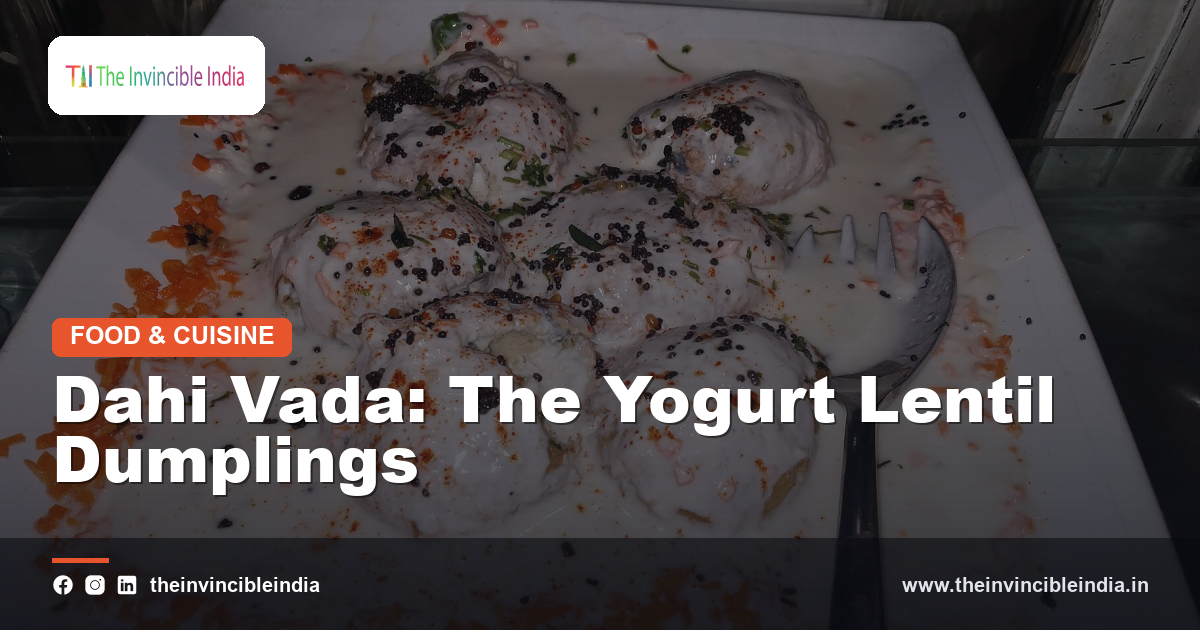
Dahi vada is one of India’s most loved cooling snacks, a plate of soft, spongy lentil dumplings soaked in creamy whipped yogurt and finished with sweet tamarind chutney, green chutney and a dusting of roasted spices. Found at festive tables, wedding buffets and busy street stalls alike, it balances the richness of fried vadas with the freshness of chilled curd. Like many dishes explored among the regional cuisines of India, it carries different names and small variations from one region to the next, yet its essential character remains unmistakable. This guide explores dahi vada, its ingredients, its regional forms and its lasting place in Indian food culture.
Quick Facts
| Detail | Information |
|---|---|
| Type | Cooling chaat-style snack |
| Main ingredients | Urad dal dumplings and yogurt |
| Also called | Dahi bhalla, thayir vadai, dahi bara |
| Served | Chilled, with chutneys and spices |
| Popular at | Festivals, weddings and street stalls |
| Character | Soft, tangy, creamy and mildly spiced |
What Is Dahi Vada
Dahi vada is a classic Indian snack made of deep-fried lentil dumplings that are softened and then served immersed in sweetened or lightly salted yogurt. The dish belongs to the broad family of chaat, the tangy, textured street foods that form such an important part of everyday eating across the subcontinent. What distinguishes it is the contrast between the warm, savoury character of the vada and the cool, creamy surface of the curd, balanced by sweet and sour chutneys and a scattering of spices. It is eaten as a snack, a starter or a light accompaniment to a larger meal. This combination of simple ingredients and layered flavours explains why dahi vada has remained a favourite in homes and eateries across India.
Origins and Culinary Background
The precise origins of dahi vada are difficult to trace, but the dish clearly grows out of two very old Indian food traditions, the preparation of fried lentil fritters and the widespread use of yogurt as both a food and a cooling accompaniment. Lentil vadas have been part of Indian cooking for many centuries, while curd has long been valued for its taste, its versatility and its association with comfort and freshness. Combining the two in a single dish was a natural step that cooks in many regions took independently. Over time the dish settled into festive menus and street food culture. Its rooted, widely shared ancestry helps account for the many regional versions found across the country today.
The Lentil Dumplings
The vada at the centre of the dish is traditionally made from urad dal, the split black gram, which is soaked, ground into a smooth batter and whipped so that it becomes light and airy. Some cooks add a little moong dal to alter the texture, and a few spices such as ginger, green chilli, cumin or black pepper may be mixed in for flavour. The quality of this batter largely determines the quality of the finished dish, because a well-aerated mixture yields vadas that stay tender even after soaking. Urad dal has a naturally sticky, elastic quality that holds the batter together without any additional binder. The humble lentil dumpling, built on careful grinding and beating, is therefore the foundation on which the whole preparation depends.
Frying the Vadas
Once the batter is ready, it is shaped into rounds, often with a wet hand or a damp cloth, and slipped into hot oil to fry until golden. The temperature of the oil matters, since oil that is too cool leads to greasy dumplings and oil that is too hot can brown the outside before the centre cooks through. Cooks usually aim for a steady, moderate heat that produces an evenly coloured surface and a fully cooked interior. Some vadas are given a small hole in the middle, a shape familiar from the medu vada of the south, though dahi vada is often formed as a simple round or flattened ball. Careful frying gives the dumplings the structure they need to absorb liquid without falling apart.
Soaking and Softening
A distinctive step in making dahi vada is the soaking of the fried dumplings before they meet the yogurt. They are commonly placed in lukewarm, lightly salted water for a short time until they swell and become soft, then gently pressed between the palms to remove the excess liquid. This process removes surplus oil, softens the interior and allows the vada to take up the flavours of the yogurt more readily. Done well, the result is a dumpling that feels almost sponge-like, yielding at the touch of a spoon. Done carelessly, it can leave the vadas either dense or soggy. This brief soaking stage, easily overlooked, is what gives dahi vada its signature melting softness.
The Yogurt Layer
The yogurt is as important as the vada, and it is usually whisked until smooth and creamy, with a little salt and sometimes a touch of sugar to soften its tang. Fresh, thick curd gives the best results, because watery or very sour yogurt can overpower the dumplings and make the dish thin. In some homes the curd is strained slightly, while in others a spoonful of milk is whisked in to reach a pouring consistency. The yogurt is spooned generously over the soaked vadas so that every piece is coated and partly submerged. This cool, smooth covering not only provides flavour but also gives the dish its refreshing character, making the yogurt layer an essential part of the whole.
Chutneys and Sweet-Sour Balance
Chutneys give dahi vada its lively, layered taste. A sweet-and-sour tamarind chutney, often made with jaggery or dates, adds depth and gentle sweetness, while a fresh green chutney of coriander, mint and green chilli supplies sharpness and herbal brightness. Drizzled over the yogurt, the two sauces create a pleasing contrast of colours as well as flavours. Every household and vendor adjusts the proportions to personal taste, favouring more sweetness in some places and more heat in others. The skill lies in keeping the sweet, sour, salty and spicy elements in harmony, so that none dominates the others. This careful balance of chutneys is a hallmark of good chaat generally and of dahi vada in particular.
Spices and Garnishes
The finishing touches transform a simple bowl of vadas in curd into a complete flavour experience. Roasted cumin powder, a pinch of red chilli powder, black salt and chaat masala are the most common seasonings, each lending its own warmth, smokiness or tang. Fresh coriander leaves, finely chopped, bring colour and freshness, and in many places pomegranate seeds, thin sev or crushed papdi are added for texture and visual appeal. Some cooks also top the dish with a tempering of mustard seeds and curry leaves, particularly in the south. These garnishes are applied at the last moment so that they remain vivid and crisp. The thoughtful use of spices and toppings lifts dahi vada from a plain snack to a richly textured, aromatic dish.
Dahi Bhalla in Delhi and Punjab
In Delhi and across Punjab and much of north India, the dish is more commonly called dahi bhalla, and it is a fixture of chaat stalls and festive spreads. The northern style often features larger, softer dumplings, generously covered in thick curd and finished with tamarind chutney, green chutney, roasted cumin and chaat masala. It frequently appears alongside other chaat items such as papdi chaat and aloo tikki in the lively food markets of the region. Winter and summer both have their devotees, though the cooling effect of the dish makes it especially welcome in warmer months. The dahi bhalla of the north, rich and generously dressed, remains perhaps the most widely recognised form of this much-loved snack.
Thayir Vadai and Southern Versions
South India has its own long tradition of curd-soaked vadas, known by names such as thayir vadai in Tamil and perugu vada or perugu garelu in Telugu. The base is often the familiar medu vada, with its crisp exterior and ring shape, which is soaked in thinned, salted yogurt flavoured with ginger, green chilli and curry leaves. A tempering of mustard seeds and sometimes asafoetida is poured over the top, giving the dish a distinctly southern aroma. It is commonly served at temple feasts, family meals and on festive days, usually without the sweet chutneys of the north. The southern thayir vadai demonstrates how the same basic idea can take on a different flavour profile entirely while keeping its cooling, comforting purpose.
Dahi Bara in Odisha
In Odisha the dish is known as dahi bara and is closely associated with the street food of cities such as Cuttack. It is traditionally served with a spiced potato curry, often called aloo dum, and the combination of soft vada, cool curd and warm gravy creates a layered and filling plate. Additional toppings may include chopped onion, fresh coriander and a sprinkling of spices. The thinner, lighter curd used in the eastern style gives the dish a slightly different consistency from its northern cousin. Eaten as a breakfast or an evening snack, it is a much-loved local speciality. Dahi bara shows once again how a widely shared idea can acquire a strong regional identity through local accompaniments and habits.
A Dish for Festivals and Gatherings
Dahi vada has long been associated with celebrations, and it features prominently in festive menus across many parts of India. It is a common sight at occasions such as Holi, Diwali and family weddings, where large platters are prepared in advance and served chilled to guests. Because the vadas can be fried ahead of time and assembled shortly before serving, the dish suits the practicalities of feeding large groups. It also fits naturally alongside other festival foods, offering a cooling counterpoint to richer, sweeter or spicier items. The presence of dahi vada on celebratory tables reflects its reputation as a comforting, generous and crowd-pleasing dish, closely tied to hospitality and togetherness.
A Cooling Food for Warm Weather
Yogurt has traditionally been regarded in Indian food culture as a cooling ingredient, and dahi vada draws on that association to become a popular choice during the hot months. Served chilled, it offers relief from heat while still delivering satisfying savoury flavour, and the spices commonly added, such as roasted cumin, are also traditionally valued for their digestive qualities. Many households prepare the dish in summer as an easy way to enjoy a substantial snack that does not feel heavy. Vendors often keep their curd in cool containers to maintain freshness throughout the day. This long-standing link between the dish and refreshment explains why dahi vada is so strongly associated with summer afternoons and festive warm-weather gatherings.
Nutritional Character
In general terms, dahi vada combines the protein of lentils with the dairy goodness of yogurt, and the curd is also valued for its live cultures, which are widely associated with digestive comfort. The dish is nevertheless a fried food, so its richness depends on how much oil the vadas absorb and how generously the toppings are applied. Many home cooks keep the dish lighter by draining the dumplings well after frying, pressing out the soaking water and using fresh, moderately thick yogurt. Some modern cooks also prepare baked or steamed versions for those who prefer a lighter option. Understood as a treat rather than an everyday staple, dahi vada offers a pleasing balance of nourishment and indulgence within a traditional diet.
Street Food and Chaat Culture
Dahi vada occupies an honoured place within India’s rich chaat culture, which celebrates the interplay of crisp, soft, sweet, sour and spicy elements in a single plate. Chaat vendors, known for their rapid, practised assembly, can dress a bowl of dahi vada in moments, ladling curd, spooning chutneys and shaking spices with remarkable speed. Customers often stand around the stall, eating from small leaf or paper bowls and enjoying the social atmosphere of the market. The dish appears alongside golgappa, papdi chaat and tikki at many such stalls. This lively street setting is where dahi vada is often experienced at its freshest, and it remains central to the character and charm of Indian street food.
Tips for Soft, Well-Made Vadas
Cooks who prepare dahi vada at home often share a handful of practical principles for success. A thorough soaking of the dal, a smooth grind with as little water as possible and a long, vigorous whipping of the batter all help create light, airy dumplings. Frying at a steady, moderate heat ensures a cooked centre and an evenly golden surface, while a gentle soak in lukewarm water softens the vadas without breaking them. The yogurt should be fresh and well whisked, and the garnishes should be added only at the last moment. Patience at each stage is rewarded with a dish that is tender, balanced and visually appealing. These simple habits, passed down through families, are the quiet secrets behind a good plate of dahi vada.
Dahi Vada Today
Dahi vada remains as popular today as it has ever been, served in restaurants, home kitchens, sweet shops and street stalls across India and in Indian communities around the world. Modern cooks have introduced creative variations, from different toppings to lighter cooking methods, while traditional recipes continue to be passed from one generation to the next. The dish also appears on the menus of festive caterers who rely on its familiar appeal and its suitability for large gatherings. Despite all these changes, its essence has stayed the same: soft lentil dumplings, cool yogurt and a lively mix of chutneys and spices. As a simple, refreshing and deeply loved dish, dahi vada continues to represent the generosity and creativity of Indian cooking.
Sources & Further Reading
- Ministry of Culture, Government of India (indiaculture.gov.in).
- Food Safety and Standards Authority of India (fssai.gov.in).
Frequently Asked Questions
What is dahi vada made of?
Dahi vada is made from fried dumplings of ground urad dal, sometimes mixed with a little moong dal, which are soaked and served in whisked yogurt. It is finished with sweet tamarind chutney, green chutney and spices such as roasted cumin and chaat masala.
What is the difference between dahi vada and dahi bhalla?
The two names refer to essentially the same dish. Dahi bhalla is the term more commonly used in Delhi, Punjab and other parts of north India, while dahi vada is the more general name used across many regions.
Why are the vadas soaked in water before adding yogurt?
A short soak in lukewarm, lightly salted water softens the fried dumplings and removes some surplus oil. After gentle pressing, the vadas absorb the yogurt more readily and become tender and sponge-like.
Is dahi vada served hot or cold?
It is usually served chilled or at cool room temperature, with the yogurt kept cold. The vadas themselves are prepared in advance, soaked and then assembled shortly before serving.
How does the southern version of dahi vada differ?
The southern thayir vadai or perugu vada typically uses thin, salted yogurt flavoured with ginger, green chilli and curry leaves, topped with a mustard seed tempering. It generally omits the sweet tamarind chutney found in the northern style.


