

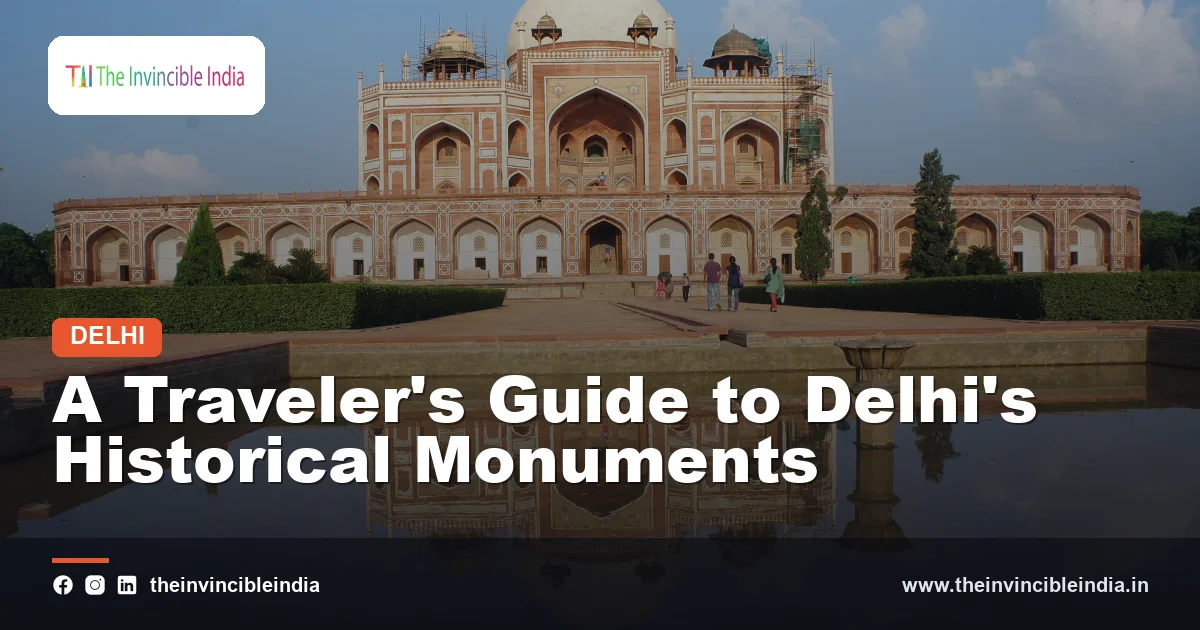
Delhi, India’s capital, is a living museum of history where ancient monuments stand alongside a modern metropolis. Ruled by successive dynasties and empires over more than a thousand years — from the Tomars and Chauhans to the Delhi Sultanate, the Mughals and the British — the city is layered with the remains of at least seven historic cities. It is home to three UNESCO World Heritage Sites and countless other landmarks. This detailed guide covers the essential historical monuments of Delhi.
The Seven Cities of Delhi
Delhi is often described as a city of cities, built and rebuilt at least seven times over the centuries. Each ruler left behind forts, tombs, mosques and stepwells, so that today ancient ruins sit beside colonial avenues and modern towers. Exploring Delhi’s monuments is like reading the history of India written in stone.
Quick Facts
| UNESCO sites | Red Fort, Qutub Minar, Humayun’s Tomb |
| Best time to visit | October to March |
| Getting around | Delhi Metro, cabs, auto-rickshaws |
Red Fort (Lal Qila)
A UNESCO World Heritage Site, this mighty red-sandstone fort was built by Emperor Shah Jahan and completed in 1648 as the palace of his new capital, Shahjahanabad. It served as the main residence of the Mughal emperors for nearly 200 years. Every year on Independence Day (15 August), the Prime Minister hoists the national flag and addresses the nation from its ramparts, making it a powerful symbol of Indian sovereignty.
Qutub Minar
A UNESCO World Heritage Site, this soaring victory tower stands about 73 metres tall, making it the tallest brick minaret in the world. Its construction was begun in 1199 by Qutb-ud-din Aibak and completed by his successors. The surrounding complex contains the Quwwat-ul-Islam Mosque and the famous Iron Pillar, over 1,600 years old, which has resisted rust for centuries — a marvel of ancient metallurgy.
Humayun’s Tomb
A UNESCO World Heritage Site built in the 1560s by Humayun’s widow, this magnificent garden tomb was the first grand Mughal mausoleum in India and a direct architectural precursor to the Taj Mahal. Set within a beautiful charbagh (four-part garden), its symmetry and red-sandstone-and-marble design are breathtaking.
India Gate
A 42-metre war memorial designed by Sir Edwin Lutyens and completed in 1931, India Gate honours the more than 70,000 Indian soldiers who died in the First World War. It stands majestically at the end of the ceremonial Kartavya Path (formerly Rajpath), surrounded by lawns that are popular with families in the evenings.
Jama Masjid
One of the largest mosques in India, built by Shah Jahan and completed in 1656, Jama Masjid has a vast courtyard that can hold around 25,000 worshippers. Climbing its minaret offers sweeping views over the bustling lanes of Old Delhi.
Purana Qila (Old Fort)
One of Delhi’s oldest forts, associated with the legendary city of Indraprastha from the Mahabharata, Purana Qila features massive gates and a serene lake, and hosts an evening sound-and-light show.
Lotus Temple
A modern architectural marvel completed in 1986, this Bahai House of Worship is shaped like a blooming lotus flower with 27 marble petals. Open to people of all faiths, it is a peaceful place for quiet reflection.
Akshardham Temple
A vast, intricately carved modern temple complex opened in 2005 on the banks of the Yamuna, Akshardham showcases traditional Indian architecture, exhibitions, gardens and a spectacular evening water-and-light show.
Other Landmarks
Delhi’s wealth of monuments also includes the elegant Safdarjung Tomb, the astronomical instruments of Jantar Mantar, the historic stepwell of Agrasen ki Baoli, the colonial grandeur of Rashtrapati Bhavan and Connaught Place, and the moving memorials of Raj Ghat, dedicated to Mahatma Gandhi.
Best Time to Visit and Tips
October to March offers the most pleasant weather for exploring Delhi’s monuments on foot. The city is well served by the efficient Delhi Metro, which connects most major sites and helps you avoid traffic. Start early to beat the crowds and heat, carry water, dress modestly for religious sites, and consider combining nearby monuments into a single day’s itinerary.
Old Delhi and New Delhi
To understand Delhi’s monuments, it helps to distinguish its two halves. Old Delhi, or Shahjahanabad, is the walled Mughal city built by Shah Jahan, a dense, atmospheric warren of lanes centred on the Red Fort, Jama Masjid and the bustling market of Chandni Chowk. New Delhi, by contrast, is the imperial capital designed by British architects Edwin Lutyens and Herbert Baker in the early 20th century, with wide, tree-lined avenues, grand government buildings and spacious roundabouts. Together they offer a fascinating study in contrasts, from the crowded, timeless charm of the old city to the ordered grandeur of the new.
More Monuments and Ruins
Delhi’s historical wealth extends far beyond the famous three. Tughlaqabad Fort, a massive 14th-century ruin, evokes the power of the Tughlaq dynasty. The serene Lodhi Gardens contain elegant tombs of the Sayyid and Lodhi rulers set among landscaped lawns, a favourite with joggers and picnickers. The medieval reservoir and ruins of Hauz Khas sit beside a trendy urban village of cafes and boutiques. The spiritual heart of the Nizamuddin area centres on the dargah of the Sufi saint Nizamuddin Auliya, where soul-stirring qawwali is sung on Thursday evenings, close to the tomb of the poet Amir Khusro and the exquisite Humayun’s Tomb complex.
Museums, Markets and Food
Delhi’s museums bring its history to life. The National Museum holds treasures spanning five thousand years, from Indus Valley artefacts to Mughal miniatures, while the National Rail Museum, the Crafts Museum and the poignant memorials at Raj Ghat are all worth visiting. For markets, Chandni Chowk is legendary for its wedding finery, spices at Khari Baoli (Asia’s largest spice market) and, above all, its food — from Karim’s near Jama Masjid to the parathas of Paranthe Wali Gali and the jalebis and chaat that draw food lovers from across the city. Modern shopping hubs include Connaught Place, Khan Market and Dilli Haat.
The Golden Triangle
Delhi forms one corner of India’s famous Golden Triangle tourist circuit, together with Agra and Jaipur. From Delhi, Agra — home of the Taj Mahal — is around three to four hours away by the Yamuna Expressway or a fast train, and the Pink City of Jaipur is a similar distance. Many visitors combine all three over four to six days to experience the finest of northern India’s Mughal and Rajput heritage, making Delhi the natural gateway for first-time travellers to India.
Getting Around and Best Time to Visit
Delhi is best explored between October and March, when the weather is pleasant, though the winter can bring cold mornings and occasional smog. The clean, efficient and extensive Delhi Metro is the fastest and most comfortable way to travel between monuments and neighbourhoods, avoiding the city’s notorious traffic. App-based cabs and auto-rickshaws fill the gaps. Start sightseeing early to beat both crowds and heat, dress modestly for religious sites, carry water, and consider grouping nearby monuments together to make the most of each day.
Sufi and Spiritual Delhi
Delhi has long been a centre of spirituality and religious diversity. The dargah of the Sufi saint Hazrat Nizamuddin Auliya draws people of all faiths, and the qawwali (devotional music) performed there on Thursday evenings is a deeply moving experience. Nearby lies the tomb of the great poet Amir Khusro. The city is also home to the serene Bangla Sahib Gurudwara with its sacred tank and vast community kitchen, the ancient Kalkaji and Chhatarpur temples, and churches, mosques and temples that together reflect Delhi’s pluralistic soul.
Delhi’s Food Scene
Delhi is one of India’s greatest food cities, and exploring its cuisine is essential to understanding it. Old Delhi is legendary for Mughlai food — kebabs, korma and biryani at institutions like Karim’s, the stuffed parathas of Paranthe Wali Gali, and rich sweets like jalebi and rabri. The chaat, golgappe and chole bhature found across the city are beloved street snacks. New Delhi offers everything from South Indian and regional Indian food to world cuisines, making the capital a paradise for food lovers of every taste and budget.
Gardens, Markets and Shopping
Delhi is surprisingly green, with beautiful gardens such as the Lodhi Gardens, the Mughal Gardens and the sprawling Deer Park offering peaceful retreats. For shopping, the capital caters to all tastes: the bustling lanes of Chandni Chowk and Sarojini Nagar for bargains, Dilli Haat for handicrafts and regional food, Khan Market and Connaught Place for books and brands, and the emporiums along Baba Kharak Singh Marg for state handicrafts and textiles from across India.
Museums of Delhi
To go deeper into India’s history, Delhi’s museums are unmatched. The National Museum houses a superb collection spanning the Indus Valley Civilisation, Gupta and Chola bronzes, Mughal miniatures and more. The National Gallery of Modern Art showcases Indian art, while specialist museums cover crafts, railways, and the lives of national leaders. Together they provide context that brings the city’s monuments and India’s long story vividly to life.
A Suggested Delhi Itinerary
To make the most of a short visit, a focused itinerary helps. Day one can cover Old Delhi — the Red Fort, Jama Masjid, a rickshaw ride through Chandni Chowk and Raj Ghat. Day two can explore New Delhi and the south — Humayun’s Tomb, the Qutub Minar complex, India Gate and the Lotus Temple. A third day allows for Akshardham, museums, gardens and shopping. Using the metro between areas keeps the pace comfortable and avoids traffic.
When to Visit and Staying Safe
The best months are October to March, though December and January can be foggy and cold, and air quality dips after the autumn. Summers are extremely hot. Delhi is generally straightforward for visitors who take normal precautions: use trusted transport, keep valuables secure in crowds, agree fares in advance, and stay hydrated. With a little planning, the capital’s incredible wealth of history is easy and rewarding to explore.
Colonial and Modern Landmarks
Alongside its Mughal and medieval heritage, Delhi is defined by the grand imperial capital built by the British in the early 20th century. The stately Rashtrapati Bhavan (the President’s residence), the circular Parliament House, the sweeping Kartavya Path and the classical facades of North and South Block form one of the world’s great planned government precincts, designed by Lutyens and Baker. The colonnaded circles of Connaught Place remain a bustling commercial and social hub. These landmarks, together with modern additions like the Akshardham complex and gleaming metro stations, show how Delhi continually reinvents itself while honouring its layered past.
Delhi Through the Festivals
Delhi’s monuments and neighbourhoods take on special life during festivals. Diwali sees homes, markets and India Gate glow with lights; Republic Day on 26 January brings a spectacular parade down Kartavya Path; and cultural festivals fill the city’s heritage venues with music and dance through the cooler months. Visiting during a major festival offers a vivid, joyful glimpse of the capital’s living traditions set against its historic backdrop.
Frequently Asked Questions
How many UNESCO World Heritage Sites are in Delhi?
Delhi has three: the Red Fort, Qutub Minar and Humayun’s Tomb.
How tall is the Qutub Minar?
The Qutub Minar is about 73 metres tall, the tallest brick minaret in the world.
Who built the Red Fort?
The Red Fort was built by the Mughal emperor Shah Jahan and completed in 1648.
Why is Humayun’s Tomb important?
It was the first grand Mughal garden tomb in India and inspired the design of the Taj Mahal.
When is the best time to visit Delhi?
October to March offers the most pleasant weather for sightseeing.


