


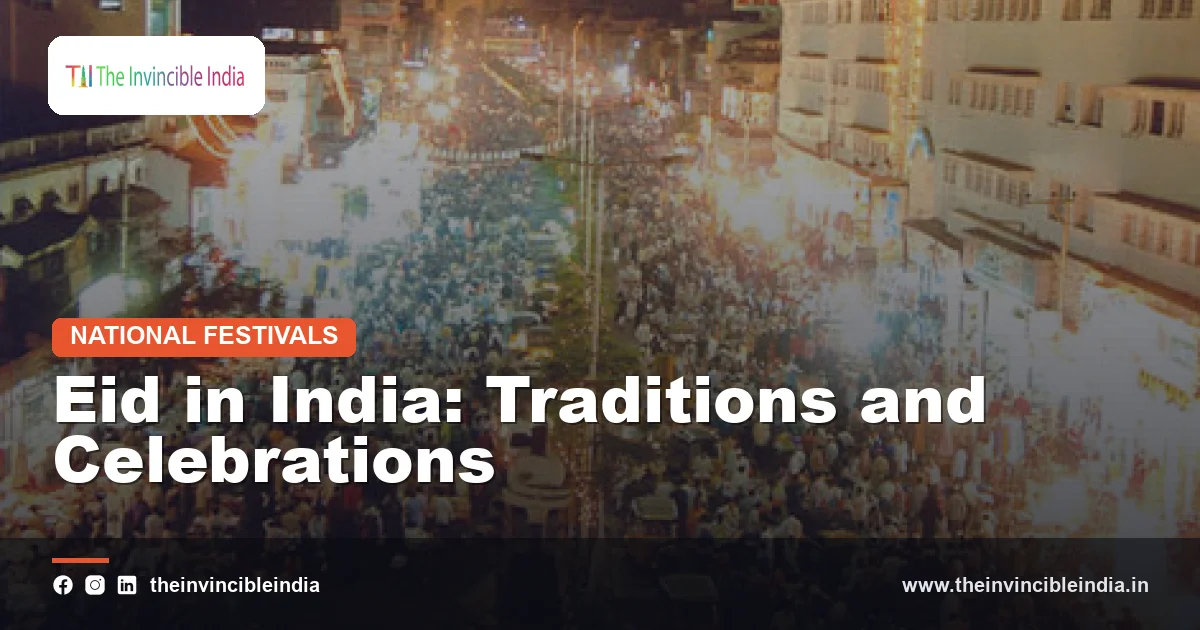
Eid is among the most joyous and widely celebrated festivals in India, observed with great devotion and warmth by the country’s large Muslim community and shared in the spirit of togetherness by people of all faiths. India actually celebrates two major Eids, Eid al-Fitr, marking the end of the holy month of Ramadan, and Eid al-Adha, the festival of sacrifice. Marked by prayer, feasting, charity and the coming together of families and communities, Eid reflects the rich tradition of India’s composite culture. This guide explores the meaning and vibrant celebrations of Eid across India.
Quick Facts: Eid in India
| Detail | Information |
|---|---|
| Two festivals | Eid al-Fitr and Eid al-Adha |
| Eid al-Fitr | Marks the end of Ramadan fasting |
| Eid al-Adha | The festival of sacrifice (Bakrid) |
| Key values | Prayer, charity, family, community |
| Signature dish | Sheer khurma and biryani |
| Greeting | “Eid Mubarak” |
Eid al-Fitr: The Festival of Breaking the Fast
Eid al-Fitr marks the end of Ramadan, the holy month during which Muslims fast from dawn to sunset, dedicating themselves to prayer, reflection and self-discipline. The festival begins with the sighting of the new moon and is a joyous celebration of the successful completion of the fast. On the morning of Eid, people dress in their finest clothes and gather in large numbers at mosques and open grounds for special congregational prayers. Before the prayer, it is obligatory to give a charitable donation known as Zakat al-Fitr, ensuring that even the less fortunate can partake in the festivities.
Eid al-Adha: The Festival of Sacrifice
Eid al-Adha, popularly known in India as Bakrid, commemorates the willingness of the Prophet Ibrahim to sacrifice his son in obedience to God, who then provided a ram in the son’s place. The festival, which falls about two months after Eid al-Fitr and coincides with the Hajj pilgrimage, is marked by prayers and the ritual sacrifice of an animal, the meat of which is traditionally shared in three parts, among family, friends and neighbours, and importantly, the poor. This emphasis on sharing and charity lies at the heart of the celebration.
Feasting and Traditions
Food is central to the celebration of Eid, and Indian Muslim cuisine offers a magnificent array of festive dishes. The most iconic is sheer khurma, a rich vermicelli and milk pudding flavoured with dates, nuts and saffron, prepared in nearly every home on Eid al-Fitr. Biryani, kebabs, haleem, korma and a variety of sweets grace the festive table. Homes are cleaned and decorated, new clothes are worn, and elders give gifts and money, known as Eidi, to children. Visiting relatives and friends, exchanging the greeting “Eid Mubarak”, and sharing meals strengthen the bonds of family and community.
Eid and India’s Composite Culture
Eid in India is a beautiful reflection of the country’s pluralistic and composite culture. In cities and towns across the nation, from the historic lanes of Old Delhi and Hyderabad to Lucknow and Mumbai, markets come alive in the run-up to Eid, glowing with lights, and food streets overflow with festive delicacies. People of all faiths join in the celebrations, visiting their Muslim friends and sharing in the feasts, embodying the spirit of unity and brotherhood. This shared joy makes Eid not just a religious festival but a celebration of India’s diversity and harmony.
The Holy Month of Ramadan
Eid al-Fitr is inseparable from the holy month of Ramadan that precedes it. During Ramadan, the ninth month of the Islamic lunar calendar, Muslims observe a fast from dawn until sunset, abstaining from food and drink, and dedicate themselves to increased prayer, reflection, charity and self-discipline. The fast is broken each evening with a meal called iftar, often beginning with dates and water, and a pre-dawn meal called suhoor sustains the faithful through the day. This month of spiritual devotion, self-restraint and heightened generosity culminates in the joyous celebration of Eid al-Fitr, which is both a reward for the discipline of the fast and an expression of gratitude to God.
The Importance of Charity
Charity lies at the very heart of both Eids, reflecting one of the central values of Islam. Before the Eid al-Fitr prayer, every able Muslim is required to give Zakat al-Fitr, a donation of food or its monetary equivalent, so that the poor may also enjoy the festival. During Eid al-Adha, the meat of the sacrificed animal is shared generously, with a significant portion going to those in need. This deep emphasis on giving ensures that Eid is a festival of the whole community, in which no one is left out, and it embodies the spirit of compassion, generosity and social responsibility that the celebrations are meant to inspire.
Eid in India’s Great Cities
Eid transforms the historic Muslim quarters of India’s great cities into scenes of remarkable colour and festivity. In Old Delhi, the area around the magnificent Jama Masjid, one of the largest mosques in India, fills with worshippers and the streets overflow with festive food, from kebabs and biryani to sweets. Hyderabad is famous for its haleem during Ramadan and its grand Eid celebrations, while Lucknow, with its refined Nawabi heritage, Mumbai, and the cities of Kashmir and Kerala each celebrate with their own distinctive customs and cuisines. The markets glowing with lights, the aroma of festive cooking, and the crowds in their finest clothes create an unforgettable atmosphere.
The Cuisine of Eid
Food is one of the great joys of Eid, and Indian Muslim cuisine, with its rich Mughlai heritage, offers a magnificent spread for the occasion. The undisputed star of Eid al-Fitr is sheer khurma, a luxurious pudding of fine vermicelli cooked in milk with dates, raisins, almonds, pistachios and saffron, served to family and guests throughout the day. The festive table also features aromatic biryanis, succulent kebabs and koftas, rich mutton and chicken korma, nihari, and a variety of sweets and desserts. The preparation and sharing of these lavish dishes, often over several days of visiting and hosting, are central to the warmth and hospitality of the celebrations.
Eid as a Celebration of Unity
Perhaps the most beautiful aspect of Eid in India is the way it embodies the country’s tradition of unity in diversity. Eid is not celebrated in isolation but is shared across communities, with friends, neighbours and colleagues of all faiths joining in to exchange greetings, visit homes and share in the feasts. This spirit of togetherness reflects the composite culture that has flourished in India for centuries, where festivals become occasions for building bonds across religious lines. In its emphasis on prayer, charity, family and community, and in its joyful, inclusive celebrations, Eid stands as a cherished expression of both faith and the harmonious, pluralistic spirit of India.
The Traditions of Eid al-Fitr
The day of Eid al-Fitr follows a cherished sequence of traditions. It begins with a ritual bath and the wearing of new or one’s finest clothes, followed by the special Eid prayer offered in congregation at mosques or large open grounds, where thousands gather in unity. It is customary to eat something sweet, such as dates or sheer khurma, before the prayer, marking the end of the fasting period. After the prayers, people embrace one another with the greeting “Eid Mubarak”, visit the homes of family and friends, and children receive Eidi, gifts of money or presents from their elders. The day is filled with feasting, hospitality, and the warmth of reunion, as families come together to celebrate the successful completion of Ramadan.
The Sighting of the Moon
A distinctive and important aspect of Eid is that its date depends on the sighting of the new crescent moon, as the Islamic calendar is lunar. The end of Ramadan and the arrival of Eid al-Fitr are confirmed only when the new moon is sighted, which is why the exact date can vary and is eagerly anticipated. The evening before Eid, known as Chaand Raat (the night of the moon), is a time of great excitement and festivity, when people throng the markets to shop for clothes, sweets, gifts and, for women, bangles and henna (mehndi). This charming tradition of moon-sighting and the joyous Chaand Raat that follows add to the anticipation and communal spirit of the celebration.
The Enduring Spirit of Eid
Eid endures as one of India’s most beloved and meaningful festivals because it beautifully combines devotion, gratitude, charity and joy. Beyond the feasting and festivities, it carries a profound message of self-discipline learned through fasting, of compassion expressed through giving to the needy, and of unity fostered through prayer and the coming together of communities. In the Indian context, its celebration across religious lines, with people of all faiths sharing in the greetings and the feasts, makes Eid a cherished symbol of the country’s pluralistic culture and spirit of brotherhood. It is a festival that nourishes both the soul and the bonds of family, community and nation.
Eid al-Adha and the Spirit of Sacrifice
Eid al-Adha, known in India as Bakrid, carries a profound spiritual message centred on faith, obedience and sacrifice. It commemorates the devotion of the Prophet Ibrahim, who was willing to sacrifice what was most precious to him in submission to God’s will, only for God to spare his son and provide a ram instead. The festival, which coincides with the culmination of the Hajj pilgrimage to Mecca, is marked by prayers and the ritual sacrifice of an animal, whose meat is shared among family, friends and, importantly, the poor and needy. This act symbolises the willingness to give up something valuable for a higher purpose and reinforces the values of generosity, humility and care for the less fortunate that lie at the heart of the celebration.
Eid Greetings and Family Gatherings
The warmth of Eid is best expressed in the greetings and gatherings that fill the day. The heartfelt exchange of “Eid Mubarak”, accompanied by embraces, sets the tone of joy and goodwill, while homes open their doors to a steady stream of relatives, friends and neighbours. Elders bless the young and give Eidi, children delight in new clothes and gifts, and tables overflow with festive delicacies shared generously with all who visit. These gatherings, filled with laughter, hospitality and affection, renew the bonds of family and friendship and embody the true spirit of Eid, a celebration of gratitude, togetherness and shared happiness.
Frequently Asked Questions
What are the two Eids celebrated in India?
India celebrates Eid al-Fitr, which marks the end of the holy month of Ramadan, and Eid al-Adha (Bakrid), the festival of sacrifice, which coincides with the Hajj pilgrimage.
What is the significance of Eid al-Fitr?
Eid al-Fitr celebrates the successful completion of the month-long Ramadan fast, and is marked by special prayers, charity, feasting and the coming together of families and communities.
What food is associated with Eid in India?
The most iconic Eid dish is sheer khurma, a sweet vermicelli and milk pudding, along with biryani, kebabs, haleem and various sweets that grace the festive table.
What does “Eid Mubarak” mean?
“Eid Mubarak” is the traditional Eid greeting, meaning “Blessed Eid” or “Happy Eid”, exchanged warmly among family, friends and neighbours during the celebrations.