

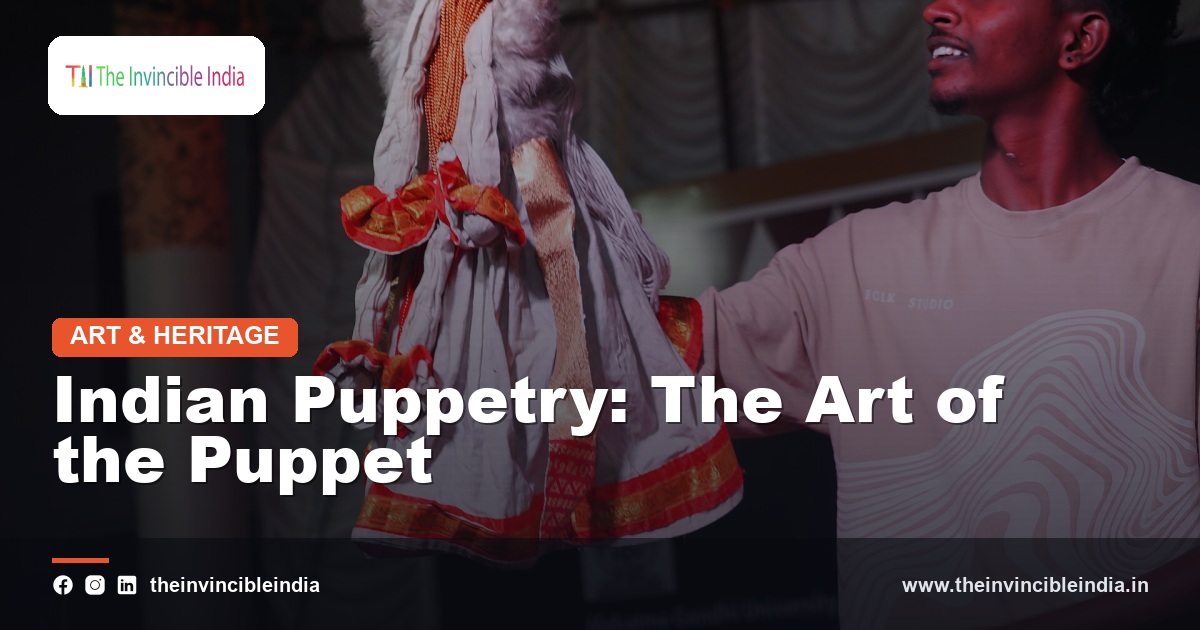
Indian puppetry is one of the most ancient and beloved of the country’s folk arts, a rich and delightful tradition in which puppets are brought to life to tell stories from mythology, legend, history and folklore. Practised across India in a wonderful variety of regional forms, it embraces string puppets, shadow puppets, rod puppets and glove puppets, each with its own techniques and traditions, and it combines the arts of the puppet-maker, the performer, the musician and the storyteller. A folk art of great charm, colour and skill, and a vehicle for storytelling and entertainment, Indian puppetry is a cherished part of the country’s cultural heritage. This guide explores the ancient art of Indian puppetry, its types, its storytelling and its regional traditions, one of the most delightful of India’s folk arts.
Quick Facts
| Detail | Information |
|---|---|
| Type | The folk art of the puppet |
| Antiquity | An ancient tradition of India |
| Main types | String, shadow, rod and glove puppets |
| Famous form | The Kathputli string puppets of Rajasthan |
| Purpose | Storytelling and entertainment |
| Themes | Mythology, legend, history and folklore |
An Ancient Folk Art
Indian puppetry is one of the most ancient and beloved of the country’s folk arts, a rich and delightful tradition of bringing puppets to life to tell stories and entertain. Practised across India for many centuries in a wonderful variety of regional forms, puppetry combines the arts of the puppet-maker, the performer, the musician and the storyteller, and it has long been a beloved form of entertainment and a vehicle for the telling of the great stories of mythology, legend and folklore. As an ancient and beloved folk art, delightful in its charm, colour and skill, Indian puppetry holds a cherished place among the folk arts of India and is a wonderful expression of the country’s tradition of storytelling and performance.
The Art of the Puppet
Puppetry is the art of bringing to life figures, or puppets, which are manipulated by a performer to move, act and tell a story, creating the illusion of living characters. The puppeteer, often hidden or in the background, gives the puppets movement, voice and life, and, together with music and narration, brings to life whole stories and dramas through the little figures. This art combines craftsmanship, skill and storytelling. This art of the puppet, in which figures are brought to life by a skilled performer to move, act and tell a story, is the essence of puppetry, and the skill of the puppeteer in giving the puppets movement, character and life is central to this delightful folk art.
A Vehicle for Storytelling
Indian puppetry has above all been a vehicle for storytelling, a beloved means of telling the great stories of mythology, legend, history and folklore to audiences across the land. Through the puppets, the performers brought to life the tales of the gods and heroes, the epics, the deeds of legendary figures, and the stories of folklore, entertaining and instructing audiences, especially in the villages, and keeping the great stories alive. This role in storytelling is central to the tradition. This role of Indian puppetry as a vehicle for storytelling, bringing to life the great tales of mythology, legend and folklore, is central to the tradition, and puppetry has long been a beloved means of telling and preserving the great stories of India for audiences across the land.
The String Puppets
Among the most famous and beloved forms of Indian puppetry are the string puppets, or marionettes, which are manipulated by strings from above, above all the Kathputli of Rajasthan. These string puppets, beautifully made and colourfully dressed, are brought to life by the puppeteer pulling their strings, and they perform with lively movement, telling stories of legendary heroes and folklore to the accompaniment of music and narration. The Kathputli of Rajasthan is the most famous string puppet tradition. These string puppets, manipulated by strings from above, above all the famous and beloved Kathputli of Rajasthan, are among the most famous forms of Indian puppetry, delightful in their colour, movement and charm, and a beloved vehicle for the telling of stories of heroes and folklore.
The Kathputli of Rajasthan
The most famous string puppet tradition of India is the Kathputli of Rajasthan, colourful wooden puppets that are a beloved emblem of the folk culture of the region. The Kathputli puppets, carved from wood and dressed in bright, traditional Rajasthani costumes, are manipulated by strings to perform lively shows, telling stories of legendary Rajasthani heroes and folklore, accompanied by music and narration. The Kathputli is a cherished and famous folk art of Rajasthan. This Kathputli tradition of Rajasthan, the famous and colourful wooden string puppets that are a beloved emblem of the region’s folk culture, is the most famous string puppet tradition of India and a delightful and cherished folk art, bringing to life the stories of Rajasthani heroes and folklore.
The Shadow Puppets
Another ancient and beautiful form of Indian puppetry is the shadow puppet theatre, in which flat puppets are held against a lit screen to cast shadows that tell a story. In this form, the puppets, often made of leather and intricately cut, are manipulated behind a translucent screen lit from behind, so that their shadows appear to the audience, bringing to life stories from the epics and mythology in a magical play of light and shadow. Shadow puppetry is a treasured tradition, especially in the south. This shadow puppet theatre, in which flat, intricately cut puppets cast their shadows on a lit screen to tell stories from the epics and mythology, is an ancient and beautiful form of Indian puppetry, treasured especially in the south, and a magical and enchanting folk art.
The Rod Puppets
Indian puppetry also includes the tradition of rod puppets, larger figures manipulated from below by rods, which are used to perform stories and dramas. These rod puppets, often larger than string puppets and controlled by rods held by the puppeteer, are used in the puppet traditions of certain regions, especially the east, to enact stories from mythology and legend with lively movement. The rod puppets are an important form of the art. These rod puppets, larger figures manipulated from below by rods and used to perform stories and dramas, are an important form of Indian puppetry, especially in the traditions of the east, and a delightful vehicle for the enactment of the great stories of mythology and legend.
The Glove Puppets
Another form of Indian puppetry is the glove puppet, worn on the hand of the puppeteer, who brings the figure to life through the movements of the hand and fingers. These glove puppets, fitted over the hand like a glove, are used in the puppet traditions of certain regions to perform lively and often humorous shows, telling stories and entertaining audiences. The glove puppets are a charming form of the art. These glove puppets, worn on the hand and brought to life through the movements of the fingers, are a charming form of Indian puppetry, used in the traditions of certain regions to perform lively and entertaining shows, and a delightful part of the country’s rich variety of puppet arts.
Music and Narration
Indian puppetry is inseparable from music and narration, which accompany the movement of the puppets and bring the stories to life. The puppet shows are performed to the accompaniment of music, songs and the narration or dialogue of the puppeteer, who gives voice to the characters and tells the story, so that the performance is a rich combination of visual, musical and verbal art. This music and narration are central to the tradition. This music and narration, which accompany the movement of the puppets and bring the stories to life, are central to Indian puppetry, and the rich combination of the visual art of the puppets with music, song and the storytelling of the puppeteer is what makes the puppet show a complete and delightful performance.
The Making of the Puppets
The creation of the puppets is a skilled craft, and the beautiful puppets of India, made from wood, leather, cloth and other materials, are works of art in themselves. The puppet-makers carve, shape, paint and dress the puppets with great skill, creating colourful and characterful figures, whether the wooden string puppets, the intricately cut leather shadow puppets, or the other forms, and the making of the puppets is an important part of the tradition. The beautiful puppets are a delight in themselves. This making of the puppets, a skilled craft producing beautiful and characterful figures from wood, leather, cloth and other materials, is an important part of Indian puppetry, and the colourful and finely made puppets are works of folk art in themselves, delightful to behold even apart from the performance.
Regional Traditions
Indian puppetry is practised across the country in a wonderful variety of regional traditions, each with its own types of puppets, styles and stories, reflecting the diversity of the country. Different regions are famous for particular forms of puppetry, from the string puppets of the north-west to the shadow puppets and rod puppets of the south and east, each with its own distinctive puppets, techniques, music and repertoire. This regional diversity enriches the tradition. This rich diversity of regional traditions of Indian puppetry, in which each region has its own types of puppets, styles and stories, enriches the art and reflects the wonderful variety of the country’s folk culture, so that puppetry takes many delightful forms across the land.
A Folk Entertainment
Indian puppetry has long been a beloved folk entertainment, especially in the villages, bringing colour, story, music and delight to audiences across the land. Before the age of modern media, the puppet show was a cherished form of entertainment, awaited with delight by village audiences, who gathered to enjoy the lively shows, the beautiful puppets, the music and the great stories. This role as a beloved folk entertainment is central to the tradition. This role of Indian puppetry as a beloved folk entertainment, bringing colour, story and delight to audiences especially in the villages, is central to the tradition, and the puppet show has long been a cherished source of joy and storytelling in the folk culture of India.
A Craft in Need of Support
Like many traditional folk arts, Indian puppetry has faced challenges in modern times, especially from new forms of entertainment, and efforts are made to preserve and support this ancient tradition. The competition of modern media and changing times has made it harder for the traditional puppeteers, and efforts by cultural organisations, festivals and supporters seek to preserve the art, support the puppeteers, and keep the tradition alive for new generations. The preservation of this ancient folk art is an important task. This character of Indian puppetry as a craft in need of support, facing the challenges of modern times, has made its preservation an important task, and efforts to sustain the art, support the puppeteers and keep the tradition alive are important for the survival of this ancient and delightful folk art.
Indian Puppetry Today
Today Indian puppetry continues as a cherished, if challenged, folk art, kept alive by traditional puppeteers and supported by cultural organisations and festivals, and still delighting audiences with its colour, story and charm. The famous Kathputli of Rajasthan, the shadow puppets, the rod and glove puppets, and the other regional traditions continue to be performed, and efforts to preserve and promote the art help to keep it alive and to introduce it to new audiences. The delightful puppets and their stories continue to charm. As an ancient and beloved folk art of storytelling and entertainment, delightful in its colour, skill and charm, Indian puppetry endures as a cherished part of the country’s rich folk cultural heritage.
Sources & Further Reading
- Sangeet Natak Akademi, national academy for the performing arts, on the puppet traditions of India (sangeetnatak.gov.in).
- Ministry of Culture, Government of India, on the folk arts of India (indiaculture.gov.in).
Frequently Asked Questions
What is Indian puppetry?
Indian puppetry is an ancient and beloved folk art in which puppets are brought to life to tell stories from mythology, legend, history and folklore. Practised across India in many regional forms, it embraces string, shadow, rod and glove puppets, combined with music and narration.
What are the main types of Indian puppets?
The main types of Indian puppets are string puppets, or marionettes, manipulated by strings from above; shadow puppets, whose shadows are cast on a lit screen; rod puppets, manipulated from below by rods; and glove puppets, worn on the hand of the puppeteer.
What is Kathputli?
Kathputli is the famous string puppet tradition of Rajasthan, colourful wooden puppets dressed in bright traditional costumes and manipulated by strings to perform lively shows telling stories of legendary heroes and folklore. It is a beloved emblem of Rajasthani folk culture.
What are shadow puppets?
Shadow puppets are flat, often intricately cut leather figures held against a translucent screen lit from behind, so that their shadows appear to the audience. This ancient and beautiful form of puppetry, treasured especially in the south, tells stories from the epics and mythology.
What stories does Indian puppetry tell?
Indian puppetry tells the great stories of mythology, legend, history and folklore, bringing to life the tales of the gods and heroes, the epics, the deeds of legendary figures, and folk stories, entertaining and instructing audiences and keeping the great stories alive.


