

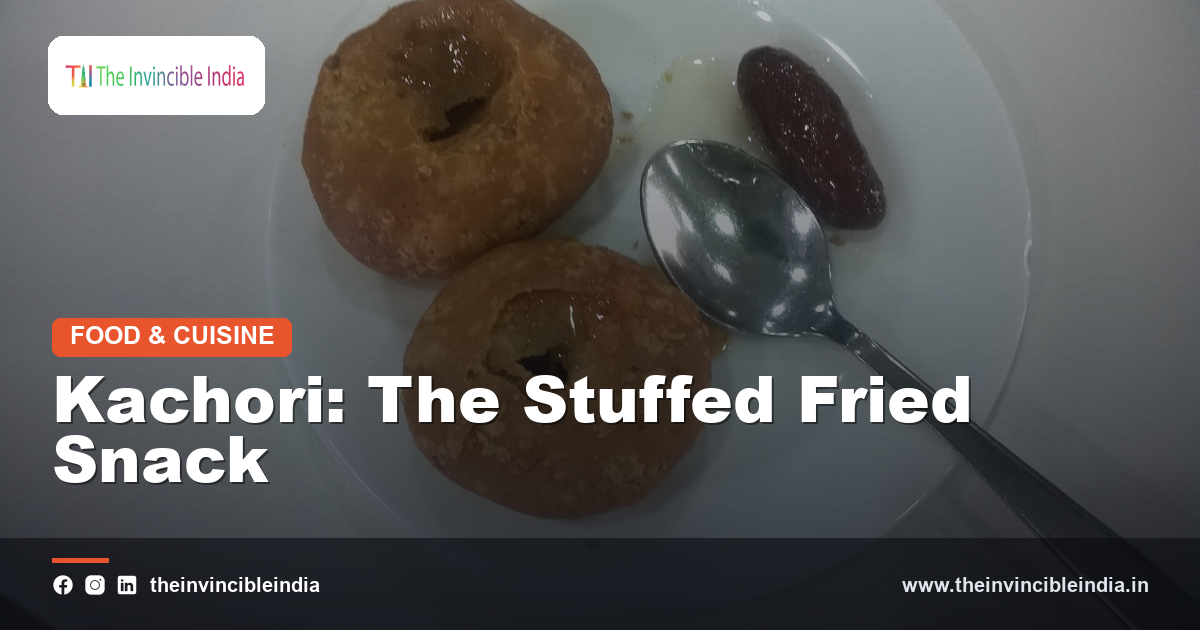
Kachori is a flaky, deep-fried pastry stuffed with a spiced filling of lentils, onion or other savoury mixtures, a dish beloved across North and Central India for its crisp shell and richly flavoured centre. Prepared in countless regional forms, from the simple dal kachori of Rajasthan to the elaborately loaded raj kachori topped with yoghurt and chutneys, it appears at breakfast tables, festive gatherings and street stalls alike. Much as chaat culture across India’s regional cuisines celebrates bold, layered flavour, kachori exemplifies that same spirit in pastry form. This guide explores kachori, its preparation, its regional character and its enduring place in India’s culinary heritage.
Quick Facts
| Detail | Information |
|---|---|
| Type | A deep-fried, stuffed savoury pastry |
| Main ingredients | Refined or whole wheat dough, lentils or onion filling |
| Region | Widespread across North and Central India |
| Famous styles | Pyaaz kachori, dal kachori and raj kachori |
| Usually served with | Spiced potato curry, chutney or yoghurt |
| Occasion | Breakfast, festivals and street food snacking |
What Is Kachori
Kachori is a round, deep-fried pastry made from a stiff dough that encases a spiced filling, most commonly of lentils or onion, before being fried slowly until the crust turns crisp, flaky and golden brown. Unlike thinner fried snacks, kachori is prepared with a relatively thick shell that puffs during frying, creating a hollow, airy texture around the flavourful stuffing inside. It is typically eaten with a savoury curry or a tangy chutney rather than on its own. As a stuffed, deep-fried pastry of this particular character, kachori occupies a distinctive place among India’s many beloved fried snacks.
Origins and Regional Roots
Kachori has deep roots across North and Central India, particularly in Rajasthan, Uttar Pradesh and Madhya Pradesh, regions where wheat forms the staple grain and deep-frying is a well-established cooking technique for festive and everyday snacks alike. Its development reflects the broader culinary traditions of these areas, where stuffed breads and pastries are common and lentils feature prominently in savoury fillings. Over time, distinct regional styles emerged, each associated with particular towns or communities. This grounding in the wheat-based, lentil-rich culinary traditions of North and Central India explains kachori’s widespread popularity across the region.
The Dough and Its Preparation
Kachori dough is typically made from refined or whole wheat flour combined with a small amount of fat, often ghee, worked in to create a short, slightly flaky texture once fried. The dough is kept relatively stiff, allowing it to hold the stuffing securely and puff properly during cooking rather than collapsing. Resting the dough before shaping is considered important for achieving the right texture. This careful preparation of the dough, balancing stiffness with a touch of richness, lays the essential foundation for a successful kachori.
Dal Kachori and Lentil Fillings
Dal kachori, filled with a spiced mixture of ground moong or urad dal seasoned with fennel, coriander seed and chilli, is one of the most traditional and widely eaten versions of the dish, particularly associated with Rajasthan. The lentil filling is cooked and dried before stuffing to prevent excess moisture from making the pastry soggy during frying. Its flavour is often more subtly spiced than other fillings, allowing the lentil itself to come through. This dal kachori, with its fragrant, well-spiced lentil centre, remains one of the most classic and enduring versions of the snack.
Pyaaz Kachori, the Onion Version
Pyaaz kachori, stuffed with a spiced onion filling rather than lentils, is especially popular in Rajasthan and parts of Uttar Pradesh, prized for its slightly sweet, caramelised onion centre balanced against a generous hit of chilli and spice. The onion is typically cooked down before stuffing to reduce moisture and concentrate its flavour. This version is often considered richer and more indulgent than the plainer dal kachori. This distinct pyaaz kachori, with its sweet and spicy onion filling, has become one of the most sought-after versions of the snack in its home regions.
Raj Kachori and Its Elaborate Presentation
Raj kachori represents a far more elaborate presentation of the dish, in which a large, hollow, crisp kachori shell is filled with a colourful mixture of boiled potato, chickpeas, yoghurt, tamarind chutney, mint chutney and various crunchy toppings, transforming a simple pastry into a full chaat-style dish. Its name, suggesting royal or grand status, reflects the richness and complexity of its presentation compared with simpler kachori styles. It is typically eaten immediately after assembly to preserve its crunch. This elaborate raj kachori, layering flavour and texture atop a single fried shell, stands as one of the most celebrated forms the dish takes.
Khasta Kachori and Its Flaky Texture
Khasta kachori, meaning crisp or flaky kachori, refers to a preparation style in which the dough is worked to produce an especially crumbly, layered texture that shatters pleasingly when bitten into, a quality much prized by connoisseurs of the snack. Achieving this texture requires careful attention to the ratio of fat worked into the dough and a slow, patient frying process at moderate heat. This term is often used to describe particularly well-made kachori regardless of filling. This emphasis on khasta, or flaky, texture reflects the high value placed on textural perfection within the wider kachori tradition.
Kachori with Spiced Potato Curry
Kachori is frequently served with a tangy, lightly spiced potato curry, particularly for breakfast in cities such as Jaipur and Indore, where the combination is a well-established morning tradition. The curry’s thin, tomato- or yoghurt-based gravy soaks slightly into the kachori as it is broken apart, softening its edges while the centre retains some crispness. This pairing is often accompanied by a side of chutney for extra tang. This classic combination of kachori with spiced potato curry remains one of the most beloved breakfast pairings across North and Central India.
Kachori as a Festival Food
Kachori holds a special place during festivals and family celebrations across its home regions, prepared in larger batches for guests and often accompanied by sweets and other festive dishes. Its relatively long shelf life once fried makes it practical for gatherings where food is prepared in advance. Certain festivals in Rajasthan and neighbouring states see kachori stalls become especially busy, with vendors preparing large quantities to meet demand. This role as a festival food underscores kachori’s importance beyond the everyday, marking it as a dish suited to celebration and hospitality alike.
Regional Variations Across India
Kachori takes on distinct regional forms beyond Rajasthan and Uttar Pradesh, including versions found in Bihar, West Bengal and parts of Maharashtra, each adapting the basic stuffed-pastry concept with local fillings and accompaniments. Bengali kachori, for instance, is often paired with a spiced potato curry known locally by a different name, while other regions favour their own preferred lentil or vegetable stuffing. This adaptability allows kachori to remain recognisably itself while reflecting considerable local variation. This wide range of regional interpretations reflects how deeply kachori has been absorbed into diverse culinary traditions across the country.
Street Food and Kachori Vendors
Kachori is a fixture of Indian street food culture, sold hot from stalls that often specialise in little else, drawing loyal customers who return for a particular vendor’s preferred filling or accompanying curry. Many such stalls have operated for generations, with recipes and techniques passed down within families. The sight of kachori frying in large, shallow pans of oil is a familiar and evocative image in many North Indian markets. This prominent street food presence has helped kachori remain an accessible and beloved snack across income levels and generations.
Kachori in Restaurants and Modern Dining
Kachori has found its way onto restaurant and hotel menus well beyond its traditional street food setting, sometimes presented in refined form as part of a breakfast buffet or festive menu, occasionally alongside contemporary variations with unusual fillings. Its familiar flavour profile makes it an approachable dish for diners encountering North Indian cuisine for the first time. Some modern establishments experiment with baked versions to reduce oil content. This presence in both traditional street settings and modern dining spaces reflects kachori’s broad and lasting appeal.
Kachori and Chutneys
Chutneys play an important supporting role in the enjoyment of kachori, with tangy tamarind chutney and fresh mint or coriander chutney commonly served alongside to cut through the richness of the fried pastry and its filling. These chutneys, prepared fresh and adjusted to taste, allow diners to balance sweetness, tang and heat according to preference. Yoghurt is also sometimes offered as a cooling accompaniment. This close pairing with chutneys and other accompaniments enhances the overall experience of eating kachori, rounding out its flavour considerably.
Nutritional Character of Kachori
As a deep-fried, stuffed pastry, kachori is generally considered an indulgent, occasional food rather than an everyday staple, though its lentil-based fillings do contribute a meaningful amount of plant protein. Its richness makes it particularly suited to festive or leisurely weekend breakfasts rather than routine daily eating. Some home cooks prepare lighter, baked versions for more frequent consumption. This understanding of kachori as a special, indulgent treat rather than a routine dish reflects how it is generally regarded within Indian food culture.
Kachori Beyond India
Kachori has travelled well beyond India alongside migrating communities, appearing at Indian restaurants and sweet shops internationally, particularly in areas with significant populations from Rajasthan, Uttar Pradesh and neighbouring regions. Its sturdy, fried form makes it relatively easy to transport and serve outside a home kitchen setting compared with more delicate dishes. It often serves as an introduction to North Indian snack food for those less familiar with the cuisine. This international presence reflects the strong emotional and culinary attachment communities maintain to kachori as a taste of home.
Kachori and Household Traditions
Many families maintain their own closely guarded kachori recipes, passed down through generations and often reserved for special weekends or festive mornings when there is time for the unhurried preparation the dish demands. Grandmothers and mothers are frequently credited within households as the keepers of the correct filling proportions and dough technique, details rarely written down and instead learned through years of watching and helping in the kitchen. Children often grow up associating the aroma of frying kachori with festive mornings and family gatherings. This strong household tradition surrounding kachori preparation reflects how deeply the dish is woven into everyday family life across its home regions.
Kachori Today
Today kachori remains one of the most beloved stuffed snacks in Indian cuisine, prepared in homes, at street stalls and in restaurants across North and Central India in forms ranging from the humble dal kachori to the elaborately dressed raj kachori. Its continued popularity reflects a satisfying balance of crisp pastry, flavourful filling and versatile accompaniment that has changed little in essence over generations. Vendors and home cooks alike continue to guard their preferred recipes closely. As a flaky, stuffed fried snack of enduring appeal, kachori stands as a cherished part of India’s culinary heritage.
Sources & Further Reading
- Ministry of Tourism, Government of India, on the cuisines of India (tourism.gov.in).
- Culinary references on North and Central Indian snack food traditions.
Frequently Asked Questions
What is kachori made of?
Kachori is made from a stiff wheat dough stuffed with a spiced filling, typically of ground lentils or onion, and then deep-fried until the shell turns crisp, flaky and golden brown.
What is the difference between pyaaz kachori and dal kachori?
Pyaaz kachori is stuffed with a spiced onion filling, giving it a sweeter, richer character, while dal kachori is filled with spiced ground lentils, typically moong or urad dal, for a more subtly savoury flavour.
What is raj kachori?
Raj kachori is an elaborate version of the dish in which a large, hollow, crisp kachori shell is filled with potato, chickpeas, yoghurt and various chutneys, turning it into a full chaat-style dish.
What is kachori usually eaten with?
Kachori is usually eaten with a spiced potato curry, tamarind chutney or mint chutney, and sometimes yoghurt, all of which balance the richness of the fried pastry and its filling.
Is kachori vegetarian?
Yes, kachori is entirely vegetarian, made from wheat dough and fillings of lentils, onion or vegetables, and it is a common feature of vegetarian breakfast and festival food across North and Central India.


