

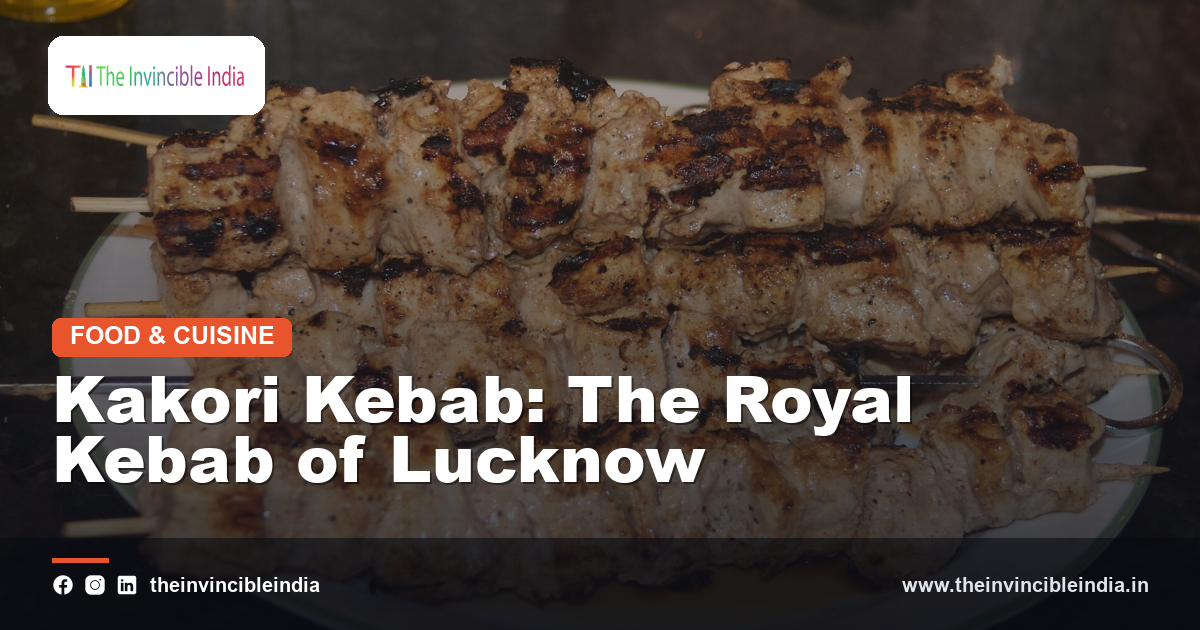
Kakori kebab is the silken, finely minced skewered kebab of the Awadh region, famed for a texture so soft that it is said to dissolve on the tongue. Associated above all with Lucknow and the town of Kakori nearby, it represents the pinnacle of the refined kebab-making tradition developed in the courts of the nawabs. Much as the wider regional cuisines of India reflect local history and patronage, this kebab reflects an era when cooks competed to create dishes of ever greater delicacy. This guide explores the kakori kebab, its origins, technique, flavours and place in India’s culinary heritage.
Quick Facts
| Detail | Information |
|---|---|
| Type | A skewered minced-meat kebab |
| Region | Lucknow and the Awadh region, Uttar Pradesh |
| Cuisine | Awadhi, shaped by the courts of the nawabs |
| Key ingredients | Finely minced meat, spices, ghee and a tenderising agent |
| Cooking method | Grilled on skewers over charcoal heat |
| Character | Silky, tender, aromatic and mildly spiced |
The Kebab of the Nawabs
Kakori kebab is the best-known expression of the kebab tradition of Awadh, the cultured region centred on Lucknow in present-day Uttar Pradesh. Its name comes from Kakori, a town close to the city, and it is closely linked to the cooks who worked for the nawabs and the households that imitated their tastes. Unlike a rough, coarsely textured kebab, it is made from meat ground to an almost paste-like smoothness and shaped on skewers to be cooked gently. The result is a kebab of remarkable softness and fragrance. As the signature of Awadhi grilling, the kakori kebab stands as a symbol of the region’s courtly love of refinement in food.
Awadh and Its Culinary Culture
The Awadh region developed one of the most refined food cultures in India, nurtured by rulers who treated cooking as an art and encouraged their kitchens to experiment. Its cuisine is known for slow cooking, subtle spicing, the generous use of ghee and a preference for aroma and texture over sheer heat. Kebabs, breads, biryanis and sweets all flourished under this patronage, and professional cooks passed their craft down through families. The kakori kebab belongs firmly to this milieu. Understanding the courtly food culture of Awadh therefore helps explain why this kebab values delicacy so highly, and why it remains an emblem of Lucknow’s gastronomic identity.
Legends of Its Creation
Like many celebrated dishes, the kakori kebab is surrounded by stories about how it came to be. One widely repeated tradition holds that a nawab, anxious to enjoy kebabs despite difficulty in chewing them, challenged his cooks to prepare something of extraordinary softness, and that the resulting dish became the foundation of Lucknow’s reputation for tender kebabs. Such accounts are part of local lore rather than documented history, and they vary from teller to teller. What they consistently convey is the central ambition behind the dish: a kebab that yields effortlessly. These legends, whatever their exact truth, capture the spirit of the kakori kebab as a creation of cooks striving for perfection.
The Role of Finely Minced Meat
Everything about the kakori kebab begins with the meat, which is traditionally chosen with care and ground repeatedly until it reaches a fine, smooth consistency. Cooks remove sinew and excess fat so that the mixture binds into a uniform, velvety paste rather than a coarse mince. This painstaking preparation is what allows the kebab to hold its shape on a skewer while remaining tender inside. Traditionally mutton is the meat most associated with the dish, though variations exist today. The fineness of the grind, which separates this kebab from its coarser relatives, remains the primary technical foundation of the kakori kebab and the first mark of a skilled kebab maker.
Tenderising with Raw Papaya
A hallmark of the kakori kebab is the use of a natural tenderiser, most commonly raw papaya paste, which has long been used in Indian kitchens to soften meat. The enzymes in the fruit break down tough fibres, helping the minced meat achieve its celebrated delicacy. Cooks balance the quantity carefully, since too much would leave the texture mushy and too little would fail to deliver the desired softness. This simple, ingenious use of a kitchen ingredient demonstrates the practical craft behind the dish. The thoughtful application of raw papaya as a tenderiser is among the quiet secrets that give the kakori kebab its signature melt-in-the-mouth quality.
Spices and Aromatics
The spicing of the kakori kebab is aromatic rather than fiery, in keeping with the Awadhi preference for fragrance and balance. Whole and ground spices such as cardamom, mace, nutmeg, black pepper and cloves are traditionally associated with the cuisine, along with ginger, garlic and fried onion, and ghee is used to lend richness. Many cooks guard their particular spice blends closely, and no two kitchens are quite alike. The aim is to perfume the meat without masking its flavour. This restrained, carefully layered use of spices explains why the kakori kebab is regarded as elegant, and why its fragrance is as much a part of its appeal as its taste.
Shaping the Kebab on the Skewer
The soft mixture of the kakori kebab is moulded around flat or round skewers, a task that demands skill because the paste is delicate and can easily slip. Experienced cooks wet their hands and press the mixture evenly along the length of the skewer, giving each kebab a uniform thickness so that it cooks at an even rate. The finished skewers are then lowered over a bed of heat. In this way the form of the kebab is as carefully controlled as its flavour. The patient shaping of the mixture on the skewer is a visible demonstration of the craftsmanship that distinguishes the kakori kebab from simpler grilled preparations.
Charcoal Grilling and Gentle Heat
Traditionally the kakori kebab is cooked over glowing charcoal, with the skewers turned frequently and basted with ghee so that the surface colours lightly while the interior stays moist. The heat is moderate rather than fierce, since a hard char would spoil the silky texture that defines the dish. Skilled cooks judge the readiness of the kebab by sight, touch and aroma. The smoky fragrance picked up from the charcoal adds a final layer of flavour. This gentle, attentive charcoal grilling, which values patience over speed, is what completes the transformation of the carefully prepared mince into the delicate and aromatic kakori kebab.
Texture – The Melt-in-the-Mouth Quality
The defining quality of the kakori kebab is its texture, often described as melting in the mouth, which sets it apart from firmer and more robust kebabs. A well-made example is moist, tender and almost creamy, with a lightly browned exterior giving way to a soft centre that needs little chewing. This effect is the cumulative result of fine mincing, careful tenderising, controlled spicing and gentle cooking. Connoisseurs judge a kebab maker by this very quality. The unmistakable softness of the kakori kebab, achieved through many small acts of care, is the reason it has long been described as the royal kebab of Lucknow.
Sheermal, Rumali Roti and Accompaniments
Kakori kebabs are rarely eaten alone and are traditionally paired with breads that suit their softness. Sheermal, a lightly sweet, saffron-tinged flatbread, and rumali roti, the thin handkerchief-like bread, are classic companions, as are the layered parathas of Lucknow’s bazaars. Sliced onions, lime wedges and a green chutney usually complete the plate, adding freshness and sharpness against the richness of the meat. These accompaniments are chosen to complement rather than compete with the kebab. The thoughtful pairing of kakori kebab with soft breads and fresh relishes reflects the Awadhi instinct for balance and makes the experience of eating it more complete.
Difference from Seekh and Galouti Kebabs
The kakori kebab is often compared with other Indian kebabs, especially the common seekh kebab and the even softer galouti kebab of Lucknow. A seekh kebab is generally coarser and chewier, cooked on a skewer with a firmer bite, while the galouti is prepared from an extremely fine paste and traditionally pan-cooked. The kakori sits between the two in spirit, sharing the skewer method of the seekh but pursuing the delicacy associated with the galouti. Such comparisons help show how varied Awadhi kebab-making is. Understanding these distinctions clarifies the particular place of the kakori kebab within Lucknow’s wider family of tender, refined kebabs.
The Kebab Makers of Lucknow
Lucknow’s reputation for kebabs rests on generations of specialist cooks, many of whom learned their craft within families and guard recipes as inherited treasures. The old bazaars and lanes of the city are home to long-established kebab shops, where skewers are grilled throughout the evening and the aroma draws crowds. Skill is understood to take years to acquire, particularly in judging the grind, the moisture and the heat. This lineage of makers has carried the tradition forward from the era of the nawabs into modern times. The enduring craft of Lucknow’s kebab makers is the living foundation on which the fame of the kakori kebab continues to stand.
Kakori Beyond the Kebab
The name of Kakori is known to many Indians for reasons beyond food, as the town holds a place in the history of the freedom movement as well. In the culinary context, however, it is the kebab that carries the name to dining tables, and local pride in the town’s association with the dish is considerable. Residents and food lovers alike view the kebab as part of the cultural identity of the surrounding countryside. The association between a small town and a refined dish shows how food and place become entwined. The kakori kebab thus serves as a flavourful ambassador for the town whose name it bears.
Serving Etiquette and Occasions
In Awadhi culture, the serving of kebabs is an act of hospitality, and the kakori kebab is traditionally offered to honoured guests and at festive gatherings. It features at celebrations, wedding feasts and special dinners, where it often opens the meal before richer main dishes arrive. During Ramzan evenings in Lucknow, kebabs of many kinds also fill the bazaars after the fast is broken. Presentation tends to be simple, with the kebabs laid neatly on a platter alongside their breads and relishes. The role of the kakori kebab in hospitality and celebration underlines how deeply the dish is woven into the social customs of Awadh.
Modern Variations and Challenges
Today the kakori kebab is prepared in restaurants across India and abroad, and cooks have introduced variations, including different meats and adapted spice mixes, to suit contemporary tastes. Commercial kitchens sometimes use shortcuts, such as food processors and tenderising agents, that change the texture from the handmade original. Purists emphasise that the true character of the dish depends on patient, traditional methods. At the same time, the wider popularity of the kebab has helped carry Awadhi cuisine to new audiences. The balance between innovation and fidelity to technique is the central question facing the kakori kebab in the modern era.
Kakori Kebab Today
Kakori kebab remains one of the most admired dishes of Lucknow, offered in homes, old-city eateries and fine restaurants alike. It endures because it captures what Awadhi cuisine does best: elevating humble technique into refinement through patience, balance and aroma. Food enthusiasts travel to Lucknow specifically to taste it at its source, and chefs elsewhere cite it as an example of India’s sophisticated grilling heritage. As interest in regional food continues to grow, the dish is increasingly recognised as a cultural treasure. Today the kakori kebab stands as a delicious reminder of the courtly culinary traditions of Awadh and of the craft that keeps them alive.
Sources & Further Reading
- Ministry of Culture, Government of India (indiaculture.gov.in).
- Ministry of Tourism, Government of India (incredibleindia.org).
Frequently Asked Questions
What is kakori kebab?
Kakori kebab is a silky, finely minced skewered kebab from the Awadh region of Uttar Pradesh, associated with Lucknow and the town of Kakori. It is known for its melt-in-the-mouth texture and aromatic spicing.
What makes kakori kebab so soft?
The softness comes from very finely ground meat, careful use of a natural tenderiser such as raw papaya, and gentle cooking over moderate heat. Together these steps produce its famously silky texture.
How is kakori kebab different from seekh kebab?
A seekh kebab is generally coarser and has a firmer bite, while the kakori kebab is made from a much finer paste and aims for extreme tenderness. Both are cooked on skewers, but their textures differ markedly.
What is kakori kebab served with?
It is traditionally served with soft breads such as sheermal or rumali roti, along with sliced onions, lime and a green chutney. These accompaniments balance the richness of the kebab.
Is kakori kebab part of Awadhi cuisine?
Yes, it is one of the best-known examples of Awadhi cuisine, which developed under the patronage of the nawabs of Lucknow. It reflects the region’s emphasis on refinement, aroma and technique.


