

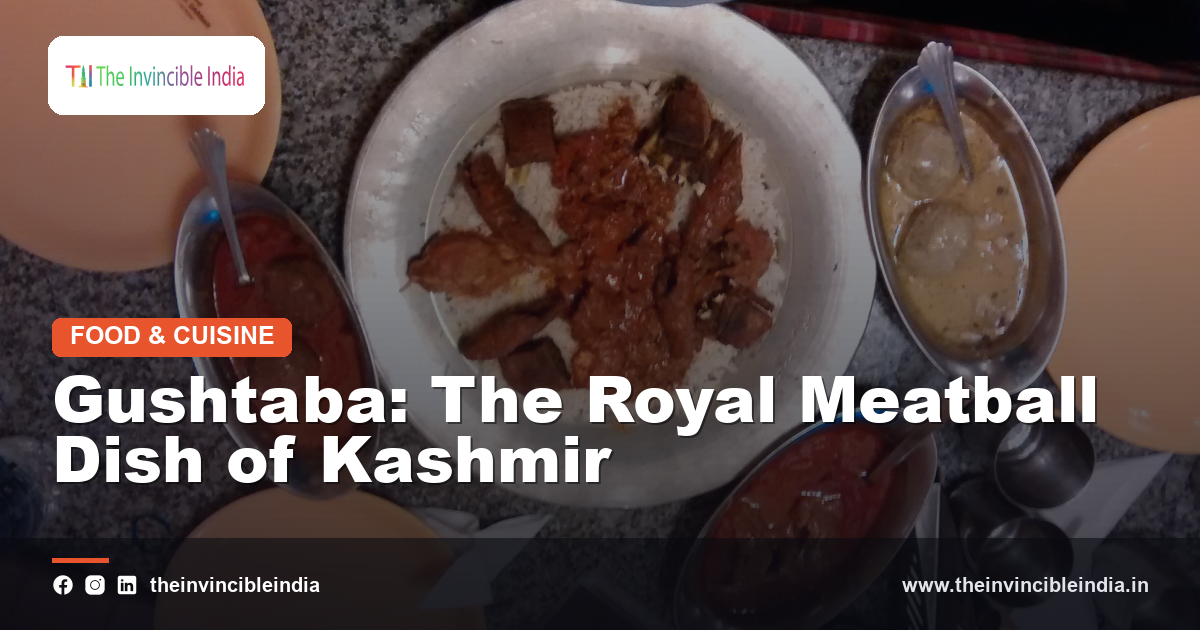
Gushtaba is the large, silken meatball simmered in a delicate yogurt-based gravy that traditionally brings the Kashmiri wazwan to its close. Prepared by pounding meat for a long time until it becomes a smooth, elastic paste, it is regarded as one of the most prestigious and demanding dishes in the valley. Just as the wider regional cuisines of India show how landscape and culture shape what people eat, gushtaba reflects the ceremonial feasting culture of Kashmir. This guide explores gushtaba, its preparation, flavours, cultural role and place in India’s culinary heritage.
Quick Facts
| Detail | Information |
|---|---|
| Type | A pounded meatball in yogurt gravy |
| Region | Kashmir Valley |
| Cuisine | Kashmiri, part of the ceremonial wazwan |
| Key ingredients | Pounded meat, yogurt, fennel, cardamom and ghee |
| Cooked by | Master chefs known as wazas |
| Character | Soft, mild, creamy and aromatic |
The Crowning Dish of Kashmir
Gushtaba is among the most celebrated dishes of Kashmir, a large meatball of exceptionally fine texture served in a pale, fragrant gravy. It belongs to the wazwan, the elaborate multi-course feast that forms the centrepiece of Kashmiri celebrations, and it is traditionally the final meat dish brought to the table. Its fame rests on the skill needed to prepare it, since the smooth consistency cannot be achieved quickly or carelessly. The dish is mild rather than fiery, in keeping with its gentle character. As a showpiece of Kashmiri hospitality, gushtaba holds a place of honour at the end of the feast that few other dishes can match.
Understanding the Wazwan
The wazwan is the traditional banquet of the Kashmir Valley, a formal feast of many meat dishes served on a large shared platter called a trami, around which diners sit in groups of four. It is prepared for weddings and major occasions, and its preparation often takes many hours and the labour of an entire team of cooks. The meal follows a customary sequence, building gradually from kebabs and rich red-gravied dishes toward lighter, subtler preparations. Within this structure, gushtaba is placed last, a position that signals its importance. The ceremonial order of the wazwan is therefore essential to understanding why gushtaba is regarded as the grand finale.
The Waza and the Art of the Feast
The cooks who prepare the wazwan are known as wazas, master chefs whose craft is traditionally passed down within families through long apprenticeship. A waza leads a team of assistants and oversees every stage, from selecting the meat to judging the final seasoning, and is held in considerable respect within the community. Many wazas cook in large copper vessels over wood fires, relying on experience rather than written recipes. Their authority in the kitchen is rarely questioned. The role of the waza, as the guardian of a demanding culinary tradition, is central to the identity of gushtaba and every other dish of the Kashmiri feast.
Pounding the Meat
The most distinctive step in making gushtaba is the pounding of the meat, which is beaten with a heavy wooden mallet on a flat stone or block for a long time until it becomes a smooth, almost elastic paste. Fat and sinew are worked into the mixture so that the final meatball is rich and uniform in texture. The effort is physical and rhythmic, and in traditional kitchens it is often performed by strong assistants working in turn. Nothing but patience and strength can replace this stage. The laborious pounding is what gives gushtaba its legendary softness and is the heart of the dish’s reputation.
Shaping the Meatballs
Once the meat has been pounded to the right consistency, cooks shape it by hand into large, smooth, round balls, far bigger than an ordinary meatball. The mixture is lightly seasoned and handled carefully so that each ball holds together without cracking. Uniformity matters, since the balls must cook evenly in the simmering gravy. Expert hands can shape them quickly and with a flawless surface. The deliberate shaping of the paste into large, perfectly smooth rounds shows that gushtaba is as much about appearance and form as about flavour, and reinforces its status as a dish for special occasions.
The Yogurt Gravy
Gushtaba is traditionally simmered in a gravy built on yogurt, which gives the dish its pale colour and gentle tang. The yogurt is cooked slowly with ghee and spices, with attention paid to stirring so that it stays smooth rather than splitting. The finished gravy is thin enough to coat the meatballs yet rich enough to feel luxurious. This approach contrasts with the deep red gravies of other Kashmiri meat dishes. The creamy, delicate yogurt gravy is the setting in which the gushtaba is presented, and its mildness is deliberately chosen to complement the softness of the meat.
Spices and Aromatics
The seasoning of gushtaba is subtle, relying on fragrant spices rather than heat. Fennel, dried ginger powder, cardamom and sometimes saffron are among the flavours most associated with Kashmiri cooking, and they appear here in careful balance. Cooks avoid the heavy use of chilli and onion that characterises many other Indian meat dishes, preferring to let the aroma of the spices and the sweetness of the meat come forward. The result is a dish of quiet elegance. This restrained and aromatic spicing is a defining trait of gushtaba and of Kashmiri cuisine at its most refined.
Slow Simmering and Patience
After shaping, the meatballs are gently lowered into the simmering gravy and cooked slowly so that they absorb flavour without breaking apart. The heat is kept low and steady, and the vessel is often covered, allowing the meatballs to swell slightly and the gravy to thicken naturally. Cooks watch closely, because too vigorous a boil would damage the delicate balls. The process cannot be hurried. This unhurried simmering, which demands both attention and restraint, is the final stage through which the humble ingredients of gushtaba are transformed into a feast-worthy dish.
Texture and Flavour
The charm of gushtaba lies in its contrast between a soft, almost creamy meatball and a light, tangy gravy. Properly made, the ball is smooth and springy rather than crumbly, with a mild, sweet flavour of meat gently perfumed by spice. It is not designed to overwhelm the palate, and it is often described as the most delicate of the wazwan dishes. Diners comment as much on its texture as on its taste. This harmony of softness, mildness and aroma is the quality that earns gushtaba its reputation as the royal meatball of Kashmir.
Rice and Serving Style
Gushtaba is served as part of the shared trami platter, usually alongside steamed rice, which soaks up the creamy gravy. Each diner takes a portion from the common plate, and the communal manner of eating reinforces the sense of fellowship that the wazwan represents. The meatballs are presented whole and are cut or broken at the table. Service follows custom and is carried out with ceremony. The shared, ritualised way in which gushtaba is served shows that it is not simply a dish but part of a social experience rooted in Kashmiri hospitality.
Gushtaba as the Final Course
In the order of the wazwan, gushtaba is customarily the last meat dish to arrive, and its appearance is understood by guests to signal that the feast is drawing to a close. This position carries symbolic weight, because it implies that the host has saved the most prized preparation for last. Tradition holds that a guest who has reached gushtaba has been fully honoured. Dessert and the Kashmiri tea that follow serve as a gentle epilogue. The placement of gushtaba as the closing course is one of the most distinctive and meaningful customs of Kashmiri dining.
Related Wazwan Dishes
Gushtaba is one of many dishes that make up the wazwan, which also includes rogan josh, tabak maaz, rista, yakhni and various kebabs. Rista is a similar meatball dish served in a red gravy, and the contrast between the red rista and the white gushtaba illustrates the variety within the feast. Each dish has its own character and a fixed place in the sequence. Together they offer a survey of Kashmiri meat cookery. Seen alongside these companions, gushtaba stands out for its delicacy and ceremonial position within the grand structure of the wazwan.
Cultural Meaning of the Feast
The wazwan, and gushtaba within it, carries meanings beyond nutrition, expressing generosity, status and communal bonds. Hosts take pride in the quality and abundance of the feast, and families have historically measured the importance of an occasion by the grandeur of the meal. Preparing it involves neighbours, relatives and professional cooks in a shared undertaking. The ritual of eating together from a common platter reinforces social ties. In this sense gushtaba functions as a cultural symbol of Kashmiri warmth, and its serving is an act of respect extended to every guest.
Kashmiri Culinary Influences
Kashmiri cuisine reflects centuries of cultural exchange along the routes that connected the valley with Central Asia and Persia, and these contacts are visible in its techniques, spices and feasting customs. Dried fruits, saffron, yogurt and slow-cooked meat dishes all bear traces of this heritage, blended with local ingredients and tastes. Gushtaba itself shows how outside influences were absorbed into a distinctly Kashmiri form. The dish is a product of long cultural interaction. Recognising these wider influences reveals gushtaba as a meeting point of regional tradition and the broader culinary history of the lands around the Himalaya.
Preservation of the Craft
The craft of preparing gushtaba depends on skills that are demanding to learn and difficult to shortcut, and some observers worry that fewer young people are willing to undertake the long apprenticeship. Mechanical grinders can produce a passable paste more quickly, but traditionalists maintain that hand-pounding yields a superior texture. Families of wazas continue to train their successors, and public interest in authentic wazwan has helped sustain demand. Efforts to document and celebrate the tradition also play a role. The continuing transmission of the waza’s skills is essential if gushtaba is to remain a living craft rather than a memory.
Gushtaba Today
Gushtaba remains the proud finale of Kashmiri wedding feasts and is increasingly appreciated by food lovers across India and beyond, appearing on restaurant menus that celebrate the cuisine of the valley. Even in modern settings, it carries the aura of ceremony and respect that has surrounded it for generations. Its mild, creamy character offers a quiet contrast to the bolder flavours of many other Indian dishes. For visitors to Kashmir, tasting it is often a highlight of the journey. Today gushtaba stands as a celebrated symbol of Kashmiri hospitality and of a feasting tradition that continues to thrive.
Sources & Further Reading
- Ministry of Culture, Government of India (indiaculture.gov.in).
- Ministry of Tourism, Government of India (incredibleindia.org).
Frequently Asked Questions
What is gushtaba?
Gushtaba is a large, smooth meatball made from finely pounded meat and cooked in a mild yogurt-based gravy. It is a signature dish of the Kashmiri wazwan feast.
Why is gushtaba served last in the wazwan?
Tradition places gushtaba as the final meat dish of the feast, signalling that the meal is nearing its end. Its position reflects the high regard in which the dish is held.
How is gushtaba made?
The meat is pounded with a wooden mallet until it becomes a smooth paste, then shaped into large balls and simmered slowly in a spiced yogurt gravy. The pounding is the most demanding step and gives the dish its soft texture.
What is the difference between gushtaba and rista?
Both are pounded meatball dishes of the wazwan, but rista is cooked in a red gravy while gushtaba is served in a pale yogurt-based one. Gushtaba is generally milder and more delicate.
Who prepares gushtaba?
It is traditionally prepared by wazas, the master chefs of Kashmir, who learn their craft through long apprenticeship within families. They lead teams of assistants in preparing the entire wazwan.


