

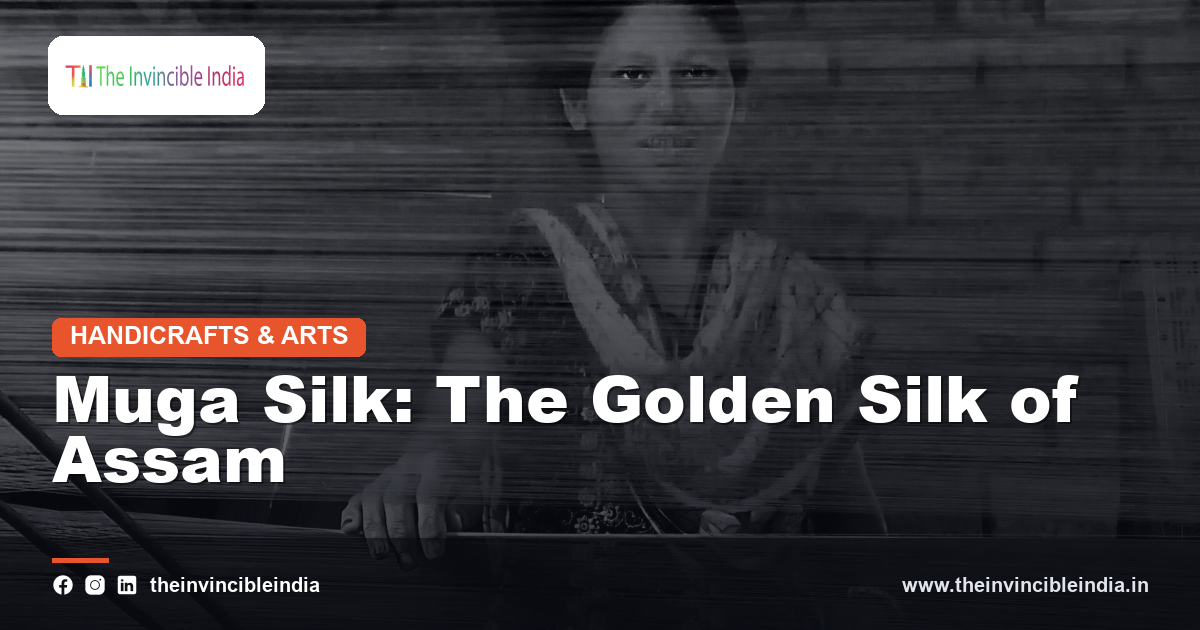
Muga silk, also called muga pat and widely known as the golden silk of Assam, is a rare wild silk celebrated for its natural golden-yellow colour, its glossy sheen and its remarkable strength. Unlike mulberry silk, which is dyed to achieve colour, muga has its warm golden tone naturally, produced by the Antheraea assamensis silkworm, a wild silk moth reared in and around the Brahmaputra valley. The silk is prized for its durability, its lustre that is said to deepen with age and washing, and its use in the traditional Assamese dress, above all the elegant mekhela chador worn by women. Muga is one of the signature crafts of Assam and a source of regional pride. Readers who enjoy India’s great silk traditions may also explore the Kanjeevaram silk guide. This guide describes muga silk, its silkworm, its home, its history, its production, its weaving, its cultural role and its present-day place.
Quick answer: Muga silk (also called muga pat, or the golden silk of Assam) is a rare wild silk of Assam, India, naturally golden in colour and produced from the Antheraea assamensis silkworm. It is prized for its durability and its warm golden sheen, and is woven into traditional Assamese dress, above all the mekhela chador. Muga silk of Assam has been recognised with a Geographical Indication.
Key Takeaways
- Muga silk, also called muga pat, is the naturally golden wild silk of Assam, India.
- It is produced from the Antheraea assamensis silkworm, a wild silk moth of the region.
- Its golden-yellow colour is natural and not achieved by dyeing.
- It is prized for its durability and its glossy golden sheen, which is said to improve with age.
- It is woven into traditional Assamese dress, above all the mekhela chador.
- Muga silk of Assam has been recognised with a Geographical Indication.
The sections below explain what muga silk is, why it is golden, which silkworm produces it, where it is made, its history, how it is reared and woven, its cultural role and why it still matters.
Quick Facts
| Detail | Information |
|---|---|
| Craft type | Wild silk (sericulture and handloom weaving) |
| Region of origin | Assam, India, especially the Brahmaputra valley |
| Also known as | Muga pat, golden silk of Assam |
| Materials | Silk from the Antheraea assamensis silkworm |
| Technique | Rearing of wild silkworms, reeling of the silk and handloom weaving |
| Known for | Natural golden colour, glossy sheen and great durability |
| GI status | Muga silk of Assam has been recognised with a Geographical Indication; confirm details with the Registry |
| Community | Traditional Assamese silk rearers and weavers |
What Is Muga Silk?
Muga silk is a rare wild silk of Assam, naturally golden in colour and reeled from the cocoons of the Antheraea assamensis silkworm. Also called muga pat, it is one of a small number of wild, or non-mulberry, silks and is counted among the most distinctive silks of India. Its defining feature is its warm, golden-yellow colour, which is natural rather than dyed, together with a glossy sheen and an unusual strength and durability. The silk is woven on handlooms into fine fabric for traditional Assamese dress, most famously the mekhela chador worn by women. Muga is admired for its lustre, which is said to grow richer with age and washing, and for its longevity. It is a signature craft of Assam and a source of great regional pride. The golden colour and durability define muga silk. It is unlike any ordinary silk.
Why Is Muga Silk Golden?
Muga silk is golden because the silk produced by the Antheraea assamensis silkworm carries its warm golden-yellow colour naturally, without any dyeing. This natural golden tone is the most celebrated feature of the silk and the reason it is known as the golden silk of Assam. Where most silks must be dyed to achieve colour, muga arrives already golden from the cocoon, giving the woven fabric a distinctive glow. The colour is often said to deepen and the sheen to grow richer as the fabric ages and is washed over the years, so that an old muga garment can be especially lustrous. This natural, lasting golden colour sets muga apart from other silks and makes it instantly recognisable. The gold comes from the silk itself, not from dye. It is the signature of muga. The colour is central to its fame.
What Silkworm Produces Muga Silk?
Muga silk is produced by the Antheraea assamensis silkworm, a wild silk moth native to Assam and the surrounding region. This silkworm is a species of wild, or non-mulberry, silk moth, distinct from the domesticated mulberry silkworm that produces common mulberry silk. The Antheraea assamensis feeds on the leaves of particular host trees, such as som and soalu, that grow in the region, and it is this diet and species that yield the characteristic golden silk. Because the silkworm is reared in a semi-wild manner on host trees rather than fully domesticated indoors, muga is classed among the wild silks. The silkworm, its host plants and the climate of the Brahmaputra valley together make muga possible, binding the silk closely to Assam. The silkworm is the true source of the golden silk. Without it there is no muga. The species defines the craft.
Where Is Muga Silk Produced?
Muga silk is produced in Assam, especially in the Brahmaputra valley, where the climate and the host trees of the silkworm allow the wild silk to be reared. The craft is deeply rooted in the state and is considered one of its signature traditions, associated with particular districts and communities long engaged in silk rearing and weaving. The warm, humid conditions of the valley and the availability of the som and soalu host trees support the rearing of the Antheraea assamensis silkworm. Weaving of the silk into mekhela chador and other garments is widespread in Assamese households and weaving centres. The combination of the right silkworm, host plants, climate and skilled rearers and weavers makes Assam the home of muga. The silk is identified with the state above all. Assam is the heartland of muga silk. The region and the craft are inseparable.
What Is the History of Muga Silk?
Muga silk has a long and celebrated history in Assam, where silk rearing and weaving have been part of life and culture for a very long time, though the precise early origins rest on tradition rather than exact record. Silk, and muga in particular, has long been associated with Assam, valued at court and in society and worn on important occasions. The craft of rearing the wild silkworm and weaving its golden thread was developed and sustained over generations within Assamese communities, becoming woven into the fabric of regional identity. Muga came to be especially linked to the traditional dress of Assam and to its festivals and ceremonies. In more recent times, the silk has gained wider recognition, including Geographical Indication status. Because much of the early story rests on tradition, it is best described in general terms. What is clear is that muga is ancient and honoured in Assam.
How Is the Muga Silkworm Reared?
The muga silkworm is reared in a semi-wild manner on host trees, where the Antheraea assamensis feeds on the leaves and spins its golden cocoons. Rearers place the silkworms on som, soalu and other host trees, tending them as they grow and feed in the open rather than fully indoors, which is why muga is classed as a wild silk. The silkworms pass through their life stages on the trees, and the rearers protect them and manage the rearing through the seasons, which is demanding and weather-dependent work. When the silkworms spin their cocoons, these are gathered for processing into silk. The rearing depends on healthy host trees, suitable climate and the care and knowledge of the rearers. Because practices vary, the details differ between rearers and seasons. The rearing of the wild silkworm is the first stage of the craft. It yields the precious golden cocoons.
How Is Muga Silk Reeled and Woven?
Muga silk is obtained by reeling the thread from the cocoons and then weaving it into fabric on a handloom. After the cocoons are gathered, the silk filament is drawn out, or reeled, and processed into yarn suitable for weaving, work that requires skill to preserve the natural lustre and strength of the thread. The golden muga yarn is then woven on traditional handlooms, often in Assamese homes and weaving centres, into mekhela chador, sarees, stoles and other cloth. Weavers may combine muga with other threads or add woven motifs and borders characteristic of Assamese textiles. The whole process, from reeling to weaving, is largely done by hand and relies on inherited skill. Because practices vary, the exact methods differ between artisans. The reeling and weaving turn the cocoons into lustrous golden cloth. The handloom gives muga its final form. The craft unites rearing, reeling and weaving.
Why Is Muga Silk So Durable?
Muga silk is prized for its exceptional durability, so that well-made muga garments can last for a very long time and are often passed down through generations. The silk thread produced by the Antheraea assamensis silkworm is notably strong, giving the woven fabric a toughness and longevity beyond that of many ordinary silks. Muga is also said to grow more lustrous with age and repeated washing, so that an old garment can be more beautiful than a new one, adding to its value as a lasting possession. This combination of strength, longevity and improving sheen makes muga an heirloom fabric, kept and treasured within families. Its durability is a large part of why it is so highly valued in Assam. The strength of the silk is one of muga’s defining qualities. It makes the fabric endure. Durability is central to its worth.
What Is Muga Silk Used For?
Muga silk is used above all for traditional Assamese dress, especially the mekhela chador worn by women, as well as sarees, stoles, scarves and other fine garments. Its natural golden colour, lustre and durability make it a prized fabric for festive, ceremonial and formal wear, and muga garments are treasured possessions in Assamese households. The silk is particularly associated with special occasions, weddings and cultural celebrations, where its golden glow is admired. Beyond clothing, muga is used for shawls, furnishings and decorative textiles, and it features in the wider handloom tradition of Assam. Because muga is rare and costly, it is often reserved for the finest and most cherished pieces. Whatever the item, the hallmark is the golden, lustrous, durable silk. Its uses centre on the traditional dress of Assam. The mekhela chador is its most famous use. Muga clothes the people of Assam in gold.
The Mekhela Chador and Muga Silk
The mekhela chador, the traditional two-piece dress worn by Assamese women, is the most celebrated use of muga silk and is closely identified with the fabric. The garment consists of the mekhela, a skirt-like lower piece, and the chador, an upper drape, worn together to form an elegant and graceful ensemble. Woven in golden muga, often with decorative motifs and borders characteristic of Assamese textiles, the mekhela chador is prized for festive, ceremonial and wedding wear. A muga mekhela chador is a cherished possession, frequently passed down within families as an heirloom. The pairing of this iconic garment with the golden silk has made muga a symbol of Assamese womanhood and culture. The mekhela chador shows muga at its most beautiful. It unites the golden silk with the traditional dress of Assam. It is the heart of the muga tradition.
What Role Does Muga Silk Play in Assamese Culture?
Muga silk plays a central role in Assamese culture as a symbol of heritage, prosperity and identity, worn on the most important occasions and treasured as an heirloom. Its golden colour is associated with richness and festivity, and muga garments are worn at weddings, festivals such as Bihu, religious ceremonies and other significant events. A muga mekhela chador is often a prized part of a bride’s attire and a cherished family possession passed down the generations. The rearing and weaving of muga also form part of the livelihood and tradition of many Assamese households, binding the craft to everyday life as well as to celebration. Muga thus carries both economic and emotional meaning in Assam. The golden silk is woven into the culture of the state. It marks life’s important moments. Muga is a proud emblem of Assamese identity. Its role reaches beyond mere fabric.
Who Are the Muga Silk Rearers and Weavers?
The muga silk tradition is sustained by the rearers who tend the wild silkworms and the weavers who turn the golden thread into cloth, many of them in rural Assamese households. Rearing the Antheraea assamensis silkworm on its host trees demands knowledge of the silkworm, the trees and the seasons, while reeling and weaving the silk require inherited skill to preserve its lustre and strength. For many families, these crafts are both a tradition and a livelihood, with the stages of rearing, reeling and weaving often spread across households and communities. The weavers produce the mekhela chador and other garments prized within Assam and beyond. Like many silk and handloom crafts, muga depends on keeping skilled rearers and weavers in the trade, on healthy host trees and on fair returns. The knowledge and handwork of these communities are the craft’s living heart. Their skill keeps muga alive.
Does Muga Silk Have a GI Tag?
Muga silk of Assam has been recognised with a Geographical Indication, marking it as a distinctive product rooted in the state and its silk tradition. Such recognition identifies the golden silk with Assam and with the rearers and weavers who produce it, and helps protect the name and the tradition from imitation. Buyers and readers seeking the precise terms, scope and current status of the recognition should confirm the details with the official Geographical Indications Registry, since the particulars of such tags are best checked rather than assumed. Whatever the formal specifics, muga is clearly and strongly identified with Assam and its golden silk. Recognition and heritage interest help protect the craft and sustain its makers. They also encourage the making and buying of genuine muga. The bond between the silk and its region remains central to its identity. Muga is a cherished emblem of Assam.
What Makes Muga Silk Distinctive?
Muga silk is distinctive for its natural golden colour, its glossy sheen, its remarkable durability and its deep ties to Assamese culture. Its warm golden-yellow tone, produced naturally by the wild Antheraea assamensis silkworm without dyeing, sets it apart from all ordinary silks. Its strength and longevity make it an heirloom fabric, and its lustre is said to deepen with age and washing, so that old muga can be the most beautiful. Its use in the mekhela chador and its role in Assamese festivals, weddings and identity give it rich cultural meaning. Its origin in the wild silkworm of the Brahmaputra valley roots it firmly in Assam. These qualities together make muga rare, valued and instantly recognisable. Its blend of golden colour, durability and cultural significance is central to its appeal. Muga is a proud and singular silk of India.
How Can You Buy Authentic Muga Silk?
Authentic muga silk can be bought from recognised Assam handloom emporiums, cooperatives, trusted weavers and reputable stores that clearly identify the fabric as genuine Assam muga. Because muga is rare and costly, true muga carries its distinctive natural golden colour, a characteristic lustre and the weight and feel of genuine silk, and is generally sold at a price that reflects its value. Imitations may use dyed or lesser silks, or blends, to mimic the golden look at a lower price, so care is needed. Buyers can ask about the source and the weaver, examine the colour and sheen, look for any Geographical Indication or handloom labelling, and be wary of prices that seem too low for genuine muga. Buying from recognised emporiums, cooperatives or known weavers helps ensure authenticity and supports the makers. Careful buying rewards genuine craftsmanship. It also secures a true piece of Assam’s golden silk.
Muga Silk Today
Muga silk today remains the pride of Assam and one of India’s most celebrated wild silks, treasured for its natural golden colour, its lustre and its durability. Rearers continue to tend the wild Antheraea assamensis silkworm, and weavers continue to craft the golden thread into the mekhela chador and other fine garments worn on the most important occasions. The Geographical Indication recognition of muga silk of Assam and growing interest in rare, handmade and heritage textiles have brought renewed attention to the craft. At the same time, muga faces real challenges, including the demands of rearing the wild silkworm, the availability of host trees, competition from imitations and the need for fair returns and new makers. Readers can support the tradition by choosing genuine muga, buying from cooperatives and valuing the labour behind each piece. Muga endures as a golden expression of Assamese heritage. Its golden sheen keeps the tradition alive.
Sources & Further Reading
- Central Silk Board, Ministry of Textiles, Government of India (csb.gov.in).
- Geographical Indications Registry, Government of India (ipindia.gov.in).
- Directorate of Sericulture, Government of Assam.
Frequently Asked Questions
What is muga silk?
Muga silk, also called muga pat, is the naturally golden wild silk of Assam, produced from the Antheraea assamensis silkworm. Its golden colour is natural, not dyed, and it is prized for its durability and lustre. It is woven into traditional Assamese dress, above all the mekhela chador.
Why is muga silk golden?
Muga silk is golden because the silk produced by the Antheraea assamensis silkworm carries its warm golden-yellow colour naturally, without any dyeing. The colour is said to deepen and the sheen to grow richer as the fabric ages and is washed. This natural golden tone gives muga its name, the golden silk of Assam.
What is muga silk used for?
Muga silk is used above all for traditional Assamese dress, especially the mekhela chador worn by women, as well as sarees, stoles and other fine garments. Its golden colour, lustre and durability make it prized for festive, ceremonial and wedding wear. Muga garments are treasured heirlooms in Assamese households.
Why is muga silk so durable?
Muga silk is exceptionally durable because the thread from the Antheraea assamensis silkworm is notably strong, giving the fabric great longevity. Well-made muga garments can last a very long time and are often passed down through generations. The silk is also said to grow more lustrous with age and washing.
Does muga silk have a GI tag?
Yes, muga silk of Assam has been recognised with a Geographical Indication, identifying the golden silk with Assam and its rearers and weavers. The precise terms and current status of the recognition are best confirmed with the official Geographical Indications Registry, as the particulars of such tags should be checked rather than assumed.
How can I identify authentic muga silk?
Authentic muga silk has a distinctive natural golden colour, a characteristic lustre and the weight and feel of genuine silk, and is sold at a price reflecting its rarity. Imitations may use dyed or lesser silks to mimic the look. Buying from recognised Assam emporiums, cooperatives or known weavers helps ensure authenticity.


