

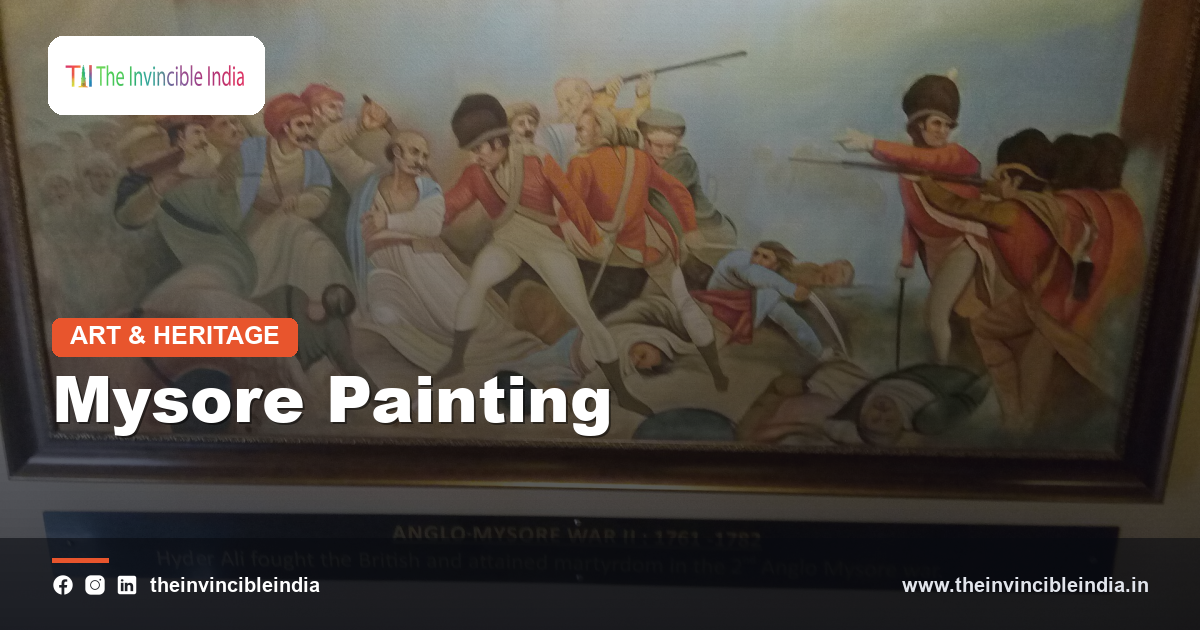
Mysore painting is a classical school of South Indian painting that developed under the patronage of the Wadiyar rulers of Mysore, prized for its fine detail, delicate gesso relief work and the restrained use of gold leaf to depict Hindu deities and mythological themes. Painted with great patience on prepared surfaces, these works combine devotional subject matter with a distinctive technical refinement that sets Mysore painting apart from other regional schools, much as the miniature painting traditions of the north each developed their own techniques and character. This guide explores the origins, technique, themes and lasting heritage of Mysore painting.
Quick Facts
| Detail | Information |
|---|---|
| Type | A classical school of South Indian painting |
| Region | Mysore and the surrounding Karnataka region |
| Patrons | The Wadiyar rulers of the Mysore kingdom |
| Technique | Gesso relief work highlighted with gold leaf |
| Themes | Hindu deities and mythological narratives |
| Heritage | A refined tradition of devotional painting |
Mysore Painting: An Overview
Mysore painting is a classical tradition of South Indian painting that developed under the patronage of the Wadiyar rulers of the Mysore kingdom, known for its fine detail, delicate ornamentation and the restrained application of gold leaf to depict Hindu deities and mythological subjects. Painted with meticulous care on carefully prepared surfaces, these works combine devotional seriousness with a jewel-like technical refinement that distinguishes the style from other regional schools of Indian painting. Its combination of craft and devotion is unmistakable. As a classical devotional art form of great technical refinement, Mysore painting holds an important place among the regional painting traditions of India.
Historical Origins
The origins of Mysore painting are closely tied to the patronage of the Wadiyar dynasty, who ruled the kingdom of Mysore and supported artists in developing a distinctive style suited to temple and palace decoration as well as devotional use in the home. Over time, painters refined their techniques and iconography, drawing on earlier South Indian painting traditions while developing the particular methods that would define the mature Mysore style. This royal encouragement was essential to its development. This historical development of Mysore painting under sustained royal patronage explains both its technical sophistication and its strong association with the court and temples of Mysore.
Royal Patronage of the Wadiyar Dynasty
The Wadiyar rulers of Mysore were notable patrons of art and culture, and their support for painters working in the traditional style helped sustain and elevate the craft over many generations, providing both material resources and prestige to the artists’ workshops. Paintings were commissioned for palace interiors, temple decoration and as gifts, ensuring a steady demand that allowed the tradition to flourish and refine its methods. This patronage linked art closely to court life. This royal patronage of the Wadiyar dynasty is central to the history of Mysore painting, providing the stable support that allowed its distinctive technique to reach maturity.
Preparation of the Painting Surface
Mysore painting begins with careful preparation of the surface, traditionally a base of paper or cloth mounted on a wooden board and coated with a fine paste to create a smooth, even ground suitable for detailed work. This preparatory stage was essential to the durability and finish of the finished painting, providing a stable base for the layers of drawing, gesso and colour to follow. Considerable care went into achieving the right texture and evenness. This meticulous preparation of the painting surface reflects the disciplined, methodical character of the Mysore tradition and its emphasis on lasting quality and fine finish.
Gesso Relief Work
A defining technique of Mysore painting is the use of gesso, a paste applied in low relief to selected areas of the composition such as jewellery, crowns and architectural details before the addition of gold leaf. This raised gesso work gives these elements a subtle three-dimensional quality, catching the light and adding a tactile richness to the flat painted surface. Considerable skill was required to apply it evenly and to let it dry and harden correctly before further decoration. This distinctive gesso relief technique is one of the most recognisable and technically demanding features of Mysore painting, setting it apart from most other Indian painting styles.
The Use of Gold Leaf
Gold leaf is applied over the raised gesso work in Mysore painting, adding a restrained but luminous richness to crowns, jewellery and architectural elements without overwhelming the composition as a whole. The gold was traditionally used sparingly and precisely, reserved for details that carried particular symbolic or decorative importance within the devotional image. This careful, targeted use of gold reflects considerable artistic discipline. This measured use of gold leaf, combined with the gesso relief beneath it, gives Mysore painting its characteristic jewel-like glow and sets a benchmark for restrained decorative refinement.
Colour and Traditional Pigments
Mysore painters traditionally relied on natural pigments derived from vegetable, mineral and other organic sources, ground and mixed by hand to produce the palette of colours used to complete the painting after the gesso and gold work were finished. These pigments were valued for their durability and the soft, harmonious tones they lent to the finished image, complementing rather than competing with the gilded details. This careful colour work completed the overall effect. This use of traditional natural pigments, applied with restraint alongside gold leaf and gesso, is central to the distinctive visual character of Mysore painting.
Religious and Mythological Themes
The subject matter of Mysore painting is overwhelmingly religious, depicting Hindu deities, avatars and scenes from mythology and epic literature with a serene and dignified formality suited to their devotional purpose. Figures are typically shown in careful, symmetrical compositions that emphasise their sacred character, often accompanied by symbolic attributes that identify each deity to the viewer. This devotional focus shaped every aspect of the style. This strong emphasis on religious and mythological subject matter reflects the primary function of Mysore painting as an art created for worship and devotional display.
Iconography and Symbolism
Mysore painting follows established conventions of Hindu iconography, carefully depicting the attributes, postures and symbolic objects associated with each deity so that the painting could be readily recognised and venerated by worshippers. This adherence to traditional iconography required painters to have a thorough knowledge of religious texts and conventions alongside their technical skill in gesso and gold work. Consistency of symbolism was considered essential to devotional accuracy. This careful attention to iconography and symbolism underlines the close relationship between artistic training and religious knowledge within the Mysore painting tradition.
Compositional Style
Mysore paintings are typically composed with clarity and symmetry, placing the central deity or figure prominently within the frame, often seated or standing beneath an ornate arch or canopy that frames the image and draws attention to its sacred subject. Secondary figures and decorative borders are arranged to support rather than distract from the central composition, reflecting a disciplined and hierarchical approach to picture-making. This ordered composition reinforces the devotional purpose of the work. This compositional style of Mysore painting, ordered and hierarchical in its arrangement, reflects the serious devotional intent that runs through the entire tradition.
Distinction from Tanjore Painting
Mysore painting is often discussed alongside the related Tanjore painting tradition of Tamil Nadu, with which it shares certain techniques such as gesso relief and gold leaf, yet the two schools maintain distinct characteristics in their use of colour, style of gesso work and overall visual effect. Mysore painting tends to favour more delicate, finely worked gesso and a softer palette compared to the bolder, more heavily gilded surfaces often associated with Tanjore work. This distinction is important to specialists and collectors alike. This comparison with Tanjore painting helps to clarify the particular qualities that define Mysore painting as a separate and distinctive regional school.
Training and Craftsmanship
Mastery of Mysore painting traditionally required lengthy training under an experienced artist, as the technique demanded skill in drawing, gesso work, gilding and the mixing and application of natural pigments, each stage requiring patience and precision. Apprentices learned by observing and assisting established painters, gradually taking on more complex work as their skill developed over years of practice. This long apprenticeship preserved exacting standards of craftsmanship. This demanding tradition of training and craftsmanship helps explain why Mysore painting has long been regarded as one of the more technically exacting of India’s regional painting styles.
Decline and Revival
Like many traditional Indian art forms, Mysore painting experienced a decline in patronage and practice during periods of social and economic change, as royal support diminished and cheaper printed images became widely available. In more recent decades, however, renewed interest from collectors, cultural institutions and government initiatives has helped support a revival of the tradition, encouraging new generations of artists to learn its techniques. This revival has been vital to its continuity. This pattern of decline followed by revival mirrors the experience of several other Indian craft and painting traditions during the modern era, and reflects the resilience of skilled artisan communities.
Government and Institutional Support
Recognition of Mysore painting’s cultural and artistic value has led to government and institutional support aimed at preserving the tradition, including training programmes, exhibitions and recognition schemes that help sustain practising artists and safeguard traditional techniques. Such support has been important in ensuring that the specialised skills of gesso work and gold leaf application, which require years to master, are not lost to future generations. This institutional backing complements private and commercial demand. This government and institutional support for Mysore painting plays an important role in keeping this refined tradition economically viable and technically intact.
Contemporary Mysore Painting
Contemporary artists working in the Mysore painting tradition continue to produce devotional works using the established techniques of gesso relief and gold leaf, serving both religious demand and a growing market of collectors and admirers of traditional Indian art. Some artists have also adapted the style to new formats and subjects while retaining its core techniques, helping to keep the tradition relevant to modern audiences without abandoning its essential character. This blend of continuity and adaptation supports its ongoing practice. This continuation of Mysore painting by contemporary artists ensures that this refined and technically demanding tradition remains a living practice rather than a purely historical art form.
Mysore Painting Today
Today Mysore painting is recognised as one of the classical treasures of South Indian art, admired for its fine detail, its delicate gesso relief and its restrained, luminous use of gold leaf in the service of devotional subjects. Museums, temples and private collections across Karnataka and beyond preserve important examples of the tradition, while contemporary artists keep its exacting techniques alive for new generations. Its association with the Mysore court remains a proud part of the region’s heritage. As a refined and enduring tradition of devotional art, Mysore painting continues to hold a distinguished place among the great regional painting schools of India.
Sources & Further Reading
- Ministry of Culture, Government of India, on the traditional art forms of Karnataka (indiaculture.gov.in).
- Sangeet Natak Akademi, on the classical and traditional arts of South India.
Frequently Asked Questions
What is Mysore painting?
Mysore painting is a classical South Indian painting tradition that developed under the patronage of the Wadiyar rulers of Mysore, known for its fine detail, gesso relief work and restrained use of gold leaf to depict Hindu deities and mythological themes.
What makes Mysore painting distinctive?
Mysore painting is distinctive for its combination of delicate gesso relief work, applied in low relief and highlighted with gold leaf, alongside natural pigments, producing devotional images of jewel-like richness and fine, disciplined detail.
How is Mysore painting different from Tanjore painting?
Mysore painting shares certain techniques with Tanjore painting, such as gesso relief and gold leaf, but tends to feature more delicate gesso work and a softer palette, distinguishing it from the bolder, more heavily gilded style typical of Tanjore work.
What subjects are depicted in Mysore painting?
Mysore painting depicts predominantly religious and mythological subjects, including Hindu deities and scenes from epic literature, presented in symmetrical, dignified compositions suited to devotional worship and display.
Is Mysore painting still practised today?
Yes, contemporary artists continue to practise Mysore painting using traditional techniques of gesso relief and gold leaf, supported in part by government and institutional recognition aimed at preserving this technically demanding craft.


