

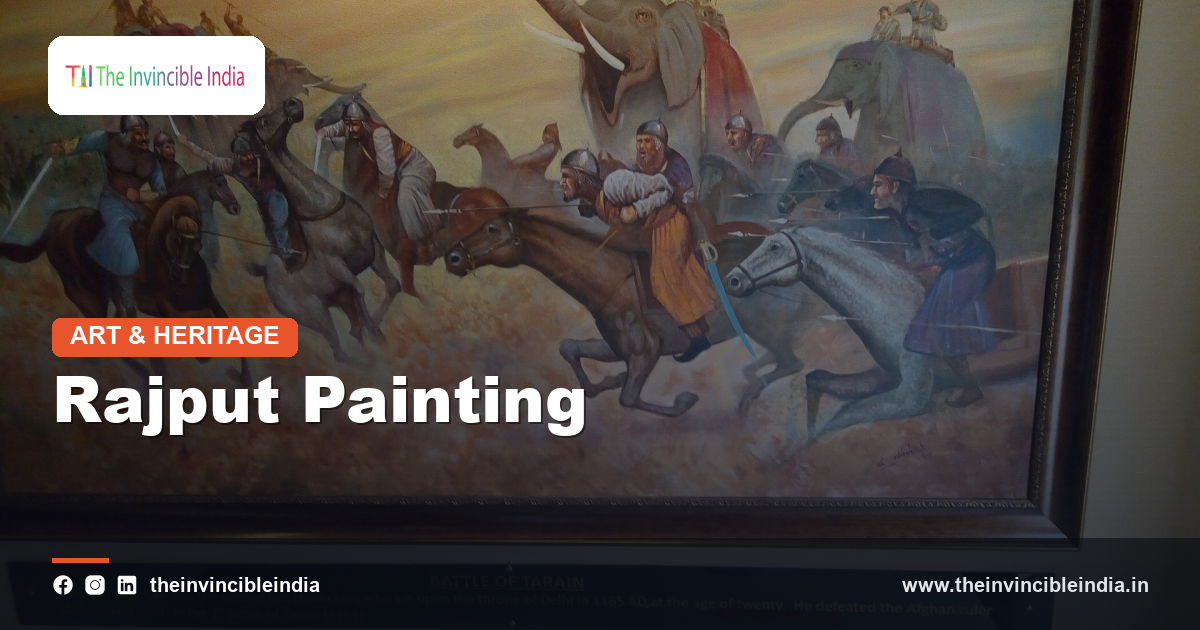
Rajput painting is one of the great schools of Indian miniature art, a courtly tradition that flourished across the kingdoms of Rajasthan and central India from roughly the sixteenth century onward. Painted in fine natural pigments on small sheets of paper, these miniatures combined devotional themes, royal portraiture and scenes of courtly life into images of remarkable colour and detail, each princely court developing its own recognisable style within the broader tradition. Alongside its many regional schools, Rajput painting sits within the wider story of India’s miniature painting traditions, sharing techniques and themes while remaining distinct in spirit and subject. This guide explores the origins, schools, themes and enduring heritage of Rajput painting.
Quick Facts
| Detail | Information |
|---|---|
| Type | A courtly school of Indian miniature painting |
| Region | Rajasthan and neighbouring courts of central India |
| Period | Flourished from around the sixteenth century onward |
| Major schools | Mewar, Marwar, Bundi-Kotah and Kishangarh |
| Themes | Devotional scenes, court life and royal portraiture |
| Heritage | A defining tradition of Indian miniature art |
Rajput Painting: An Overview
Rajput painting refers to the miniature painting traditions that flourished in the courts of Rajasthan and neighbouring regions of central India, each ruled by a Rajput dynasty that took pride in patronising its own school of artists. Painted on paper in fine brushwork and vivid natural pigments, these miniatures depicted gods and goddesses, court life, hunting scenes and portraits of rulers, blending religious devotion with courtly elegance in a single artistic tradition. The style varied considerably from court to court while sharing a common visual language. As a courtly art uniting devotion, portraiture and daily life within the miniature format, Rajput painting occupies a central place in the history of Indian art and remains one of its most admired and studied traditions.
Origins and Historical Background
The tradition of Rajput painting grew out of earlier Indian manuscript painting, absorbing new techniques and sensibilities as artists moved between courts and as regional styles matured over the sixteenth and seventeenth centuries. Rajput rulers, eager to establish their own cultural identity, invited or retained painters who developed distinctive local idioms suited to the taste of each court, giving rise to a family of related but individual schools. This gradual development produced a tradition of great richness and variety. This historical growth of Rajput painting from manuscript art into a mature courtly tradition explains both the shared foundations and the striking regional differences found across its many schools.
Courtly Patronage of Rajput Painting
Rajput painting flourished above all through the patronage of the ruling houses of Rajasthan, who maintained workshops of painters attached to the court and commissioned works to decorate palaces, illustrate manuscripts and record court life. A ruler’s taste and interests often shaped the subjects and style favoured by his workshop, so that each court’s paintings carry something of its individual character and history. This close relationship between artist and patron was essential to the tradition. This courtly patronage of Rajput painting, sustained across generations by successive rulers, provided both the resources and the encouragement that allowed the tradition to reach its highest achievements.
Materials and Techniques
Rajput painters worked with fine handmade paper, preparing it with a smooth burnished surface before applying outlines in black or red and building up colour in successive layers of natural pigment derived from minerals, plants and other organic sources. Brushes made from fine animal hair allowed for the delicate detail seen in faces, jewellery and textile patterns, while gold and silver were used sparingly to highlight architecture or ornament. This careful technique demanded great patience and skill. This meticulous technique of preparation, outline and layered colour underlies the fine detail and lasting brilliance for which Rajput miniature painting is so highly regarded.
Themes and Subject Matter
The subject matter of Rajput painting ranges widely across devotional, courtly and literary themes, including scenes from Hindu mythology, episodes from the life of Krishna, portraits of rulers and nobles, hunting expeditions, festivals and depictions of musical modes. Painters often illustrated well-loved poems and devotional texts, giving visual form to their verses in ways that combined narrative clarity with lyrical beauty. This breadth of subject matter reflects the full range of courtly and religious life. This wide range of themes found in Rajput painting reveals both the devotional depth and the worldly sophistication of the courts that produced it.
The Mewar School
The Mewar school, associated with the court of Udaipur, is among the earliest and most vigorous of the Rajput painting traditions, known for bold colour, expressive figures and a strong narrative energy in its depiction of religious and courtly themes. Mewar painters often worked on a relatively large scale within the miniature format, filling their compositions with incident and detail while maintaining a distinctive palette of rich reds and yellows. Its energetic style set it apart from other courts. This Mewar school of Rajput painting, with its bold colour and narrative vigour, is celebrated as one of the most distinctive and historically important of the regional traditions.
The Bundi-Kotah School
The neighbouring courts of Bundi and Kotah developed a school of painting particularly admired for its lush depictions of landscape, forest and hunting scenes, rendered in cool greens and blues that convey the monsoon atmosphere of the region. Rulers of these states were noted patrons of hunting scenes and court portraits, and their painters achieved a remarkable sense of movement and atmosphere within the miniature format. This attention to landscape gives the school its particular charm. This Bundi-Kotah school of Rajput painting, celebrated for its atmospheric landscapes and hunting scenes, adds a distinctive naturalistic dimension to the broader tradition of Rajasthani miniature art.
The Marwar School
The Marwar school, centred on the court of Jodhpur, produced miniatures notable for their bold, often flat use of colour and strong decorative sense, frequently depicting court ceremonies, portraits and devotional subjects with a directness of style distinct from more delicate schools elsewhere. Painters of Marwar were also skilled in large-scale portraiture, capturing the dignity and presence of rulers and courtiers with confident line and colour. This robust style reflects the character of the desert court that sustained it. This Marwar school of Rajput painting, with its bold colour and confident portraiture, forms an important regional branch of the wider tradition centred in western Rajasthan.
The Kishangarh School
The small court of Kishangarh produced one of the most refined and instantly recognisable schools of Rajput painting, celebrated for its lyrical depictions of Radha and Krishna rendered with elongated eyes, delicate features and a poetic, dreamlike atmosphere. This distinctive style, associated with a particular ruler’s devotion to Krishna and patronage of a gifted court painter, produced images of exceptional grace and emotional intensity within a relatively small body of work. Its refinement contrasts with the boldness of other schools. This Kishangarh school of Rajput painting, prized for its lyrical grace and devotional intensity, is regarded as one of the artistic high points of the entire miniature tradition.
Depictions of Krishna and Radha
Among the most enduring themes of Rajput painting is the devotional and romantic relationship between Krishna and Radha, portrayed across many schools in scenes of divine love, longing and reunion set within gardens, groves and pavilions. These images drew on a rich body of devotional poetry, translating its verses into tender and often deeply emotional visual narratives that appealed to both religious sentiment and courtly taste. This theme recurs with endless variation across the tradition. This recurring depiction of Krishna and Radha across Rajput painting reflects the deep devotional currents that ran alongside courtly life in the Rajasthani kingdoms.
Ragamala Paintings
A distinctive genre within Rajput painting is the Ragamala series, sets of miniatures that give visual form to the moods and seasons associated with particular musical modes, or ragas, through carefully chosen imagery of lovers, landscapes and courtly scenes. Each painting in a Ragamala set aimed to capture the emotional character of its raga through colour, gesture and setting, uniting the visual and musical arts in a single imaginative scheme. This genre reveals the close bond between painting and music at court. These Ragamala paintings, translating musical mood into visual imagery, stand among the most inventive and poetic achievements of the Rajput painting tradition.
Portraiture in Rajput Painting
Portraiture held an important place in Rajput painting, with rulers, nobles and court officials depicted in profile with careful attention to costume, jewellery and insignia that conveyed rank and identity at a glance. Court portraits often recorded specific events, such as processions, hunts or ceremonial audiences, functioning as both artistic works and historical documents of courtly life. This dual purpose gave portraiture particular importance at court. This tradition of formal portraiture within Rajput painting provides valuable historical evidence of dress, ceremony and courtly life across the Rajasthani kingdoms during the height of the tradition.
Colour and Composition
Rajput painters achieved striking effects through the bold and often symbolic use of colour, employing flat fields of red, yellow, blue and green to structure their compositions and to convey mood, season or emotional tone. Figures were typically arranged with clarity and balance, often set against simplified architectural or landscape backgrounds that focused attention on the narrative or devotional subject at hand. This disciplined use of colour and space gives the paintings their visual power. This characteristic approach to colour and composition, favouring clarity and symbolic force over naturalistic detail, is a defining stylistic feature across the many schools of Rajput painting.
Influence of Mughal Painting
Rajput painting developed alongside the Mughal court’s own tradition of miniature painting, and periods of close political and cultural contact between Rajput courts and the Mughal empire brought exchanges of style, technique and even individual artists between the two traditions. Some Rajput schools absorbed elements of Mughal naturalism and refined technique, while retaining their own distinctive themes and emotional directness. This interaction enriched Rajput painting without erasing its individuality. This ongoing exchange with Mughal painting, absorbed selectively into each regional school, added new technical sophistication to the Rajput tradition while leaving its essential character intact.
Decline and Rediscovery
With the decline of princely patronage in the nineteenth and twentieth centuries, many Rajput painting workshops lost their traditional support, and the tradition gradually gave way to changing tastes and new forms of artistic production. Yet growing scholarly and collector interest over the past century has brought renewed appreciation for these miniatures, with museums and private collections preserving and studying works from across the many schools. This rediscovery has restored Rajput painting to wide recognition. This process of decline followed by rediscovery has ensured that Rajput painting is now valued as one of the essential chapters in the history of Indian art.
Rajput Painting Today
Today Rajput painting is studied and celebrated as one of the great regional schools of Indian miniature art, its surviving works preserved in museums, private collections and the palaces of the courts that once commissioned them. Contemporary artists in Rajasthan continue to practise miniature techniques rooted in this tradition, keeping its methods and motifs alive for new audiences while scholars continue to deepen understanding of its many regional schools. Its influence can still be traced in Indian art today. As a courtly tradition of extraordinary colour, devotion and craftsmanship, Rajput painting remains one of the most cherished and enduring achievements of India’s artistic heritage.
Sources & Further Reading
- Ministry of Culture, Government of India, on the miniature painting traditions of India (indiaculture.gov.in).
- Sahitya Akademi, on the artistic and literary heritage of the Rajput courts.
Frequently Asked Questions
What is Rajput painting?
Rajput painting is a tradition of Indian miniature painting that flourished in the courts of Rajasthan and neighbouring regions from around the sixteenth century onward, depicting devotional, courtly and literary themes in fine detail and vivid natural colour.
What are the main schools of Rajput painting?
The main schools of Rajput painting include Mewar, Marwar, Bundi-Kotah and Kishangarh, each associated with a particular royal court and known for its own distinctive style, palette and favoured themes within the broader tradition.
Why is the Kishangarh school of Rajput painting famous?
The Kishangarh school is famous for its lyrical, refined depictions of Radha and Krishna, painted with elongated eyes and delicate features that convey a poetic, devotional intensity distinct from the bolder styles of other Rajput courts.
What is a Ragamala painting?
A Ragamala painting is part of a set of miniatures that visually express the mood and season associated with a particular musical raga, using imagery of lovers, landscapes and courtly scenes to translate musical feeling into pictorial form.
How did Mughal painting influence Rajput painting?
Periods of contact between Rajput courts and the Mughal empire brought exchanges of style and technique, and some Rajput schools absorbed elements of Mughal naturalism and refinement while retaining their own distinctive themes and emotional directness.


