

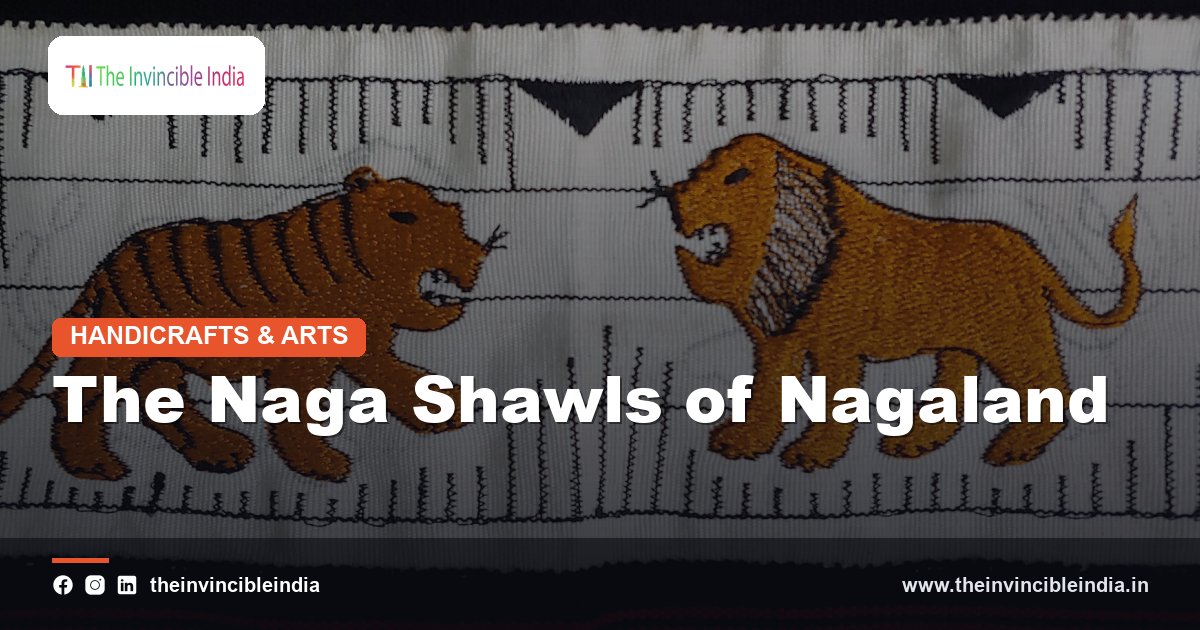
The Naga shawl, also described simply as a Naga tribal shawl, is the handwoven textile of the Naga peoples of Nagaland in the Northeast of India, and among the most striking tribal textiles of the region. Woven on backstrap, or loin, looms, these shawls are known for their bold warp-striped bands, their deep colours and their symbolic motifs. Nagaland is home to many Naga tribes, among them the Ao, Angami, Lotha and Sumi, and each community carries its own distinctive patterns, colours and conventions, so that a shawl can speak of the wearer’s tribe and standing. Certain shawls, such as the Ao tsungkotepsu, carry particular motifs and were traditionally earned rather than simply worn. Readers who enjoy India’s fine textile crafts may also explore the pashmina guide. This guide describes the Naga shawl, its weaving, its motifs, its colours, its tribes and its present-day place.
Quick answer: A Naga shawl is a handwoven tribal textile of the Naga peoples of Nagaland, India, woven on a backstrap or loin loom and known for its bold warp-striped bands and symbolic motifs. Nagaland has many Naga tribes, such as the Ao, Angami, Lotha and Sumi, and each carries its own distinctive patterns and colours, so a shawl can indicate the wearer’s tribe and status. Some shawls, such as the Ao tsungkotepsu, were traditionally earned rather than merely worn.
Key Takeaways
- The Naga shawl is the handwoven tribal textile of the Naga peoples of Nagaland, in Northeast India.
- It is woven on backstrap, or loin, looms and is known for bold warp-striped bands and symbolic motifs.
- Nagaland is home to many Naga tribes, among them the Ao, Angami, Lotha and Sumi.
- Each tribe carries its own distinctive patterns, colours and conventions, so a shawl can indicate tribe and standing.
- Certain shawls, such as the Ao tsungkotepsu, carry particular motifs and were traditionally earned.
- The shawls are commonly woven in deep reds, blacks and whites with striped bands.
The sections below explain what a Naga shawl is, where it comes from, which tribes weave it, how it is made, what its motifs mean, the tsungkotepsu, its colours and why it still matters.
Quick Facts
| Detail | Information |
|---|---|
| Craft type | Handwoven tribal textile (loin-loom weaving) |
| Region of origin | Nagaland, Northeast India |
| Communities | Naga tribes including the Ao, Angami, Lotha and Sumi |
| Materials | Cotton, and in cooler use wool and other yarns |
| Technique | Weaving on a backstrap or loin loom, with warp-striped bands |
| Known for | Warp-striped bands, deep colours and symbolic tribal motifs |
| Notable shawl | The Ao tsungkotepsu, traditionally an earned shawl |
| GI status | Certain Naga textiles have been recognised with Geographical Indication tags; confirm details with the Registry |
What Is a Naga Shawl?
A Naga shawl is a handwoven tribal textile of the Naga peoples of Nagaland, distinguished by bold warp-striped bands, deep colours and symbolic motifs. Woven on backstrap, or loin, looms, the shawls are typically rectangular wraps worn over the shoulders and body, and are among the most recognisable tribal textiles of Northeast India. Their most characteristic feature is the arrangement of coloured stripes running along the cloth, often in deep red, black and white, sometimes bearing woven or added motifs with symbolic meaning. Because Nagaland is home to many Naga tribes, the shawls vary from community to community, each with its own patterns and conventions, so that a shawl can carry information about the wearer. The Naga shawl is thus both a garment and a marker of identity. Its striped bands and motifs define its character. It is a proud textile of the Naga people.
Where Do Naga Shawls Come From?
Naga shawls come from Nagaland, a state in the Northeast of India that is home to the Naga peoples, among whom handweaving is a long-rooted tradition. The hilly region and its many Naga communities have sustained the craft over generations, with weaving carried out in households as part of everyday life and culture. The shawls are identified closely with the various Naga tribes, each associated with particular patterns and colours rooted in its own traditions. Weaving on the loin loom, the use of distinctive striped bands and the symbolic motifs are all part of the shared yet varied textile heritage of the region. The craft belongs to the Naga people and to the land of Nagaland. Its home gives the shawl its identity and meaning. Nagaland is the heartland of Naga weaving. The region and the craft are inseparable.
Which Communities Weave Naga Shawls?
Naga shawls are woven by the many Naga tribes of Nagaland, among them the Ao, Angami, Lotha and Sumi, each with its own distinctive patterns, colours and conventions. Nagaland is home to numerous Naga communities, and weaving is practised across them, so that the textiles of the region form a rich and varied tradition rather than a single uniform style. Each tribe carries its own designs, and the patterns, stripes and motifs of a shawl can indicate the community to which the wearer belongs. The Ao, for example, are associated with shawls such as the tsungkotepsu, while other tribes have their own recognised cloths. This diversity, in which every community contributes its own textile identity, is a defining feature of Naga weaving. The shawls are the work of many tribes. Each adds its own voice to the tradition. Together they make a varied heritage.
What Materials Are Used in a Naga Shawl?
Naga shawls are woven chiefly from cotton, with wool and other yarns used for warmth, and coloured threads that give the shawls their characteristic striped bands. Cotton has long been a common fibre for the cloth, suited to the weaving and to wear, while warmer yarns are used for shawls meant for the cooler hill climate. The deep reds, blacks, whites and other colours of the stripes come from dyed yarns, and in the past natural dyes were used before manufactured yarns and dyes became more common. The choice of yarn and colour follows the conventions of each tribe and the purpose of the shawl. Any added motifs may be woven in or worked onto the cloth. The materials, simple but skilfully used, make the distinctive striped textile. Yarn and colour are the foundation of the craft. They give the shawl its form and character.
How Are Naga Shawls Woven?
Naga shawls are woven on a backstrap, or loin, loom, a simple portable loom in which the warp is stretched between a fixed point and a strap passed around the weaver’s back. The weaver controls the tension of the warp with the body, leaning back to tighten it, and weaves the weft through by hand, building up the cloth and its coloured striped bands row by row. Because the loin loom produces a cloth of limited width, larger shawls are often made by weaving panels and joining them together. The warp-wise arrangement of coloured threads creates the characteristic bands, and motifs may be woven in during this process or added afterwards. The whole process is done by hand and relies on inherited skill. Because practices vary, the exact methods differ between weavers and tribes. The loin loom gives the shawl its structure. The handwork is the heart of the craft.
What Do the Patterns and Motifs Mean?
The patterns and motifs of a Naga shawl carry meaning, often indicating the wearer’s tribe and, in some traditions, standing or achievement within the community. The arrangement of coloured striped bands is itself a mark of identity, as each tribe follows its own conventions of colour and pattern. Certain shawls bear additional motifs, which may depict figures, animals or symbols connected to the traditions and values of the community, and these can signal that the shawl is of a particular kind or rank. In some traditions, the right to wear a shawl bearing specific motifs was linked to deeds or to feasts of merit, so that the cloth spoke of the wearer’s place in society. The meanings follow the customs of each tribe and should be understood within that context. The motifs are a language of identity. They make the shawl more than a garment. They carry the traditions of the Naga people.
What Is the Tsungkotepsu Shawl?
The tsungkotepsu is a well-known shawl of the Ao tribe of Nagaland, recognised by its distinctive bands and its motifs, and traditionally carrying particular significance for the wearer. It is among the most celebrated of Naga shawls, marked by broad striped bands, commonly in red, black and white, and by a central band bearing painted or worked motifs depicting figures and symbols drawn from Ao tradition. In the customs associated with the shawl, the right to wear it was linked to standing and to achievement, so that it was a mark of distinction rather than an ordinary garment. The tsungkotepsu thus illustrates how a Naga shawl can embody both artistry and social meaning. It is a proud emblem of Ao identity. Its motifs and bands make it instantly recognisable. The tsungkotepsu stands among the most honoured of Naga textiles.
Why Were Some Shawls Traditionally Earned?
Some Naga shawls were traditionally earned rather than simply worn, with the right to a particular shawl linked to a person’s deeds, standing or participation in feasts of merit. In the customs of certain Naga tribes, social recognition was tied to achievements such as valour or to the giving of feasts of merit, through which a person gained honour within the community. The right to wear a shawl bearing specific motifs or of a particular kind could be associated with such standing, so that the cloth became a visible mark of distinction. This practice gave the shawl a meaning beyond its warmth and beauty, making it a statement of the wearer’s place in society. The particular customs varied between tribes and are best understood within each tradition. The earned shawl shows the deep social role of Naga textiles. The cloth spoke of honour. It was worn with pride and meaning.
What Colours Appear in Naga Shawls?
Naga shawls are commonly woven in deep, bold colours, above all red, black and white, arranged in striking striped bands, though the exact palette varies between tribes. The combination of dark grounds with bright bands gives the shawls their characteristic strong and dignified appearance. Red, black and white are especially associated with many Naga textiles, but other colours appear according to the conventions of each community and the purpose of the shawl. In the past, colours were obtained from natural dyes before manufactured yarns and dyes became common. The particular arrangement and choice of colours follow the traditions of each tribe and can themselves be a mark of identity. The colours are central to the shawl’s bold and recognisable look. They work with the striped bands and motifs. Together they give the Naga shawl its distinctive character.
How Does Each Tribe's Shawl Differ?
Each Naga tribe’s shawl differs in its patterns, colours, stripes and motifs, so that the textiles of Nagaland form a varied family rather than a single style. Because Nagaland is home to many Naga communities, such as the Ao, Angami, Lotha and Sumi, each with its own traditions, the shawls carry distinctive conventions that mark the wearer’s community. The arrangement of coloured bands, the particular motifs and the overall design follow the customs of each tribe, so that a knowledgeable eye can often tell which community a shawl belongs to. Certain shawls, such as the Ao tsungkotepsu, are strongly identified with a particular tribe. This diversity is one of the great riches of Naga weaving. The shawls differ from community to community. Each tribe keeps its own textile identity. Together they make a varied and vivid heritage.
What Role Do Shawls Play in Naga Society?
Naga shawls play an important role in society as markers of identity, status and belonging, worn in everyday life and on important occasions. Beyond their practical warmth, the shawls signal the wearer’s tribe and, in some traditions, standing or achievement, so that the cloth carries social meaning. Shawls are worn at festivals, ceremonies and gatherings, where their colours and motifs add to the dignity of the occasion and express community identity. In traditions where particular shawls were earned, wearing them was a public statement of honour. The weaving of shawls also forms part of household life and tradition, binding the craft to the fabric of the community. The shawl is thus woven into Naga social life. It is a garment, an emblem and a marker of identity. Its role reaches far beyond warmth. The shawl carries the identity of the Naga people.
What Is the History of Naga Shawl Weaving?
Naga shawl weaving has a long history in Nagaland, rooted in the household traditions of the Naga peoples, though its precise early origins rest on tradition rather than exact record. For generations, Naga communities have woven cloth on the loin loom, developing the distinctive striped bands, colours and motifs that mark the shawls of each tribe. The craft became bound up with identity, status and ceremony, with particular shawls carrying social meaning within their communities. Over time, the textiles of Nagaland have gained wider recognition as a remarkable tribal weaving tradition of Northeast India. Because much of the early story rests on tradition, it is best described in general terms as part of the region’s heritage. What is clear is that Naga weaving is long-rooted and deeply tied to community life. Its history lies in the households and traditions of the Naga tribes.
Who Are the Weavers of Naga Shawls?
Naga shawls are woven largely by women within Naga households, who tend the loin loom and carry the knowledge of patterns, colours and motifs passed down over generations. Weaving on the backstrap loom is a skill learned within families and communities, and women have traditionally been the principal weavers, producing cloth for their households and communities. The knowledge of each tribe’s distinctive designs and conventions is kept and transmitted by these weavers, so that the textile identity of each community is sustained. For many, the craft is both a tradition and a source of livelihood. Like many handloom crafts, Naga weaving depends on keeping skilled weavers in the trade and on fair returns for their work. The weavers, and especially the women among them, are the craft’s living heart. Their skill and knowledge keep the tradition alive. They carry the identity of their communities in thread.
Do Naga Shawls Have a GI Tag?
Certain Naga textiles of Nagaland have been recognised with Geographical Indication tags, marking them as distinctive products rooted in the state and its communities. Such recognition identifies particular shawls and textiles with Nagaland and with the tribes and weavers who produce them, and helps protect the names and traditions from imitation. Because the Naga textile tradition includes many tribes and types of cloth, the precise scope and current status of any recognition is best confirmed with the official Geographical Indications Registry and the relevant state authorities, since the particulars of such tags should be checked rather than assumed. Whatever the formal specifics, the shawls are clearly and strongly identified with Nagaland and its Naga communities. Recognition and heritage interest help protect the craft and sustain its makers. They also encourage the making and buying of genuine Naga textiles. The bond between the shawls and their communities remains central to their identity.
How Can You Buy an Authentic Naga Shawl?
An authentic Naga shawl can be bought from recognised Nagaland handloom emporiums, cooperatives, trusted weavers and reputable stores that identify the cloth as genuine handwoven Naga textile. A genuine shawl is woven by hand on the loin loom, showing the characteristic striped bands, deep colours and the slight natural variation that marks handwork, and may carry motifs connected to a particular tribe. Mass-produced or machine-made imitations may look perfectly uniform, use synthetic materials or copy motifs without the proper tradition. Buyers should also treat shawls bearing motifs of social or ceremonial significance with respect, understanding their meaning within the community. Buyers can examine the weaving, ask about the tribe, the weaver and the region, and look for handloom or cooperative labelling. Buying from recognised emporiums, cooperatives or known weavers helps income reach the makers. Careful and respectful buying rewards genuine craftsmanship. It secures a true piece of Naga heritage.
Naga Shawls Today
Naga shawls today remain a proud living tradition of Nagaland and one of the most admired tribal textiles of Northeast India, treasured for their bold bands, deep colours and symbolic motifs. Weavers, many of them women, continue to work the loin loom, and the distinctive shawls of the various Naga tribes continue to be worn at festivals, ceremonies and in daily life, as well as sought by admirers of handwoven craft. Geographical Indication recognition for certain Naga textiles and growing interest in tribal and handmade textiles have brought wider attention to the craft. At the same time, Naga weaving faces real challenges, including competition from machine-made imitations, fair returns for weavers and the need to pass skills and knowledge of the motifs to new generations, with due respect for their meaning. Readers can support the tradition by choosing genuine shawls through recognised sources. Naga shawls endure as vivid emblems of the Naga peoples. Their striped bands keep the tradition alive.
Sources & Further Reading
- Development Commissioner (Handlooms), Ministry of Textiles, Government of India (handlooms.nic.in).
- Geographical Indications Registry, Government of India (ipindia.gov.in).
- Department of Industries and Commerce, Government of Nagaland.
Frequently Asked Questions
What is a Naga shawl?
A Naga shawl is a handwoven tribal textile of the Naga peoples of Nagaland, woven on a backstrap or loin loom and known for bold warp-striped bands and symbolic motifs. Nagaland has many Naga tribes, and each carries its own distinctive patterns and colours. A shawl can indicate the wearer’s tribe and, in some traditions, their standing.
What is the tsungkotepsu shawl?
The tsungkotepsu is a well-known shawl of the Ao tribe of Nagaland, recognised by its broad striped bands and its motifs depicting figures and symbols from Ao tradition. In the customs associated with it, the right to wear it was linked to standing and achievement. It is among the most celebrated of Naga shawls.
Why were some Naga shawls earned?
Some Naga shawls were earned because, in the customs of certain tribes, the right to wear a particular shawl was linked to a person’s deeds, standing or participation in feasts of merit. The cloth thus became a visible mark of honour within the community. The particular customs varied between tribes.
How are Naga shawls woven?
Naga shawls are woven by hand on a backstrap, or loin, loom, in which the warp is held in tension by a strap around the weaver’s back. The weaver passes the weft by hand to build the cloth and its coloured striped bands. Larger shawls are often made by weaving panels and joining them.
Do Naga shawls have a GI tag?
Certain Naga textiles of Nagaland have been recognised with Geographical Indication tags, identifying particular shawls with the state and its communities. Because the tradition includes many tribes and cloths, the precise scope and current status are best confirmed with the official Geographical Indications Registry and the relevant state authorities.
How can I identify an authentic Naga shawl?
An authentic Naga shawl is handwoven on the loin loom, showing characteristic striped bands, deep colours and the slight natural variation of handwork, and may carry motifs connected to a particular tribe. Machine-made imitations look perfectly uniform or use synthetic materials. Buying from recognised Nagaland emporiums, cooperatives or known weavers helps ensure authenticity.


