

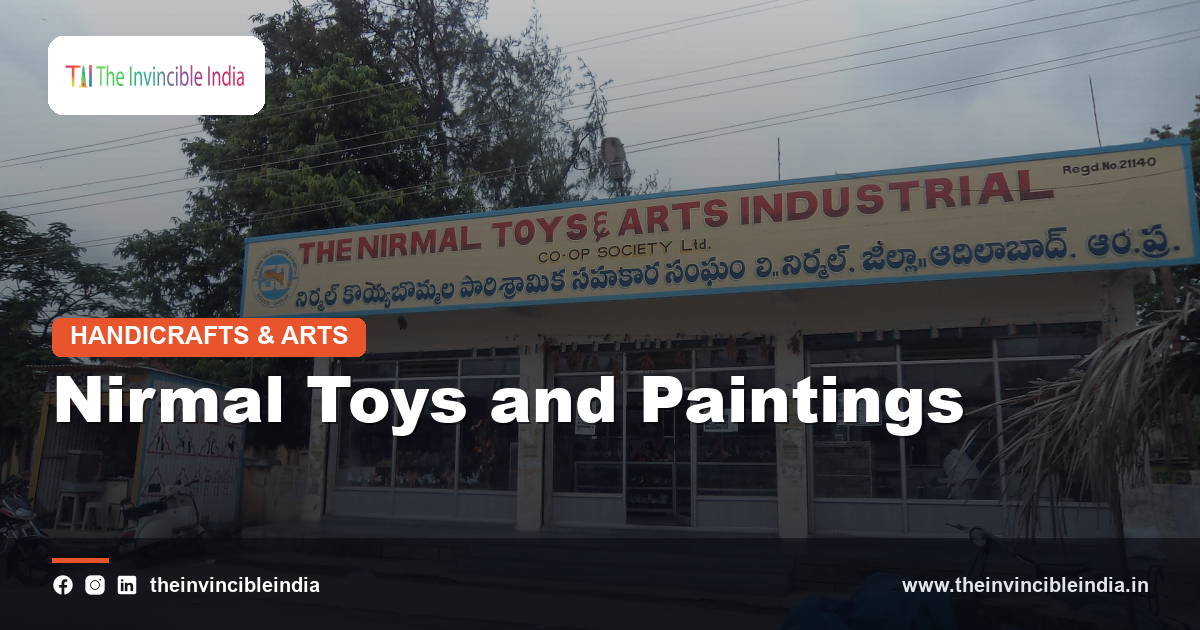
Nirmal toys and paintings are a craft tradition from the town of Nirmal in Telangana, combining lightweight wooden toys and figurines with a distinctive gold-tone painting style applied to both toys and flat decorative panels. Produced by artisan families whose craft is said to trace back many generations, Nirmal work shares the broader Indian tradition of regional wooden toys seen in crafts such as Etikoppaka lacquer toys from Andhra Pradesh, though Nirmal’s use of a distinctive golden paint finish sets it clearly apart. The craft encompasses both three-dimensional toys and flat Nirmal paintings, unified by a shared palette and decorative sensibility.
Quick Facts
| Detail | Information |
|---|---|
| Also Known As | Nirmal art, Nirmal ware |
| Primary Region | Nirmal town, Telangana |
| Wood Used | Poniki (light softwood) |
| Signature Finish | Gold-tone paint over natural gum base |
| Traditional Subjects | Animals, birds, mythological figures |
| Craft Forms | Wooden toys and flat panel paintings |
Origins in Nirmal Town
Nirmal toys and paintings take their name from Nirmal, a town in Telangana long associated with a distinctive tradition of wooden craft and decorative painting. Artisan families in the area are understood to have practised this craft over many generations, developing specialised techniques particular to the region.
The craft’s development is often linked to historical patronage and cross-cultural influence in the region, which contributed to a decorative style that blends elements recognisable from broader Deccan artistic traditions with locally distinct materials and techniques.
Poniki Wood: A Light Raw Material
Nirmal toys are traditionally carved from poniki wood, a notably light and soft timber that allows artisans to shape intricate toy forms with relative ease while keeping the finished pieces lightweight. This particular wood is central to the craft’s identity and working methods.
The lightness of poniki wood makes it especially suitable for producing delicate toy figures and small decorative objects, distinguishing Nirmal craftsmanship from wooden toy traditions elsewhere in India that rely on denser timbers requiring different carving and finishing approaches.
Carving Traditional Toy Forms
Artisans shape poniki wood into a range of toy forms, including animals, birds, and human figures, using hand tools to carve and smooth each piece before it proceeds to the painting stage. This carving work requires patience and a steady, practised hand.
Because poniki wood is soft, carvers must work carefully to avoid damaging fine details, particularly on smaller figures where delicate features such as limbs or facial elements are especially vulnerable to breakage during shaping.
Preparing the Gesso Base
Before painting, carved wooden surfaces are typically prepared with a smooth base coating made from natural binding materials, creating an even ground capable of holding fine painted detail. This preparatory layer is essential to achieving the craft’s characteristic polished appearance.
The quality of this base preparation directly affects how well subsequent layers of paint adhere and how smooth the final surface appears, making it a critical, though often overlooked, stage in producing high-quality Nirmal work.
The Gold-Tone Painting Technique
The most distinctive feature of Nirmal craft is its gold-tone painting technique, in which figures and motifs are rendered predominantly in golden and metallic hues against a dark background, producing a rich, glowing visual effect. This technique applies equally to toys and flat panel paintings.
This golden palette gives Nirmal work an immediately recognisable appearance, distinguishing it from most other Indian wooden craft traditions, which typically rely on bright, varied colour schemes rather than a dominant metallic tone.
Nirmal Paintings on Flat Panels
Alongside three-dimensional toys, Nirmal artisans also produce flat decorative paintings on wood panels, depicting scenes and figures using the same gold-tone technique associated with the region’s toy-making. These panel paintings represent a parallel strand of the same broader craft tradition.
Such paintings often draw on mythological themes, courtly scenes, and depictions of flora and fauna, allowing the golden painting style to be appreciated as a standalone decorative art form rather than solely as a finish applied to carved toys.
Mughal and Persian Stylistic Influence
Nirmal’s decorative painting style is often described as reflecting influences from Mughal and Persian miniature traditions, visible in the composition and figure styles found in many Nirmal panel paintings. This blending of influences reflects the region’s broader historical cultural exchanges.
While Nirmal art has absorbed these outside stylistic elements, it has integrated them into a distinct local idiom defined by its characteristic gold-and-dark colour scheme, resulting in a craft that is recognisably its own rather than a direct imitation of any single outside tradition.
Animal and Bird Motifs
Animals and birds are especially popular subjects in Nirmal toy-making, with elephants, horses, peacocks, and other creatures rendered in simplified, elegant forms suited to both carving and the golden painted finish. These motifs remain among the craft’s most enduring and recognisable products.
Such animal figures are often produced in varying sizes, from small collectible pieces to larger decorative items, allowing the same core motifs to serve different market segments while maintaining the craft’s consistent visual identity.
Nirmal Furniture and Larger Objects
Beyond toys and small paintings, Nirmal artisans have also applied their gold-tone painting technique to furniture and larger decorative objects, extending the craft’s distinctive aesthetic to items intended for home interiors. This diversification has broadened the craft’s commercial scope.
Painted furniture pieces allow the golden Nirmal style to be appreciated at a larger scale, appealing to buyers seeking distinctive, handcrafted decorative items beyond the smaller toys and panels more traditionally associated with the craft.
Artisan Families and Craft Transmission
Nirmal craftsmanship has traditionally been passed down within specific artisan families in and around Nirmal town, with skills in carving, base preparation, and gold-tone painting transmitted through direct family apprenticeship rather than formal training institutions. This close family structure has sustained the craft’s continuity.
Younger family members typically begin by assisting with simpler tasks before progressing to more demanding carving and painting work, gradually absorbing the specialised knowledge required to produce high-quality Nirmal pieces.
Government Support and Craft Institutions
Government craft development bodies have supported Nirmal artisans through training programmes, cooperative structures, and promotional initiatives aimed at sustaining the craft’s economic viability. Such support has included efforts to modernise marketing while preserving traditional techniques.
These institutional efforts have helped connect Nirmal artisans to wider domestic and international markets, providing additional avenues for sustaining a craft that might otherwise face pressure from cheaper, mass-produced alternatives.
Distinguishing Nirmal from Other Wooden Crafts
While India has several regional traditions of wooden toy-making, Nirmal is most readily distinguished by its gold-tone painting technique and use of poniki wood, features not typically found together in other regional crafts. This combination gives Nirmal work a clear and recognisable identity.
Buyers and collectors familiar with India’s craft landscape often identify Nirmal pieces specifically by their golden, dark-ground painting style, which stands apart from the brighter, more varied palettes typical of other Indian wooden toy traditions.
Market Presence and Contemporary Demand
Nirmal toys and paintings are sold through craft emporiums, exhibitions, and increasingly online platforms, reaching buyers across India and among collectors of Indian folk art internationally. This market reach has provided important economic support for artisan families in Nirmal.
Continued interest from designers and collectors in distinctive regional craft styles has helped sustain demand for Nirmal’s golden painting technique, encouraging its application to an expanding range of products beyond traditional toys.
Challenges Facing the Craft
Nirmal craftsmanship faces challenges typical of many traditional Indian handicrafts, including competition from cheaper manufactured goods, the time-intensive nature of hand carving and painting, and the need to attract younger artisans to sustain the tradition. These pressures require ongoing attention.
Efforts to address these challenges have included skill-development programmes and marketing support aimed at improving artisan incomes, recognising that the craft’s survival depends on making it a viable livelihood for future generations.
Tools and Workshop Practices
A typical Nirmal workshop combines basic carving tools for shaping poniki wood with fine brushes used for applying the gesso base and gold-tone paint, reflecting the craft’s reliance on manual skill rather than mechanised equipment. Workshops are often small, family-operated spaces.
Because the painting stage demands particular precision, especially when outlining fine details in gold against a dark ground, artisans typically dedicate separate time and attention to this step, distinct from the earlier carving and base-preparation stages of production.
Recognition at Craft Fairs
Nirmal artisans regularly participate in state and national craft fairs and exhibitions, where their gold-tone toys and paintings are displayed alongside other regional handicrafts, helping raise awareness of the tradition among buyers unfamiliar with Telangana’s craft heritage. Such events provide valuable direct sales opportunities.
Recognition at these fairs has also helped connect Nirmal artisans with designers and retailers interested in stocking distinctive regional crafts, supporting the tradition’s continued presence in both domestic and specialty export markets.
Nirmal Pieces as Home Décor
Beyond toys and traditional panel paintings, Nirmal’s gold-tone finish has been applied to a range of home décor items, including wall plaques, trays, and small decorative boxes, broadening the craft’s appeal to buyers furnishing contemporary interiors. This extension has diversified artisan income sources.
Such décor items allow the distinctive golden aesthetic associated with Nirmal to reach households seeking a single striking accent piece, rather than requiring buyers to purchase a full traditional toy or painting to appreciate the craft’s visual character.
Training and Skill Continuity
Sustaining Nirmal’s specialised carving and gold-tone painting techniques depends heavily on younger family members learning the craft directly from experienced relatives, a process that typically unfolds gradually over several years of hands-on practice. This close mentorship model has kept the tradition alive across generations.
Recognising the risk of skills fading as fewer young people enter traditional crafts, some cultural and craft development organisations have introduced supplementary training efforts aimed at documenting techniques and encouraging new entrants to the trade.
Presentation and Retail Packaging
As Nirmal products have reached broader retail and export markets, careful packaging has become increasingly important for protecting delicate painted surfaces during transport while presenting the craft attractively to buyers unfamiliar with its regional origins. Thoughtful presentation helps convey the value of handcrafted work.
This attention to packaging and presentation has supported Nirmal’s growing visibility in craft emporiums and online marketplaces, where clear communication of the item’s handmade, regionally rooted character can significantly influence buyer interest.
Nirmal Toys and Paintings Today
Nirmal toys and paintings today continue to represent a distinctive strand of Telangana’s craft heritage, recognised for a golden painting technique found nowhere else in quite the same form. Artisan families in Nirmal town remain the primary custodians of this tradition.
With continued institutional support and sustained interest from craft buyers and collectors, Nirmal’s combination of lightweight wooden carving and gold-tone painting appears likely to remain an active and valued part of India’s regional craft landscape.
Sources & Further Reading
- Ministry of Culture, Government of India (indiaculture.gov.in).
- Ministry of Textiles, Government of India (texmin.nic.in).
Frequently Asked Questions
What makes Nirmal toys distinctive?
Nirmal toys are distinguished by their use of lightweight poniki wood combined with a signature gold-tone painting technique that gives finished pieces a rich, golden appearance against a dark background.
Where does the Nirmal craft come from?
Nirmal toys and paintings originate from Nirmal town in Telangana, where artisan families have practised this craft over many generations.
Do Nirmal artisans only make toys?
No, Nirmal artisans also create flat decorative panel paintings and, in some cases, painted furniture, all using the same characteristic gold-tone painting style.
What subjects are commonly shown in Nirmal art?
Common subjects include animals and birds such as elephants, horses, and peacocks, as well as mythological figures and scenes influenced by Mughal and Persian painting traditions.
Why is poniki wood used for Nirmal toys?
Poniki wood is soft and notably light, making it easy to carve into detailed toy forms while keeping the finished pieces lightweight and easy to handle.


