


If any Engineering college of Udaipur is not in the list, Please message us on our FACEBOOK PAGE
[totalpoll id=”1114″]


When someone comes to Rajasthan, the first thing which comes to mind is about Forts, Palaces, Historic Places and deserts.


GO EXPERIENCE THE INDIAN FAIRYTALE CALLED

 The Jantar Mantar is an equinoctial sundial, consisting a gigantic triangular gnomon with the hypotenuse parallel to the Earth’s axis. On either side of the gnomon is a quadrant of a circle, parallel to the plane of the equator. The instrument is intended to measure the time of day, correct to half a second and declination of the Sun and the other heavenly bodies.
There are five Jantar Mantar monuments in India, of which the largest is in Jaipur which features many instruments along with the world’s largest stone sundial. The Vrihat Samrat yantra is a sundial that can give the local time to an accuracy of 2 seconds. It is a UNESCO World Heritage Site.
In the early 18th century, Maharaja Jai Singh II of Jaipur constructed five Jantar Mantars in total, in New Delhi, Jaipur, Ujjain, Mathura and Varanasi; they were completed between 1724 and 1735.
 The Jantar Mantar monument in Jaipur, Rajasthan is a collection of nineteen architectural astronomical instruments built by the Rajput king Sawai Jai Singh II, and completed in 1734. It features the world’s largest stone sundial, and is a UNESCO World Heritage site. It is located near City Palace and Hawa Mahal. The instruments allow the observation of astronomical positions with the naked eye. The monument expresses architectural innovations, as well as the coming together of ideas from different religious and social beliefs in 18th-century India. The observatory is an example of the Ptolemaic positional astronomy which was shared by many civilizations.
 Jantar Mantar is located in the modern city of New Delhi. It consists of 13 architectural astronomy instruments. The site is one of five built by Maharaja Jai Singh II of Jaipur, from 1723 onwards, as he was given by Mughal emperor Muhammad Shah the task of revising the calendar and astronomical tables. There is a plaque fixed on one of the structures in the Jantar Mantar observatory in New Delhi that was placed there in 1910 mistakenly dating the construction of the complex to the year 1710. Later research, though, suggests 1724 as the actual year of construction.
 Jantar Mantar is an observatory built in Varanasi in the year 1737 by Maharaja Jai Singh II of kingdom of Amber (later called Jaipur). The observatory is one of the five observatories built by Maharaja Jai Singh II.
 Vedh Shala or Jantar Mantar is located in the holy city of New Ujjain. It is an observatory built by Maharaja Jai Singh II in 1725 which consists of 13 architectural astronomy instruments. The observatory is one of the five observatories built by Maharaja Jai Singh II when he was governor of Ujjain.
 Raja Jai Singh and his astrologer Pt. Jagannath contributed their invaluable contributions in the spread of this science by composing texts like ‘Yantra type’ and ‘Emperor theory’. He has established 5 observatories in his care, out of which Mathura was the last one. After it, Jai Singh also added Indian astronomy to European ideology. So it would be fair to say that Jaisingh’s observatories became the basis of the constellations of the future in India. Thus a circle of constellations is completed from the observatory and observatories from stone structures.

 Dussehra is a Hindu festival celebrated all over the country. As the name suggests, it is the ‘Tenth Day’ of the fierce battle fought; when Lord Rama killed King Ravana. This holy day marks the victory of good over evil. The Dussehra Festival of Kota is quite a unique experience for both, the residents and tourists. Villagers dress themselves in colourful traditional wear and join long processions to offer their prayers to Lord Rama. Cultural programmes are organised and include scintillating performances by well-known artists. However, the highlight of the festivities is the theatrical representation of the encounter popularly known as ‘Ramleela’. The drama is so highly anticipated among the locals that spectators start chanting the name of Lord Rama during the show. The climax of the show holds most appeal as it ends with setting alight gigantic effigies of the 10-headed Ravana along with his brother Kumbhkarana and his son Meghnath. These 75-feet tall statues are stuffed with crackers and once set on fire, they burst to create an extravagant show.
 The Kota Adventure Festival is held every year during Dusserha (October). Originally started off to boost tourism, this festival is a paradise for adventure-sports lovers. Tourists from across the world can witness various events such parasailing, rafting, wind surfing, water skiing and kayaking. Apart from these activities, visitors can also indulge in rock climbing, gliding, trekking, angling and rural excursions. The panoramic and stunning view of the Chambal River adds to the beauty and excitement of the Adventure Festival.
 The most popular festival in Jodhpur is the Marwar Festival. The two-day festival is held every year in the month of Ashwin (between September and October) in memory of the heroes of Rajasthan. It was originally known as the Maand Festival. The main attraction of this festival is the folk music centering around the romantic lifestyle of Rajasthan’s rulers. The music and dance of the Marwar region is the main theme of this festival. The folk dancers and singers assemble at the festival and provide lively entertainment. These folk artists give you a peek into the days of yore, of battles and of heroes who live on through their songs. Among other attractions at the festival is the Camel Tattoo Show and various competitions like Moustache, Turban Tying, Tug of War, Matka Race, Traditional Dress Competition and many more. The venues of this festival include the famous Clock Tower & Osian’s sand dunes.
 The Kolayat Fair of Bikaner holds great importance for the locals who eagerly await it. Tourists also experience a great time as the fair is celebrated on an expansive scale. Also known as ‘Kapil Muni Fair’, it is held in the month of November. The pomp and show of the fair is not its only attraction as it also possesses great religious significance. A large number of devotees visit the fair to take a holy dip in the Kolayat Lake. It is believed that a holy dip can absolve them of all their sins.

Every year, the Chandrabhaga Fair in Rajasthan welcomes thousands of visitors and participants from all over the nation. It is held at Jhalrapatan, situated at a distance of about six kilometres from Jhalawar, in the month of Kartik (October and November). This fair attracts travellers, pilgrims and explorers alike with rituals and traditions practiced in this region. A lot of pilgrims assemble on the banks of river Chandrabhaga during the fair and participate in this gala event. The festival, named after the river Chrandrabhaga, is considered very sacred by the people of Rajasthan. People travel from far just for a dip in the river as they believe this will purify their souls. A huge cattle fair is also organised here, where livestock such as cows, horses, buffaloes, camels and bullocks are purchased from various parts for resale. The fair includes several spiritual and traditional activities. During the fair, the Department of Tourism organises activities over a course of 3 days like traditional Deepdan, Shobha Yatra and various competitions as well as cultural evenings.
 The Matsya festival of Alwar held in November over two days is the foremost of all fairs and festivals of Rajasthan. It is celebrated to glorify the prosperity, traditional values and colourful customs of the region. This festival is renowned for its colourful processions, cultural performances, an array of sporting events and impressive artistic exhibitions. The magnificence of Alwar’s numerous palaces and forts, lakes, hunting lodges, archaeological sites and thick forests, make it a delightful setting for a flamboyant celebration.
 The Bundi Festival is celebrated in the month of Kartik (October-November) and includes several spiritual and traditional activities. It is a remarkable cluster of traditional art, culture and craftsmanship and visitors are left charmed by its magnificence. The program includes a colourful Shobha Yatra, arts & crafts fair, ethnic sports, cultural exhibition, classical music & dance program, turban competitions, bridal clothing, musical band competitions, and a sparkling fireworks display. Early in the morning, after the full moon night of Kartik Purnima, women and men clad in attractive colourful costumes light diyas or lamps on the banks of River Chambal and seek blessings.
 The Kumbhalgarh fort, cradled in the Aravali Ranges, north of Udaipur, hosts the vibrant and colourful Kumbhalgarh Festival. This three-day festival is an incredible effort by the Department Of Tourism of the state to promote the culture and heritage of Rajasthan. The event is divided into two parts- day and night. In the daytime there is the folk performances by traditional artistes and competitions like turban tying and henna applying. On the other hand, the night is filled with impressive explosions of lights, sound, colours and dance. The Kumbhalgarh Festival is a must visit for ardent patrons of art, music and dance. Visit Rajasthan Tourism Facebook Page for more details. The Udaipur Airport is the closest and is located 98 kilometres away.
 Located in district Pali is the city of Ranakpur that becomes the delightful setting for one of the most popular festivals of Rajasthan. Organized by the Department of Tourism, this festival offers a unique insight into the local culture and heritage. With fun activities like yoga, nature walks at the foothills in forests of aravallis, visits to the Ranakpur Jain temple, hot air ballooning, interesting activities like : tug of war, beautiful decorations, cultural programmes, the open air amphitheater at Sun Temple showcases attractive folk and classical performances every evening and much more, the Ranakpur Festival is something you simply cannot miss. This festival is usually held on the 21st and 22nd of December every year, playing host to tourists from all corners of the globe, to immerse them in a colorful affair of cultural festivity!

The government of India Approved the construction of 6 nuclear-powered submarines in February 2015. These will be designed by the Navy’s in-house Directorate of Naval Design and indigenously built in Shipbuilding Centre Vishkapatnam. Indian Government approved the project of 6 nuclear-powered attack submarines and seven stealth frigate at the cost of about $16 billion.
It is expected that the new domestically build submarines are likely to be based on Akula-class submarines because India uses the Russian Nuclear Submarines INS Chakra for about 10 years on lease. The submarines will be powered by a Miniature pressurised water reactor(PWR) being developed by the Bhabha Atomic Research Centre Which has already supplied a similar 83 miniature reactor for the Arihan-class SSBNs.

The Arihant Class is a class of nuclear-powered ballistic missile submarines being built for the Indian Navy. The lead Vessel of the class, INS Arihant was first launched in 2009 and began sea trails in December 2014. It is expected to commissioned in Early 2016 . Presently it is under sea trails. The Arihant-class submarine are being built under the US $2.9 billion Advanced Technology Vessel (ATV) project to design and build nuclear-powered submarines.They will be the first nuclear submarines designed and built by India.

The Kalvari Class is a class of Submarine based On the Scorpene-class submarine. The diesel-electric powered Scorpene submarine to be called INS Kalvari after commissioning will undergo extensive sea trials before it is cleared to formally join the Indian Navy. The diesel-electric submarines are being built at the state-run Mazgaon docks in Mumbai; they are expected to be inducted into the Navy by 2018, about four years later than planned.
Project delayed by 4 years. The first submarine is planned to be in service by 2016 and the last by 2020. India plans to make 6 in total where 5 are under construction and 1 submarine named INS Kalvari has been launched to undergo sea trials on April 2015.

The Akula class submarines is a nuclear-powered submarine first deployed by the Soviet Union in 1986. It is being operated by three nations namely Soviet union, Russian Navy and Indian Navy. India leased INS Chakra the Akula Class submarine from Russia.It was officially inducted into the Indian Navy on April 4, 2012.Before leasing more than three hundred Indian Navy personnel were trained in Russia for the operation of the Akula II Submarine Nerpa.Later on, it is named INS Chakra.

The Indian Navy Swimmer Delivery Vehicle(SDV) I a planned class of Midget Submarine for the Indian navy. under this programme, the Indian Navy will acquire 2 midget submarines for use as Swimmer delivery vehicles. These submarines will be used for conducting underwater special operations by MARCOS. Both submarines will be constructed by Hindustan Shipyard limited, The cost of procuring the two SDVs will be around 2000 crore.

The Project 75I-class submarine is a follow-on of the project 75 Kalvari-Class submarine for the Indian Navy. Indian navy has acquired 6 diesel-electric submarines under this project which features advanced Air Independent Propulsion (AIP) system that enables the submarines to stay submerged for longer duration and increasing its operational range sustainability. All the 6 submarines are expected to be constructed in Indian Shipyards and the project costs around $8.1 Billion. In October 2014, The project got a green signal from Defence Acquisition Council.
The Project 75I submarines will have a vertical Launching system that enables the submarine to carry Brahmos Supersonic cruise missile making it fully capable to do anti-surface and anti-ship warfare missions. The submarines will be armed with torpedoes and feature advanced stealth capabilities such as greater suppress noise and acoustics signature.

Kumbhalgarh fort is a Mewar fortress on the westerly range of Aravalli Hills, in the Rajsamand district near Udaipur of Rajasthan state. Kumbhalgarh is the second largest fort in Rajasthan and is declared as a ‘World Heritage Site’.
Built on a hilltop 1,100 m (3,600 ft) above sea level on the Aravalli range, the fort of Kumbhalgarh has perimeter walls that extend 36 km (22 mi), and is 15 feet wide making it one of the longest walls in the world.


The fort houses 7 gates of which Aaret Pol, Hulla Pol, Hanuman Pol and Ram Pol are the major gates. Pol in the local language means “Main Gate”. There are different sections with rooms constructed inside the fort and given different names likes ‘Badal Mahal’, ‘Kumbha Mahal’ etc. The Badal Mahal is one of the most important and attractive buildings built by Rana Fateh Singh. From the palace top, it is possible to see kilometres into the Aravalli Range.


 The Kumbhalgarh fort has around 360 temples and surprisingly 300 of them are Jain temples and rest are Hindu temples.
The reason of Jain temple in such quantity is due to the fact that the place was earlier ruled by a Jain prince Samprati of the second century B.C.
Kumbhalgarh Fort is surrounded by Wildlife Sanctuary in which you can take a jungle safari organized by local tour operators. The sanctuary is a home to various wild animals like chinkara, leopard, Sloth Bear, Antelope, jackal, sambhar, nilgai and hyena & various species of birds.


*Visible Marwar and Sand Dunes


The sand dunes of the Thar Desert can be seen from the fort walls.
*Birthplace of a Braveheart
Kumbhalgarh fort also holds the honour of being the birthplace of the brave Maharana Pratap, the great warrior of Mewar who didn’t succumb to the giant Mughals.
*Remained ‘almost invincible’
 The Kumbhalgarh fort remained almost invincible throughout the Mewar rulers era, it just got breached once that too due to the shortage of water supplies. It got captured by the joint army of four kings, Mughal king Akbar, Amer’s Man Singh, Mewar’s Udai Singh, and Sultan of Gujrat.
*The Giant Lamp used for light
It is said that Maharana Kumbha used to light giant lamp which used 100 kg cotton and 50 kg ‘ghee’ to provide light to the farmers working in the farms at night. The lamps used to glow so brightly that its brightness used to reach in miles.
*Light and Sound show inside Kumbhalgarh Fort
The Rajasthan Tourism Department organizes a three-day annual festival in the fort in remembrance of the passion of Maharana Kumbha towards art and architecture. Sound and light shows are organized with the fort as the background. Various concerts and dance events are also organised to commemorate the function. The other events during the festival are Heritage Fort Walk, turban tying, tug-of-war and Mehendi Mandana among others.


*Sunset point
A place where you want to spend your dusk.


– Jayesh Vyas
Want to get your talent, poem or article featured on our blog, just mail it to us at talent@theinvincibleindia.in with a proper Title, content, your name and category of writing..


 Teej refers to all the monsoon festivals observed particularly in the western and northern states of India. The festivals celebrate the bounty of nature, arrival of the monsoon, greenery and birds with social activities, rituals & customs. The festival is mainly for women, and includes dancing, singing, getting together with friends and narrating stories, applying henna on hands and feet, wearing brightly coloured lehariya saris, sharing festive foods and playing under trees on swings on Haryali Teej. The festivals are dedicated, in many parts of India, to Goddess Parvati, also known as Teej Mata. Women pray to the goddess seeking the wellness of their husband. On this occassion, a royal procession of Goddess Teej comprising of camels, dancing folk artists, royal palanquins, chariots and bullock carts, starts from the City Palace, winding its way through Tripolia Bazaar and Chhoti Chaupar on both days. The traditional sweet Ghewar is closely associated with the festival and enjoyed heartily over its duration.
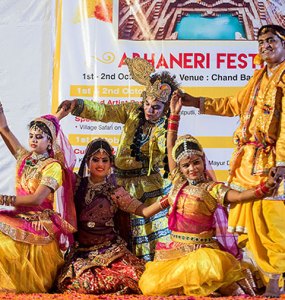 ‘Abhaneri festival’ is named after the village Abhaneri in the Dausa district which is around 90 km from Jaipur on the Agra road. This two-day festival has gained immense popularity amongst the tourists around the globe. This year, it will commence from 10th to 13th September with various Rajasthani & local folk performances like Kachhi Ghori, Kalbeliya, Ghoomar, and Bhawai. Festival was initiated by Rajasthan Tourism in 2008, it is of great significance for Rajasthan. The village of Abhaneri was originally named Abha Nagri, meaning “city of brightness”. The place is popular for the Chand Baori-step well, one of the largest step wells built over a thousand years ago. Be a part of the celebrations at Abhaneri and dip into the rustic charm of traditional Rajasthani music.
Interesting Facts About Surgical Strike by Indian Army
Defence Minister Manohar Parrikar (Now, CM of GOA), National Security Advisor Ajit Doval, Army Chief Dalbir Singh and Director General Military Operations Ranbir Singh monitored the operation of surgical strike.
No army would be foolish enough to provide evidence of an intelligence-based surgical strike. Although few central ministers wanted to know about the whole operation as a documentary. How could the army tell you about the satellite positions, equipment which they used?
It only puts a big questions mark on their thinking and intelligence…
These few facts can only be observed by the news:
Do share it if you agree to the facts and are proud of Indian Army for conducting it.
JAI HIND!!
Complete Documentary of Surgical Strike by History TV18 Channel:-