

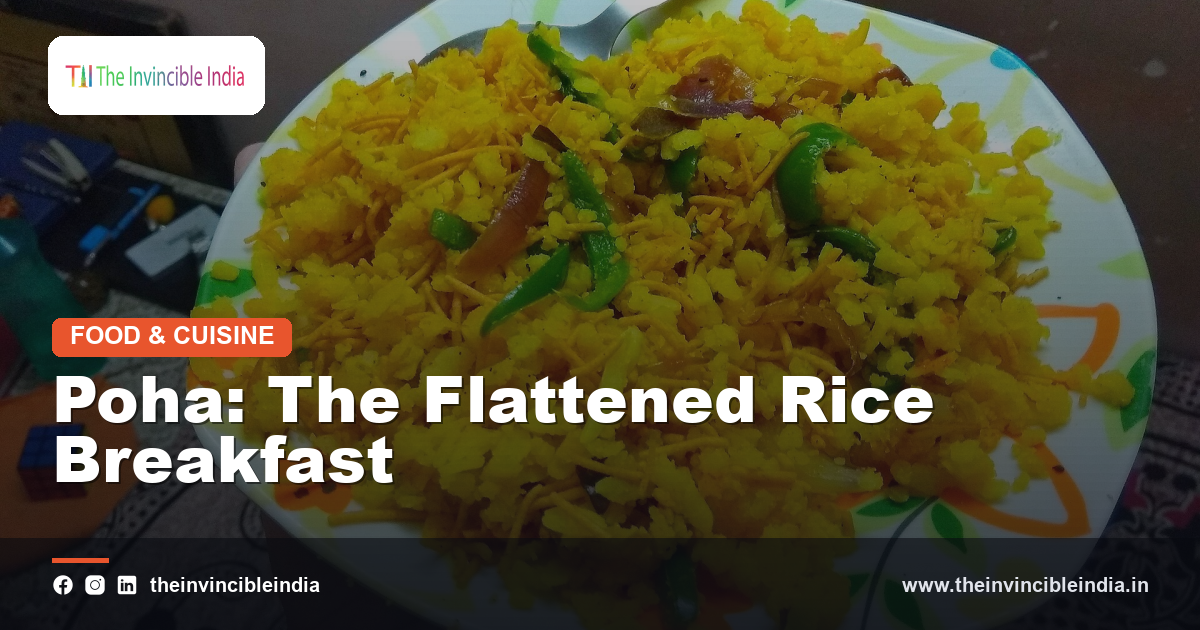
Poha is one of India’s most widely eaten breakfast dishes, made from flattened, parboiled rice that is lightly rinsed and cooked quickly with onion, mustard seed, turmeric and curry leaves into a soft, fluffy preparation finished with a squeeze of lime. Loved for how quickly it comes together and how easily it adapts to local taste, poha is eaten from Maharashtra to Madhya Pradesh, appearing on breakfast tables, in railway station stalls and at roadside eateries alike. Much as rice underpins so many of the regional cuisines of India in different forms, poha represents one of its lightest and most everyday incarnations. This guide explores poha, its preparation, its regional character and its enduring place in India’s culinary heritage.
Quick Facts
| Detail | Information |
|---|---|
| Type | A dish made from flattened, parboiled rice |
| Main ingredient | Poha (flattened rice flakes) |
| Region | Widely eaten across India, especially central and western states |
| Famous style | Indori poha from Indore, Madhya Pradesh |
| Usually topped with | Sev, coriander, lime and pomegranate |
| Occasion | Breakfast, light evening snack and travel food |
What Is Poha
Poha refers both to flattened, parboiled rice flakes and to the popular dish made from them, in which the flakes are briefly rinsed, softened and cooked with onion, mustard seed and turmeric into a light, fluffy, pale yellow preparation. Because the rice has already been parboiled and flattened during processing, it cooks in a matter of minutes, making poha one of the quickest breakfast dishes to prepare in an Indian kitchen. Its texture, soft yet with a slight bite, distinguishes it from other rice-based dishes cooked from raw grain. As a quick, light rice preparation of this kind, poha occupies a distinctive and much-loved place in everyday Indian eating.
How Flattened Rice Is Made
Flattened rice, the base ingredient of poha, is produced by parboiling paddy and then pressing it between rollers until the grains flatten into thin, dry flakes that keep well and cook quickly once rehydrated. This processing method, practised in rice-growing regions across India, transforms an otherwise time-consuming grain into a convenient pantry staple. Poha is sold in varying thicknesses, with thinner flakes suited to quick dishes and thicker ones holding up better to more elaborate preparations. This traditional method of producing flattened rice explains why poha has remained such a practical and enduring kitchen staple across generations.
Rinsing and Softening the Poha
Preparing poha begins with a careful rinse under water or a light soak, just long enough to soften the dry flakes without turning them mushy, a step that experienced cooks judge by touch rather than by a fixed time. Poha that is over-soaked becomes sticky and dense, while poha that is under-soaked remains hard and unpleasant to eat. Draining thoroughly afterwards is equally important to prevent excess moisture from affecting the final texture. This careful attention to rinsing and softening is one of the most important, if understated, skills in preparing a good plate of poha.
The Classic Kanda Poha
Kanda poha, meaning onion poha, is the most familiar and widely prepared version of the dish, made by tempering mustard seeds, curry leaves and green chilli in oil, sautéing onion until soft, and then folding in the softened rice flakes with turmeric and salt. The dish is finished with a garnish of fresh coriander and a squeeze of lime juice, which brightens its otherwise mild flavour. Peanuts are often added for extra crunch and richness. This classic kanda poha, simple yet full of contrasting texture and flavour, remains the most commonly eaten version of the dish across Indian households.
Indori Poha and Its Distinct Style
Indori poha, from the city of Indore in Madhya Pradesh, is among the most celebrated regional versions of the dish, distinguished by its generous garnish of sev, a crunchy chickpea-flour noodle, along with pomegranate seeds, extra lime and sometimes a dusting of a distinctive local spice mix. This style is typically sweeter and more heavily garnished than the plainer versions found elsewhere, reflecting Indore’s particular reputation as a street food city. It is commonly sold at breakfast stalls throughout the city. This distinct Indori style of poha has become so well known that it is now recognised and replicated across India.
Regional Variations Across India
Poha takes on different forms across India, from the tomato-enriched version popular in some regions to batata poha, which incorporates diced potato for added heartiness, alongside countless household variations in spice and garnish. In some coastal areas, poha is prepared with coconut, while other regions favour a drier, less oily preparation. This adaptability allows poha to reflect local taste while retaining its essential identity as a flattened rice dish. This wide range of regional variations demonstrates poha’s remarkable flexibility and its ability to fit naturally into diverse regional culinary traditions across the country.
Batata Poha and Added Vegetables
Batata poha, incorporating small pieces of boiled or fried potato alongside the traditional onion and spice base, is a particularly popular and filling variation enjoyed widely in Maharashtra and neighbouring regions. The potato adds substance and a mild starchiness that complements the light texture of the rice flakes, making the dish more satisfying as a full breakfast. Peas, carrots or other vegetables are sometimes added in a similar spirit. This addition of potato and other vegetables in batata poha shows how easily the basic poha recipe can be adapted into a more substantial meal.
Spicing and Tempering Technique
The flavour of poha depends heavily on its tempering, the initial step in which mustard seeds, curry leaves, dried red chilli and sometimes asafoetida are briefly fried in hot oil before other ingredients are added, releasing their aromatic oils into the dish. Turmeric provides the dish’s characteristic pale yellow colour, while green chilli and ginger contribute a gentle heat. This tempering technique, common across much of Indian cooking, is what elevates poha from a plain rice preparation into a dish with real depth of flavour. This careful spicing and tempering process is central to what makes a well-made plate of poha so satisfying.
Garnishes That Define the Dish
Garnishes play an outsized role in poha, with fresh coriander, lime juice, grated coconut, sev and pomegranate seeds each contributing colour, crunch or brightness depending on the regional style being prepared. A final squeeze of lime is considered almost essential, cutting through the dish’s mild, starchy base with welcome acidity. Roasted peanuts are another common addition, providing both texture and a subtle nuttiness. These finishing garnishes, varying by region and household, are often what most distinguishes one style of poha from another despite their shared underlying preparation.
Poha as a Quick Breakfast
Poha’s greatest practical appeal lies in the speed of its preparation, requiring only a brief soak and a few minutes of cooking to produce a warm, satisfying breakfast suitable for busy households across India. This convenience has made it one of the most commonly prepared morning dishes nationwide, rivalling other quick breakfasts in popularity. Its relatively light nature also makes it easy to digest early in the day. This combination of speed, simplicity and satisfaction explains why poha remains one of the most frequently cooked breakfast dishes in Indian homes.
Poha as Travel and Railway Food
Poha has long been associated with travel food in India, sold at railway station stalls and roadside eateries where its quick preparation and satisfying flavour make it an ideal option for travellers passing through. Central Indian cities, including Indore and Bhopal, are particularly known for their poha stalls, some operating for long stretches of the morning to serve commuters and visitors alike. Its ability to be served warm without elaborate plating suits this fast-paced setting well. This strong association with travel and railway culture has helped poha reach and become familiar to people from every part of India.
Nutritional Character of Poha
Poha is generally considered a light and easily digestible dish, made from rice that has already been parboiled and requiring comparatively little oil compared with many other fried or heavier breakfast options. The addition of peanuts, vegetables or sprouts in some versions boosts its nutritional value further, making it a reasonably balanced start to the day. Its mild flavour also makes it suitable for a wide range of palates, including children and those recovering from illness. This light, digestible character is a major reason poha remains a preferred breakfast choice across so many Indian households.
Poha in Festive and Everyday Contexts
While poha is primarily an everyday dish, it also appears at festive and special occasions in some households, sometimes prepared with added dried fruit or a sweeter version enriched with jaggery, depending on regional and family custom. Certain communities prepare specific poha dishes during particular festivals or as an offering, reflecting the versatility of the base ingredient beyond its usual savoury form. This flexibility allows poha to move comfortably between humble daily meals and more festive spreads. This dual role in both festive and everyday contexts underscores poha’s deep integration into Indian food culture.
Poha Across Restaurants and Modern Menus
Poha has found a place on modern breakfast menus well beyond its traditional home kitchens, appearing at cafes, hotel buffets and quick-service restaurants across India, often presented alongside other regional breakfast dishes. Some establishments offer contemporary twists, incorporating unusual vegetables or presenting poha in a more refined plating style, while others stay faithful to the traditional recipe. Its recognisability across regions makes it a safe and popular choice on varied menus. This continued presence on modern menus shows how a humble household dish can remain relevant across changing dining habits.
Poha Beyond India
As Indian communities have settled around the world, poha has travelled with them, prepared in households and at Indian restaurants internationally as a familiar taste of home and an accessible introduction to Indian breakfast food for others. Its simple ingredient list, built around widely available flattened rice, onion and basic spices, makes it easy to recreate in kitchens far from India. Its short cooking time also suits busy lifestyles abroad. This spread of poha beyond India reflects both its practicality and its enduring appeal as comfort food for the Indian diaspora.
Poha Today
Today poha remains one of the most frequently prepared breakfast dishes across India, valued equally for its speed, its light character and its remarkable adaptability to regional taste, from the plain kanda poha of everyday households to the elaborately garnished Indori style sold at bustling street stalls. Its continued popularity across generations reflects how well it balances convenience with genuine flavour. Home cooks and street vendors alike continue to pass down their own preferred techniques and garnishes. As a light, versatile and deeply loved flattened rice dish, poha stands as one of the great everyday staples of Indian cuisine.
Sources & Further Reading
- Ministry of Tourism, Government of India, on the cuisines of India (tourism.gov.in).
- Culinary references on Indian breakfast and everyday food traditions.
Frequently Asked Questions
What is poha made of?
Poha is made from flattened, parboiled rice flakes, which are rinsed or briefly soaked and then cooked with tempered mustard seeds, onion, turmeric and other spices into a light, fluffy dish.
What is Indori poha?
Indori poha is a distinctive style of poha from Indore, Madhya Pradesh, generously garnished with sev, pomegranate seeds and extra lime, typically sweeter and more elaborately topped than plainer household versions.
Is poha healthy?
Poha is generally considered a light, easily digestible breakfast option, requiring relatively little oil and often enriched with peanuts, vegetables or sprouts for additional nutrition, making it a fairly balanced everyday choice.
What is the difference between poha and kanda poha?
Poha refers broadly to the flattened rice dish, while kanda poha specifically refers to the classic version made with onion, which is the most common and widely prepared style found across Indian households.
Is poha vegetarian and vegan?
Yes, poha is naturally vegetarian and, in its traditional preparation without ghee, generally vegan as well, made from rice flakes, vegetables, oil and spices without any dairy or animal products.


