

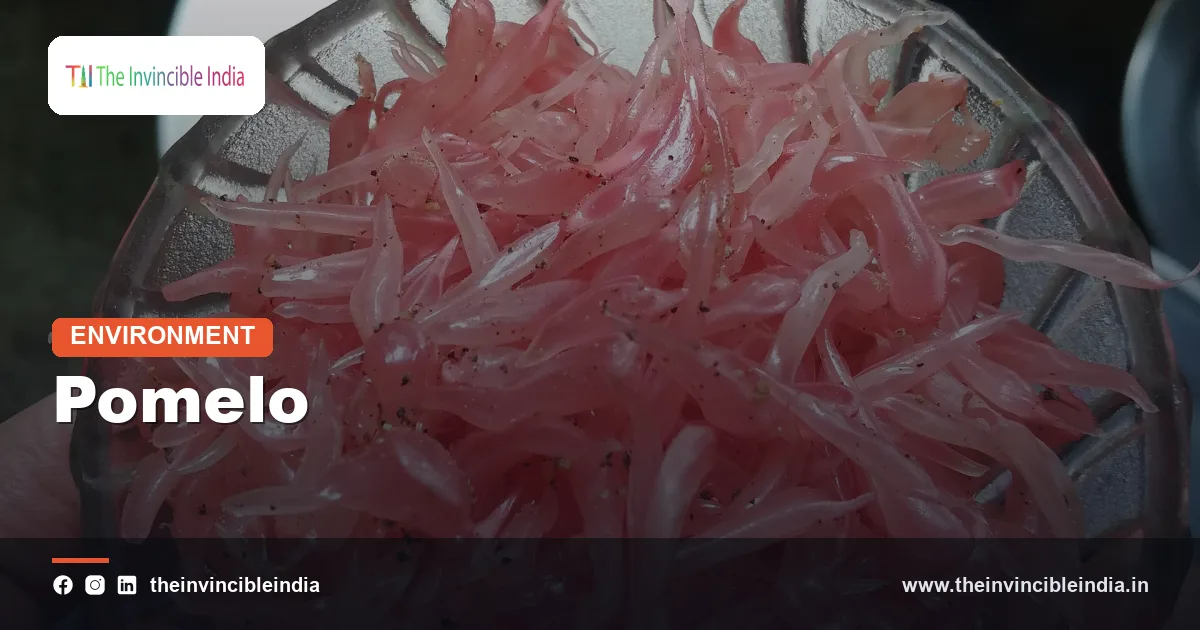
The pomelo, called chakotra or batabi lebu in many Indian languages, is the largest of the citrus fruits, a round to pear-shaped fruit with a very thick pale rind and sweet to mildly tart, slightly bitter-edged segments. Botanically it is Citrus maxima, one of the original wild ancestors of today’s cultivated citrus, and in India it is grown mainly in the east, north-east and south as a garden and small-orchard fruit.
This explainer covers what the pomelo is, how it differs from grapefruit and orange, how the tree grows, where it is cultivated in India, how to peel and eat it, what it contains and a few health cautions. It is meant as an everyday guide to a fruit that is often seen in winter markets but rarely explained.
| Quick Fact | Detail |
|---|---|
| Common names | Pomelo, pummelo, chakotra (Hindi), batabi lebu (Bengali), shaddock, jambura (in some regions) |
| Scientific name | Citrus maxima (also written Citrus grandis) |
| Family | Rutaceae (the citrus or rue family) |
| Where grown in India | Assam and the north-eastern states, West Bengal, Bihar, Odisha, Kerala, Tamil Nadu and parts of Uttar Pradesh, mostly in small orchards and home gardens |
| Season | Fruit is harvested mainly in the cooler months, roughly from November to February in much of north and east India, with regional variation |
| Part used | Juicy segments (pulp); the rind is candied or used for marmalade and in cooking |
| Nutrition | High in water, with vitamin C, potassium and fibre; modest in calories |
| Main uses | Eaten fresh, juiced, in salads, and as candied peel; a parent species of grapefruit and sweet orange |
Key Takeaways
- The pomelo (Citrus maxima) is the largest citrus fruit, often weighing one to two kilograms or more, with a rind that can be several centimetres thick.
- Pomelo is one of the three or four ancestral citrus species, and the grapefruit arose as a natural cross between pomelo and sweet orange.
- In India the pomelo is known as chakotra in Hindi and batabi lebu in Bengali, and it is grown mainly in Assam, the north-east, West Bengal, Bihar, Odisha and the south.
- Pomelo segments have tough membranes that are normally peeled away, and the fruit is eaten for its sweet, mildly tart pulp.
- Pomelo, like grapefruit, contains compounds that can interfere with some medicines, so people on regular medication should check with a doctor before eating it often.
- The thick rind makes the pomelo an unusually good keeper, and fruit can remain sound for a few weeks without refrigeration.
What Is a Pomelo?
A pomelo is a large citrus fruit, Citrus maxima, with a thick, spongy, pale green to yellow rind and juicy, sweet-tart segments of pink, pale yellow or white flesh. It is the biggest citrus fruit in the world and one of the few citrus species that grows true as a wild or ancient type rather than as a modern hybrid.
The fruit is round, slightly flattened or pear-shaped, commonly about fifteen to twenty-five centimetres across. Its rind is aromatic and so thick that a large part of the fruit’s weight is pith rather than pulp. The inside is divided into segments, each wrapped in a tough membrane, and each filled with firm, dry-looking vesicles that burst with juice when eaten.
The pomelo is native to Southeast Asia and southern China. It reached the Indian subcontinent in ancient times, and it has been grown here for many centuries in gardens and home orchards.
What Is the Pomelo Called in India?
The pomelo is called chakotra in Hindi, batabi lebu in Bengali, and by several local names in the north-east, south and west of India. English speakers use pomelo, pummelo or shaddock for the same fruit.
Common names that readers may encounter:
- Chakotra: the common Hindi and north Indian name.
- Batabi lebu: the Bengali name, literally a big lemon-type fruit.
- Pummelo or pomelo: the standard English spellings used in horticulture.
- Shaddock: an older English name, said to honour a sea captain who brought seeds to the Caribbean in the seventeenth century.
- Local tribal and regional names: many north-eastern communities have their own names for the fruit, and in some cases the fruit is grown for local use only.
Because “lebu” and “lemon” both appear in these names, readers should not assume the fruit is sour. Pomelo can be sweet, tart or a mix of both depending on the variety.
How Is a Pomelo Different From a Grapefruit?
A pomelo differs from a grapefruit by being larger, with a thicker rind, drier and firmer segments and a milder, less bitter flavour, because the grapefruit is a hybrid that arose from pomelo crossing with sweet orange. The two fruits share a family resemblance but are not the same species.
| Feature | Pomelo | Grapefruit |
|---|---|---|
| Botanical status | Citrus maxima, an ancestral species | Citrus paradisi, a hybrid of pomelo and sweet orange |
| Size | Very large, often one to two kilograms | Medium to large, smaller than most pomelos |
| Rind | Very thick, spongy, pale | Thinner, smoother, yellow to pink |
| Segments | Firm, tough membranes, usually peeled | Juicier, thinner membranes |
| Taste | Sweet to mildly tart, slight bitterness | Sharper, more acidic, often bitter |
| Typical use | Eaten as segments, salads | Halved and eaten with a spoon, juiced |
The pomelo is also an ancestor of the sweet orange. Genetic studies indicate that the sweet orange resulted from a cross between a pomelo and a mandarin in the distant past, which means pomelo ancestry runs through most of the oranges, grapefruits and lemons that people eat today.
How Does the Pomelo Tree Grow?
The pomelo tree is a vigorous, rounded evergreen that grows about five to ten metres tall, with large oval leaves that have a broadly winged stalk, white fragrant flowers and fruits that hang in heavy clusters or singly. It grows best in warm, humid conditions with well-drained, fertile soil.
The leaves are among the largest of any citrus, and the winged leaf stalk, a typical sign of the group, is also unusually broad in the pomelo. The branches are often drooping under the weight of fruit, and young twigs may carry short thorns. Flowers appear in spring in most regions, and fruits take around six to nine months to mature.
Propagation
Pomelo can be grown from seed, because many seeds are true to type, and this is why many home garden trees in eastern India are seedlings. Commercial growers prefer budding or air-layering from known good trees, which gives fruit of predictable quality and brings trees into bearing sooner. Seed-grown trees may take five to eight years to fruit, while layered or budded trees can fruit within three to four years.
Soil and climate
Pomelo thrives in humid tropical and subtropical lowlands. It likes plenty of sun and rainfall of moderate to high levels, but it dislikes standing water. Cold snaps and strong, drying winds damage young trees and cause flowers and fruit to drop.
Where Is the Pomelo Grown in India?
The pomelo is grown in India mainly across Assam and the other north-eastern states, West Bengal, Bihar, Odisha, Kerala and Tamil Nadu, usually in small orchards, farm borders and home gardens rather than in large specialised plantations. National production is small compared with oranges, mandarins and sweet limes.
The north-east has the greatest range of types and is often regarded as a centre of citrus diversity, with a wide variety of wild and cultivated citrus fruits. In Assam, pomelo, known locally by names such as robab tenga, is a familiar garden tree. In West Bengal and Bihar, batabi lebu appears in markets in winter and is also used in household pickles and in some festive dishes. In peninsular India, pomelo trees grow in humid coastal and hill-foot regions.
Most pomelo growing in India is for local markets. Because the fruit is bulky and the rind is thick, long-distance sales are less common than for other citrus, though the good keeping quality does make transport possible.
When Is Pomelo in Season?
Pomelo is in season mainly in the cooler months, usually from about November to February in much of eastern and northern India, though timing varies with variety and region. Fruits ripen slowly on the tree and are usually picked once the rind turns from green to pale yellow or light green.
Some varieties are harvested earlier or later, and fruit from southern regions can appear at other times of year. Fruit left on the tree sweetens as it matures, so growers who wait for full ripeness often get a better flavour. After picking, a whole pomelo can be stored at room temperature for two to four weeks or longer because its thick rind protects the segments from drying and from many pests.
How Do You Peel and Eat a Pomelo?
To eat a pomelo, slice off the top and bottom, score the thick rind from top to bottom in several places, peel it away with the white pith, separate the segments and remove the tough outer membrane to reach the juicy pulp. The pulp is then eaten on its own or mixed into dishes.
A simple step-by-step method:
- Cut a slice off the top and bottom so that the fruit sits steadily on the board.
- Score the rind from top to bottom in four to six lines, cutting through the pith but not into the flesh.
- Pull the rind away in strips, then peel off any remaining pith.
- Pull the fruit apart into segments at the natural divisions.
- Peel the membrane from each segment, starting from the thin end, and separate the pulp vesicles into a bowl.
The pulp is often tossed with salt, chilli or chaat masala in India, or served in fruit salads. Southeast Asian cuisines use it in savoury salads with herbs, peanuts and a sharp dressing, and the same idea works in an Indian kitchen with onion, green chilli and lime.
What Nutrients Does Pomelo Provide?
Pomelo provides water, vitamin C, potassium, dietary fibre and a modest amount of natural sugar, and a serving typically contains fewer calories than the same weight of many other fruits because the fruit is so watery. Exact values vary with variety and ripeness.
The main nutritional points are as follows:
- Vitamin C: a single serving can supply a large share of daily needs.
- Potassium: a mineral that supports normal muscle and nerve function and is present in useful amounts.
- Fibre: mainly in the membranes and pith, so eating the pulp with some membrane retains more of it.
- Plant compounds: flavonoids and other antioxidants typical of citrus fruits.
- Low fat and sodium: the fruit contains almost no fat.
Health claims about the fruit should be treated cautiously. Pomelo is a nutritious fruit like other citrus, but it is not a medicine, and no single food changes health on its own.
Can Pomelo Interact With Medicines?
Yes, pomelo can interact with some medicines, because it contains furanocoumarins, natural compounds also found in grapefruit that can slow the breakdown of certain drugs in the body. People who take regular medication, particularly for blood pressure, cholesterol or heart rhythm, should ask a doctor or pharmacist before eating pomelo regularly.
The effect is strongest with grapefruit and is also reported for pomelo and some other citrus relatives, though sweet oranges and mosambi do not have the same effect. Because the interaction is drug-specific, the general advice is simply to check the leaflet that comes with a prescription or ask a health professional. For most people who take no relevant medicine, eating pomelo is safe.
How Is the Rind Used?
The thick pomelo rind is used for candying, marmalade, pickles and flavouring, because its pith becomes tender and mild when it is blanched and cooked in sugar or spices. Its outer peel also carries fragrant oil.
The rind is not eaten raw, as it is bitter and tough. In India, homes in the east cook it into sweet and sour preparations. In East and Southeast Asia, it is candied for festive treats or simmered in savoury dishes. The dried peel is sometimes used as an aromatic in tea or in traditional preparations, though these uses are mostly regional customs.
How Is Pomelo Cultivated and Cared For?
Pomelo is cultivated like other citrus: planted as a sapling in a pit enriched with compost, spaced about five to eight metres apart, watered regularly in dry months, pruned lightly, and protected from pests and disease. It is a relatively undemanding tree compared with sweet orange.
Common problems
- Citrus canker: a bacterial disease that leaves corky spots on leaves, twigs and fruit.
- Citrus greening (huanglongbing): a serious disease spread by the citrus psylla insect.
- Fruit drop: heavy shedding of young fruit caused by water stress, nutrient shortages or weather.
- Fruit fly and leaf miner: insects that damage fruit and young shoots.
- Root rot: a fungal disease in poorly drained soil.
Fruit is picked by hand with clippers, and care is taken not to bruise the rind. A single mature tree can bear dozens of fruits in a good year, and because each fruit is so heavy, branches sometimes need propping.
Why Does the Pomelo Matter?
The pomelo matters because it is a living link to the origins of cultivated citrus, a nutritious and long-keeping fruit and a useful crop for small farmers in eastern and north-eastern India. Understanding the pomelo also explains why so many citrus fruits resemble one another.
Citrus genetics has shown that most familiar citrus fruits descend from just a few ancestral species, among them the pomelo, mandarin and citron. The pomelo contributed size, thick rind and some of the sweetness and bitterness found in oranges and grapefruit. For households, the tree provides a dependable winter fruit, and its rind and pulp can both be used, which makes it a thrifty garden plant.
Bottom Line
The pomelo, or chakotra, is the largest citrus fruit, a mild, thick-skinned and long-keeping winter fruit of eastern and southern India. It is an ancestor of grapefruit and sweet orange, rich in vitamin C, and worth checking against medicines in the same way as grapefruit.
Frequently Asked Questions
What is a pomelo called in Hindi?
A pomelo is called chakotra in Hindi. In Bengali it is known as batabi lebu, and in Assam as robab tenga. English also uses the names pummelo and shaddock.
Is pomelo the same as grapefruit?
No, pomelo and grapefruit are different fruits. The pomelo is an ancestral citrus species, Citrus maxima, while the grapefruit is a hybrid of pomelo and sweet orange. Pomelo is larger, with a thicker rind and a milder, less bitter taste.
Where is the pomelo grown in India?
The pomelo is grown mainly in Assam and the other north-eastern states, West Bengal, Bihar, Odisha, Kerala and Tamil Nadu. It is mostly a small-orchard and home-garden fruit rather than a large commercial crop.
How do you eat a pomelo?
To eat a pomelo, cut and peel away the thick rind and white pith, separate the segments and peel off the tough membrane from each one. The juicy pulp can be eaten fresh, with a little salt or chaat masala, or added to salads.
When is pomelo in season in India?
Pomelo is in season mainly from about November to February in much of north and east India. Timing varies by variety and region, and the thick rind helps the fruit to keep for several weeks after harvest.
Can pomelo affect medicines?
Yes, pomelo can affect how the body processes some medicines. Like grapefruit, it contains furanocoumarins that may slow the breakdown of certain drugs, so anyone taking regular medication should check with a doctor or pharmacist before eating it often.
{“@context”:”https://schema.org”,”@graph”:[{“@type”:”FAQPage”,”mainEntity”:[{“@type”:”Question”,”name”:”What is a pomelo called in Hindi?”,”acceptedAnswer”:{“@type”:”Answer”,”text”:”A pomelo is called chakotra in Hindi. In Bengali it is known as batabi lebu, and in Assam as robab tenga. English also uses the names pummelo and shaddock.”}},{“@type”:”Question”,”name”:”Is pomelo the same as grapefruit?”,”acceptedAnswer”:{“@type”:”Answer”,”text”:”No, pomelo and grapefruit are different fruits. The pomelo is an ancestral citrus species, Citrus maxima, while the grapefruit is a hybrid of pomelo and sweet orange. Pomelo is larger, with a thicker rind and a milder, less bitter taste.”}},{“@type”:”Question”,”name”:”Where is the pomelo grown in India?”,”acceptedAnswer”:{“@type”:”Answer”,”text”:”The pomelo is grown mainly in Assam and the other north-eastern states, West Bengal, Bihar, Odisha, Kerala and Tamil Nadu. It is mostly a small-orchard and home-garden fruit rather than a large commercial crop.”}},{“@type”:”Question”,”name”:”How do you eat a pomelo?”,”acceptedAnswer”:{“@type”:”Answer”,”text”:”To eat a pomelo, cut and peel away the thick rind and white pith, separate the segments and peel off the tough membrane from each one. The juicy pulp can be eaten fresh, with a little salt or chaat masala, or added to salads.”}},{“@type”:”Question”,”name”:”When is pomelo in season in India?”,”acceptedAnswer”:{“@type”:”Answer”,”text”:”Pomelo is in season mainly from about November to February in much of north and east India. Timing varies by variety and region, and the thick rind helps the fruit to keep for several weeks after harvest.”}},{“@type”:”Question”,”name”:”Can pomelo affect medicines?”,”acceptedAnswer”:{“@type”:”Answer”,”text”:”Yes, pomelo can affect how the body processes some medicines. Like grapefruit, it contains furanocoumarins that may slow the breakdown of certain drugs, so anyone taking regular medication should check with a doctor or pharmacist before eating it often.”}}]}]}


