

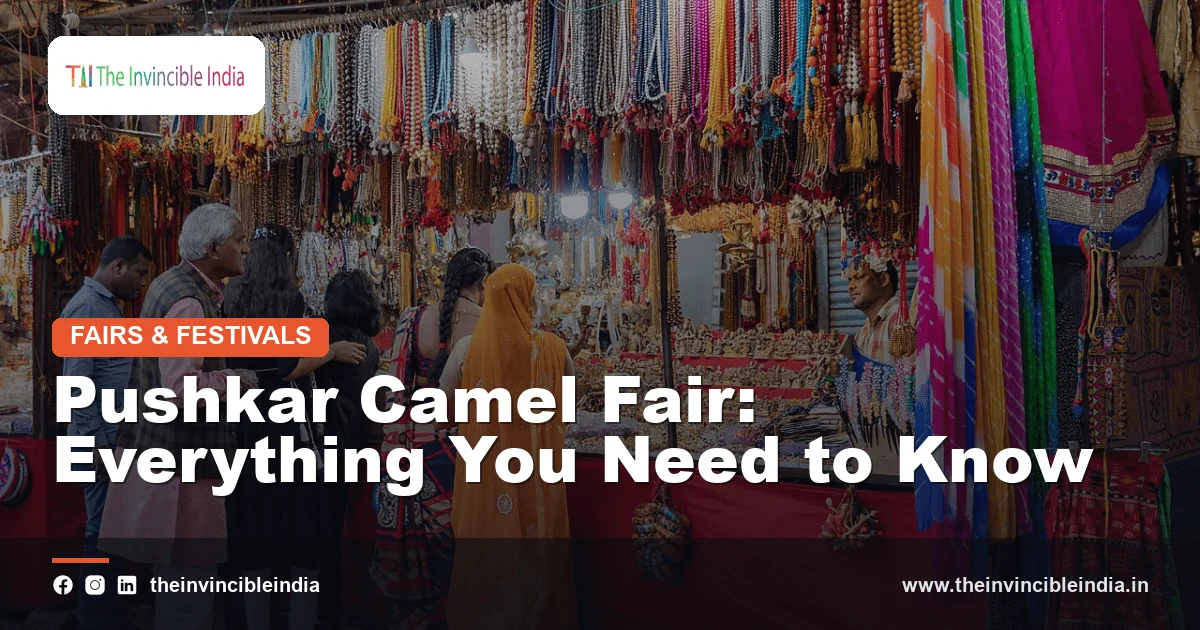
The Pushkar Camel Fair is one of the most colourful, unique and photographed festivals in India. Held annually in the small, sacred desert town of Pushkar in Rajasthan, it combines a centuries-old livestock fair with vibrant culture, tradition, spirituality and pure spectacle. Drawing hundreds of thousands of visitors, traders, pilgrims and photographers from around the world, it is an unforgettable window into rural Rajasthan. This detailed guide covers everything you need to know about the Pushkar Camel Fair.
Quick Facts
| Location | Pushkar, Rajasthan |
| When | Hindu month of Kartik (Oct–Nov) |
| Duration | Around a week |
| Highlights | Camel trading, competitions, folk culture, holy dip |
What Is the Pushkar Fair?
The Pushkar Fair began as, and remains, one of the largest livestock and camel trading fairs in the world. Over time it has blossomed into a spectacular cultural festival that blends commerce, religion and festivity in the heart of the Thar Desert. For a few days each year, the sandy fairgrounds around Pushkar fill with tens of thousands of camels, horses and cattle, along with traders, herders, tourists and pilgrims, creating a scene unlike anywhere else on earth.
When It Happens
The fair takes place in the Hindu lunar month of Kartik, usually falling in October or November, and builds up to the full-moon day of Kartik Purnima, which is considered especially auspicious. The trading typically begins in the early days of the fair, while the cultural events and religious observances intensify towards the full moon, making the timing of your visit important depending on what you most want to see.
The Livestock Trade
At its heart, Pushkar is a working fair. Herders travel long distances across the desert to buy and sell camels, horses and cattle. The camels are lovingly groomed, shorn into decorative patterns, and adorned with colourful bridles, jewellery and tassels. Watching the trading, the inspection of animals and the bustling encampments offers a fascinating glimpse into a way of life that has endured for centuries.
Competitions and Fun
The fair is famous for its quirky and joyful competitions. There are camel races and camel-decoration contests, the celebrated “longest moustache” competition, turban-tying races, tug-of-war matches (often between local and foreign teams), and even a bridal competition. These lighthearted events, set against the backdrop of the desert and the fairground, are a highlight for visitors and a source of great local pride.
Cultural Performances
Pushkar comes alive with the folk culture of Rajasthan. Musicians and dancers perform traditional Kalbeliya and Ghoomar dances, snake charmers and puppeteers entertain the crowds, and the skies fill with hot-air balloons. Craft stalls sell textiles, jewellery and handicrafts, and food stalls serve Rajasthani specialities, creating a lively carnival atmosphere from morning until late into the night.
The Spiritual Side of Pushkar
Pushkar is one of the holiest towns in Hinduism, built around the sacred Pushkar Lake. Pilgrims come to bathe in its waters, and the ritual dip on Kartik Purnima is believed to be especially cleansing and auspicious. The town is also home to one of the very few temples in the world dedicated to Lord Brahma, the creator god, making it an important pilgrimage destination quite apart from the fair itself.
Exploring the Town
Beyond the fairground, the town of Pushkar is a charming maze of narrow lanes, ghats, temples and bazaars. Its relaxed, spiritual atmosphere, rooftop cafes overlooking the lake, and the surrounding desert dunes make it a delightful place to linger. Being a holy town, Pushkar is strictly vegetarian and alcohol-free, which adds to its serene character.
How to Reach and Where to Stay
Pushkar lies close to the city of Ajmer, which is well connected by rail and road, and about three hours from Jaipur, the nearest major airport. During the fair, accommodation ranges from budget guesthouses and hostels to luxurious tented “desert camps” set up especially for the event, which offer a memorable way to experience the festival. Because the town fills up quickly, it is essential to book well in advance.
Tips for Visitors
To make the most of your visit, arrive early in the morning to see the camels and trading at their liveliest, and stay for the evening to enjoy the performances and the beautifully lit ghats. Carry sun protection, comfortable footwear and cash, and always ask permission before photographing local people, many of whom now expect a small tip. Dress modestly out of respect for the town’s religious character, and take care to travel responsibly and support local businesses and artisans.
The Legend of Pushkar Lake
Pushkar’s sanctity is rooted in ancient legend. According to Hindu mythology, the sacred lake was formed when a lotus flower fell from the hand of Lord Brahma, the creator, and it is considered one of the most holy water bodies in India. Its many ghats are dedicated to different deities and purposes, and a dip in the lake, particularly during Kartik Purnima, is believed to wash away sins and grant blessings. This spiritual significance is what draws pilgrims to Pushkar throughout the year, quite apart from the fair.
The Brahma Temple
Pushkar is home to one of the very few temples in the world dedicated to Lord Brahma, the creator in the Hindu trinity. While Brahma is revered across Hinduism, temples specifically dedicated to him are extraordinarily rare, which makes the Pushkar Brahma Temple a site of unique importance. Marked by its distinctive red spire and a silver turtle motif on the floor, the temple draws a constant stream of devotees, and visiting it is considered a highlight of any trip to Pushkar.
A Photographer’s Paradise
Few events in India offer photographers as much as the Pushkar Fair. The golden desert light, the sea of camels and their colourful trappings, the weathered faces of the herders, the swirling folk dancers, the hot-air balloons and the sacred rituals at the ghats create endless opportunities for striking images. Early morning and late afternoon offer the best light, and the fair rewards those willing to rise before dawn. As always, it is important and courteous to ask permission before photographing people, and to be respectful during religious moments.
Responsible and Ethical Visiting
As the fair has grown in popularity, so has the importance of visiting responsibly. Treat the animals and their handlers with respect, avoid encouraging practices that may harm the camels, and be sensitive when photographing local people, offering a fair tip if one is expected. Support local traders, artisans and food stalls, minimise plastic waste in this fragile desert environment, and remember that Pushkar is first and foremost a sacred town for its residents, not merely a spectacle for visitors.
Other Great Fairs of Rajasthan
Pushkar is the most famous, but Rajasthan’s calendar is full of vibrant fairs and festivals. The Jaisalmer Desert Festival celebrates the culture of the Thar with camel races and folk performances; the Nagaur Cattle Fair is one of the largest livestock fairs in the country; the Bikaner Camel Festival honours the “ship of the desert”; and colourful celebrations of Teej, Gangaur and Marwar keep the state’s traditions alive. Travellers who enjoy Pushkar may wish to time future visits around these equally captivating events.
Combining Pushkar With Your Rajasthan Trip
Pushkar fits naturally into a wider Rajasthan itinerary. It lies close to Ajmer, home to the revered Ajmer Sharif Dargah, and within easy reach of Jaipur, making it an ideal stop on the popular circuit that includes the Pink City, Jodhpur, Udaipur and Jaisalmer. Whether you come specifically for the fair or simply to experience the town’s serene, spiritual charm, Pushkar adds a memorable and distinctive dimension to any journey through Rajasthan.
The Best Time and How Long to Stay
Timing your visit to the Pushkar Fair depends on your interests. The earlier days of the fair are best for witnessing the serious camel and livestock trading and the great encampments on the dunes, while the later days, closer to Kartik Purnima, are richer in cultural performances, competitions and religious activity. Two to three days is ideal, allowing time to explore both the fairground and the town at a relaxed pace without feeling rushed. Arriving a day before the crowds peak can also make for a more comfortable experience.
What to Pack for the Fair
The desert climate calls for practical preparation. Pack light, breathable clothing for the warm days and a warm layer for the surprisingly cool desert nights and early mornings. Comfortable, closed footwear is essential for the sandy, dusty fairground, along with a hat, sunglasses, sunscreen and a scarf to guard against dust. Carry a refillable water bottle, some cash for stalls and tips, and, of course, a good camera with spare batteries and memory to capture the endless photo opportunities.
Beyond the Fair: Nearby Attractions
Pushkar sits within easy reach of several other attractions. The nearby city of Ajmer is home to the revered Ajmer Sharif Dargah, one of the most important Sufi shrines in India, as well as the historic Adhai Din Ka Jhonpra and Taragarh Fort. The desert landscapes around Pushkar are perfect for camel and jeep safaris and for watching the sunset over the dunes. These add depth to a trip and make Pushkar an ideal stop within a broader Rajasthan itinerary.
Why Pushkar Stays With You
What makes the Pushkar Camel Fair so unforgettable is the way it brings together so many worlds in one place — commerce and devotion, tradition and festivity, the everyday life of desert herders and the wonder of first-time visitors. The sight of thousands of camels against the setting sun, the sound of folk music drifting across the sands, and the serenity of the sacred lake at dawn combine into an experience that lingers long after you leave. For many travellers, it remains one of the most vivid and moving memories of their time in India.
The Spirit of Pushkar
At its heart, the Pushkar Camel Fair is a celebration of life in the desert — of the animals that sustain it, the traditions that shape it and the faith that gives it meaning. It is a place where a herder and a foreign photographer, a pilgrim and a folk dancer, all share the same golden sands and starlit nights. Whether you come for the spectacle, the culture, the trading or the spirituality, Pushkar offers a rare and authentic glimpse into the soul of Rajasthan. It is an experience that rewards curiosity, respect and an open heart, and one that few who attend ever forget.
Frequently Asked Questions
When is the Pushkar Camel Fair held?
The fair is held in the Hindu month of Kartik (October–November), building up to the full moon of Kartik Purnima.
Why is Pushkar famous?
Pushkar is famous for its camel fair, its sacred lake, and one of the very few temples in the world dedicated to Lord Brahma.
What happens at the Pushkar Camel Fair?
Camels and livestock are traded and decorated, alongside races, quirky competitions, folk performances, hot-air balloons and religious rituals.
How long does the Pushkar Fair last?
The fair typically lasts around a week, culminating on Kartik Purnima.
Is Pushkar a vegetarian town?
Yes, being a holy town, Pushkar is strictly vegetarian and alcohol-free.


