

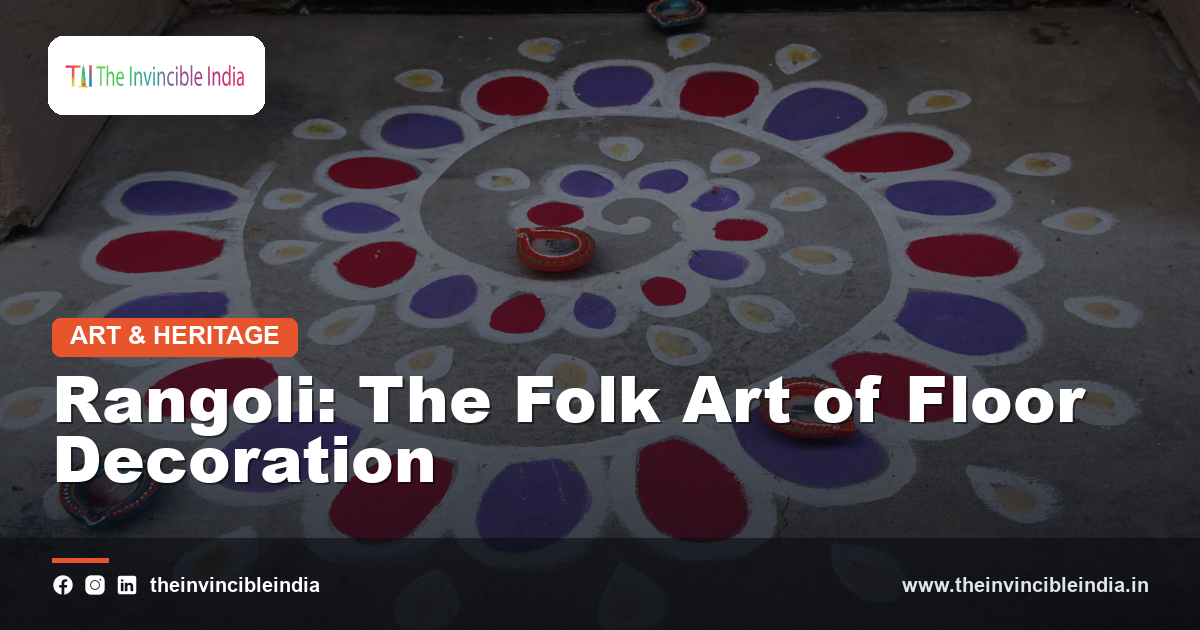
Rangoli is one of the most beautiful and beloved of India’s folk art traditions, the art of decorating floors and entrances with intricate and colourful designs. Created especially during festivals, celebrations and auspicious occasions, rangoli transforms the thresholds and courtyards of homes into works of art, welcoming guests and the divine and inviting good fortune and prosperity. Made with colourful powders, rice, flowers and other materials, and drawn in a wonderful variety of patterns and regional styles, rangoli is a living folk art practised in countless homes across the country. This guide explores the meaning, the materials, the patterns, the regional forms and the place in festivals of rangoli, one of the most cherished of India’s folk arts.
Quick Facts
| Detail | Information |
|---|---|
| Type | The folk art of decorating floors and entrances |
| Created for | Festivals, celebrations and auspicious occasions |
| Purpose | To welcome guests and the divine and invite good fortune |
| Materials | Coloured powders, rice, flowers and more |
| Regional names | Kolam, alpana, mandana and others |
| Patterns | Geometric, floral and symbolic designs |
A Beautiful Folk Art
Rangoli is one of the most beautiful and beloved of India’s folk art traditions, the art of creating decorative designs on the floors and at the entrances of homes. A living folk art practised in countless homes, especially by women, rangoli transforms the thresholds and courtyards of houses into works of colour and beauty, created for festivals, celebrations and auspicious occasions. Beautiful, ephemeral and full of meaning, rangoli is a cherished part of the everyday and festive life of India. As a beautiful and beloved folk art, practised in countless homes to decorate floors and entrances with colour and pattern, rangoli holds a cherished place among the folk arts of India and is a living expression of creativity, welcome and auspiciousness.
The Meaning of Rangoli
Rangoli is far more than mere decoration; it is an art rich in meaning, created to welcome guests and the divine, to invite good fortune and prosperity, and to mark auspicious occasions. The designs are drawn at the entrances of homes to welcome all who come, including the deities and the goddess of prosperity, and they are believed to bring good fortune and to ward off ill, so that the art carries a sense of welcome, auspiciousness and blessing. This meaning is central to the art. This meaning of rangoli, as an art of welcome, auspiciousness and blessing, created to welcome guests and the divine and to invite good fortune, is central to the tradition and gives the beautiful designs a significance beyond their decorative beauty.
An Art of Welcome
One of the primary purposes of rangoli is to welcome, and the designs are traditionally created at the entrances and thresholds of homes to greet all who come. The rangoli at the doorway welcomes guests with beauty and warmth, and it is also intended to welcome the divine, especially on festive and auspicious occasions, inviting the deities and the goddess of prosperity into the home. This role as an art of welcome is central to the meaning of rangoli. This role of rangoli as an art of welcome, created at the entrances of homes to greet guests and the divine with beauty and warmth, is central to the tradition and expresses the spirit of hospitality and reverence that lies at the heart of this beloved folk art.
A Symbol of Auspiciousness
Rangoli is regarded as auspicious, and its creation is associated with inviting good fortune, prosperity and blessing into the home. The designs, especially those made for festivals and important occasions, are believed to bring good luck and prosperity and to invite the blessings of the deities, and certain symbols and patterns are considered especially auspicious. This association with auspiciousness and good fortune is an important part of the meaning of the art. This character of rangoli as a symbol of auspiciousness, associated with inviting good fortune, prosperity and blessing into the home, is an important part of the meaning of the art and a large part of why it is created for festivals and auspicious occasions.
The Materials of Rangoli
Rangoli is created with a variety of materials, above all coloured powders, but also rice, flowers and other natural materials. The most common material is coloured powder, applied by hand to create the designs, but rangoli is also made with rice flour, coloured rice, flower petals, coloured sand and other materials, each producing its own effect. The choice of materials varies by region, occasion and tradition. This variety of materials used in rangoli, from coloured powders to rice, flowers and other natural materials, gives the art its diversity and its beauty, and the skilled use of these materials to create colourful and intricate designs is central to the practice of this beloved folk art.
Patterns and Designs
Rangoli is created in a wonderful variety of patterns and designs, from geometric and floral motifs to symbolic and figurative designs, drawn with skill and creativity. The designs may include intricate geometric patterns, beautiful flowers and creepers, symbolic motifs, images of deities, and traditional auspicious symbols, arranged in circular, square or free-flowing compositions. The patterns range from simple daily designs to elaborate creations for festivals. This wonderful variety of patterns and designs in rangoli, from geometric and floral motifs to symbolic and figurative creations, gives the art its richness and beauty, and the skill and creativity with which these designs are drawn are a delight of this beloved folk art.
The Kolam of the South
In southern India, the art of rangoli is known as kolam, and it has its own distinctive and beautiful tradition, characterised by intricate patterns drawn with rice flour. The kolam is traditionally created daily at the entrances of homes, drawn freehand in intricate geometric and looping patterns, often based on a grid of dots, and it is a cherished daily practice as well as a festive art. The kolam is a beautiful and distinctive regional form of the art. This kolam of the south, the distinctive southern tradition of rangoli characterised by intricate patterns drawn with rice flour, often based on a grid of dots, is a beautiful and beloved regional form of the art and a cherished daily and festive practice in southern India.
Regional Traditions
Rangoli is practised across India in a rich variety of regional forms, each with its own name, style and traditions, reflecting the diversity of the country. Besides the kolam of the south, the art is known by different names and practised in different styles in other regions, from the alpana of the east to the mandana of other areas, each with its own distinctive designs, materials and customs. This regional diversity enriches the tradition of rangoli. This rich diversity of regional traditions of rangoli, in which the art is known by different names and practised in different styles across India, reflects the wonderful variety of the country’s folk culture, so that this beloved art takes many beautiful forms across the land.
Rangoli in Festivals
Rangoli is especially associated with festivals, above all the great festival of Diwali, when it is created with particular care and beauty to welcome the goddess of prosperity and to celebrate the festival. During festivals, homes are decorated with elaborate and colourful rangoli, and the art is an important part of the festive celebration, adding colour, beauty and auspiciousness to the occasion. The festive rangoli is among the most beautiful and elaborate. This association of rangoli with festivals, above all Diwali, when it is created with particular care to welcome prosperity and celebrate the occasion, is an important part of the tradition, and the beautiful festive rangoli is a cherished and joyful part of the celebration of India’s festivals.
The Art of the Women
Rangoli has traditionally been the art of women, created and passed down within the home from mother to daughter as a cherished folk tradition. The women of the household create the rangoli at the entrances and in the courtyards, and the skill and the designs are handed down through the generations, so that the art is a living tradition of women’s creativity and a part of the daily and festive life of the home. This association with women is central to the tradition. This character of rangoli as traditionally the art of women, created and passed down within the home from generation to generation, is central to the tradition and makes the art a living expression of women’s creativity and a cherished part of the domestic and festive life of India.
An Ephemeral Beauty
One of the distinctive qualities of rangoli is its ephemeral nature, for the designs, drawn in powder or flowers on the floor, are temporary and are renewed each day or for each occasion. Unlike permanent works of art, the rangoli is created fresh, enjoyed for a time, and then swept away, to be drawn anew, so that the art is a daily or festive act of creation, ever renewed. This ephemeral quality gives rangoli a special character. This ephemeral beauty of rangoli, in which the designs are temporary and renewed each day or for each occasion, is one of the distinctive qualities of the art, making it a living, ever-renewed act of creation and a beautiful expression of the joy of making beauty anew.
A Living Tradition
Rangoli is a vibrant living tradition, practised in countless homes across India every day and especially during festivals, cherished and passed down through the generations. The art continues to be created at the entrances of homes, drawn for daily beauty and auspiciousness and, above all, for the great festivals, and it remains a beloved and widely practised folk art. Competitions and community celebrations of rangoli also keep the tradition vibrant. This character of rangoli as a vibrant living tradition, practised in countless homes and cherished across India, reflects the enduring appeal of the art and its deep place in the daily and festive life of the country, kept alive and passed down through the generations.
A Symbol of Celebration
Rangoli has become a beautiful symbol of celebration, joy and festivity in Indian culture, associated with the happy occasions of life and the great festivals. The colourful designs, created to mark festivals, weddings, celebrations and auspicious occasions, express the joy and festivity of the moment and add beauty and colour to the celebration, so that rangoli is a beloved emblem of festive joy. This role as a symbol of celebration is a cherished aspect of the art. This role of rangoli as a symbol of celebration, joy and festivity, associated with the happy occasions of life and the great festivals, is a cherished aspect of the art and a large part of its beloved place in the culture and celebrations of India.
Rangoli Today
Today rangoli remains one of the most beloved and widely practised folk arts of India, created in countless homes for daily beauty and auspiciousness and, above all, for the great festivals, and cherished across the country and among Indian communities around the world. The beautiful designs, in their many regional forms and their wonderful variety of patterns, continue to welcome guests and the divine, to invite good fortune, and to add colour and joy to celebrations. The tradition is passed down and kept vibrant through daily practice, festivals and community celebrations. As a beautiful folk art of welcome, auspiciousness and celebration, rangoli endures as one of the most cherished and living traditions of India’s folk culture.
Sources & Further Reading
- Ministry of Culture, Government of India, on the folk arts of India (indiaculture.gov.in).
- Cultural records on the folk art traditions of India.
Frequently Asked Questions
What is Rangoli?
Rangoli is the beautiful folk art of decorating floors and entrances with intricate and colourful designs, created especially during festivals and auspicious occasions to welcome guests and the divine and to invite good fortune. It is made with coloured powders, rice, flowers and other materials.
What is the purpose of Rangoli?
Rangoli is created to welcome guests and the divine, to invite good fortune and prosperity into the home, and to mark auspicious occasions and festivals. The designs at the entrance greet all who come and are believed to bring blessing and to ward off ill.
What is kolam?
Kolam is the distinctive southern Indian tradition of rangoli, characterised by intricate patterns drawn with rice flour, often based on a grid of dots. It is traditionally created daily at the entrances of homes and is a cherished daily and festive practice.
What materials are used to make Rangoli?
Rangoli is made with a variety of materials, above all coloured powders, but also rice flour, coloured rice, flower petals, coloured sand and other natural materials, each producing its own effect, with the choice varying by region, occasion and tradition.
Why is Rangoli made during festivals?
Rangoli is especially associated with festivals, above all Diwali, when it is created with particular care and beauty to welcome the goddess of prosperity, to invite good fortune, and to celebrate the occasion, adding colour, beauty and auspiciousness to the festivities.


