

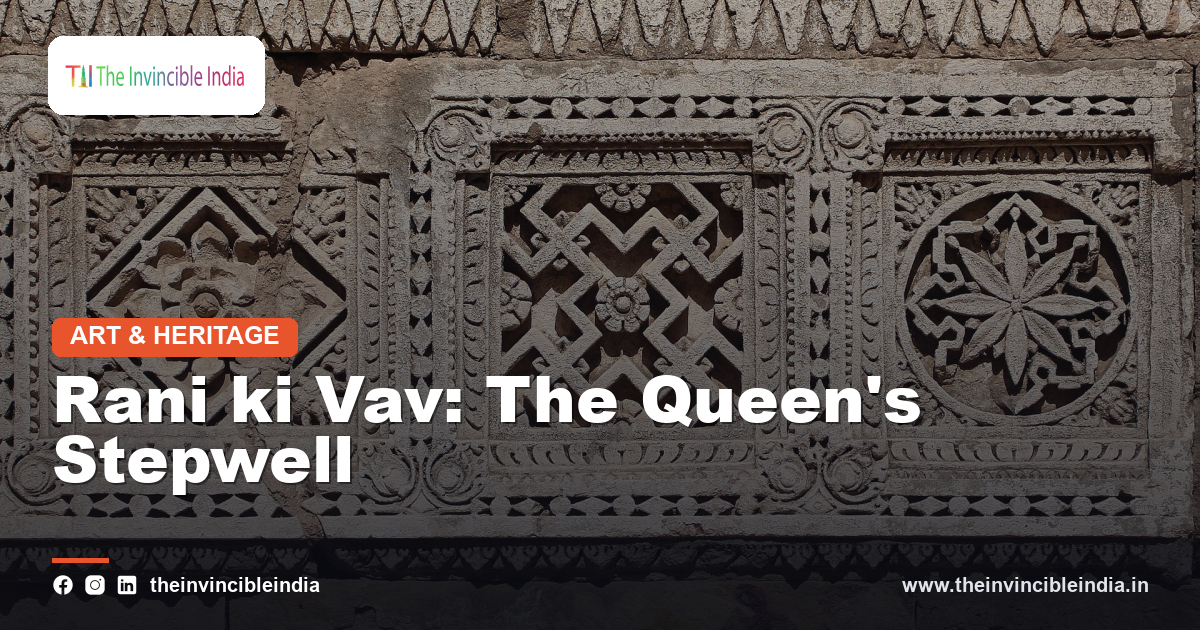
Rani ki Vav, the Queen’s Stepwell, is one of the most extraordinary water monuments of India, a vast subterranean structure at Patan in Gujarat where descending stairways and pillared galleries are covered from top to bottom in intricate stone carving. Built in the eleventh century by a queen of the Chaulukya dynasty in memory of her royal husband, the stepwell combines the practical function of a water source with the artistry and sanctity of a temple turned on its side, its walls filled with sculpted deities, celestial maidens and mythological scenes. Long buried by silt from a nearby river and rediscovered only in later centuries, it now stands restored as one of the finest surviving examples of stepwell architecture, alongside other treasures of Indian stepwell heritage. This guide explores its origins, architecture, sculpture and enduring significance.
Quick Facts
| Detail | Information |
|---|---|
| Location | Patan, Gujarat, on the former course of the Saraswati River |
| Built by | Queen Udayamati of the Chaulukya (Solanki) dynasty |
| Period | Eleventh century |
| Type | Vav (stepwell), a multi-storey subterranean water structure |
| Dedication | Primarily to the god Vishnu |
| Recognition | UNESCO World Heritage Site |
Rani ki Vav: An Introduction
Rani ki Vav, whose name translates simply as the Queen’s Stepwell, is among the most celebrated monuments of Gujarat and one of the finest stepwells anywhere in India. Unlike a simple well, it is a grand subterranean structure reached by a long flight of steps descending through several storeys of pillared galleries, every surface of which is carved with sculpture of remarkable delicacy and abundance. The stepwell was built to provide water in a region where the resource was precious, but it was conceived on a scale and with an artistry that transformed a utilitarian need into a work of profound devotion and beauty. As a monument combining engineering, religion and art in a single descending structure, Rani ki Vav occupies a place of singular importance among the stepwells of India and the architectural heritage of Gujarat.
What Is a Stepwell
A stepwell, known in various regional languages as a vav, baori or kund, is a distinctive Indian water structure in which a well or tank is reached by a long flight of steps descending well below ground level, rather than being drawn up by rope and bucket alone. This design allowed access to water even as the level fell through the dry months, while the shaded, cool galleries built along the descent offered a refuge from the heat above. Many stepwells, including Rani ki Vav, elaborated this simple idea into a monument of considerable architectural and sculptural ambition. This basic form of the stepwell, uniting practical access to water with shelter and, in many cases, sacred decoration, underlies the achievement of Rani ki Vav and its place within the broader tradition of Indian stepwell architecture.
Origins and Royal Patronage
Rani ki Vav was built in the eleventh century under the patronage of Queen Udayamati, a member of the Chaulukya dynasty, also known as the Solanki dynasty, which ruled over parts of present-day Gujarat during this period. Tradition holds that the stepwell was raised in memory of her royal husband, King Bhima I, making the monument as much a work of devotion and remembrance as a practical provision of water for the city of Patan. Such royal patronage of public water works was a recognised expression of piety and good governance in the period. This origin of Rani ki Vav as a queen’s memorial and a work of royal munificence gives the monument its name and helps to explain the extraordinary care lavished on its design and decoration.
Patan and the Saraswati River
The stepwell stands at Patan, once the capital of the Chaulukya kingdom and an important centre of trade, learning and craft in medieval Gujarat, on the banks of what was then the Saraswati River. The presence of the river made Patan a natural site for a great water monument, and the stepwell was aligned along its course, drawing on the water table sustained by the river even as the river itself later changed course and diminished. The historic importance of Patan as a royal capital lent the project additional prestige. This setting of Rani ki Vav within the once-thriving city of Patan, beside the waters of the Saraswati, situates the monument firmly within the political and cultural life of its age.
Architectural Plan and Scale
Rani ki Vav is laid out along a long east-west axis, descending through several distinct levels of pillared pavilions and galleries before reaching the circular well shaft at its western end, which plunges far deeper than the decorated galleries above. Visitors moving down the stepped corridor pass through a succession of storeys, each opening onto galleries lined with sculpted niches, so that the descent unfolds as a gradual revelation of increasingly rich ornament. This multi-level plan is far grander than that of a simple well. The scale and complexity of this architectural plan, unfolding over multiple storeys toward a deep circular shaft, place Rani ki Vav among the most ambitious stepwells ever constructed in India.
The Inverted Temple Concept
Scholars and guides often describe Rani ki Vav as an inverted temple, a structure that turns the vertical form of a Hindu temple upside down, so that the visitor descends toward the sacred rather than ascending toward it. Each level of the stepwell functions like a horizontal register of temple wall carving, filled with deities, guardians and decorative motifs, so that walking down the steps is akin to moving through the successive layers of a temple’s iconographic scheme. This inversion gives the monument its distinctive religious character. This concept of Rani ki Vav as a temple turned inward and downward is central to understanding why its walls were carved with such devotion and why the stepwell is regarded as a sacred as well as a practical structure.
The Sculptural Programme
The galleries of Rani ki Vav are filled with an extraordinarily dense and accomplished sculptural programme, with hundreds of carved panels depicting deities, celestial beings, sages and decorative motifs distributed across its many niches and pilasters. The carving displays a remarkable consistency of style and quality throughout the structure, suggesting the coordinated work of many skilled craftsmen over a sustained period of royal patronage. Few surviving stepwells anywhere approach the density and refinement of this decoration. This vast and carefully organised sculptural programme is the defining glory of Rani ki Vav, transforming a functional water structure into one of the richest surviving galleries of medieval Indian stone carving.
The Dashavatara Panels
Among the most celebrated features of the sculptural scheme are the panels depicting the ten principal incarnations of the god Vishnu, known as the Dashavatara, which recur across the galleries in finely carved relief. These panels present the various avatars in their traditional forms, each rendered with careful attention to iconographic detail and set among attendant figures and ornamental borders, forming a coherent devotional narrative as the visitor moves through the stepwell. Their prominence reflects the primary dedication of the monument. This recurring depiction of the Dashavatara throughout Rani ki Vav underscores the Vaishnava character of the monument and its role as a place of devotion as well as a source of water.
Vishnu and Other Deities
Beyond the incarnations of Vishnu, the carved galleries of Rani ki Vav include a wide range of other deities and divine attendants, reflecting the broader devotional world of eleventh century Gujarat. Figures associated with Vishnu appear in various forms and postures, often accompanied by attendant gods, guardian figures and auspicious symbols, while the overall arrangement reflects a carefully considered theological scheme rather than a random accumulation of images. The richness of this pantheon adds to the monument’s depth. This inclusion of Vishnu in his many aspects alongside a wider company of divine figures reveals the sophistication of the religious programme that guided the carving of Rani ki Vav.
Apsaras and Celestial Figures
Interspersed among the divine images are numerous figures of apsaras, celestial female dancers and attendants, carved with graceful poses, elaborate jewellery and flowing drapery that showcase the sculptors’ mastery of the human form. These figures, along with nagakanyas and other semi-divine beings, add a note of worldly beauty and movement to the otherwise solemn religious imagery, reflecting a long tradition in Indian temple art of pairing devotional and decorative sculpture. Their liveliness balances the gravity of the deities nearby. This presence of finely carved apsaras and celestial attendants throughout Rani ki Vav exemplifies the aesthetic richness that distinguishes the finest achievements of Chaulukya-period stone carving.
Materials and Craftsmanship
Rani ki Vav was constructed in stone, worked by craftsmen skilled in the regional building traditions of Gujarat, whose methods combined precise structural engineering with an evident devotion to fine decorative carving. The consistency of style across the many pillars, brackets and wall panels of the stepwell points to a well-organised workshop tradition capable of sustaining a single artistic vision across a large and complex building project. Such coordination required considerable resources and skilled labour. This combination of structural competence and refined craftsmanship in stone is a hallmark of Rani ki Vav and of the broader architectural tradition of the Chaulukya dynasty in Gujarat.
Silting and the Passage of Time
Over the centuries following its construction, Rani ki Vav gradually filled with silt carried by floodwaters from the nearby river, a natural process that eventually buried much of the structure beneath layers of earth and debris. While this burial obscured the monument from view for a very long period, it also had the effect of protecting its delicate carvings from weathering, vandalism and the wear of continued use, preserving the sculpture in a remarkably fresh condition. This paradox of concealment as preservation is a striking feature of the site’s history. This long period of silting, which hid Rani ki Vav from view while shielding its carvings, ultimately proved essential to the extraordinary state in which the monument survives today.
Rediscovery and Restoration
In more recent times, the Archaeological Survey of India undertook the careful excavation and restoration of Rani ki Vav, gradually clearing away the accumulated silt to reveal the full extent of its galleries, pillars and sculpture. This painstaking work exposed a monument of far greater scale and richness than had been visible before, allowing scholars and visitors alike to appreciate the true achievement of its eleventh century builders for the first time in generations. The conservation effort required great patience and expertise. This process of rediscovery and restoration by the Archaeological Survey of India transformed Rani ki Vav from a half-buried ruin into one of the most fully appreciated stepwells in the country.
UNESCO World Heritage Recognition
In recognition of its outstanding architecture, its exceptional state of preservation and its importance to the history of stepwell design, Rani ki Vav has been inscribed as a UNESCO World Heritage Site. This international recognition acknowledges the stepwell as a masterpiece of subterranean architecture and confirms its place among the most significant water monuments surviving from medieval India, drawing greater attention, protection and scholarly study to the site. The listing has also encouraged wider public interest in the monument. This UNESCO World Heritage status affirms the universal value of Rani ki Vav and helps to secure the ongoing conservation of this exceptional monument for future generations.
A Symbol on the Currency
Reflecting its national importance, an image of Rani ki Vav has appeared on Indian currency, a distinction reserved for only a small number of the country’s most significant monuments. This recognition on the currency has brought the stepwell to wider public attention across India, introducing many people to a monument that, despite its scale and beauty, remained relatively little known outside specialist circles for much of its modern history. The honour underscores the stepwell’s standing as a national treasure. This appearance of Rani ki Vav on the currency of India is a further mark of the esteem in which the monument is now held, both at home and internationally.
Rani ki Vav Among Gujarat Stepwells
Gujarat is home to a notable tradition of stepwell architecture, with other fine examples found across the region alongside Rani ki Vav, each reflecting local variations in plan, decoration and scale. While these other stepwells share the basic form of a stepped descent to water, few approach the density and quality of sculpture found at Patan, which is widely regarded as the outstanding masterpiece of the regional tradition. This comparison highlights the exceptional ambition of the Patan project. This position of Rani ki Vav at the summit of Gujarat’s rich stepwell tradition confirms its reputation as the finest and most fully realised example of the form.
Rani ki Vav Today
Today Rani ki Vav stands fully excavated and carefully conserved, drawing visitors, scholars and photographers from across India and abroad to admire its galleries of sculpture and its remarkable architectural design. Protected as a monument of national and international importance, it continues to be studied for what it reveals about the artistry, engineering and religious life of eleventh century Gujarat, while serving as a source of pride for the city of Patan and the wider region. Its carved stones still speak eloquently of the age that created them. As a UNESCO World Heritage Site and one of the great masterpieces of Indian stepwell architecture, Rani ki Vav remains among the most extraordinary and cherished monuments of the country’s heritage.
Sources & Further Reading
- Archaeological Survey of India, on Rani ki Vav and the monuments of Patan (asi.nic.in).
- UNESCO World Heritage Centre, on Rani ki Vav, Patan (whc.unesco.org).
Frequently Asked Questions
What is Rani ki Vav?
Rani ki Vav, meaning the Queen’s Stepwell, is an elaborately carved subterranean water monument at Patan in Gujarat, built in the eleventh century and recognised today as a UNESCO World Heritage Site.
Who built Rani ki Vav?
Rani ki Vav is traditionally attributed to Queen Udayamati of the Chaulukya, or Solanki, dynasty, who is said to have built it in memory of her husband, King Bhima I.
Why is Rani ki Vav called an inverted temple?
Rani ki Vav is often described as an inverted temple because its multiple descending storeys are covered in sculpted deities and celestial figures, so that moving down its steps resembles passing through the carved registers of a temple turned upside down.
What is depicted in the carvings of Rani ki Vav?
The carvings of Rani ki Vav depict the ten incarnations of Vishnu, known as the Dashavatara, alongside other deities, guardian figures, apsaras and celestial attendants, arranged across hundreds of niches in its pillared galleries.
Why was Rani ki Vav hidden for so long?
Rani ki Vav gradually filled with silt from flooding of a nearby river over the centuries, which buried much of the structure from view while also protecting its delicate carvings, until it was later excavated and restored by the Archaeological Survey of India.


