

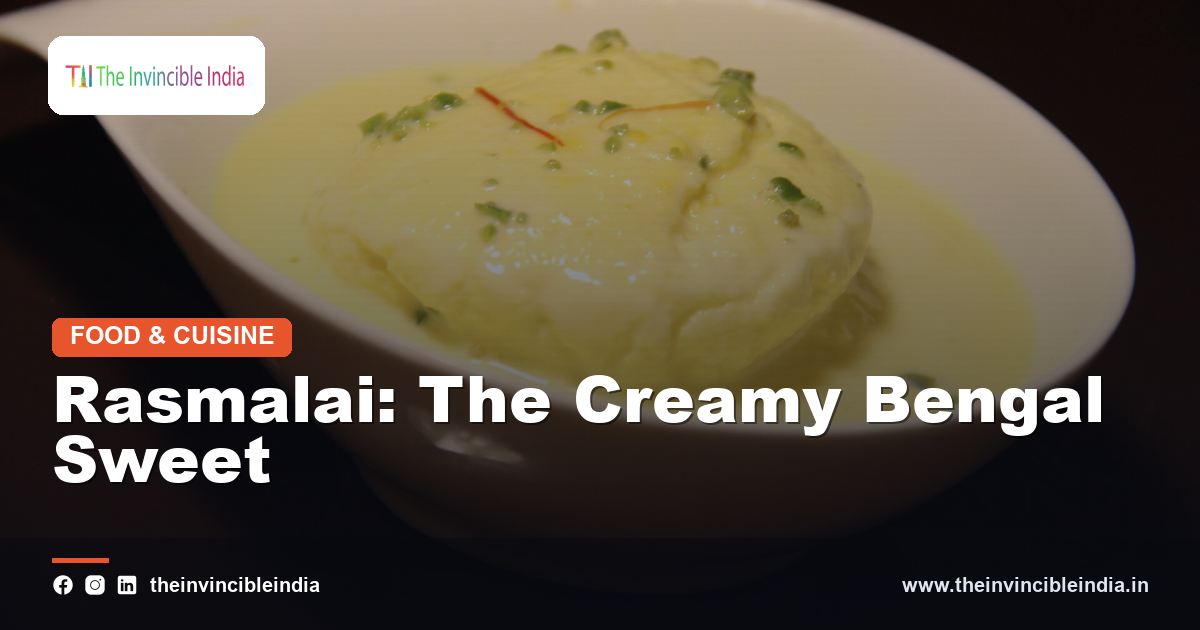
Rasmalai is one of Bengal’s most celebrated sweets, made from soft, spongy discs of fresh cottage cheese that are gently soaked in a rich, saffron-flavoured milk reduced slowly until thick and fragrant. Its name, drawn from the words for juice and cream, captures the essence of the sweet precisely, for rasmalai is prized above all for the way its delicate discs soak up the creamy, subtly sweetened milk they rest in. Part of the same milk-based sweet-making tradition celebrated among the famous sweets of India, rasmalai stands out for its particular lightness and elegance. This guide explores rasmalai, its history, its preparation and its enduring popularity across the country.
Quick Facts
| Detail | Information |
|---|---|
| Type | A cottage cheese sweet soaked in saffron milk |
| Rooted in | Bengali milk-based sweet-making tradition |
| Famous for | Its soft texture and creamy, fragrant syrup |
| Key ingredients | Chenna, milk, sugar, saffron and cardamom |
| Popular in | Bengal and across India as a festive sweet |
| Character | Soft, delicate, creamy and mildly sweet |
Bengal's Celebrated Creamy Sweet
Rasmalai is one of Bengal’s most celebrated sweets, a delicate preparation of soft cottage cheese discs that are gently simmered and then left to soak in a rich, reduced milk flavoured with saffron and cardamom. Its appeal lies in the contrast between the light, spongy texture of the discs and the thick, creamy sweetness of the milk that surrounds them, a balance achieved only through careful and patient preparation. It is considered one of the finer achievements of Bengali sweet-making. As Bengal’s celebrated creamy sweet, rasmalai occupies a special place among India’s milk-based desserts, admired wherever it is served for its elegance and refinement.
Chenna: The Foundation of Rasmalai
Rasmalai begins with chenna, a fresh cottage cheese made by curdling hot milk with an acidic agent such as lemon juice or vinegar and then draining away the whey, leaving behind soft, crumbly curds. This chenna is kneaded until smooth before being shaped into small discs, a technique refined over generations of Bengali sweet-making. The quality of the milk used has a direct effect on the final texture. This foundation of chenna, prepared with skill and care, determines much of rasmalai’s ultimate softness and is considered the single most important step in making the sweet successfully.
Shaping and Cooking the Discs
Once the chenna has been kneaded to a smooth, pliable consistency, it is shaped into small, flattened discs that are then gently simmered in a light sugar syrup until they puff up slightly and become tender enough to absorb liquid readily. This cooking stage must be handled carefully, as discs that are undercooked remain dense while those overcooked can turn rubbery. Skilled cooks judge readiness by touch and appearance alone. This careful shaping and cooking of the discs is a crucial stage in rasmalai’s preparation, directly determining the soft, spongy quality for which the sweet is so highly regarded.
The Saffron Milk Base
The creamy base that gives rasmalai its name is made by slowly reducing full-fat milk over low heat until it thickens considerably, then flavouring it with saffron strands and ground cardamom, which lend the milk both a golden hue and a delicate fragrance. This reduction process demands patience, as the milk must be stirred frequently to prevent it from catching or forming a heavy skin. Some cooks add a few chopped pistachios for extra richness. This saffron milk base, thick and fragrant, is what transforms plain cottage cheese discs into the luxurious dessert known as rasmalai.
Soaking and Absorbing Flavour
Once cooked, the chenna discs are transferred from their sugar syrup into the prepared saffron milk, where they are left to soak for a period of time, allowing them to absorb the creamy liquid and swell gently in the process. This soaking stage is essential, as rasmalai is best enjoyed only once the discs have had sufficient time to take on the flavour and softness of the milk around them. Chilling before serving further improves the texture. This process of soaking and absorbing flavour is what completes rasmalai, transforming a simple sweet into one defined by its rich, creamy character.
Bengali Roots of the Sweet
Rasmalai is deeply rooted in the milk-based sweet-making traditions of Bengal, a region long celebrated across India for its mastery of chenna and its many delicate sweets built upon this same fresh cottage cheese base. Bengali confectioners developed considerable skill in shaping and cooking chenna into an enormous range of textures and forms, of which rasmalai remains among the most admired. This tradition continues to be passed down among sweet-making families. These Bengali roots, reflecting generations of expertise with milk and chenna, remain clearly evident in the fine craftsmanship that goes into a well-made rasmalai.
Rasmalai and Rasgulla Compared
Rasmalai is closely related to rasgulla, another celebrated Bengali sweet made from similar chenna discs, though the two differ significantly in their final presentation, as rasgulla is served in a light sugar syrup while rasmalai’s discs are instead soaked in thickened, saffron-flavoured milk. Both sweets share the same careful chenna-making technique at their foundation. Some rasmalai recipes even begin with freshly made rasgulla. This close relationship between rasmalai and rasgulla, sharing a common base yet differing in their final treatment, illustrates the versatility of chenna within Bengali sweet-making at its finest.
Cardamom and Saffron Fragrance
The fragrance of rasmalai owes much to its careful use of cardamom and saffron, two ingredients long prized in Indian sweet-making for the delicate aroma they lend to milk-based dishes. Ground cardamom adds a warm, slightly sweet note, while saffron contributes both colour and a subtle, distinctive fragrance that perfumes the entire dish. Only a small quantity of each is needed to make a noticeable difference. This careful use of cardamom and saffron fragrance is what elevates rasmalai from a simple milk sweet into something genuinely aromatic and memorable.
Rasmalai at Festivals and Celebrations
Rasmalai holds a firm place at festivals, weddings and family celebrations across India, valued as an elegant sweet suitable for guests and special occasions alike, often served chilled in small bowls toward the end of a festive meal. Its rich, creamy character makes it feel appropriately celebratory without being overly heavy. Many sweet shops report their highest rasmalai sales during festival seasons. This presence of rasmalai at festivals and celebrations reflects the sweet’s status as a dessert reserved for moments of particular joy and gathering.
Rasmalai Beyond Bengal
Though rooted in Bengal, rasmalai has travelled widely across India, becoming a staple item at sweet shops in nearly every major city and a familiar presence on dessert menus at Indian restaurants around the world. Its universal appeal, built on the gentle sweetness of milk and cardamom, has helped it transcend regional boundaries more successfully than many other traditional sweets. Regional sweet shops often develop their own signature version. This spread of rasmalai beyond Bengal shows how a sweet rooted in one region’s craftsmanship can come to be cherished as a shared national favourite.
Serving and Presentation
Rasmalai is traditionally served chilled, arranged in a shallow bowl with enough of the saffron milk to cover the discs generously, and often garnished with slivers of pistachio or almond for a touch of colour and crunch. This presentation, simple yet elegant, allows the sweet’s delicate texture and fragrant milk to remain the focus of attention. A light dusting of edible silver leaf is sometimes added for special occasions. This careful serving and presentation of rasmalai reflects the refinement that runs throughout the sweet’s preparation, from chenna-making to its final garnish.
Making Rasmalai at Home
Preparing rasmalai at home requires patience across several distinct stages, from curdling and draining milk to make chenna, to shaping and cooking the discs, and finally reducing and flavouring the milk in which they will soak. While the process takes time, none of the individual steps demands particularly advanced skill, making rasmalai an achievable project for a dedicated home cook. Many families make it in batches for festivals. This home preparation of rasmalai, though time-consuming, remains a rewarding way for households to enjoy the sweet freshly made rather than store-bought.
Rasmalai Cake and Modern Twists
In recent years, rasmalai’s distinctive flavour has inspired modern reinterpretations, including rasmalai-flavoured cakes, tarts and other fusion desserts that borrow the sweet’s saffron and cardamom notes while presenting them in an entirely different form. These contemporary versions have found particular popularity among younger diners and at modern bakeries seeking to blend traditional Indian flavours with Western dessert formats. Traditional rasmalai nonetheless remains the preferred choice for festivals. These modern twists on rasmalai show how a classic Bengali sweet can continue to inspire creativity while its original form remains firmly beloved.
Sweet Shops and Rasmalai's Reputation
Certain sweet shops across India, particularly in Bengal and other parts of North India, have built strong reputations specifically around their rasmalai, known for a particularly soft disc or an especially fragrant milk that keeps customers returning. Such shops often guard their exact methods closely, treating their rasmalai recipe as a point of pride and competitive distinction. Word of mouth plays a large role in these reputations. This close association between certain sweet shops and their rasmalai’s reputation reflects just how much variation in quality and skill can exist within what looks like a single, simple sweet.
Nutritional Character of Rasmalai
Rasmalai, built from milk, chenna and sugar, offers a rich source of protein and calcium typical of milk-based Indian sweets, though it is also relatively high in sugar and should be enjoyed in moderation as an occasional treat rather than a daily indulgence. Its use of full-fat milk contributes to both its nutritional density and its characteristic creaminess. Lighter versions using reduced-fat milk are increasingly available. This nutritional character of rasmalai, rich yet balanced by its milk-based ingredients, is typical of the wider category of Indian milk sweets to which it belongs.
Rasmalai as a Gifting Sweet
Rasmalai is frequently chosen as a gifting sweet in India, packed into decorative boxes and presented during festivals, weddings and other social visits as a mark of goodwill and celebration. Its refined appearance and universally pleasing flavour make it a safer, more elegant choice than many other sweets when the recipient’s exact taste is unknown. Sweet shops often package it in individual sealed containers to preserve its texture during transport. This popularity of rasmalai as a gifting sweet, valued for its elegance and broad appeal, has further cemented its place among the most sought-after Indian desserts for any occasion calling for a thoughtful, celebratory treat.
Rasmalai Today
Today rasmalai remains one of India’s most widely loved sweets, prepared in Bengali sweet shops with generations of expertise and increasingly reproduced in homes and modern bakeries across the country and beyond. Its delicate discs and fragrant saffron milk continue to be served at festivals, weddings and family gatherings with the same enthusiasm they have long enjoyed. Its popularity abroad continues to grow as well. As Bengal’s celebrated creamy sweet, soft, fragrant and refined, rasmalai remains one of the finest expressions of India’s rich tradition of milk-based desserts.
Sources & Further Reading
- Ministry of Culture, Government of India, on India’s culinary heritage (indiaculture.gov.in).
- Culinary references on the sweet-making traditions of Bengal.
Frequently Asked Questions
What is rasmalai made of?
Rasmalai is made from chenna, or fresh cottage cheese, shaped into discs and cooked before being soaked in a rich, reduced milk flavoured with saffron and cardamom.
What is the difference between rasmalai and rasgulla?
Rasgulla is served in a light sugar syrup, while rasmalai uses similar chenna discs soaked instead in thickened, saffron-flavoured milk, giving it a creamier, richer character than rasgulla.
Which region is rasmalai from?
Rasmalai originates from Bengal, a region renowned across India for its mastery of chenna and milk-based sweets, though the dessert is now enjoyed and prepared throughout the country.
Is rasmalai served hot or cold?
Rasmalai is traditionally served chilled, allowing the cottage cheese discs to remain firm while fully absorbing the flavour of the cold, fragrant saffron milk they are soaked in.
What gives rasmalai its flavour?
Rasmalai gets its distinctive flavour from saffron and cardamom infused into the reduced milk, along with the natural mild sweetness of the chenna discs and sugar used in the syrup and milk.


