

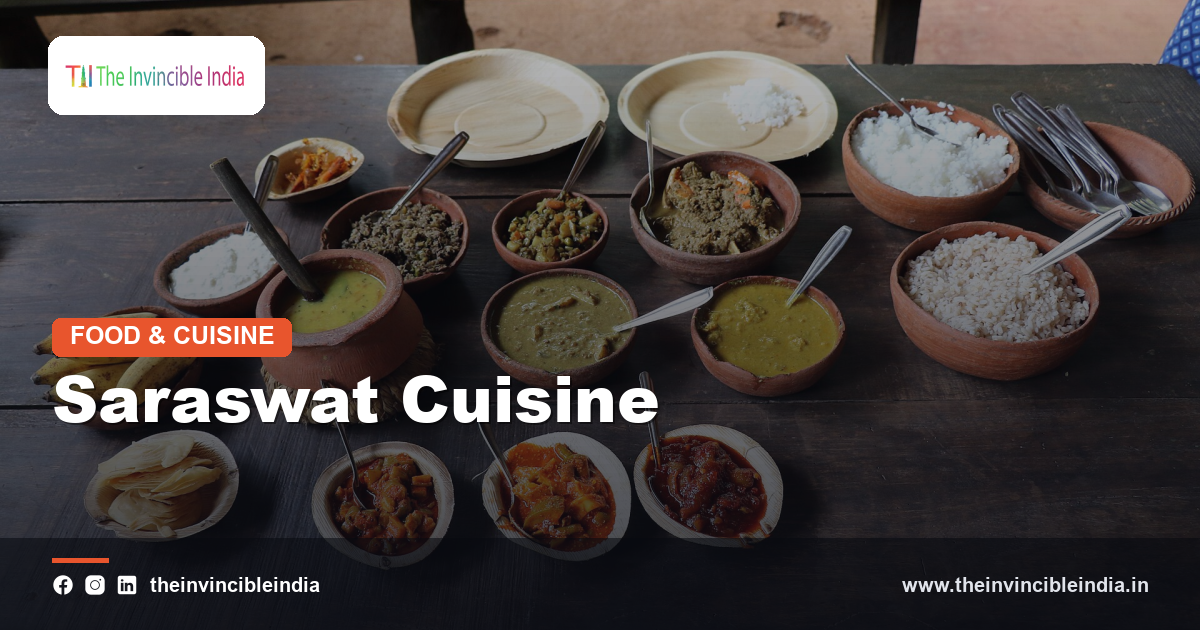
Saraswat cuisine is the coconut-rich, tangy and carefully balanced food of the Saraswat communities who made their homes along the Konkan coast, from Goa through coastal Karnataka and into Kerala. Unlike the cooking of many Brahmin groups elsewhere in India, it embraces fish and seafood alongside an equally sophisticated vegetarian tradition. Much like the diverse regional cuisines of India, it is a cuisine shaped by migration, coastline and community memory. This guide explores Saraswat cuisine, its history, its signature curries and sweets, and the way a small community built one of the most distinctive culinary identities on India’s western shore.
Quick Facts
| Detail | Information |
|---|---|
| Type | Coastal community cuisine of the Konkan region |
| Rooted in | Gaud Saraswat Brahmin kitchens of Goa, Karnataka and Kerala |
| Famous for | Coconut-based fish curries, ghashi and sol kadhi |
| Key ingredients | Coconut, kokum, tamarind, red chillies and fish |
| Signature style | Tangy, mildly sweet and freshly ground masalas |
| Character | Balanced, aromatic and rich in vegetarian options too |
The Food of the Saraswats
Saraswat cuisine belongs to the Saraswat Brahmin communities, among them the Gaud Saraswat Brahmins, who settled along the western coast of India and developed a cooking style that reflects both their traditions and their surroundings. Over the centuries the community spread through Goa, the Karnataka coast and parts of Kerala and Maharashtra, carrying recipes and adapting them to local produce. Konkani, the language of many of these families, became the vehicle through which dish names and cooking customs were passed down. This layered history gave rise to a cuisine that is deeply rooted yet adaptable. As the food of a close-knit coastal community, Saraswat cuisine occupies a treasured and distinctive place among the regional traditions of western India.
A Community Shaped by the Coast
The history of the Saraswat communities is closely tied to the Konkan coast, a narrow strip of land between the Western Ghats and the Arabian Sea, rich in rivers, backwaters, rice fields and coconut palms. Life here offered an abundance of fish, shellfish, coconuts, tamarind and tropical vegetables, and the community’s cooking made ready use of all of them. Movement along the coast, whether for trade, learning or settlement, spread culinary ideas from one town to the next and gave Saraswat food its slight regional variations. This close relationship between community and coastline explains why the cuisine feels so unmistakably maritime and tropical, and why its flavours remain so closely tied to the landscape that first nurtured them.
Fish in a Brahmin Kitchen
One of the most striking features of Saraswat cuisine is the place of fish in the home kitchen. While many Brahmin communities across India follow strictly vegetarian diets, the Saraswats of the coast have long eaten fish and seafood, regarding them as a natural gift of the region. Fresh catch such as mackerel, sardines, pomfret and prawns is prepared in coconut-based curries, in shallow-fried slices coated with semolina or rice flour, and in dry preparations flavoured with spices. At the same time, the community maintains a rich vegetarian repertoire for religious days and certain occasions. This coexistence of fish and strictly observed vegetarian meals gives Saraswat cuisine its particular range and sets it apart from other Brahmin culinary traditions.
Coconut as the Heart of the Kitchen
Coconut is the single most important ingredient in Saraswat cooking, appearing in nearly every meal in one form or another. Freshly grated coconut is ground with red chillies, tamarind and spices to produce the thick masalas that give curries their body and warmth, while coconut milk and coconut oil add richness and aroma. Grated coconut also garnishes dry vegetable dishes, and coconut is the base of many chutneys and sweets. The freshness of the grinding is considered essential to flavour, and families traditionally prepared their masalas on the grinding stone each day. This constant, creative use of coconut is what gives Saraswat cuisine its creamy depth and its unmistakable coastal character.
Kokum, Tamarind and the Tangy Palate
Saraswat curries are known for a pleasing tang, which comes from souring agents native to the western coast. Kokum, the dried deep-purple rind of a tropical fruit, lends a gentle, fruity sourness and a rosy colour to curries and cooling drinks, while tamarind provides a sharper, deeper acidity. Some preparations use raw mango, tender tamarind or tomato in season. The sourness is carefully balanced against the sweetness of coconut and, in some dishes, a pinch of jaggery. Together these ingredients create the layered taste that defines the cuisine. This skilful use of kokum and tamarind to balance richness with brightness is among the clearest signatures of Saraswat cooking and one of its greatest strengths.
Ambat, Ghashi and the Everyday Curries
The everyday meal in a Saraswat home revolves around a handful of curries with distinctive names. Ambat is a tangy, spiced preparation, often made with vegetables or lentils, while ghashi is a thick coconut gravy usually made with a single main ingredient such as raw jackfruit, sweet pumpkin, or sprouted pulses, and tempered with mustard seeds and curry leaves. Simple dals and dry vegetable dishes known as upkari sit alongside them, and rice remains the constant companion. Each household has its own preferred proportions of chillies, coconut and souring agent. These humble yet flavourful curries, cooked fresh each day, form the heart of Saraswat home cooking and show how much character can emerge from a short list of well-chosen ingredients.
The Coastal Seafood Repertoire
Seafood preparations form a proud branch of Saraswat cuisine, reflecting the community’s long familiarity with the western coast’s waters. Fish curry made with a ground coconut and red chilli masala, soured with tamarind or kokum, is perhaps the most iconic dish, served over steamed rice. Prawns, crab and other shellfish are cooked in similar gravies or sautéed with onion, coconut and spices, while fish roasted or fried in a light crust offers a crisp counterpart. Dried fish is also used in certain households, especially during the rains when fresh catch is limited. This diverse seafood repertoire, shaped by the rhythm of the coastal seasons, demonstrates how deeply the community’s cooking is anchored in its maritime surroundings.
Vegetarian Traditions and Ritual Cooking
Alongside its fish dishes, Saraswat cuisine includes an elaborate vegetarian tradition that comes to the fore on religious days, festivals and certain family occasions. Meals on such days leave out fish and often onion and garlic, and rely on seasonal vegetables, pulses, coconut and jaggery. Dishes such as raw banana preparations, colocasia leaf rolls, vegetable stews and lentil curries appear on the temple and festival table. Cooks take care over purity and order in the preparation of these meals. This parallel vegetarian tradition shows the flexibility of Saraswat cooking, which moves comfortably between seafood and strictly vegetarian menus, and highlights the community’s careful attention to both ritual observance and good eating.
Sol Kadhi and Cooling Drinks
Sol kadhi, a pale pink drink made from coconut milk and kokum, is among the best-known contributions of the Konkan coast to Indian food, and it features prominently in Saraswat meals. Lightly flavoured with garlic, green chilli and coriander, it is both a digestive and a cooling accompaniment to spicy fish curry and rice, and many families serve it at the end of a meal. Buttermilk, tender coconut water and kokum sherbet provide other refreshing choices in the coastal heat. These drinks are valued as much for their effect on the body as for their taste. The humble sol kadhi, simple to make and soothing to drink, perfectly captures the practical wisdom of Saraswat cooking.
Rice, Dosas and Everyday Breads
Rice dominates the Saraswat table in many forms. Boiled rice is eaten with curries, while a light rice gruel known as pej is a comforting meal in itself, especially with pickle. Rice batter is turned into soft dosas, steamed dumplings and thin, lacy pancakes, and flattened rice is used for breakfast preparations and snacks. Where wheat or other grains are used, they usually appear in smaller roles. Breakfast dishes are often paired with coconut chutney or a spicy curry. This wide-ranging use of rice, shaped by what the coastal fields produce, reflects the logic behind Saraswat food, which makes the most of local grains in every conceivable form while keeping the preparations light and easy to digest.
Pickles, Preserves and Dried Foods
The humid coastal climate and heavy monsoon made preservation an important household skill, and Saraswat kitchens developed a range of pickles, dried vegetables and preserves to see families through the rainy months. Mango pickle, lime pickle and spicy preparations of tender mango are common, as are sun-dried vegetables, fried fritters called sandge and crisp papads made from rice or lentil flour. Salted and sun-dried ingredients stored well and added flavour when fresh produce was scarce. These preserved foods continue to appear on the thali today, adding brightness and crunch. The tradition of pickles and dried foods, born of practical necessity, remains a cherished part of Saraswat cuisine and a reminder of the resourcefulness of its home cooks.
Sweets and Festive Dishes
Festive occasions in Saraswat homes are marked with a delicious array of sweets made from rice, coconut, jaggery and milk. Payasam, prepared with rice, lentils, vermicelli or coconut milk, is a regular feature of celebratory meals, while steamed rice dumplings filled with sweet coconut are a favourite during festivals devoted to Ganesha. Other treats include laddus, sweet pancakes and delicate fried snacks prepared for special days. Recipes are typically learned within the family and passed down through the women of the household. These festive sweets, simple in ingredients yet rich in flavour and meaning, show how Saraswat cuisine marks the high points of the calendar with food that is both joyful and deeply connected to family tradition.
Spices, Masalas and Grinding Traditions
The signature flavour of Saraswat food owes much to the way spices are handled. Dry red chillies, coriander seeds, cumin, fenugreek, black pepper and turmeric are roasted and ground with coconut to make masalas suited to each dish, and the balance changes from fish curry to vegetable ghashi. Local varieties of chilli are valued for the colour and mild heat they impart rather than for ferocity alone. Traditional stone grinders produced a fine, even paste that melded smoothly into curries. Though modern kitchens use electric grinders, the principles remain the same. This careful handling of spices and masalas explains how Saraswat dishes achieve depth and aroma without relying on excessive heat, and why the cuisine appeals to such a wide range of palates.
Family Kitchens and Passing Down Recipes
Saraswat cuisine survives and evolves largely through the family kitchen, where recipes are taught by example rather than from written measures. Grandmothers and mothers pass on the feel of a good masala, the right moment to add the souring agent and the timing of a tempering, and daughters and daughters-in-law absorb these skills over years of cooking together. Community cookbooks and gatherings later helped to record and share these recipes more widely. Regional variations remain, with Goan, Karnataka and Kerala Saraswat households each preferring slightly different flavours. This tradition of oral and practical transmission has kept the cuisine alive for generations and underlines how strongly Saraswat food is bound up with family life and community identity.
Saraswat Cuisine in Restaurants and Communities
For many years Saraswat cooking was largely confined to home kitchens, community gatherings and temple events, but in recent decades it has appeared on restaurant menus and in food writing. Eateries in coastal cities and in metropolitan centres now serve Saraswat-style fish thalis, ghashi and sol kadhi, introducing the cuisine to new audiences. Community associations organise food festivals and cooking sessions, and young cooks share family recipes online. This growing visibility has encouraged pride within the community and curiosity among outsiders. By moving from private kitchens into the wider public eye, Saraswat cuisine has gained recognition as one of the finest coastal food traditions of western India while still retaining its home-cooked warmth.
Saraswat Cuisine Among the Konkan Traditions
The Konkan coast is home to several distinct food traditions, including Goan Catholic, Malvani, Mangalorean and Saraswat cooking, each shaped by its own history yet sharing ingredients such as coconut, kokum and fish. Saraswat cuisine stands out for its refined spicing, its vegetarian discipline on ritual days and its subtle balance of tangy and mildly sweet flavours, which differ from the fiery heat of some neighbouring styles. Exchanges between communities over centuries mean that many dishes and techniques overlap while keeping their own character. Seen in this wider setting, Saraswat cuisine is one important strand in the rich culinary tapestry of the Konkan, contributing finesse and variety to the coastline’s collective food heritage.
Saraswat Cuisine Today
Today Saraswat cuisine continues to flourish, carried forward by families, community organisations and a new generation of cooks and writers who cherish its flavours. Traditional dishes such as fish curry, ghashi, ambat and sol kadhi remain staples at home, while festive sweets and ritual vegetarian meals preserve the older rhythms of the calendar. Members of the community living in cities and abroad keep the cuisine alive through recipe sharing and gatherings. At the same time, restaurants and food festivals are widening its audience beyond the coast. This enduring vitality, grounded in fresh ingredients, careful technique and strong family tradition, ensures that Saraswat cuisine remains a living and treasured part of India’s rich culinary heritage.
Sources & Further Reading
- Ministry of Culture, Government of India (indiaculture.gov.in).
- Goa Tourism Department (goatourism.gov.in).
Frequently Asked Questions
What is Saraswat cuisine?
Saraswat cuisine is the traditional cooking of the Saraswat Brahmin communities of the Konkan coast, including Goa, coastal Karnataka and parts of Kerala. It is known for coconut-based curries, tangy flavours and a balance of fish and vegetarian dishes.
Do Saraswat Brahmins eat fish?
Many coastal Saraswat communities traditionally eat fish and seafood, which sets them apart from several other Brahmin groups in India. They also observe strictly vegetarian meals on religious days and certain festivals.
What is ghashi?
Ghashi is a thick coconut-based curry typical of Konkan cooking, usually made with one main ingredient such as raw jackfruit, pumpkin or sprouted pulses. It is tempered with mustard seeds and curry leaves and served with rice.
What is sol kadhi?
Sol kadhi is a cooling pink drink made from coconut milk and kokum, often flavoured with a little garlic and green chilli. It is served with fish curry and rice and is valued for its digestive qualities.
Which ingredients define Saraswat cooking?
Coconut, kokum, tamarind, dried red chillies, curry leaves and fresh fish are the defining ingredients. Together they create the tangy, mildly sweet and aromatic flavour that characterises the cuisine.


