

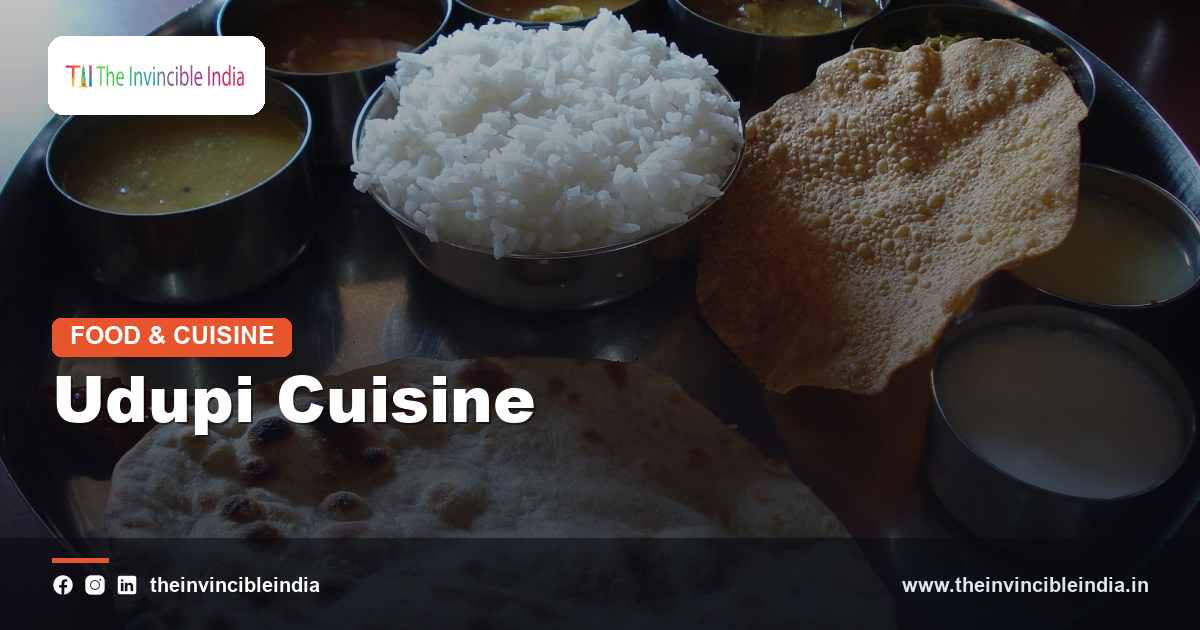
Udupi cuisine is the pure vegetarian food of a coastal Karnataka temple town, shaped by the kitchens of the Sri Krishna Matha and the culinary traditions of the Tulu-speaking region around it. Rice, coconut, lentils, tamarind and locally grown vegetables form its backbone, prepared with a gentle hand and a preference for balance over heat. Just as the wider regional cuisines of India show how place and faith shape the plate, Udupi food grew from temple offerings and devotional discipline. This guide explores Udupi cuisine, its history, its signature dishes and the remarkable way its restaurants carried the flavours of one small town across the whole country.
Quick Facts
| Detail | Information |
|---|---|
| Type | Vegetarian temple-town cuisine of coastal Karnataka |
| Rooted in | The kitchens of the Sri Krishna Matha, Udupi |
| Famous for | Sambar, masala dosa, idli and coconut chutneys |
| Key ingredients | Rice, coconut, lentils, tamarind and jaggery |
| Signature institution | The Udupi hotel, found across India |
| Character | Light, balanced and devotional in spirit |
The Food of Udupi
Udupi cuisine is the food of a small coastal town in Karnataka that holds an outsized place in India’s culinary imagination. Set between the Western Ghats and the Arabian Sea, the region draws on abundant rice fields, coconut groves and monsoon rains, and its cooking reflects the plenty of that landscape. Over generations the town’s temple kitchens and household traditions merged into a distinct style of vegetarian cooking, one that favours freshness, moderation and a careful balance of tastes. The result is a cuisine that feels both simple and refined. As the food of one temple town that came to represent an entire style of vegetarian eating, Udupi cuisine holds a special and widely loved place among India’s regional traditions.
The Sri Krishna Matha and Its Kitchen
No account of Udupi food is complete without the Sri Krishna Matha, the celebrated temple and monastic complex that has long stood at the centre of the town’s religious and social life. Its kitchen prepares food as an offering and then serves it to large numbers of devotees every day, a tradition of hospitality that has shaped local cooking habits for centuries. The temple is associated with the philosopher-saint Madhvacharya and the Dvaita tradition, and its food culture reflects a devotional outlook in which cooking is itself a form of service. This long link between worship and the kitchen explains why Udupi cuisine carries such a strong sense of purity, discipline and generosity.
The Ashta Mathas and Paryaya Tradition
Around the Krishna temple stand eight monasteries, collectively known as the Ashta Mathas, which share responsibility for the temple’s worship through a rotating arrangement known as the Paryaya. Each monastery takes its turn to manage the temple’s rituals, offerings and feeding of devotees, and each brings its own household cooks and preferred preparations to the task. This rotation has helped keep a wide repertoire of recipes alive and has encouraged friendly refinement from one cycle to the next. The Ashta Mathas and the Paryaya tradition thus act as a living archive of Udupi cooking, ensuring that the town’s devotional food customs continue to be practised and passed on with care.
Pure Vegetarian by Tradition
Udupi cuisine is vegetarian by long tradition, and the town’s temple cooking in particular follows a sattvic outlook that favours simple, wholesome ingredients and avoids heavy or pungent flavourings. Many traditional Udupi kitchens leave out onion and garlic, relying instead on coconut, tamarind, jaggery, curry leaves, mustard seeds and a measured use of chillies to build flavour. This restraint is a defining feature rather than a limitation, since the cooks achieve depth through careful tempering and slow roasting of spices. The strict vegetarian character of Udupi cuisine, grounded in devotional values and yet full of taste, remains one of the clearest ways to recognise the style.
Rice and Coconut as the Foundation
Rice and coconut stand at the very heart of Udupi cooking, as they do across much of the Karnataka coast. Rice appears as steamed grains, as batter for dosas and idlis, as flattened rice and as flour used in numerous snacks and sweets. Coconut is used fresh, grated, ground into masalas and chutneys, pressed for oil and stirred into curries to give them body and a mild sweetness. Together the two ingredients provide the comforting base on which the rest of the meal is built. This pairing of rice and coconut, drawn directly from the region’s farmland and shoreline, gives Udupi cuisine its gentle, rounded and unmistakably coastal character.
Udupi Sambar and Its Gentle Sweetness
Sambar is a staple across South India, but the Udupi version has a recognisable personality of its own. Cooks typically grind a fresh masala that includes roasted spices and coconut, then stir it into a pot of cooked toor dal, tamarind and seasonal vegetables. A small amount of jaggery is often added to round off the tang of the tamarind and the heat of the chillies, giving the dish a faintly sweet edge that many diners find distinctive. Finished with a fragrant tempering of mustard seeds and curry leaves, it is served with rice, idli or dosa. Udupi sambar, balanced and aromatic, is one of the most beloved expressions of the region’s cooking.
Rasam, Saaru and the Daily Meal
A traditional Udupi meal is built around a sequence of dishes served with rice, and the thin, tangy broth known locally as saaru or rasam plays an important part in it. Prepared with tamarind, tomato, lentil water and a fragrant spice blend, the broth is meant to stimulate the appetite and aid digestion, and it is often poured over rice towards the end of the meal. Alongside it come dal, a dry vegetable preparation, a coconut-based gravy, buttermilk and a small portion of pickle or salad. The arrangement follows a deliberate order of tastes. This simple daily meal, with its saaru and its carefully ordered courses, captures the quiet logic behind everyday Udupi eating.
Dosa, Idli and the Breakfast Table
Udupi restaurants are best known for their breakfast fare, and the masala dosa stands at the top of the list. A thin, crisp, golden crepe made from fermented rice and lentil batter, it is folded around a lightly spiced potato filling and served with sambar and coconut chutney. Soft steamed idlis, crisp medu vada and fluffy rava idli appear beside it on most menus, along with upma and a range of rice-based snacks. The batters are fermented overnight to develop flavour and lightness. These breakfast dishes, simple in ingredients yet demanding in technique, have become the public face of Udupi cuisine and a beloved morning ritual for countless families.
Chutneys, Gojju and Pickles
Beyond sambar and rasam, Udupi cooking offers a rich variety of accompaniments that lift an otherwise simple meal. Fresh coconut chutney, ground with green chillies, roasted lentils and a little tamarind, appears on almost every table. Gojju, a tangy-sweet preparation made with tamarind, jaggery, spices and vegetables or fruit, adds a lively contrast, while pickles made from raw mango, lime and other seasonal produce bring sharpness and long shelf life. Dry chutney powders, mixed with oil or ghee, offer another quick companion to rice and dosa. Together these accompaniments show how Udupi cooks use small, flavourful additions to bring variety and balance to the meal, turning modest ingredients into a full and satisfying spread.
Udupi Sweets and Festive Treats
The sweet side of Udupi cuisine reflects the same reliance on rice, coconut and jaggery found in its savoury cooking. Payasa, a milk or coconut-milk pudding sweetened with jaggery and often made with rice, vermicelli or lentils, is a common festive offering. Holige, a soft flatbread stuffed with a sweet lentil and jaggery filling, appears on celebratory tables, alongside laddus, steamed rice dumplings and sweets made from fresh coconut. Many of these are prepared first as temple offerings before being shared. These modest, home-style sweets, tied closely to festivals and worship, round out Udupi cuisine with a gentle sweetness that matches the mild and balanced character of the meals they follow.
The Banana Leaf and Serving Customs
Serving customs are an integral part of the Udupi dining experience, and the banana leaf is central to them. Meals are traditionally served on a fresh leaf, with each item placed in a set position so that the diner can eat in the proper sequence. Rice is served first, followed by dal or sambar, vegetables, chutneys and pickles, and later rasam and buttermilk. Eating with the hands is the norm, and hosts take care that no guest’s leaf remains empty. In temple settings the meal is often served to guests seated in neat rows on the floor. These customs, rooted in courtesy and cleanliness, add dignity to the simplest meal and remain a cherished part of Udupi food culture.
Seasonal Vegetables of the Coast
Udupi cooking follows the rhythm of the coastal seasons, relying on vegetables and fruits that grow readily in a warm, humid climate. Ash gourd, pumpkin, cucumber, raw banana, yam, colocasia and ridge gourd appear in curries and stir-fries, while raw jackfruit and ripe mango take centre stage in their seasons. Tender greens and the leaves of certain tubers are used as well, steamed or cooked into simple dishes. Cooks seek to preserve the natural flavour of each vegetable, adding only enough spice and coconut to complement it. This close attention to seasonal produce keeps Udupi cuisine fresh and varied through the year and reflects an enduring respect for the ingredients that the land provides.
Cooking Techniques and Flavour Building
Though Udupi food looks simple, it relies on a set of well-honed techniques that give it depth. Spices are often dry-roasted before grinding, which brings out their aroma, and fresh coconut masalas are ground to a smooth or slightly coarse texture depending on the dish. Tempering, in which mustard seeds, curry leaves and dried chillies are sizzled in hot oil or ghee, is the finishing touch for most preparations. Slow simmering allows lentils and vegetables to absorb flavour without losing their shape. Coconut oil is widely used in the region for frying and seasoning. These techniques, learned by watching and practising in family and temple kitchens, are what lift Udupi cuisine from plain vegetarian food into a carefully crafted culinary tradition.
The Udupi Hotel Across India
Perhaps the most remarkable chapter in the story of Udupi cuisine is the spread of the Udupi hotel, the modest vegetarian restaurant that carried the town’s cooking far beyond its home region. Cooks and families from the Udupi area opened eateries in cities across India, serving reliable, affordable and strictly vegetarian meals and snacks to office workers, students and travellers. Their clean kitchens, quick service and consistent flavours earned lasting loyalty, and in many cities the name Udupi became shorthand for a certain kind of wholesome South Indian eatery. This entrepreneurial journey made Udupi cuisine one of the most widely recognised regional food traditions in the country and a point of quiet pride for the region.
Festivals and Community Meals
Festivals bring out the fullest expression of Udupi cooking, with large communal meals prepared as offerings and then shared with all who attend. Occasions connected with Krishna, including the celebration of his birth, are marked with special sweets and savouries made from rice flour, jaggery and coconut. Harvest and seasonal festivals each have their own traditional dishes, prepared in family kitchens and temple halls alike. The practice of feeding visitors, rooted in the temple’s long history of hospitality, remains strong. These festival meals and community feasts show how food in Udupi is never merely sustenance but also an act of devotion, generosity and togetherness that binds families and neighbours across generations.
Udupi Cuisine Among Karnataka's Food Traditions
Karnataka has a wide spread of regional food styles, from the rich meat dishes of coastal communities to the millet-based meals of the north and the royal kitchens of Mysuru. Udupi cuisine sits within this diversity as a distinct vegetarian strand, sharing the coast’s love of rice and coconut while following its own temple-influenced discipline. Neighbouring Mangalorean and other Tulu-region traditions overlap with it in places, trading ingredients and techniques freely. Understanding this setting helps explain why Udupi food feels both rooted in its landscape and unlike its neighbours. As one clearly defined thread within the larger fabric of Karnataka’s food traditions, Udupi cuisine contributes variety, balance and a devotional character to the state’s culinary heritage.
Udupi Cuisine Today
Today Udupi cuisine continues to thrive both in its home town and in restaurants far from the coast. The temple kitchen still feeds devotees daily, family cooks still pass down recipes for sambar, gojju and festive sweets, and a new generation of chefs is rediscovering traditional Udupi dishes and presenting them in fresh ways. Food writers and travellers increasingly seek out the town for its meals as much as for its temple. At the same time, the familiar Udupi restaurant remains a trusted choice in cities across India. This lasting popularity, built on honest ingredients, gentle spicing and devotional care, ensures that Udupi cuisine remains a living and cherished part of India’s culinary heritage.
Sources & Further Reading
- Ministry of Culture, Government of India (indiaculture.gov.in).
- Karnataka Tourism Department (karnatakatourism.org).
Frequently Asked Questions
What is Udupi cuisine known for?
Udupi cuisine is known for its pure vegetarian cooking, its gentle spicing and its heavy use of rice and coconut. Sambar, masala dosa, idli and coconut chutney are among its best-loved dishes.
Is Udupi food always vegetarian?
The temple-town cuisine associated with the Krishna Matha and the Udupi restaurants is strictly vegetarian. The wider coastal region of Karnataka also has non-vegetarian traditions, which belong to its neighbouring Tulu and Mangalorean cuisines.
Why is Udupi sambar slightly sweet?
Cooks commonly add a little jaggery to the sambar to balance the sourness of tamarind and the heat of chillies. This gives it a mildly sweet and rounded flavour that distinguishes it from many other styles.
What is an Udupi hotel?
An Udupi hotel is a vegetarian restaurant, usually serving South Indian meals and snacks, run by families with roots in the Udupi region. Such restaurants spread across Indian cities and became known for clean kitchens and dependable flavours.
Do Udupi kitchens use onion and garlic?
Many traditional temple and household kitchens avoid onion and garlic in keeping with a sattvic outlook. Flavour instead comes from coconut, tamarind, jaggery, curry leaves and carefully tempered spices.


