

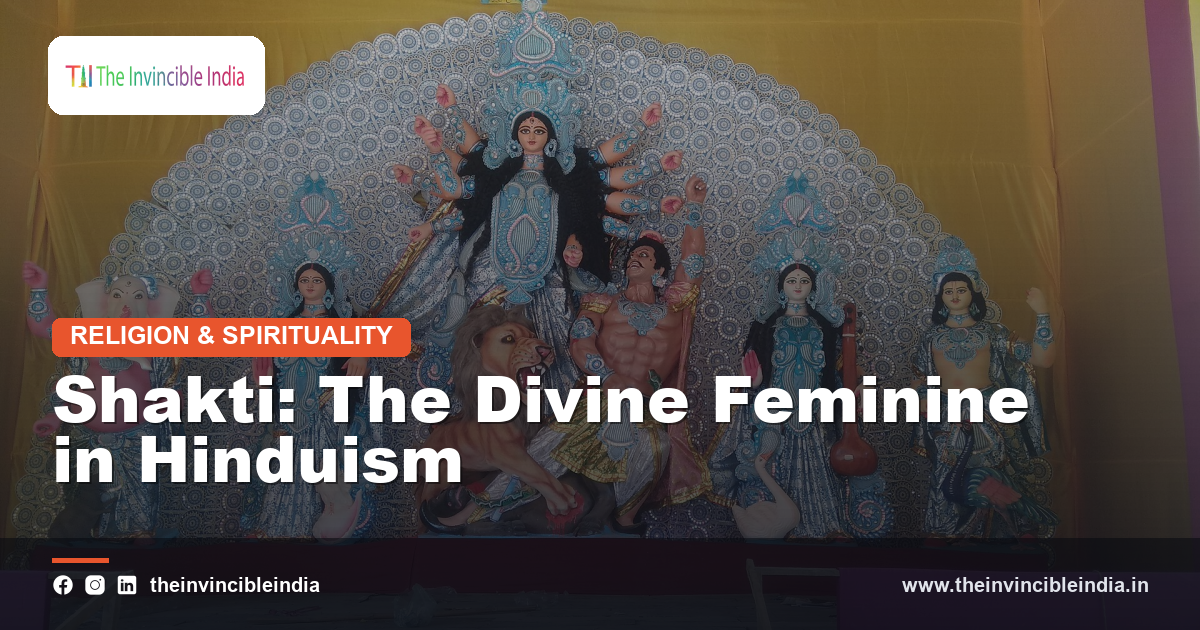
Shakti is the Divine Feminine in Hinduism, the Goddess worshipped as the supreme power and energy that pervades and animates the universe. The word Shakti means power or energy, and it names both the cosmic force that is the active power of the divine and the great Goddess who embodies it. Revered in a vast array of forms, from the gentle and nurturing to the fierce and powerful, the Goddess is worshipped across India as the mother of the universe, the destroyer of evil and the source of all power, and by a great tradition of devotees as the supreme reality itself. This guide explores Shakti, the Goddess as supreme power, her many forms, her worship and her deep meaning, one of the great streams of Hindu devotion.
Quick Facts
| Detail | Information |
|---|---|
| Meaning | Shakti means power or energy |
| Concept | The Divine Feminine as the supreme power of the universe |
| The Goddess | Devi, worshipped as the great mother and supreme reality |
| Forms | Durga, Kali, Parvati, Lakshmi, Saraswati and many more |
| Tradition | Shaktism, the worship of the Goddess |
| Festival | Navaratri, the great festival of the Goddess |
The Divine Feminine
Shakti is the Divine Feminine in Hinduism, one of the great and most profound aspects of the tradition, in which the divine is worshipped in its feminine form as the supreme power and energy of the universe. The honouring of the Divine Feminine, and the worship of the great Goddess, is a central and ancient stream of Hindu religious life, giving Hinduism one of the richest traditions of goddess worship in the world. The Goddess is revered as the mother of the universe, the source of all power, and, by her devotees, as the supreme reality itself. This deep reverence for the Divine Feminine, worshipped as supreme power and cosmic mother, is one of the most beautiful and important features of Hinduism.
The Meaning of Shakti
The word Shakti means power or energy, and it carries a profound meaning in Hindu thought. Shakti is understood as the active, dynamic power of the divine, the energy that creates, sustains and animates the universe, and it is conceived as feminine. In this understanding, the divine has both a passive, transcendent aspect and an active, creative power, and it is this active power, Shakti, that brings forth and moves the world. The great Goddess embodies this cosmic power. This concept of Shakti as the active energy of the divine, feminine in nature and embodied in the Goddess, is central to the tradition of the Divine Feminine and expresses a profound vision of the dynamic power that animates all of existence.
The Great Goddess
The Divine Feminine is worshipped as the great Goddess, or Devi, who is revered in the tradition of the Goddess as the supreme reality, the ultimate divine from whom all else proceeds. In this vision, the Goddess is not merely a consort or a lesser deity but the supreme power itself, the source and mother of the universe, encompassing all the other deities and all of creation. She is worshipped as the great mother, the giver of life, the protector and the destroyer of evil, and by her devotees as the highest divine. This exaltation of the Goddess as the supreme reality is one of the great streams of Hindu theology and devotion, and it places the Divine Feminine at the very summit of the divine.
Shaktism
The worship of the Goddess as the supreme deity constitutes one of the major traditions of Hinduism, sometimes called Shaktism, alongside the great traditions devoted to Vishnu and to Shiva. The followers of this tradition worship the Goddess in her many forms as the supreme reality and the source of all power, with their own theology, practices, scriptures and sacred places. Shaktism has a rich heritage of devotion, philosophy and worship, and it is especially strong in certain regions of India. As one of the great devotional traditions of Hinduism, centred on the worship of the Divine Feminine as supreme, Shaktism is an important and vibrant stream of the religion and the principal home of the worship of the Goddess.
The Many Forms of the Goddess
The Goddess is worshipped in a vast array of forms, from the gentle and nurturing to the fierce and terrifying, each expressing an aspect of the Divine Feminine. In her benign forms she is the loving mother, the giver of prosperity, wisdom and blessing; in her fierce forms she is the mighty warrior who destroys demons and evil, and the terrifying power of time and death. These many forms are understood as aspects of the one great Goddess, who reveals herself in different ways according to need. This rich variety of forms, embracing both the gentle and the fierce, the nurturing and the destroying, is one of the most striking features of the worship of the Goddess and expresses the fullness of the Divine Feminine.
Durga the Warrior Goddess
One of the greatest and most beloved forms of the Goddess is Durga, the mighty warrior goddess who embodies the power of the divine to destroy evil and protect the world. Depicted riding a lion or tiger and bearing many weapons in her many arms, Durga is celebrated above all for slaying a terrible demon that the other gods could not defeat, thus saving the world, a story told in the sacred texts of the Goddess. Durga represents the invincible power of the Divine Feminine against the forces of evil, and she is worshipped with great devotion, especially at the festivals of the Goddess. As the warrior goddess and protector, Durga is one of the most powerful and beloved forms of the Divine Feminine.
Kali the Fierce
Among the most striking and profound forms of the Goddess is Kali, the fierce and terrifying goddess who embodies the awesome power of time, destruction and transformation. Depicted in a fearsome form, dark and wild, Kali represents the fierce and destructive aspect of the Divine Feminine, the power that destroys evil and, in a deeper sense, the ego and illusion, and that governs time and death. Yet for her devotees, behind her terrifying form Kali is a loving mother who liberates and protects. Kali is worshipped with deep devotion, especially in certain regions, and she embodies profound spiritual truths about power, destruction and liberation. As the fierce Goddess, Kali is one of the most powerful and meaningful forms of the Divine Feminine.
The Gentle Goddesses
Alongside the fierce forms, the Goddess is worshipped in gentle, benign and nurturing forms, above all as the great goddesses of prosperity and wisdom. Lakshmi, the goddess of wealth, prosperity, fortune and beauty, and Saraswati, the goddess of knowledge, learning and the arts, are among the most beloved of these gentle forms, worshipped for the blessings they bestow. Parvati, the loving consort of Shiva and divine mother, is another cherished gentle form. These benign goddesses, embodying the nurturing, life-giving and blessing aspects of the Divine Feminine, are worshipped with deep love across India. The gentle goddesses, together with the fierce forms, express the full range of the Divine Feminine, from the nurturing mother to the mighty warrior.
The One Goddess
Although the Goddess is worshipped in a great many forms, the tradition of the Divine Feminine teaches that these are all forms of the one great Goddess, the single Divine Feminine who reveals herself in many ways. The gentle Lakshmi and Saraswati, the loving Parvati, the mighty Durga and the fierce Kali are understood as aspects or manifestations of the one Goddess, who is the supreme power and mother of the universe. This teaching of one Goddess behind the many forms parallels the wider Hindu vision of one reality behind the many deities. Understanding the many goddesses as forms of the one great Goddess reveals the unity underlying the rich diversity of the worship of the Divine Feminine.
The Devi Mahatmya
The most important scripture of the worship of the Goddess is the Devi Mahatmya, a sacred text that glorifies the great Goddess and tells the stories of her mighty deeds, above all her slaying of terrible demons to save the world. This text celebrates the Goddess as the supreme power, the source of all, who manifests to destroy evil and protect the world when the gods themselves are helpless. It is recited with great devotion, especially during the festivals of the Goddess, and it is foundational to the theology and worship of the Divine Feminine. The Devi Mahatmya is the central scripture of goddess worship, and its powerful stories of the Goddess overcoming evil are among the most important and beloved in the tradition of Shakti.
Navaratri, the Festival of the Goddess
The great festival of the Goddess is Navaratri, meaning nine nights, a joyous celebration dedicated to the worship of the Divine Feminine in her various forms over nine nights and days. During Navaratri, the Goddess is worshipped with devotion, and the festival is celebrated across India in many regional forms, with worship, fasting, music, dance and festivity, culminating in the celebration of the victory of good over evil. In some regions it is marked by the famous worship and immersion of images of the Goddess, and in others by nights of communal dance. Navaratri is the supreme festival of the Divine Feminine, a great celebration of the Goddess that expresses the deep devotion to Shakti across the land.
The Sacred Sites of the Goddess
The worship of the Goddess is associated with many sacred sites across India, holy places dedicated to the Divine Feminine and revered as centres of her power and presence. Among the most important are the sites known as the seats of the Goddess, holy places connected in tradition to the Goddess and revered as especially sacred to her, which are important centres of pilgrimage for her devotees. These sacred sites, spread across the land, mark the presence and power of the Goddess and draw pilgrims to worship the Divine Feminine. The network of holy places dedicated to the Goddess is an important part of the tradition of Shakti and reflects the deep and widespread devotion to the Divine Feminine across India.
Shakti and Shiva
In Hindu thought, Shakti, the active power of the divine, is often understood in relation to Shiva, who represents the passive, transcendent aspect of the divine, the two together forming a complete vision of the divine as the union of consciousness and power. In this understanding, Shiva is the unchanging ground and Shakti the dynamic energy, and it is through their union that the universe comes into being and is animated. This profound concept expresses the interdependence of the divine consciousness and its power, and the vision of the divine as the union of the masculine and feminine principles. The relationship of Shakti and Shiva is one of the deep philosophical aspects of the tradition of the Divine Feminine.
The Meaning of the Goddess
The worship of the Goddess carries a profound meaning, honouring the divine in its feminine form as the supreme power, the source of life, and the great mother of the universe. It affirms the sacredness of the feminine and of the creative, life-giving and protecting powers, and it offers devotees a loving mother and a mighty protector in the divine. In its deeper philosophy, the tradition of Shakti expresses the vision of the active power that creates and animates all existence. This rich meaning, honouring the Divine Feminine as supreme power and cosmic mother, and affirming the sacredness of the feminine, is one of the great and beautiful contributions of Hinduism to the religious vision of humanity.
The Divine Feminine Today
Today the worship of the Goddess and the honouring of the Divine Feminine remain among the most vibrant and beloved streams of Hindu religious life, practised with deep devotion across India and the Hindu world. The Goddess continues to be worshipped in her many forms, her great festivals celebrated with joy, her sacred sites drawing pilgrims, and her devotees turning to her as supreme power and loving mother. The tradition of Shakti continues to affirm the sacredness of the Divine Feminine and to offer a profound vision of the divine as power, energy and cosmic mother. As one of the great traditions of Hinduism, the worship of the Goddess endures as a beautiful and living expression of devotion to the Divine Feminine.
Sources & Further Reading
- Ministry of Culture, Government of India, on the religious traditions of India (indiaculture.gov.in).
- The Devi Mahatmya and the Puranas, the classical sources of goddess worship.
Frequently Asked Questions
What is Shakti?
Shakti is the Divine Feminine in Hinduism, the Goddess worshipped as the supreme power and energy of the universe. The word Shakti means power or energy, and it names both the cosmic force that is the active power of the divine and the great Goddess who embodies it.
Who is the Goddess in Hinduism?
The Goddess, or Devi, is the Divine Feminine, worshipped in the tradition of the Goddess as the supreme reality, the mother of the universe and the source of all power. She is revered in many forms, from the gentle Lakshmi and Saraswati to the mighty Durga and the fierce Kali.
Who is Durga?
Durga is a great and beloved form of the Goddess, the mighty warrior goddess who embodies the power of the divine to destroy evil and protect the world. She is celebrated above all for slaying a terrible demon that the other gods could not defeat, and is worshipped especially at Navaratri.
What is Navaratri?
Navaratri, meaning nine nights, is the great festival of the Goddess, a joyous celebration dedicated to the worship of the Divine Feminine in her various forms over nine nights and days, celebrated across India with worship, music, dance and festivity.
What is Shaktism?
Shaktism is one of the major traditions of Hinduism, the worship of the Goddess as the supreme deity, alongside the great traditions devoted to Vishnu and to Shiva. Its followers worship the Divine Feminine as the supreme reality and the source of all power.


