

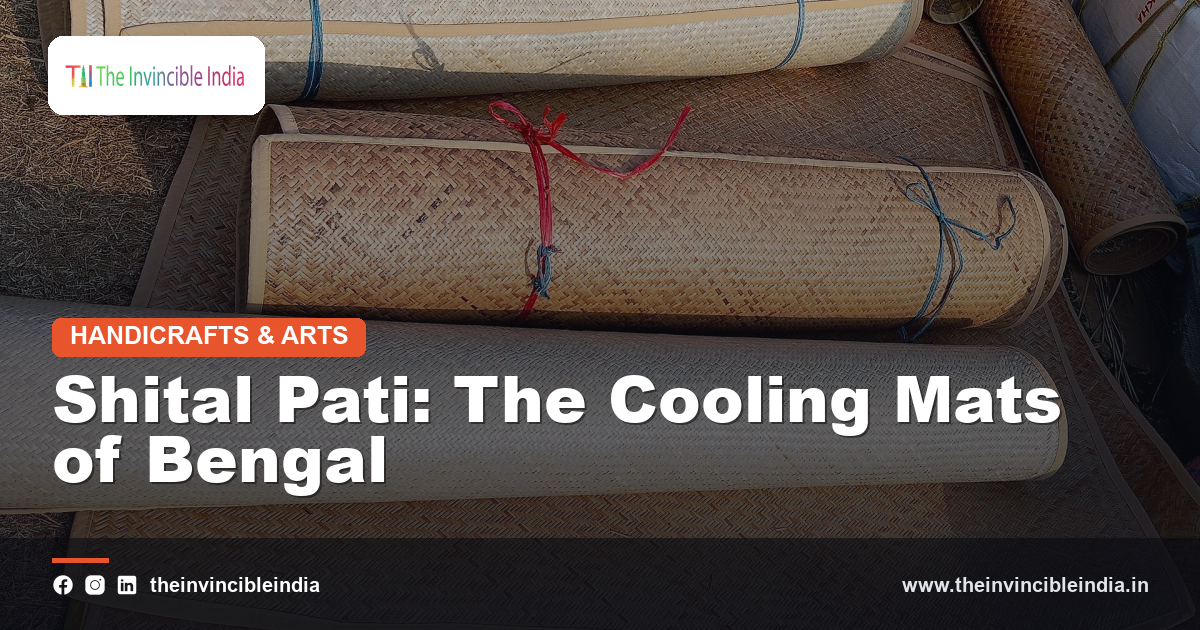
Shital Pati, whose name means cool mat, is a traditional handwoven mat of Bengal, famed for its smooth, glossy surface and its cooling feel in hot weather. The mat is woven from fine strips of murta, or mutra, cane, a reed-like plant, split and processed into thin, flexible slips that are then interlaced into a dense, even weave. The result is a light, smooth and pleasantly cool mat used for sleeping and sitting, especially valued in the humid heat of eastern India. The craft is particularly associated with the Cooch Behar region of Bengal, and the Sitalpati of Cooch Behar has been recognised with a Geographical Indication. Readers interested in India’s rich traditions of weaving and natural-fibre craft may also enjoy the traditional handicrafts of Rajasthan. This guide describes the mat, its name, its material, its home, its technique, its cooling quality, its makers and its present-day place.
Quick answer: Shital Pati is the cool mat of Bengal, India, woven from fine strips of murta (or mutra) cane (Schumannianthus dichotomus) into smooth, cooling sleeping and sitting mats. Its name means cool mat, reflecting its pleasant coolness in hot, humid weather. The craft is especially associated with Cooch Behar, and the Sitalpati of Cooch Behar has been recognised with a Geographical Indication.
Key Takeaways
- Shital Pati, also spelled Sitalpati, is the cool mat of Bengal, India; its name means cool mat.
- It is woven from fine strips of murta, or mutra, cane (Schumannianthus dichotomus).
- The cane is split and processed into thin, flexible slips that are interlaced into a dense, smooth weave.
- The mats are smooth, light and pleasantly cool, used for sleeping and sitting in hot weather.
- The craft is especially associated with the Cooch Behar region of Bengal.
- The Sitalpati of Cooch Behar has been recognised with a Geographical Indication.
The sections below explain what Shital Pati is, why it is called the cool mat, what murta cane is, where it is made, how it is woven, why it feels cool, who makes it and why it still matters.
Quick Facts
| Detail | Information |
|---|---|
| Craft type | Handwoven cane mat |
| Region of origin | Bengal, especially Cooch Behar |
| Also known as | Sitalpati, cool mat |
| Materials | Fine strips of murta / mutra cane (Schumannianthus dichotomus) |
| Technique | Splitting cane into slips and interlacing them into a dense weave |
| Known for | Smooth, cooling sleeping and sitting mats |
| GI status | Sitalpati of Cooch Behar has been recognised with a Geographical Indication; confirm details with the Registry |
| Community | Traditional pati weavers of the region |
What Is Shital Pati?
Shital Pati is a traditional handwoven mat of Bengal, made from fine strips of cane and known for its smooth surface and cooling feel. Also spelled Sitalpati, the name itself means cool mat, describing the quality for which it is prized. The mat is woven from thin, flexible slips split from murta cane and interlaced into a dense, even and often glossy surface. Shital Pati is light, smooth and pleasantly cool to the touch, which makes it especially suited to sleeping and sitting in the hot, humid weather of eastern India. The finer mats are admired for their delicacy and smoothness, almost like cloth. The craft is particularly associated with the Cooch Behar region of Bengal. Shital Pati turns humble cane into a cool, smooth mat. Its coolness and smoothness define its character. It is a distinctive natural-fibre craft of Bengal.
Why Is It Called the Cool Mat?
Shital Pati is called the cool mat because its name, Sitalpati, literally means cool mat, and because the finished mat feels pleasantly cool to lie or sit on in hot weather. The word shital, or sital, means cool, and pati means mat, so the name describes the defining quality of the craft. The smooth, dense weave of fine cane slips gives the mat a surface that feels cool against the skin, offering relief in the humid heat of eastern India. This cooling quality is the chief reason the mat has long been valued and used in the region. The name therefore captures exactly what makes the mat special. It distinguishes Shital Pati from ordinary mats by pointing to its comfort in the heat. The cool feel is the signature of the craft. The name says what the mat does. Coolness is its purpose and its pride.
What Is Murta Cane?
Murta, also called mutra, is a reed-like cane plant, botanically Schumannianthus dichotomus, whose stems provide the fine strips from which Shital Pati is woven. The plant grows in the moist, marshy areas of Bengal and neighbouring regions, where it is cultivated or gathered for the craft. Its stems are split and processed into thin, flexible slips, which are smooth and strong enough to be woven into a dense mat. The quality of the murta cane and of the slips drawn from it directly affects the smoothness, fineness and coolness of the finished mat. Preparing the cane into even, fine slips is a skilled and important step in the craft. Because the plant grows in the region, the cane ties the craft to its home in Bengal. The murta cane is the heart of the craft. Its slips make the cool, smooth weave possible.
Where Is Shital Pati Made?
Shital Pati is made in Bengal, with the craft particularly associated with the Cooch Behar region, where it is deeply rooted in local tradition. Cooch Behar, in the northern part of West Bengal, is especially renowned for the fine quality of its mats, and the Sitalpati of Cooch Behar has been recognised with a Geographical Indication. The craft became identified with the region because the murta cane grows there and because communities of weavers developed the skills to work it over generations. The demand for cool, comfortable mats in the humid heat of eastern India supported the craft. The concentration of skilled weavers in and around Cooch Behar helped the mat become renowned. The region and the craft are closely bound together, so that the finest mats are known by the name of Cooch Behar. The region is therefore both the home of the cane and the heart of the craft.
What Is the History of Shital Pati Weaving?
Shital Pati weaving has a long history as a traditional craft of Bengal, rooted in the everyday need for cool, comfortable mats in a hot, humid climate, though its precise early origins are not documented in exact detail. For a very long time, people in the region have woven mats from the murta cane that grows in their wetlands, developing the craft into a fine art, especially in Cooch Behar. The mats served for sleeping, sitting and prayer, and the finer pieces became prized possessions and gifts. Over generations, communities of weavers passed on the skills and refined the weave to produce ever smoother and finer mats. In recent times, the craft has gained recognition, including the Geographical Indication for the Sitalpati of Cooch Behar. Because much of the early story rests on tradition, it is best described in general terms as part of Bengal’s craft heritage. What is clear is that Cooch Behar became renowned for the craft.
How Is the Cane Harvested and Prepared?
The murta cane is harvested from the wetlands, then split and processed into fine, flexible slips before it can be woven. Weavers gather the cane at the appropriate stage and cut the stems for use. The stems are then split lengthwise and processed to draw out thin, even slips, which may be smoothed and sometimes treated to improve their flexibility and finish. The fineness and evenness of these slips are crucial, as the smoothness and coolness of the finished mat depend on them, and the finest mats require the finest slips. This preparation is a skilled and labour-intensive part of the craft, demanding care and patience. Because practices vary between weavers and between coarse and fine mats, the exact methods differ. This careful preparation turns raw cane into a workable weaving material. The quality of the slips shapes the quality of the mat. Preparation is a crucial first step.
How Is Shital Pati Woven?
Shital Pati is woven by interlacing the fine cane slips by hand into a dense, even and smooth mat. The weaver arranges the slips and passes them over and under one another in a close weave, building up the mat strip by strip and packing the slips tightly to create a smooth, firm surface. The finer the slips and the closer the weave, the smoother, cooler and more delicate the finished mat. Patterns and borders may be worked into the mat by varying the arrangement of the slips. The whole process is done by hand and relies on the weaver’s skill in handling the fine slips and keeping the weave even. Weaving a fine mat is slow, patient work that can take considerable time. Because practices vary, the exact techniques differ between weavers and products. The hand-weaving gives the mat its smooth, cool character. The weave is the craft.
Why Does Shital Pati Feel Cool?
Shital Pati feels cool because its smooth, dense weave of fine cane slips creates a surface that is pleasant and cooling against the skin in hot, humid weather. The natural properties of the murta cane and the smoothness of the tightly woven slips combine to give the mat its characteristic cool feel, which is the quality for which it is named and prized. Lying or sitting on the mat offers relief from the heat, which made it a valued household item in the warm climate of eastern India. The finer the mat, the smoother and cooler its surface tends to feel. This cooling comfort is the defining appeal of the craft. The cool feel comes from the material and the fine weave together. It is what gives the mat its name and its purpose. Coolness is the heart of its value. The mat is made to bring comfort in the heat.
What Types of Shital Pati Are Made?
Shital Pati is made in a range of types, from coarser everyday mats to very fine, delicate mats admired almost as works of art. Everyday mats, woven from coarser slips, serve for sleeping, sitting and prayer in ordinary household use. The finest mats, woven from very thin, smooth slips in a close weave, are prized for their smoothness, coolness and delicacy, sometimes soft and supple enough to be folded, and are valued as special possessions and gifts. Mats may be plain or worked with patterns and borders, and are made in various sizes. The craft can also be adapted to other woven cane products. This range allows Shital Pati to serve both everyday needs and the market for fine craft. Whatever the type, the hallmark remains the smooth, cool, handwoven cane mat. The variety is part of the craft’s richness. The finest mats are its glory.
What Patterns and Designs Appear on Shital Pati?
Shital Pati mats may be plain or decorated with woven patterns and borders created by varying the arrangement of the cane slips. In the finer mats, weavers can work geometric patterns, motifs and borders into the surface by changing the way the slips interlace, sometimes using slips of contrasting tone. These patterns add beauty to the mat without interrupting its smooth, cool surface. Borders frame the mat and complete the design, while the body of the mat may carry simple or elaborate patterning according to the weaver’s skill and the purpose of the piece. The most skilled weavers can produce finely patterned mats admired as works of art. Because practices vary, the patterns differ between weavers and products. Whatever the design, the hallmark remains the smooth, cool weave of fine cane. These patterns show the artistry of the weaver. They enhance the mat’s beauty. The weave carries both comfort and ornament.
Who Are the Shital Pati Weavers?
The Shital Pati weavers are the traditional pati-making communities of Bengal, especially around Cooch Behar, who cultivate or gather the cane, prepare the slips and weave the mats. The craft requires skill in processing the murta cane into fine, even slips and in interlacing them into a smooth, dense and sometimes patterned weave, and this knowledge is passed down within weaving families and communities over generations. For many households, the craft is both an inherited tradition and a source of livelihood, with the whole process from cane to mat often done by hand within the family. The weavers supply everyday mats and fine mats alike to local users and to a wider market that values handmade natural-fibre craft. Like many handloom and cane crafts, Shital Pati depends on keeping skilled weavers in the trade, on the availability of the cane and on fair returns for their patient work. The weavers are the craft’s living heart.
What Makes Shital Pati Distinctive?
Shital Pati is distinctive for its cooling feel, its smooth and often glossy surface, its fine handwoven cane and its strong association with Cooch Behar. The cool, comfortable feel of the mat, from which it takes its name, sets it apart and makes it especially valued in a hot, humid climate. The smoothness and fineness of the best mats, woven from very thin cane slips, are admired almost as works of art. Its use of the natural murta cane and its entirely handwoven construction root it in the natural-fibre craft heritage of Bengal. The Geographical Indication recognition of the Sitalpati of Cooch Behar marks it as a distinctive regional product. These qualities together make Shital Pati recognisable and valued. Its blend of coolness, smoothness and fine handwork is central to its appeal. The craft is a proud natural-fibre tradition of Bengal.
Does Shital Pati Have a GI Tag?
The Sitalpati of Cooch Behar has been recognised with a Geographical Indication, marking it as a distinctive product rooted in its region. Such recognition identifies the fine cane mat with Cooch Behar and with the weaving communities that make it, and helps protect the name and the tradition. Readers and buyers seeking the precise terms, scope and current status of the recognition should confirm the details with the official Geographical Indications Registry, since the particulars of such tags are best checked rather than assumed. Whatever the formal specifics, the mat is clearly and strongly identified with Cooch Behar and its weavers. Recognition and heritage interest help protect the craft and sustain its makers. They also encourage the making and buying of genuine mats. The bond between the craft and its region remains central to its identity. The craft is a cherished emblem of Bengal.
How Does Shital Pati Compare with Other Mat Traditions?
Shital Pati shares the basic craft of mat-weaving with many traditions, but it is distinguished by its fine murta cane and its celebrated cooling, smooth surface. India and the wider world have many traditions of weaving mats from grasses, reeds, cane, palm and other fibres, each using the materials of its own region for sleeping, sitting and prayer. Shital Pati stands out for the fineness of its cane slips and the smooth, cool feel of the best mats, which can be almost cloth-like. Comparing these traditions shows the great variety of natural materials and weaves used in mat-making. Shital Pati contributes a distinctive, cooling voice from Bengal. Each mat tradition has its own material and character. Shital Pati, with its fine cane and cool surface, is distinctly its own. It holds a special place among India’s mat-weaving crafts.
How Can You Buy an Authentic Shital Pati?
An authentic Shital Pati can be bought from recognised Bengal weavers, state handicraft emporiums, cooperatives, craft fairs and trusted stores that name Cooch Behar or the murta cane as the source. A genuine mat is handwoven from fine murta cane slips, showing a smooth, even and cool surface and the slight natural variation that marks it as handwork, with the finest mats notably thin, smooth and supple. Machine-made or imitation mats may use synthetic or coarser materials, look perfectly uniform, or lack the true coolness and smoothness of fine handwoven cane. Buyers can check that the material is natural cane, feel the smoothness and coolness of the surface, examine the fineness of the weave and any border, and ask about the weaver and region. Buying from recognised weavers or emporiums helps income reach the makers. Keeping the mat dry and well cared for preserves it. Careful buying rewards genuine craftsmanship.
Shital Pati Today
Shital Pati today remains a cherished natural-fibre craft of Bengal and a proud emblem of Cooch Behar, where the finest cooling mats are woven. Weavers continue to process murta cane into fine slips and interlace them into smooth, cool mats for sleeping and sitting, serving both local needs and a wider market drawn to handmade, natural and comfortable craft. The Geographical Indication recognition of the Sitalpati of Cooch Behar and growing interest in traditional, eco-friendly products have brought the craft renewed attention. At the same time, it faces real challenges of competition from factory-made and synthetic mats, the availability of the cane, fair returns for weavers and the need to pass skills to new makers. Readers can support the craft by choosing genuine handwoven Shital Pati, buying from cooperatives and valuing the patient skill behind each mat. The craft endures as a cool, smooth expression of Bengal’s weaving heritage. Its cooling weave keeps the tradition alive.
Sources & Further Reading
- Development Commissioner (Handicrafts), Ministry of Textiles, Government of India (handicrafts.nic.in).
- Geographical Indications Registry, Government of India (ipindia.gov.in).
- Department of Micro, Small & Medium Enterprises and Textiles, Government of West Bengal.
Frequently Asked Questions
What is Shital Pati?
Shital Pati, also spelled Sitalpati, is the cool mat of Bengal, woven from fine strips of murta cane into smooth, cooling sleeping and sitting mats. Its name means cool mat, reflecting its pleasant coolness in hot weather. The craft is especially associated with Cooch Behar.
Why is it called the cool mat?
It is called the cool mat because its name, Sitalpati, literally means cool mat, and the finished mat feels pleasantly cool to lie or sit on in hot weather. The smooth, dense weave of fine cane slips gives the mat its cooling surface. This coolness is the quality for which it is prized.
What material is Shital Pati made from?
Shital Pati is made from fine strips of murta, or mutra, cane, botanically Schumannianthus dichotomus, a reed-like plant that grows in the wetlands of Bengal. The cane is split and processed into thin, flexible slips. These slips are then interlaced by hand into a smooth, dense mat.
Where is Shital Pati made?
Shital Pati is made in Bengal, with the craft particularly associated with the Cooch Behar region in northern West Bengal. Cooch Behar is especially renowned for the fine quality of its mats. The murta cane that the craft uses grows in the region’s wetlands.
Does Shital Pati have a GI tag?
Yes, the Sitalpati of Cooch Behar has been recognised with a Geographical Indication, identifying the fine cane mat with its region and weavers. The precise terms and current status of the recognition are best confirmed with the official Geographical Indications Registry, as the particulars of such tags should be checked rather than assumed.
How can I identify an authentic Shital Pati?
An authentic Shital Pati is handwoven from fine murta cane slips, with a smooth, even and cool surface and the slight natural variation of handwork; the finest mats are thin, smooth and supple. Imitations may use synthetic or coarser materials or lack the true coolness. Buying from Bengal weavers or emporiums helps ensure authenticity.


