

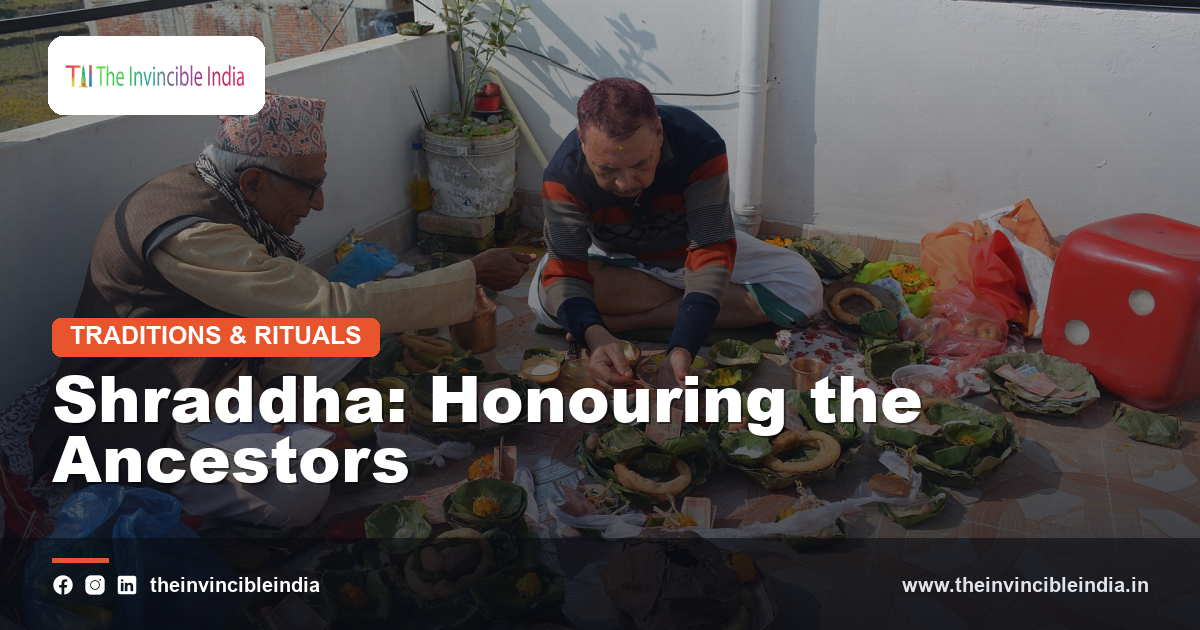
Shraddha refers to a set of Hindu rites performed to honour and remember deceased ancestors, rooted in the belief that descendants bear a responsibility to acknowledge and support the wellbeing of those who came before them. Observed at specific points in the Hindu calendar, most notably during the period known as Pitru Paksha, these rituals typically involve offerings of food and water performed with the guidance of a priest. Like other rites connected to family memory and continuity, including the bonds marked during Raksha Bandhan, Shraddha reflects a broader cultural emphasis on maintaining connection across generations. This guide explains its meaning, key rituals, and continuing significance in Hindu family life.
Quick Facts
| Detail | Information |
|---|---|
| Ceremony Type | Hindu ancestor veneration rite |
| Key Period | Pitru Paksha (ancestral fortnight) |
| Core Rituals | Pind daan and tarpan |
| Typical Officiant | A priest, often at a sacred site |
| Performed By | Descendants, often the eldest son |
| Underlying Belief | Ancestral debt (pitru rina) |
What Is Shraddha?
Shraddha refers to a category of Hindu rituals performed by descendants to honour deceased ancestors, rooted in the belief that continued acknowledgement and ritual care for the departed contributes to their peace and wellbeing in the afterlife. The term is associated with concepts of faith and devotion, reflecting the reverent attitude with which these rites are traditionally approached. Shraddha ceremonies can be performed on specific anniversaries related to a family member’s passing, as well as during designated periods in the Hindu calendar set aside for ancestor veneration more broadly. The rituals typically involve offerings of food, water, and prayers, often conducted with the guidance of a priest familiar with the appropriate sequence. Rather than being viewed as an expression of grief alone, Shraddha is understood as an ongoing familial duty, connecting the living and the deceased through a continuing cycle of remembrance and ritual care.
Philosophical Basis: Rina and Ancestral Debt
Shraddha draws on a broader Hindu philosophical concept sometimes described as rina, or debt, according to which individuals are understood to owe certain obligations across different dimensions of their lives, including a debt to their ancestors for the gift of life and lineage. Fulfilling this ancestral debt through appropriate rites is traditionally regarded as a responsibility of descendants, particularly sons, though practices around who may perform the rituals have varied and evolved over time and across communities. This framework situates Shraddha within a larger ethical and spiritual worldview, in which the living are seen as connected to, and responsible toward, those who preceded them. The concept reinforces the idea that ancestral veneration is not merely a matter of personal sentiment but a recognised aspect of one’s broader duties within a religious and family framework passed down through generations.
Pitru Paksha and the Ancestral Fortnight
Pitru Paksha, often described as the ancestral fortnight, is a period in the Hindu lunar calendar traditionally set aside for the performance of Shraddha rites in memory of one’s ancestors. Falling during a specific lunar phase each year, this period is regarded by many Hindu families as a particularly appropriate time to perform ancestor-related rituals, even for those who may not observe Shraddha at other points in the year. During Pitru Paksha, many families visit priests, temples, or designated pilgrimage sites associated with ancestral rites to perform the appropriate offerings. The period is generally treated with a degree of solemnity, with some families avoiding certain celebratory activities during this time out of respect for its ancestral focus. Its recurrence each year provides a structured, widely recognised occasion within the broader Hindu ritual calendar for the specific purpose of honouring deceased family members.
The Role of Pind Daan
Pind daan is a specific ritual offering performed as part of Shraddha, involving the preparation and offering of small balls of cooked rice or barley, known as pindas, on behalf of deceased ancestors. This offering is traditionally understood as a symbolic act of nourishment extended to the departed, reflecting the broader belief that the living retain a responsibility to sustain their ancestors through appropriate ritual means. Pind daan is often performed at specific locations considered particularly suited to the ritual, sometimes as part of a pilgrimage undertaken specifically for this purpose. The precise steps involved in preparing and offering the pindas are generally guided by a priest, who ensures the ritual follows established convention. As one of the most recognisable elements of Shraddha, pind daan is frequently regarded as central to fulfilling a family’s ritual obligations toward its ancestors.
Tarpan: Offering Water to Ancestors
Tarpan is another key ritual associated with Shraddha, involving the ceremonial offering of water, often mixed with sesame seeds, to deceased ancestors as an act of respect and remembrance. The offering is typically made by pouring water in a specific manner while reciting appropriate prayers, a practice that may be performed by an individual or guided by a priest. Tarpan can be performed on its own during certain occasions or as part of a broader sequence of rituals during Shraddha ceremonies, particularly during Pitru Paksha. Like pind daan, the ritual reflects the underlying belief that ancestors continue to require and appreciate acknowledgement from their descendants, expressed here through a simple yet symbolically significant offering of water. Its relative simplicity compared to more elaborate rites has helped tarpan remain a widely practised element of ancestor veneration across many Hindu households.
Who Performs the Rites
Traditionally, the responsibility for performing Shraddha rites has most often fallen to a deceased person’s son, particularly the eldest, reflecting broader historical patterns of family structure and inheritance within Hindu tradition. In the absence of a son, other close relatives, including daughters, grandsons, or other family members, may take on this role, and practices have varied across communities and over time regarding who is considered appropriate to perform the rites. In contemporary practice, the question of who performs Shraddha has become more flexible in various households, reflecting broader shifts in family structure and social attitudes. Regardless of who performs the ritual, the underlying expectation remains that some member of the family will take responsibility for ensuring the appropriate rites are carried out, maintaining the continuity of ancestral remembrance within the family across generations.
The Priest's Role in Shraddha
A priest typically plays a central role in guiding the performance of Shraddha, given the ritual’s specific requirements around timing, recitation, and the correct sequence of offerings. The priest generally recites Sanskrit verses appropriate to the occasion, instructs the family or individual performing the rite in the necessary actions, and helps ensure the ceremony aligns with the customs of the family’s particular community or regional tradition. Because Shraddha rituals are considered to carry significant weight for the wellbeing of the departed, many families place considerable trust in the priest’s expertise to conduct the rites correctly. At pilgrimage sites associated with ancestral rituals, specialised priests familiar with the particular procedures followed at that location often assist visiting families, reflecting a longstanding tradition of specialised religious service connected to ancestor veneration.
Food Offerings and Their Symbolism
Beyond pind daan, Shraddha ceremonies often include broader food offerings, sometimes extended to priests, guests, or those in need, as part of the ritual’s completion. Sharing food in this way is traditionally understood as an extension of the same principle underlying the offerings made directly to ancestors, reflecting values of generosity and care that the ritual as a whole seeks to embody. The specific foods offered can vary by region and family custom, though vegetarian preparations are common in many traditions associated with these rites. This dimension of Shraddha connects the ceremony to broader Hindu practices in which feeding others, particularly priests or those less fortunate, is regarded as a meritorious act. The combination of direct ancestral offerings and wider food-sharing reflects the layered social and spiritual purposes served by the ceremony.
Feeding of Crows and Other Beings
A widely observed custom connected to Shraddha involves setting aside a small portion of food for crows, which are traditionally regarded in Hindu belief as messengers capable of carrying offerings to ancestors. Many families place food on a rooftop, ledge, or open space specifically for this purpose during the days associated with ancestral rites. Whether or not a crow partakes of the offering is sometimes given symbolic significance by those observing the custom, though attitudes toward this vary among individuals and families. This practice reflects a broader tendency within Hindu tradition to draw on the natural world, particularly certain animals, as intermediaries or symbols within ritual life. While not universally observed with the same emphasis in every household, the crow-feeding custom remains one of the more recognisable and widely known elements associated with Shraddha and Pitru Paksha.
Regional Variations in Practice
As with many Hindu rituals, the specific practices associated with Shraddha vary considerably across different regions and communities in India, even as the underlying purpose of honouring ancestors remains broadly consistent. Some communities emphasise particular pilgrimage sites for performing pind daan, while others focus more heavily on home-based rituals conducted with the help of a local priest. The precise foods offered, the wording of prayers, and the specific sequence of rituals can all differ from one tradition to another. These regional variations reflect India’s broader diversity of ritual practice, in which shared religious concepts are expressed through a wide range of localised customs. Despite such differences, families across regions generally recognise the same core purpose behind Shraddha, reinforcing its status as a widely shared, if variably expressed, element of Hindu family and religious life.
Sacred Sites Associated with Shraddha
Certain locations across India have long been associated with the performance of ancestral rites, drawing pilgrims specifically for the purpose of conducting pind daan and related Shraddha ceremonies. These sites are generally regarded as particularly conducive to ancestral rituals, often due to their association with sacred rivers or their long-standing reputation within religious tradition as places suited to such observances. Families may travel considerable distances to perform Shraddha at one of these locations, sometimes as part of a broader pilgrimage that also includes visits to other religious sites. Specialised priests at these locations are typically experienced in guiding visiting families through the specific rituals associated with ancestral rites. The continued popularity of such sites reflects the importance many Hindu families place on performing these ceremonies in a setting considered especially appropriate for ancestral remembrance.
Timing Within the Hindu Calendar
Beyond Pitru Paksha, Shraddha rites may also be performed on specific anniversaries connected to an individual’s date of passing, calculated according to the Hindu lunar calendar rather than the standard civil calendar. Families often mark these anniversaries with a smaller, more private version of the ritual, distinct from the broader communal observance associated with the ancestral fortnight. The reliance on the lunar calendar for determining these dates reflects a broader pattern in Hindu religious practice, in which important observances are frequently calculated according to lunar rather than solar reckoning. This layered approach to timing, combining an annual collective period with individual anniversary observances, allows families to honour ancestors both as part of a wider shared tradition and through more personal, family-specific commemoration across the year.
Family and Continuity of Memory
Shraddha serves an important function in sustaining family memory across generations, providing a structured occasion through which the stories, names, and legacies of ancestors are recalled and passed down to younger family members. The ritual gathering associated with Shraddha often becomes an opportunity for family members to share recollections of those being honoured, reinforcing a sense of continuity between past and present generations. This function extends beyond the strictly religious content of the ritual, touching on the broader social role that such ceremonies play in maintaining family identity and cohesion. For many families, participation in Shraddha rituals from a young age also serves as an informal means of transmitting the tradition itself, ensuring that future generations remain familiar with its practices and purpose.
Shraddha in Textual and Cultural Tradition
References to ancestor veneration and rites resembling Shraddha appear across a range of traditional Hindu religious texts, reflecting the long-standing place of these practices within the broader religious and cultural tradition. Over centuries, the specific rituals have been elaborated and adapted by different communities, while the core concern with honouring deceased ancestors has remained a consistent thread. This textual and cultural continuity has helped Shraddha retain a recognised place within Hindu religious life, distinct from, though related to, other rites concerned with death and remembrance. The tradition’s endurance across such a long span reflects the deep cultural importance placed on maintaining a connection between the living and the deceased, expressed through structured and repeatable ritual practice rather than informal or purely personal forms of remembrance.
Contemporary Practice and Adaptation
In contemporary India, Shraddha continues to be widely observed, though the manner of its performance has adapted in various ways to suit modern circumstances, including busier schedules, geographic dispersal of family members, and changing attitudes toward ritual formality. Some families now arrange for priests to perform certain rites on their behalf when personal attendance at a distant pilgrimage site is not feasible, while others continue to travel specifically for the purpose. Shorter or simplified versions of the ceremony are increasingly common in urban households, reflecting broader patterns seen across many Hindu domestic rituals. Despite these adaptations, the underlying commitment to acknowledging ancestral debt and maintaining ritual remembrance appears to have persisted, suggesting that the core purpose of Shraddha remains meaningful to many families even as its precise form continues to evolve.
Shraddha Today
Shraddha remains an important part of Hindu religious and family life, continuing to provide a structured means through which descendants acknowledge and honour their ancestors. Whether observed through an elaborate pilgrimage involving pind daan at a recognised sacred site or through simpler rites performed at home, the ceremony reflects an enduring belief in the value of maintaining connection across generations. Its persistence through considerable social change speaks to the depth of the values it expresses, values concerned with gratitude, continuity, and familial responsibility that extend beyond any single ritual detail. As Hindu families continue to navigate contemporary life, Shraddha stands as a reminder of how deeply ideas of memory and obligation toward one’s forebears remain embedded within the broader fabric of Indian cultural and religious tradition.
Sources & Further Reading
- Ministry of Culture, Government of India (indiaculture.gov.in).
- Sahitya Akademi.
Frequently Asked Questions
What is Shraddha?
Shraddha refers to a set of Hindu rituals performed by descendants to honour deceased ancestors, involving offerings intended to support their wellbeing and express continued remembrance.
What is Pitru Paksha?
Pitru Paksha is a fortnight in the Hindu lunar calendar traditionally set aside for performing Shraddha rites in memory of one’s ancestors.
What is pind daan?
Pind daan is a ritual offering of small rice or barley balls made on behalf of deceased ancestors, considered a symbolic act of nourishment for the departed.
Who traditionally performs Shraddha rites?
The rites have traditionally been performed by a son, often the eldest, though other close relatives may take on this responsibility depending on family circumstances.
Why are crows fed as part of Shraddha customs?
Crows are traditionally regarded as messengers able to carry offerings to ancestors, so setting aside food for them is a widely observed part of the ritual.


