

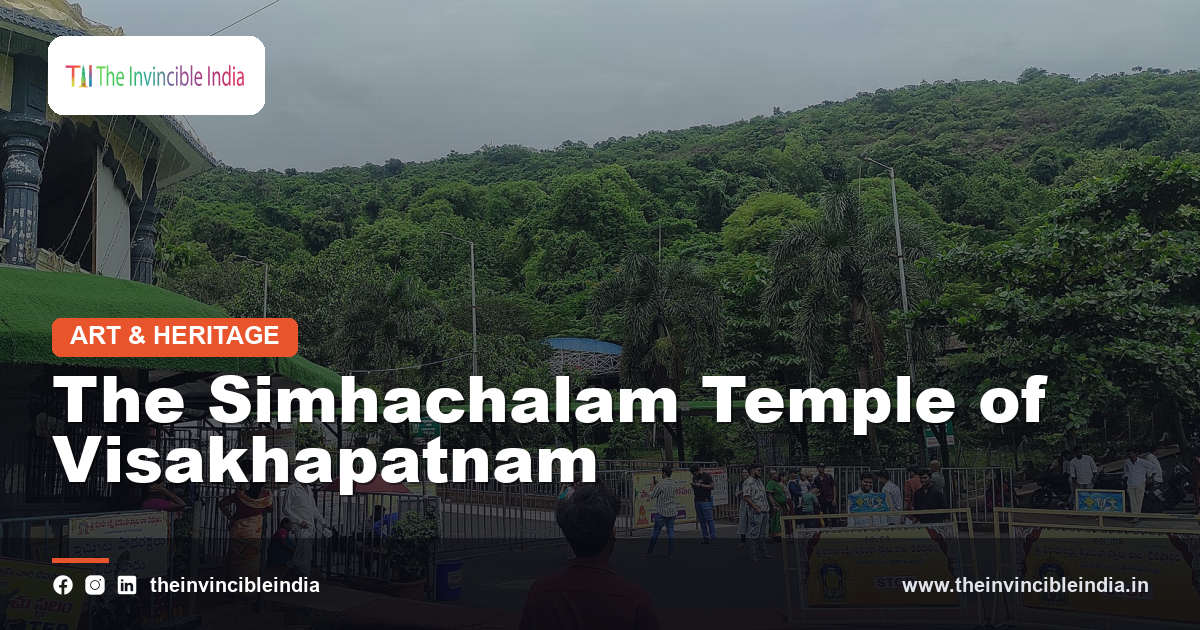
The Simhachalam temple, also called the Simhadri or Simhachalam Varaha Narasimha temple, is a famous Hindu hill temple near Visakhapatnam in Andhra Pradesh, in eastern India. It is dedicated to Varaha Narasimha, a composite form of the god Vishnu that unites the man-lion (Narasimha) and the boar (Varaha), worshipped here as Simhadri Appanna and revered as a powerful and protective deity. The temple stands on a wooded hill above the coastal plain and is built in a style showing Kalinga and Eastern Ganga influence, having been expanded under the Eastern Gangas and later patrons. A distinctive feature is that the image of the deity is kept covered in a thick coating of sandalwood paste for most of the year, revealed in its true form only on the special day of Chandanotsavam. Part of the wider story told in the guide to Indian temple architecture, this article explains its location, history, deity, rituals and living significance.
Quick answer: The Simhachalam temple is a Hindu hill temple near Visakhapatnam in Andhra Pradesh, India, dedicated to Varaha Narasimha, a composite man-lion and boar form of Vishnu worshipped as Simhadri Appanna. Standing on a wooded hill, it is built in a style of Kalinga and Eastern Ganga influence and was expanded under the Eastern Gangas and later patrons. Its most distinctive custom is that the deity is kept covered in sandalwood paste for most of the year, revealed in its true form only on the Chandanotsavam day.
Key Takeaways
- The Simhachalam temple is a Hindu hill temple near Visakhapatnam in Andhra Pradesh, eastern India.
- It is dedicated to Varaha Narasimha, a composite man-lion and boar form of Vishnu, worshipped as Simhadri Appanna.
- It is built in a style of Kalinga and Eastern Ganga influence and was expanded under the Eastern Gangas.
- The deity is kept covered in a thick coat of sandalwood paste for most of the year.
- The true form of the image is revealed only on the special day of Chandanotsavam.
- It is associated by inscription and tradition with the Eastern Ganga king Narasimhadeva.
The sections below explain where the temple stands, how it was built and what a pilgrim can still see today.
Quick Facts
| Detail | Information |
|---|---|
| Location | Simhachalam hill, near Visakhapatnam, Andhra Pradesh |
| Dedication | Varaha Narasimha (Simhadri Appanna), a form of Vishnu |
| Dynasty / Period | Expanded under the Eastern Gangas; medieval |
| Architectural style | Kalinga / Eastern Ganga influence |
| Material | Dressed and carved stone |
| Distinctive custom | Deity kept covered in sandalwood paste |
| Key festival | Chandanotsavam (removal of the sandal paste) |
| Protected status | Major living temple; heritage monument |
| Nearest city | Visakhapatnam, coastal Andhra Pradesh |
What Is the Simhachalam Temple?
The Simhachalam temple is a celebrated Hindu hill temple near Visakhapatnam in Andhra Pradesh, dedicated to Varaha Narasimha, a powerful composite form of the god Vishnu. Also known as the Simhadri temple, and its deity worshipped as Simhadri Appanna, it stands on a forested hill above the coastal plain and is one of the most important Vaishnava shrines of the region. What distinguishes the temple is its unusual deity, who unites the man-lion (Narasimha) and the boar (Varaha) incarnations of Vishnu, and its remarkable custom of keeping the image covered in sandalwood paste for most of the year. The temple is built in a style showing the influence of Kalinga and the Eastern Gangas, who expanded it in the medieval period. Because its precise history rests on inscriptions and tradition, careful description keeps the two apart. The Simhachalam temple is therefore best understood as both a major living pilgrimage centre and a fine monument of the temple architecture of eastern India.
Where Is the Simhachalam Temple Located?
The Simhachalam temple is located on the Simhachalam hill, a wooded height a short distance from the city of Visakhapatnam in the coastal region of Andhra Pradesh, in eastern India. The hill rises above the plain near the Bay of Bengal, and the temple stands amid greenery, approached by a winding road and steps that climb to the shrine. Visakhapatnam, a major port city of the eastern coast, serves as the gateway to the temple, which lies within easy reach of the city. The surrounding landscape of hills, forest and coast gives the setting a cool and sacred atmosphere, prized by the many pilgrims who visit. The temple’s position on a hill is in keeping with the Indian tradition of placing important shrines on heights. The location of the Simhachalam temple therefore unites a sacred hilltop with the nearby coastal city, making it one of the most visited and venerated temples of the Andhra coast.
Who Is Varaha Narasimha, the Deity?
Varaha Narasimha is the deity of the Simhachalam temple, a composite form of the god Vishnu that unites two of his most famous incarnations, the boar (Varaha) and the man-lion (Narasimha). In Hindu tradition, Vishnu took the form of Varaha to rescue the earth and the form of Narasimha to destroy a demon and protect his devotee, and at Simhachalam these two powerful forms are worshipped together in a single image. The deity is affectionately known as Simhadri Appanna, a beloved local name, and is revered as a protector who answers the prayers of his devotees. The combining of two incarnations in one form is a distinctive feature of this shrine. The worship of so powerful a deity draws great numbers of pilgrims. The deity Varaha Narasimha therefore stands at the heart of the Simhachalam temple, uniting the saving power of the boar and the protective might of the man-lion in one revered image on the hill.
Why Is the Deity Covered in Sandal Paste?
The deity of Simhachalam is covered in a thick coating of sandalwood paste for most of the year, a distinctive custom that keeps the image concealed in a smooth, fragrant form rather than revealing its carved shape. By tradition, this practice is connected with the fierce and powerful nature of Narasimha, the sandal paste being understood to cool and soothe the deity, and it has become one of the most famous features of the temple. For most of the year, therefore, pilgrims see the deity in this paste-covered form rather than in its true sculpted appearance. The custom reflects the deep devotional traditions that surround the shrine and the care given to its powerful deity. The application and renewal of the sandal paste is itself a sacred act. The covering of the deity in sandal paste therefore gives Simhachalam a unique character among Indian temples, uniting a striking ritual custom with the reverence due to a powerful form of Vishnu.
What Happens on Chandanotsavam Day?
On Chandanotsavam day, the one special occasion each year, the thick coating of sandalwood paste is removed from the deity of Simhachalam so that the true carved form of Varaha Narasimha may be seen by the faithful. This festival, whose name refers to the sandal (chandana) custom, is the most important event of the temple year and draws very large numbers of pilgrims eager for the rare sight of the deity in its true form. After the viewing, the image is coated afresh with sandal paste, to remain covered until the next Chandanotsavam. The occasion is marked with great devotion, celebration and ritual, befitting so important a day. For many pilgrims, seeing the deity on this day is a cherished act of faith. Chandanotsavam day therefore stands at the centre of the religious calendar of Simhachalam, the single occasion when the sandal paste is removed and the true form of the powerful deity is revealed to the devoted.
Who Were the Eastern Gangas and Their Role?
The Eastern Gangas were a medieval dynasty that ruled over the Kalinga region, covering parts of present-day Odisha and northern Andhra Pradesh, and who were great patrons of temple building in eastern India. They are especially remembered for raising magnificent temples, and their patronage is associated with the expansion and adornment of important shrines, including Simhachalam. The temple is connected by inscription and tradition with the Eastern Ganga king Narasimhadeva, under whom it is said to have been developed. The style of the temple reflects the Kalinga and Eastern Ganga traditions of architecture, with their characteristic towers and carving. The role of the Eastern Gangas in the history of Simhachalam shows how royal patronage shaped the great temples of the region. As with many medieval dynasties, details come from inscriptions and scholarship. The Eastern Gangas therefore hold an important place in the story of Simhachalam, as the patrons under whom the hill temple grew into the grand shrine known today.
What Is the Architecture of the Temple?
The architecture of the Simhachalam temple reflects the Kalinga and Eastern Ganga traditions of eastern India, with carved stone towers, pillared halls and a sanctum enshrining the deity. The temple is built on a substantial scale befitting a major pilgrimage centre, with a central shrine, surrounding halls and enclosures, and finely worked sculpture adorning its walls and pillars. The influence of the Kalinga style, known from the great temples of Odisha, appears in the forms of the towers and the character of the carving, while later additions reflect the long life of the shrine. The hilltop setting shapes the approach, with steps and gateways leading up to the temple. The whole forms a dignified and imposing complex. The architecture of the Simhachalam temple therefore unites the building traditions of eastern India with the needs of a great living shrine, creating a monument that is at once a work of art and a place of active worship on its wooded hill.
What Are the Main Legends of Simhachalam?
The main legends of Simhachalam connect the hill temple with the famous story of Narasimha and the devotee Prahlada, as well as with later traditions of the deity’s appearance and worship. In Hindu tradition, Vishnu took the man-lion form of Narasimha to destroy a demon king and to protect the demon’s son, the faithful Prahlada, and the hill of Simhachalam is linked in legend with this celebrated tale. Other traditions tell of the self-manifestation of the deity on the hill and of the origins of the sandal-paste custom. Such legends, which belong to tradition rather than documented history, give the shrine its sacred character and explain the forms of its worship. They are an essential part of the devotional life of the temple. The legends of Simhachalam therefore enrich its meaning for pilgrims, tying the hill temple to one of the best-loved stories of Vishnu and to the enduring themes of protection and devotion.
Why Is Simhachalam an Important Pilgrimage Centre?
Simhachalam is an important pilgrimage centre because it enshrines a powerful and beloved form of Vishnu, Varaha Narasimha, and because its famous customs and festivals draw devotees from across the region and beyond. As one of the principal Vaishnava shrines of the Andhra coast, the temple attracts great numbers of pilgrims throughout the year, and especially on the Chandanotsavam day when the true form of the deity is revealed. Pilgrims come to seek the blessings of the deity, revered as a protector who answers prayers, and to take part in the rituals and festivals of the shrine. The hill setting, the sacred image and the distinctive traditions all add to the temple’s appeal. The flow of pilgrims sustains the religious and cultural life of the shrine. Simhachalam is therefore an important pilgrimage centre not only for its architecture and history but above all for its living devotion, which has made it one of the great temples of eastern India.
What Rituals and Festivals Are Observed?
The Simhachalam temple observes a rich round of daily rituals and annual festivals, centred on the worship of Varaha Narasimha and the care of his sandal-covered image. Daily worship includes the offerings, prayers and services customary in a great Vaishnava temple, carried out by the priests according to established tradition. The outstanding event of the year is Chandanotsavam, when the sandal paste is removed and the true form of the deity is shown, drawing immense crowds. Other festivals of the Vaishnava and regional calendar are also marked with devotion and celebration at the shrine. These rituals and festivals structure the life of the temple and bind the community of devotees to it. They reflect the deep traditions that surround the powerful deity. The rituals and festivals of Simhachalam therefore form the living heart of the temple, sustaining the worship of Varaha Narasimha through the daily services and the great annual events that fill its sacred calendar.
How Does Simhachalam Compare With Other Vishnu Temples?
Simhachalam compares with other great Vishnu temples of India as a distinctive shrine, set apart by its composite deity Varaha Narasimha and by its famous custom of covering the image in sandal paste. Across India, many celebrated temples honour Vishnu and his incarnations, from the great shrines of the south to the temples of the east, each with its own traditions and forms of worship. Simhachalam stands out for uniting two incarnations, the boar and the man-lion, in a single image, and for the striking ritual of the sandal paste revealed only on Chandanotsavam. Its Kalinga and Eastern Ganga architecture links it to the temple traditions of eastern India rather than to the Dravidian temples of the far south. Studying it alongside other Vishnu temples reveals the variety of the god’s worship. Simhachalam therefore holds a special place among the Vishnu temples of India, representing the devotional and architectural traditions of the eastern coast.
How Is the Temple Managed and Preserved?
The Simhachalam temple is managed as a major living shrine, with a temple administration responsible for its worship, upkeep and the great flow of pilgrims, while its historic structures are cared for as heritage monuments. The combination of active worship and historic architecture means that management must balance the needs of daily ritual and festival crowds with the conservation of the old stone buildings. Challenges include the wear of heavy pilgrim traffic, the effects of the coastal climate and the maintenance of so large a complex. Conservation work aims to protect the historic structures and sculpture without disrupting the living worship of the temple. Because the arrangements and status of a great temple can change over time, visitors are advised to consult current information before planning a trip. The management and preservation of Simhachalam therefore depend on the cooperation of the temple authorities, heritage bodies and the many devotees who help sustain and respect this important shrine of the Andhra coast.
How Can Pilgrims and Visitors Plan a Trip?
Pilgrims and visitors can plan a trip to the Simhachalam temple by travelling to the city of Visakhapatnam in coastal Andhra Pradesh, which is well connected by road, rail and air, and from there reaching the temple hill a short distance away. The cooler months are generally the most comfortable for travel on the warm, humid Andhra coast, and visitors should be prepared for crowds, especially on festival days such as Chandanotsavam. As a living shrine, the temple expects modest dress, the removal of footwear and respectful, quiet behaviour in keeping with its sacred character. It is wise to check the timings of worship and the dates of festivals before setting out, and to allow time for the climb and the queues at busy periods. Combining the visit with the sights of Visakhapatnam makes for a rewarding journey. A well prepared trip therefore allows pilgrims and visitors to experience the devotion and beauty of Simhachalam with ease and respect.
Why Does the Simhachalam Temple Matter Today?
The Simhachalam temple matters today as one of the great living shrines of eastern India and as a fine monument of the temple architecture of the Andhra coast. Its powerful deity Varaha Narasimha, worshipped as Simhadri Appanna, its famous custom of the sandal paste and its great festival of Chandanotsavam continue to draw vast numbers of pilgrims and to sustain a rich tradition of devotion. Its Kalinga and Eastern Ganga architecture, developed under royal patronage, preserves the artistry and history of the medieval period. For devotees it is a cherished place of pilgrimage, and for scholars and travellers it offers insight into the religious and cultural life of the region. The temple unites faith, art and history in a single sacred place on its wooded hill. The Simhachalam temple therefore matters as both a historical monument and a living centre of worship, deserving of reverence, study and care in the present day.
The Simhachalam Temple Today
The Simhachalam temple today remains one of the most important and beloved shrines of the Andhra coast, standing on its wooded hill near Visakhapatnam and drawing pilgrims throughout the year. Its deity Varaha Narasimha, kept covered in sandal paste and revealed only on the great Chandanotsavam day, together with its Kalinga and Eastern Ganga architecture developed under the Eastern Gangas, continues to attract devotees, art historians and travellers exploring the heritage of eastern India. The temple preserves, in its customs and its stone, the living devotion and the artistry of centuries. Continued care, respectful pilgrimage and historical study help ensure that it endures for future generations. For those exploring the temples of Andhra Pradesh, the climb to the hill shrine makes a rewarding and sacred destination. The Simhachalam temple thus stands as a lasting witness to the worship of Vishnu and to the cultural heritage of the eastern coast of India.
Sources & Further Reading
- Archaeological Survey of India (asi.nic.in).
- Department of Tourism, Government of Andhra Pradesh (tourism.ap.gov.in).
Frequently Asked Questions
Where is the Simhachalam temple located?
The Simhachalam temple is located on the Simhachalam hill a short distance from the city of Visakhapatnam in coastal Andhra Pradesh, in eastern India. It stands on a wooded height reached by a winding road and steps and is one of the most visited temples of the region.
Which deity is worshipped at Simhachalam?
Simhachalam is dedicated to Varaha Narasimha, a composite form of Vishnu that unites the boar (Varaha) and the man-lion (Narasimha) incarnations. The deity is worshipped affectionately as Simhadri Appanna and revered as a powerful protector.
Why is the deity covered in sandalwood paste?
By tradition the image is kept coated in sandalwood paste, which is understood to cool and soothe the fierce and powerful nature of Narasimha. For most of the year pilgrims see the deity in this paste-covered form rather than its true carved shape.
What is Chandanotsavam?
Chandanotsavam is the annual festival when the sandalwood paste is removed from the deity so that its true form can be seen by the faithful. It is the most important day of the temple year and draws very large numbers of pilgrims.
Who expanded the Simhachalam temple?
The temple was expanded under the Eastern Gangas, a medieval dynasty of the Kalinga region, and is associated by inscription and tradition with the Eastern Ganga king Narasimhadeva. Its architecture reflects the Kalinga and Eastern Ganga traditions.
What is the best time to visit Simhachalam?
The cooler months are generally the most comfortable for travel on the warm Andhra coast. Visitors should be prepared for large crowds on festival days, especially Chandanotsavam, and should check the timings of worship before setting out.


