

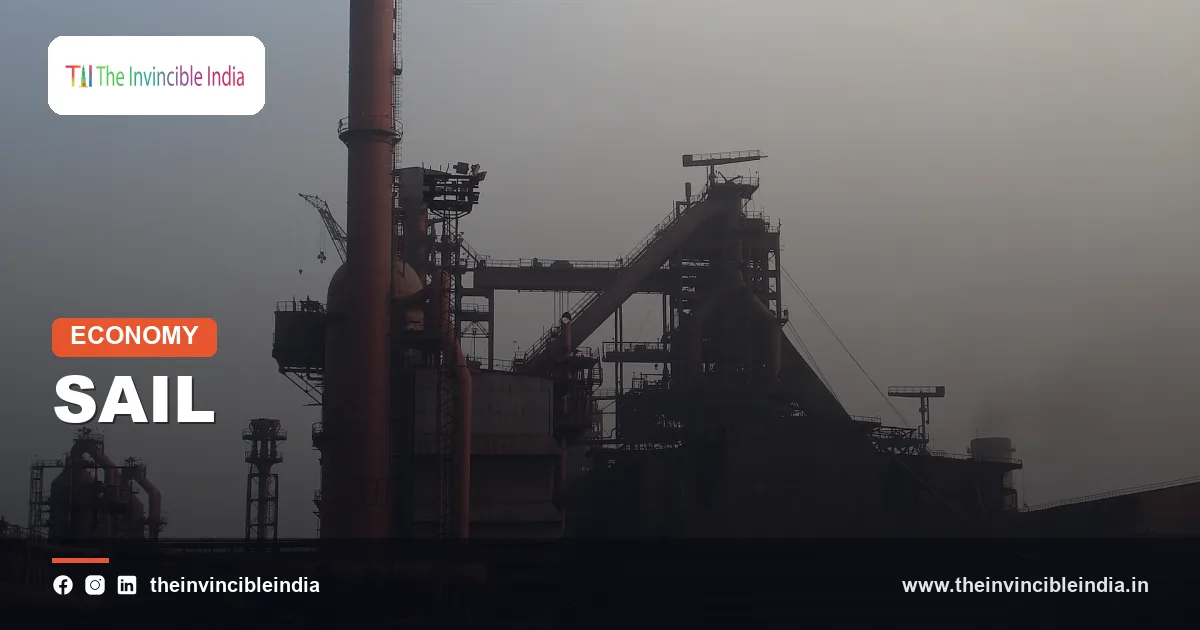
The Steel Authority of India Limited (SAIL) is India’s largest government-owned steel maker, a Maharatna public sector undertaking set up in 1973 that runs integrated steel plants at Bhilai, Bokaro, Rourkela, Durgapur and Burnpur. Steel Authority of India produces a wide range of flat, long and special steel products, including rails, plates, structurals and coils, which are used in railways, construction, infrastructure, automobiles, shipbuilding and defence.
Headquartered in New Delhi and administered by the Ministry of Steel, the Steel Authority of India Limited is among the country’s biggest industrial employers and a major supplier of rails to Indian Railways. As India expands its infrastructure and targets higher steel capacity, SAIL is modernising its plants and facing stiffer competition from private producers and imports.
| Attribute | Details |
|---|---|
| Full name | Steel Authority of India Limited (SAIL) |
| Established | 1973 as a holding company; Hindustan Steel Limited merged in 1978 |
| Status | Maharatna Central Public Sector Enterprise (CPSE) |
| Administrative ministry | Ministry of Steel, Government of India |
| Headquarters | Ispat Bhawan, Lodhi Road, New Delhi |
| Integrated steel plants | Bhilai (Chhattisgarh), Bokaro (Jharkhand), Rourkela (Odisha), Durgapur (West Bengal) and Burnpur (West Bengal) |
| Special steel plants | Alloy Steels Plant (Durgapur), Salem Steel Plant (Tamil Nadu) and Visvesvaraya Iron and Steel Plant (Bhadravati, Karnataka) |
| Signature products | Rails, plates, hot-rolled and cold-rolled coils, structurals, wheels, electrical steel and defence-grade steel |
| Ownership | Government of India holds a majority stake; shares listed on the NSE and BSE |
Key Takeaways
- The Steel Authority of India Limited (SAIL) was established in 1973 and is the largest steel-producing public sector company in India.
- Steel Authority of India runs five integrated steel plants at Bhilai, Bokaro, Rourkela, Durgapur and Burnpur, along with three special steel plants.
- The Steel Authority of India Limited holds Maharatna status and operates under the Ministry of Steel, with the Government of India as its majority shareholder.
- SAIL is a major supplier of rails to Indian Railways, and its Bhilai plant is known for producing long rails in lengths well beyond ordinary rail sections.
- Steel Authority of India has supplied specialised steel for naval vessels, including warship-grade steel used in the indigenous aircraft carrier INS Vikrant.
- SAIL is investing in capacity expansion and modernisation while competing with private producers such as Tata Steel, JSW Steel and ArcelorMittal Nippon Steel India, as well as imports.
What is the Steel Authority of India Limited (SAIL)?
The Steel Authority of India Limited is a government-owned integrated steel company that mines raw materials, makes steel and sells it across India and abroad. Known by its acronym SAIL, it is one of the largest public sector enterprises in India and one of the biggest steel makers by capacity.
An integrated steel plant is one that handles the whole chain from iron ore and coal to finished steel. SAIL’s plants include coke ovens, blast furnaces, steel melting shops, casting units and rolling mills. The company also owns captive mines of iron ore, limestone and dolomite, which gives it a degree of security in raw materials.
The company is a Central Public Sector Enterprise whose shares are listed on the National Stock Exchange (NSE) and the Bombay Stock Exchange (BSE). The Government of India remains its majority owner, and a Chairman and a board of directors manage its affairs.
When and why was SAIL established?
The Steel Authority of India Limited was established in 1973 as a holding company to manage India’s public sector steel plants under a single organisation. It built on the earlier work of Hindustan Steel Limited (HSL), which had been set up in 1954 to build and operate steel plants in the public sector.
The steel plants of the 1950s were products of the Second Five-Year Plan, which emphasised heavy industry. Bhilai was built with Soviet assistance, Rourkela with German assistance and Durgapur with British assistance. Bokaro followed later with Soviet cooperation. Over time, the government concluded that a single umbrella company would improve coordination, planning and resource use.
Timeline of the company
- 1954: Hindustan Steel Limited is incorporated to set up steel plants in the public sector.
- 1955 to 1962: Plants at Bhilai, Rourkela and Durgapur are built and commissioned in stages during the late 1950s and early 1960s.
- 1973: The Steel Authority of India Limited is set up as a holding company.
- 1978: Hindustan Steel Limited is merged with SAIL, which becomes an operating company.
- 1970s: The Bokaro Steel Plant begins production, adding a major flat-products facility in Jharkhand.
- 2006: The IISCO Steel Plant at Burnpur is merged with SAIL.
- 2010: SAIL is among the early public sector firms conferred Maharatna status.
Which are SAIL’s main steel plants?
SAIL’s main steel plants are the integrated plants at Bhilai, Bokaro, Rourkela, Durgapur and Burnpur, supported by special steel plants at Durgapur, Salem and Bhadravati. Together, they cover flat products, long products, stainless and alloy steels, and specialised items.
| Plant | State | Well-known for |
|---|---|---|
| Bhilai Steel Plant | Chhattisgarh | Rails (including long rails), structurals, plates and wheel products; set up with Soviet cooperation |
| Bokaro Steel Plant | Jharkhand | Hot-rolled and cold-rolled flat products, galvanised sheets and coils for automobiles and appliances |
| Rourkela Steel Plant | Odisha | Plates, coils, electrical steel and pipes; widely described as India’s first integrated steel plant in the public sector |
| Durgapur Steel Plant | West Bengal | Sections, rails and structurals for the eastern region |
| IISCO Steel Plant, Burnpur | West Bengal | Long products and sections; the company has a long history dating before Independence and was later modernised |
| Alloy Steels Plant | West Bengal (Durgapur) | Alloy and special steels for engineering use |
| Salem Steel Plant | Tamil Nadu | Stainless steel products |
| Visvesvaraya Iron and Steel Plant | Karnataka (Bhadravati) | Special and alloy steels |
SAIL also operates raw-material divisions and mines that supply the plants, as well as research and development facilities such as the Research and Development Centre for Iron and Steel in Ranchi.
What products does SAIL make?
Steel Authority of India Limited makes a broad portfolio of steel products, with flat products, long products, semis and special steels as the main categories. The mix serves construction, railways, power, oil and gas, shipbuilding, automobiles and defence.
Flat products
- Hot-rolled coils, sheets and plates.
- Cold-rolled coils and sheets.
- Galvanised plain and corrugated sheets.
- Electrical steel sheets for transformers and motors.
- Plates for pipes, pressure vessels, bridges and ships.
Long products
- Rails for Indian Railways, including heavy-duty and long-length rails.
- Structurals such as beams, channels and angles.
- Bars, rods and wire rods.
- Wheels and axles for railway rolling stock.
Special and defence-grade steels
SAIL produces speciality steels for demanding applications such as warship hulls, armoured vehicles, aerospace components and high-pressure pipelines. The company has said that it supplied the grade of steel used in the hull of the indigenous aircraft carrier INS Vikrant, which was a milestone for domestic defence supply chains.
How important is SAIL for Indian Railways and infrastructure?
Steel Authority of India is the principal supplier of rails to Indian Railways and a leading supplier of structural steel, plates and coils for infrastructure projects. The Bhilai Steel Plant in particular is known for rolling long rails, which reduce the number of welded joints on a track and improve ride quality.
Rails made by SAIL are used across the Indian Railways network, including in high-speed and heavy-haul corridors. Wheels, axles and structural steel are also used in coaches, wagons and bridges.
In wider infrastructure, SAIL steel goes into metro systems, highways, bridges, ports, power plants, pipelines and buildings. Government spending on infrastructure and housing is therefore an important driver of demand for the company’s products.
What role does SAIL play in defence and strategic sectors?
The Steel Authority of India Limited plays a strategic role by supplying specialised steels for defence, space and nuclear applications that require stringent quality control and domestic availability. Its steel has been used in naval ships, artillery, armoured vehicles and other platforms.
Domestic supply of such materials matters because imports of sensitive items can face delays or restrictions. India’s push for self-reliance in defence manufacturing has therefore strengthened the importance of speciality steel producers, and SAIL has worked with defence research laboratories and public sector shipyards on qualification of new grades.
How does SAIL source its raw materials?
Steel Authority of India Limited sources its raw materials from captive mines for iron ore, limestone and dolomite, and from domestic and imported supplies for coking coal. Its mines are located in eastern and central India, mainly in Jharkhand, Odisha and Chhattisgarh.
- Iron ore: mines such as Kiriburu and Meghahatuburu in Jharkhand, Bolani in Odisha, and Dalli-Rajhara and Rowghat in Chhattisgarh are associated with SAIL plants.
- Limestone and dolomite: mined from captive quarries in eastern and central India.
- Coking coal: India has limited high-quality coking coal, so the sector relies significantly on imports from countries such as Australia, along with domestic supplies.
- Power and water: plants use captive power units and large volumes of water, which makes energy efficiency and environmental management important.
Access to mines and coking coal is a strategic advantage, but it also exposes the company to price swings in global markets and to regulation of mining.
What are SAIL’s competition and challenges?
Steel Authority of India faces competition from private integrated producers such as Tata Steel, JSW Steel, Jindal Steel and Power, and ArcelorMittal Nippon Steel India, as well as from imported steel. The company also contends with raw-material costs, older plant vintage and cyclical steel prices.
| Challenge | Explanation |
|---|---|
| Private competition | Private firms have expanded capacity rapidly and often operate newer, more automated plants |
| Imports | Low-priced steel from abroad, particularly during global oversupply, can pressure domestic prices; the government has used measures such as safeguard duties at times |
| Coking coal dependence | Import dependence exposes the company to price and supply fluctuations |
| Ageing assets | Parts of older plants need modernisation to cut costs and energy use |
| Decarbonisation | Steel is a carbon-intensive sector, so emissions rules and low-carbon technologies add investment needs |
| Price cycles | Steel profitability swings with global demand, input costs and trade policy |
How is SAIL modernising and expanding?
The Steel Authority of India Limited is modernising by upgrading existing plants, adding new blast furnaces and rolling mills, and raising capacity in line with the National Steel Policy. The policy has set a long-term goal of about 300 million tonnes of national steel capacity by the early 2030s.
- Capacity expansion: SAIL has said it plans to raise its crude steel capacity substantially, with expansion projects at plants including Bhilai, Bokaro, Rourkela and the IISCO Steel Plant at Burnpur.
- Technology upgrade: modern blast furnaces, continuous casting, energy-recovery systems and automation to reduce costs and emissions.
- Value-added products: a greater share of coated, high-strength and speciality steels, with a focus on automotive and defence needs.
- Raw-material security: developing new mines and raising output from existing ones.
- Sustainability: use of waste gases, slag utilisation, water recycling and exploration of green hydrogen in steelmaking.
Actual capacity numbers and project timelines change from year to year, so readers should refer to the company’s annual reports for current data.
How does SAIL contribute to employment and local development?
Steel Authority of India Limited employs tens of thousands of people directly and supports many more indirectly, and it has built township and social infrastructure around its plants. Steel towns such as Bhilai, Rourkela, Bokaro and Durgapur grew around the factories and became major urban centres in their states.
SAIL’s townships include housing, schools, hospitals, markets and sports facilities. The company also runs corporate social responsibility programmes in health, education, skill development and rural development in areas near its plants and mines. Its plants contribute to state revenues and to the supply chains of ancillary industries.
Bottom Line
The Steel Authority of India Limited is the backbone of India’s public sector steel industry, running five integrated plants and supplying essential products such as rails, plates and defence-grade steel. Its future depends on how quickly it can modernise, secure raw materials and compete with private rivals and imports while lowering emissions. This article was last reviewed on 17 October 2026, and readers should check SAIL’s official disclosures for current production and financial data.
Frequently Asked Questions
What is SAIL?
SAIL is the Steel Authority of India Limited, India’s largest government-owned steel producer. It was set up in 1973 and operates integrated steel plants at Bhilai, Bokaro, Rourkela, Durgapur and Burnpur. It makes products such as rails, plates, coils and structurals.
Is SAIL a Maharatna company?
Yes, the Steel Authority of India Limited is a Maharatna Central Public Sector Enterprise. This status gives it greater autonomy for investments and joint ventures. It functions under the Ministry of Steel.
Where are SAIL’s steel plants located?
SAIL’s integrated steel plants are located at Bhilai in Chhattisgarh, Bokaro in Jharkhand, Rourkela in Odisha, and Durgapur and Burnpur in West Bengal. The company also runs special steel plants at Durgapur, Salem in Tamil Nadu and Bhadravati in Karnataka. Its headquarters are in New Delhi.
What is SAIL’s role in Indian Railways?
SAIL is the main supplier of rails to Indian Railways. Its Bhilai Steel Plant produces long rails and other railway products, and other SAIL plants supply wheels, axles and structural steel. These products support track and rolling stock across the network.
Does SAIL supply steel for defence?
Yes, SAIL supplies specialised steel for defence purposes, including warship-grade steel used in the indigenous aircraft carrier INS Vikrant. It also makes steel for armoured vehicles, artillery and aerospace uses. Such supply supports the country’s goal of self-reliance in defence materials.
Who are SAIL’s main competitors?
SAIL’s main competitors are private steel producers such as Tata Steel, JSW Steel, Jindal Steel and Power, and ArcelorMittal Nippon Steel India. It also competes with imported steel, especially when global prices fall. These pressures push the company to modernise and improve efficiency.
{“@context”:”https://schema.org”,”@graph”:[{“@type”:”FAQPage”,”mainEntity”:[{“@type”:”Question”,”name”:”What is SAIL?”,”acceptedAnswer”:{“@type”:”Answer”,”text”:”SAIL is the Steel Authority of India Limited, India’s largest government-owned steel producer. It was set up in 1973 and operates integrated steel plants at Bhilai, Bokaro, Rourkela, Durgapur and Burnpur. It makes products such as rails, plates, coils and structurals.”}},{“@type”:”Question”,”name”:”Is SAIL a Maharatna company?”,”acceptedAnswer”:{“@type”:”Answer”,”text”:”Yes, the Steel Authority of India Limited is a Maharatna Central Public Sector Enterprise. This status gives it greater autonomy for investments and joint ventures. It functions under the Ministry of Steel.”}},{“@type”:”Question”,”name”:”Where are SAIL’s steel plants located?”,”acceptedAnswer”:{“@type”:”Answer”,”text”:”SAIL’s integrated steel plants are located at Bhilai in Chhattisgarh, Bokaro in Jharkhand, Rourkela in Odisha, and Durgapur and Burnpur in West Bengal. The company also runs special steel plants at Durgapur, Salem in Tamil Nadu and Bhadravati in Karnataka. Its headquarters are in New Delhi.”}},{“@type”:”Question”,”name”:”What is SAIL’s role in Indian Railways?”,”acceptedAnswer”:{“@type”:”Answer”,”text”:”SAIL is the main supplier of rails to Indian Railways. Its Bhilai Steel Plant produces long rails and other railway products, and other SAIL plants supply wheels, axles and structural steel. These products support track and rolling stock across the network.”}},{“@type”:”Question”,”name”:”Does SAIL supply steel for defence?”,”acceptedAnswer”:{“@type”:”Answer”,”text”:”Yes, SAIL supplies specialised steel for defence purposes, including warship-grade steel used in the indigenous aircraft carrier INS Vikrant. It also makes steel for armoured vehicles, artillery and aerospace uses. Such supply supports the country’s goal of self-reliance in defence materials.”}},{“@type”:”Question”,”name”:”Who are SAIL’s main competitors?”,”acceptedAnswer”:{“@type”:”Answer”,”text”:”SAIL’s main competitors are private steel producers such as Tata Steel, JSW Steel, Jindal Steel and Power, and ArcelorMittal Nippon Steel India. It also competes with imported steel, especially when global prices fall. These pressures push the company to modernise and improve efficiency.”}}]}]}


