

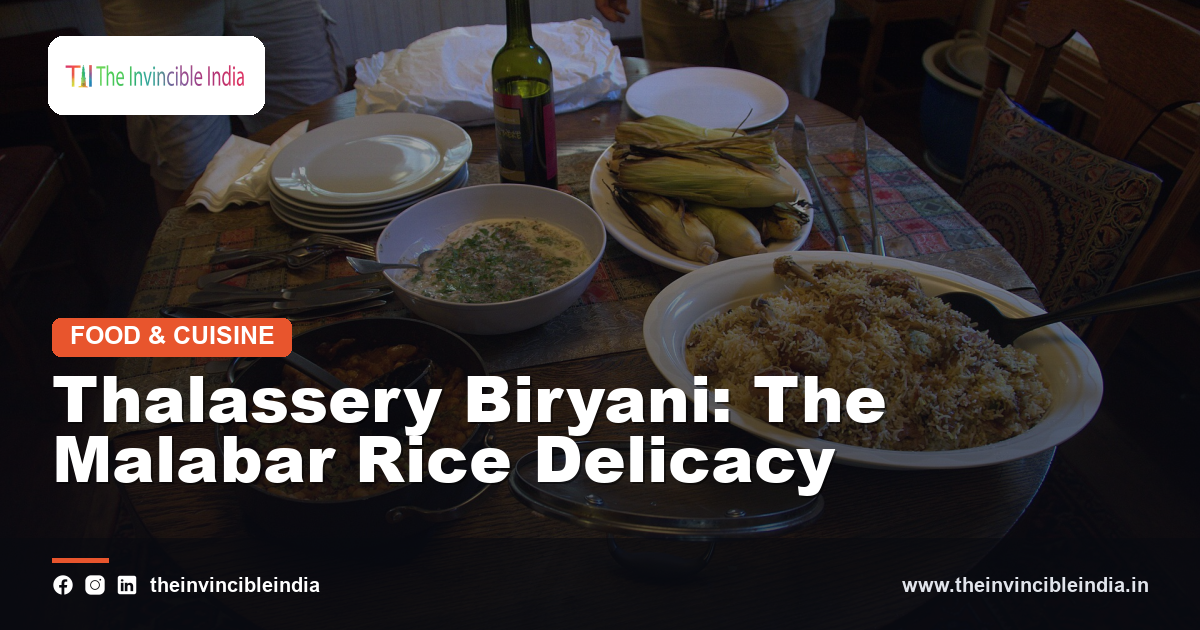
Thalassery biryani is the pride of the Malabar coast of Kerala, a fragrant, layered rice dish that stands apart from the biryanis of the north and the Deccan. Built on short-grain aromatic rice rather than long-grained basmati, and scented with ghee, whole spices and golden fried onions, it reflects the culinary heritage of the Mappila community and the long maritime history of the region. Part of the diverse landscape described in the guide to the regional cuisines of India, it shows how a dish that spread across the subcontinent was reshaped by local ingredients, local taste and a coastline open to the world.
Quick Facts
| Detail | Information |
|---|---|
| Origin | Thalassery, Malabar, Kerala |
| Community | Mappila (Malabar Muslim) cuisine |
| Rice | Short-grain aromatic kaima rice |
| Method | Layered and cooked on dum |
| Garnish | Fried onion, cashew nuts and raisins |
| Served with | Raita, pickle and papad |
Malabar and Its Maritime Past
The Malabar coast of northern Kerala has been a meeting point of traders, travellers and cultures for many centuries. Its ports exchanged pepper and other spices for goods from Arabia, Persia and, later, Europe, and the resulting contact left a deep imprint on the region’s language, architecture and cooking. Thalassery, long known as an important coastal town and trading centre, sits at the heart of this story. The food of the area blends Kerala’s coconut, curry leaf and black pepper with fragrant spices and techniques associated with the wider Islamic culinary world. Thalassery biryani is a natural product of this history, a dish in which the generous hospitality of the coast and the influence of centuries of maritime exchange meet in a single, aromatic pot of rice and meat.
Mappila Cuisine and Its Identity
The Mappila community, the Muslims of the Malabar coast, developed a distinctive cuisine that is one of the most celebrated in Kerala. It combines local ingredients, such as coconut, fish, rice and spices, with influences from Arab and other traditions, producing dishes that range from delicate rice-flour breads to elaborate meat preparations and sweets. Hospitality is central to Mappila culture, and food prepared for guests and festivals receives particular care. Biryani occupies a place of honour in this repertoire, appearing at weddings, celebrations and family gatherings. The cuisine is known for its gentle use of heat and its emphasis on fragrance rather than fire. Understanding Thalassery biryani requires understanding this community, whose kitchens preserved and refined the dish across generations while keeping it rooted in the life of the coast.
How Biryani Reached the Coast
Biryani, as a family of layered rice and meat dishes, is found across India, and each region has its own interpretation. The dish is generally associated with the Persianate and Mughal culinary world and is believed to have spread through courts, trade routes and communities. On the Malabar coast, the dish was adapted to local conditions, drawing on both overland and sea connections. The precise path by which biryani reached Thalassery is not fully documented, and it is best described in general terms as the result of long contact between coastal Kerala and the wider Islamic world. What is clear is that Malabar cooks did not merely copy the dish; they reimagined it, giving it a character that remains unmistakably their own, and which is quite different from those of other regions.
The Rice of Thalassery Biryani
The most striking difference between Thalassery biryani and many other biryanis is the rice. Instead of long-grained basmati, the dish uses a short-grain, aromatic variety known locally as kaima or jeerakasala. The small, slender grains absorb flavour readily and remain tender and slightly sticky without becoming mushy. The aroma of the rice is subtle and sweet, which pairs well with the gentle spicing. Cooks wash the rice carefully and often fry it briefly in ghee before cooking it in a flavoured stock, which gives each grain a rich, nutty fragrance. This choice of rice is central to the dish’s identity, producing a texture and taste that regional food lovers recognise at once. It illustrates how a single ingredient can define the character of a regional cuisine.
The Masala and Chicken Layer
The meat layer of Thalassery biryani is typically chicken, although mutton, beef and other versions are also made. The meat is cooked in a masala built from onions, tomatoes, ginger, garlic, green chillies and a restrained blend of ground spices, often with a touch of yogurt and fresh herbs such as mint and coriander. The masala is cooked until thick and aromatic, so that it clings to the pieces of meat and can be layered with the rice. Unlike some fiery biryanis, the Thalassery version is characterised by moderate heat and a rounded, savoury sweetness from slowly cooked onions. The care taken over this layer determines the quality of the finished dish, since the masala provides the flavour that permeates the rice during the final steam cooking.
Whole Spices and Fragrance
Fragrance is the hallmark of Thalassery biryani, and it comes largely from whole spices. Cinnamon, cloves, cardamom, star anise, fennel seed and bay leaf are commonly used, along with black pepper, the great spice of the Malabar coast. These are often added to the ghee or to the rice cooking liquid so that their aroma infuses the grains. A touch of rose water or kewra is sometimes used in festive preparations, though practices vary between households. The spice approach is notably subtle, aiming for a harmonious perfume rather than a dominant heat. Because the coast was historically the centre of the pepper trade, the use of spice in the local kitchen has always been confident but balanced, and the biryani exemplifies this long tradition of skilled, nuanced spicing.
The Importance of Ghee
Ghee, or clarified butter, is essential to the flavour of Thalassery biryani. It is used to fry the onions, to toast the rice and the whole spices and, often, to finish the dish with a final drizzle before sealing. The nutty aroma of good ghee gives the biryani a richness that no other fat can replicate, and it also helps keep the grains separate and glossy. In the Malabar tradition, the quality and quantity of ghee used reflect the care and generosity of the cook, particularly for celebrations. The ghee is often combined with a small amount of oil in everyday cooking. Its presence marks the dish as a feast food, associated with weddings and gatherings rather than ordinary meals, and it contributes greatly to the unmistakable aroma that rises when the pot is opened.
Fried Onion, Cashews and Raisins
A defining finishing touch of Thalassery biryani is the garnish of fried onions, cashew nuts and raisins. The onions are sliced thinly and fried slowly in ghee until golden and crisp, then scattered between layers and over the top. Cashew nuts, a prominent crop of Kerala, are fried until lightly browned, adding crunch and a mild sweetness. Raisins, plumped in the hot ghee, provide small bursts of sweetness that contrast with the savoury masala. Together these garnishes give the dish a festive appearance and a layered mix of textures. The combination of sweet, savoury and nutty elements is typical of the celebratory cooking of the region and shows how a simple finishing step can transform the character of a dish and its sense of occasion.
Layering and Dum Cooking
The technique known as dum, in which food is cooked slowly in a sealed vessel over low heat, is the method that unites Thalassery biryani. The cooked masala and the partly or fully cooked rice are arranged in alternate layers in a heavy pot, topped with the garnishes and sealed, often with a tight lid and a strip of dough, so that the steam stays inside. The pot is then heated gently, sometimes with coals placed on the lid, allowing the flavours to blend. This slow steaming gives the dish its mingled aroma and tender texture. The technique requires skill and patience, as too much heat can scorch the base and too little leaves the rice undercooked. Dum cooking is the culmination of all the preparation that precedes it.
What Sets It Apart from Other Biryanis
Thalassery biryani differs from other well-known biryanis in several ways. Hyderabadi biryani, for instance, is known for its long-grained rice and robust spice, while Lucknowi preparations lean towards delicate, perfumed cooking. The Malabar version distinguishes itself with its short-grain rice, its moderate heat, its generous use of ghee and the prominence of fried onions and nuts. The masala is usually cooked separately and combined with the rice by layering, which produces a distinctive balance of flavour. These differences underscore a basic truth about Indian food: a single dish name can cover many distinct traditions. Respecting those differences, rather than treating all biryanis as variations on one recipe, allows for a fuller appreciation of the diverse culinary heritage of the subcontinent.
Accompaniments
Thalassery biryani is traditionally served with a small set of accompaniments that complement its richness. A cool yogurt raita, often seasoned with onion, cucumber or mint, offers freshness, while a tangy lime or mango pickle provides sharpness. A crisp papad adds texture, and in some homes a coconut-based chutney or a simple salad rounds out the plate. These side dishes are not afterthoughts; they are chosen to balance the ghee and spice of the biryani and refresh the palate between bites. The practice of serving biryani with contrasting elements is common across India, and the Malabar versions reflect the region’s love of combining creamy, sour and spicy flavours. A well-assembled plate is a small study in harmony, in which each element enhances the others.
A Dish for Celebration
Biryani is a dish of celebration in Malabar, associated with weddings, religious festivals and family gatherings. Preparing it for a large number of guests is a serious undertaking, involving specialist cooks, large vessels and careful coordination. Festivals such as Eid are particularly closely linked with feasts that feature biryani, and a Mappila wedding without it would be unusual. The dish is offered with pride, as an expression of generosity and welcome. Its role at such occasions reinforces community bonds and gives the preparation a ceremonial dimension beyond simple nourishment. This role as a festive centrepiece explains why so much care goes into every stage of the recipe and why the dish carries such strong emotional associations for people from the region.
Biryani in the Kitchens of Thalassery
In Thalassery, biryani is prepared in homes, in small restaurants and in catering kitchens, and each has its own preferences. Family recipes pass between generations, often with small variations in the proportions of spices, the choice of garnish or the method of layering. Local eateries compete on the quality of their rice and the depth of their masala, and residents often have strong opinions about which kitchen makes the best version. This vibrant local culture keeps the tradition alive and demonstrates how a regional food identity is sustained by everyday practice. The town’s reputation for good food is linked to a broader culture of baking, snacking and hospitality, in which cooking is treated as a respected craft and a source of civic pride.
Place Within Kerala's Cuisine
Kerala’s cuisine is often associated with coconut, fish, banana and rice, but its Malabar traditions add a rich dimension of meat and festive dishes. Alongside Thalassery biryani, the Mappila table includes rice-flour breads such as pathiri, layered snacks and sweets and a variety of seafood and meat preparations. These foods illustrate the diversity of Kerala’s culinary landscape, where Hindu, Christian and Muslim communities have each developed their own traditions. Comparisons with other regional rice dishes, such as the tangy meal traditions explored in the guide to South Indian breakfast, show how rice anchors the south in many forms. Within this broad picture, the biryani of Thalassery stands out as an ambassador for the Malabar coast and its distinctive identity.
Cooking Thalassery Biryani at Home
A home cook preparing Thalassery biryani should begin with the right rice, preferably kaima or a similar short-grain aromatic variety, and use good ghee. The masala should be cooked slowly until thick, the onions fried until golden and the whole spices added with care. The rice is cooked in a lightly spiced stock until nearly done, then layered with the masala and garnishes and cooked on dum over low heat. Resting the biryani for a few minutes before opening the pot lets the flavours settle. Patience and restraint are the main principles: neither too much heat nor too much water. By following them, a home cook can approach the quality of the Malabar tradition and appreciate the discipline behind a dish that appears so effortless on the plate.
Thalassery Biryani Today
Today Thalassery biryani is celebrated throughout Kerala and beyond, served in homes, restaurants and festive gatherings, and recognised as a signature dish of the Malabar coast. Its reputation has grown as people from the region carry its flavours across India and abroad, introducing new audiences to its distinctive short-grain rice and delicate spice. At the same time, local cooks continue to prepare it with traditional methods, preserving a heritage shaped by trade, migration and cultural exchange. The dish endures because it carries so much meaning: the hospitality of Mappila culture, the history of the spice coast and the artistry of dum cooking. Each plate of Thalassery biryani is, in effect, a small celebration of a region’s identity and its welcoming spirit.
Sources & Further Reading
- Ministry of Culture, Government of India (indiaculture.gov.in).
- Ministry of Tourism, Government of India (incredibleindia.gov.in).
Frequently Asked Questions
What is Thalassery biryani?
Thalassery biryani is a layered, dum-cooked rice dish from the Malabar coast of Kerala, associated with Mappila cuisine. It is known for its short-grain aromatic rice, moderate spicing and garnish of fried onions, cashews and raisins.
What rice is used in Thalassery biryani?
The dish uses a short-grain aromatic rice known locally as kaima or jeerakasala rather than long-grained basmati. The small grains absorb flavour well and stay tender.
How is it different from Hyderabadi biryani?
Thalassery biryani uses short-grain rice, moderate heat and a masala cooked separately and layered with the rice. Hyderabadi biryani typically uses long-grained rice and a more robust spice profile.
What is dum cooking?
Dum is a slow-cooking method in which food is sealed in a heavy pot and heated gently so that it cooks in its own steam. It blends the flavours of the rice and masala.
What is Thalassery biryani served with?
It is usually served with raita, a tangy pickle and papad. These sides balance the richness of the ghee and spices.


