

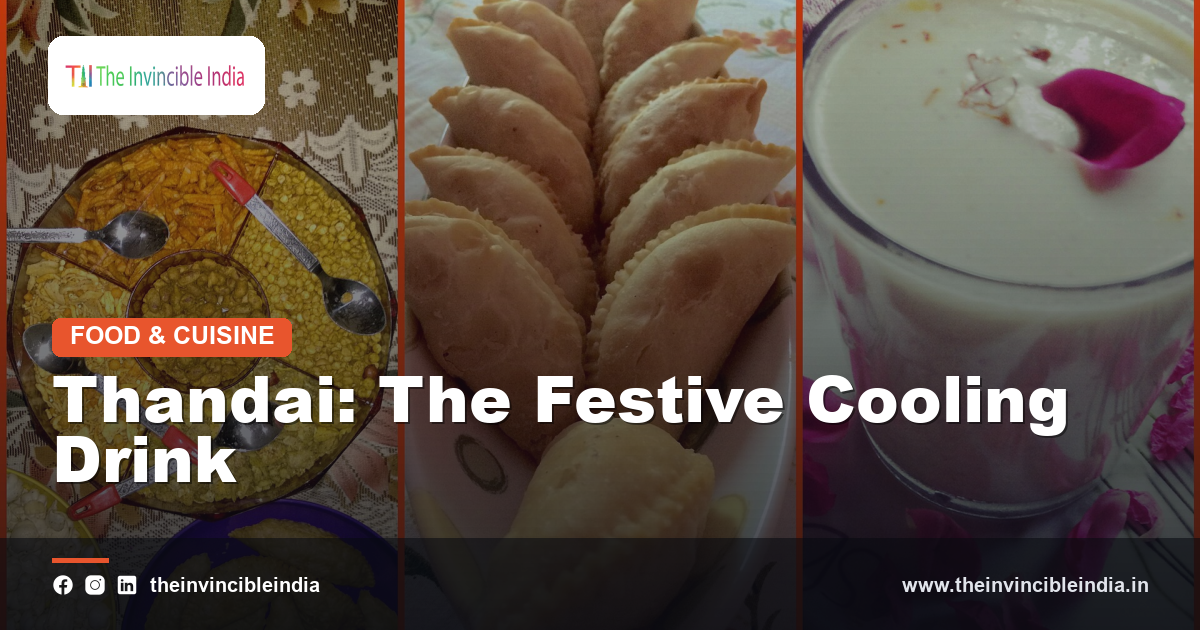
Few drinks capture the spirit of Indian festive cooling quite like thandai, a chilled, spiced milk beverage closely associated with Holi and other seasonal celebrations. Made by blending milk with a carefully balanced mixture of nuts, seeds, and aromatic spices, thandai sits alongside preparations such as the Indian thali as an example of how composed, multi-ingredient dishes carry deep cultural meaning in Indian food traditions. Its flavor, at once nutty, sweet, and gently spiced, is designed to refresh and cool the body, making it especially welcome during the warmer months when major festivals like Holi typically fall. Served chilled in tall glasses and often garnished with rose petals or crushed nuts, thandai is as much a visual and aromatic experience as a culinary one. This guide explores its history, ingredients, preparation, and lasting place within Indian festive culture.
Quick Facts
| Detail | Information |
|---|---|
| Type | Spiced, chilled milk beverage |
| Main Ingredients | Milk, nuts, seeds, aromatic spices |
| Key Spices | Fennel, cardamom, black pepper, saffron |
| Festive Association | Holi and Mahashivratri |
| Serving Style | Chilled, garnished with nuts or petals |
| Regional Popularity | Widely enjoyed across North India |
What Is Thandai
Thandai is a traditional Indian beverage made by blending milk with a rich mixture of nuts, seeds, and warming spices, then chilling the mixture before serving. Its name derives from a word meaning cooling, reflecting the drink’s intended purpose as a refreshing preparation suited to warm weather and festive gatherings. Common ingredients include almonds, melon seeds, fennel seeds, black pepper, cardamom, and saffron, ground together into a fine paste that is then mixed thoroughly with milk and sweetened to taste. The result is a fragrant, slightly thick beverage with a complex flavor profile that balances sweetness, mild spice, and nutty richness in a single glass. Thandai is most closely associated with festive occasions, particularly Holi, when it becomes a centerpiece of celebration in many North Indian households. Its combination of nutrition, flavor, and symbolic association with festivity has made it one of the most recognizable seasonal drinks in Indian culinary tradition.
Origins and History
Thandai has a long-standing presence in North Indian culinary and cultural tradition, with roots often connected to Ayurvedic principles of using nuts, seeds, and spices to create cooling, nourishing preparations suited to particular seasons. Its association with religious and festive occasions, particularly those linked to the worship of certain deities, suggests a preparation that developed over a considerable span of time within specific regional and devotional contexts. The drink’s careful blend of ingredients, each chosen for both flavor and traditional cooling properties, reflects a thoughtful culinary approach rather than an incidental combination. Over generations, thandai has remained closely tied to particular festivals, its preparation often reserved specifically for these occasions rather than treated as an everyday beverage. While precise historical details are difficult to pin down with certainty, thandai’s deep and continuing association with festive tradition points to a beverage that has been refined and cherished within North Indian culture for a very long time.
Traditional Ingredients
The characteristic flavor of thandai comes from a carefully assembled blend of ingredients, each contributing its own distinct note to the final drink. Almonds and melon seeds provide a creamy, nutty base, while fennel seeds add a subtle sweetness and cooling quality that is central to the drink’s identity. Black peppercorns contribute a gentle warmth that balances the overall cooling effect, and cardamom lends a fragrant, aromatic depth that is immediately recognizable. Saffron is often included for both its delicate flavor and the pale golden hue it imparts to the milk. Additional ingredients such as rose petals, poppy seeds, or pistachios may be included depending on regional or family preference, allowing for considerable variation while maintaining the same essential character. This combination of nuts, seeds, and spices reflects a broader pattern in Indian cuisine of building complex, balanced flavors from a deliberately chosen set of natural ingredients rather than relying on a single dominant taste.
Preparation Method
Preparing thandai traditionally begins with soaking the nuts, seeds, and spices in water for several hours, softening them enough to be ground into a smooth, fine paste. This paste is then mixed thoroughly with chilled milk, ensuring the flavors distribute evenly throughout the liquid rather than settling unevenly. Sugar is added to taste, and the mixture is typically strained to remove any coarse particles, resulting in a smoother drinking experience. Once prepared, thandai is refrigerated for a period before serving, allowing the flavors to meld further while ensuring the drink is properly chilled. Some preparations involve grinding the spice mixture into a concentrated paste in advance, which can then be stored and mixed with milk as needed, offering a convenient way to prepare individual servings. This method, though requiring some advance preparation, ensures that each ingredient contributes fully to the finished beverage rather than remaining as a separate, undissolved element.
Thandai and Holi
Thandai is most strongly associated with Holi, the vibrant spring festival of colors celebrated widely across North India, where it becomes a central feature of festive hospitality. During Holi celebrations, thandai is prepared in large quantities and offered to guests, family, and neighbors as part of the day’s festivities, often served alongside traditional sweets and snacks. Its cooling, refreshing character makes it particularly welcome during Holi, which typically falls as temperatures begin rising with the approach of summer. In some regions, thandai prepared during Holi includes additional ingredients reflecting local customs, though the core blend of milk, nuts, and spices remains consistent. This close association with Holi has made thandai one of the most anticipated seasonal beverages in North Indian households, its appearance in homes and markets serving as a clear signal that the festival is near.
Thandai and Mahashivratri
Beyond Holi, thandai also holds particular significance during Mahashivratri, a major festival dedicated to Lord Shiva, when the drink is prepared and consumed as part of devotional and celebratory customs. This association connects thandai to specific religious traditions, where its ingredients and preparation are sometimes imbued with symbolic meaning beyond simple refreshment. During Mahashivratri, thandai is often shared among devotees and family members following periods of fasting or worship, its rich blend of nuts and spices offering both nourishment and festive enjoyment. This dual connection to both Holi and Mahashivratri reflects thandai’s broader role as a beverage tied to specific devotional and seasonal occasions rather than everyday consumption. The recurrence of thandai across these distinct but related festivals underscores its established place within the broader calendar of North Indian religious and cultural celebration.
Regional Variations
While the core recipe for thandai remains broadly consistent across North India, regional and family variations do exist, reflecting local tastes and available ingredients. Some versions place greater emphasis on rose flavoring, incorporating rose water or dried rose petals for a more floral character, while others lean more heavily on black pepper and warming spices for a bolder, spicier profile. Certain regional preparations may include additional nuts such as pistachios or cashews, altering the texture and richness of the finished drink. In some communities, thandai is prepared slightly thinner, more akin to a flavored milk, while in others it is intentionally thick and rich, closer to a dessert in consistency. These variations, though relatively subtle compared to the fundamental recipe, demonstrate how a shared festive tradition can still accommodate individual and regional preference, allowing thandai to remain both recognizably consistent and personally distinctive from household to household.
Role of Milk and Spices
Milk serves as the essential base of thandai, providing both the liquid medium and the creamy richness that carries the flavor of the ground nuts and spices throughout the drink. The choice of full-fat milk is common in traditional preparations, as its richness helps balance the intensity of ingredients like black pepper and cardamom. The spices used in thandai are selected not only for flavor but, according to traditional belief, for their cooling or balancing properties, reflecting principles found in traditional Indian approaches to food and wellness. Fennel and melon seeds in particular are associated with cooling qualities, making them especially suited to a drink intended for warm weather and physically demanding festivities such as Holi. This thoughtful pairing of milk with a specific spice blend illustrates how thandai functions as more than a simple flavored beverage, instead representing a considered combination of ingredients chosen for both taste and traditional purpose.
Thandai Masala and Store-Bought Mixes
To simplify preparation, many households and manufacturers produce a pre-mixed thandai masala, a dry or paste form of the traditional spice and nut blend that can be added directly to milk. This masala typically combines dried, ground versions of the same core ingredients, including almonds, fennel, black pepper, and cardamom, allowing for a quicker preparation without the need to soak and grind ingredients fresh each time. Store-bought thandai masala has made the drink considerably more accessible, particularly for those living outside regions where fresh preparation is a common household practice. While convenient, many traditional cooks still prefer preparing the mixture fresh, believing it produces a more vibrant and well-balanced flavor compared to packaged alternatives. Nonetheless, the widespread availability of thandai masala has helped the drink remain popular even among those with limited time, ensuring its continued presence during festive seasons across many households.
Thandai Compared to Other Cooling Drinks
India has a rich tradition of seasonal cooling beverages, and thandai occupies a distinctive place among them due to its dairy base and complex spice blend. Unlike lighter drinks such as buttermilk-based chaas or fruit-based coolers, thandai is notably richer and more indulgent, closer in character to a dessert beverage than a simple thirst quencher. Its combination of nuts and spices also sets it apart from other milk-based drinks, offering a more layered and aromatic flavor profile than plain sweetened or flavored milk. While drinks like aam panna or chaas are consumed more casually and frequently during summer, thandai retains a stronger association with specific festive occasions, making it feel more special and less routine by comparison. This distinction reflects thandai’s particular role within Indian beverage culture, valued specifically for the celebratory context in which it is most often enjoyed.
Serving Traditions
Thandai is traditionally served chilled in tall glasses, often garnished with a sprinkling of chopped nuts, dried rose petals, or a few strands of saffron to enhance both its visual appeal and aroma. During festive occasions, it is commonly offered to guests as a gesture of hospitality, sometimes accompanied by traditional sweets or snacks that complement its rich, spiced flavor. In some households, thandai is served in ornate glasses reserved specifically for festive use, adding a further sense of occasion to its presentation. The drink is generally consumed slowly, allowing its complex blend of flavors to be appreciated rather than gulped quickly like a simple refreshment. This deliberate, hospitable style of serving reinforces thandai’s identity as a beverage meant for sharing and celebration, distinguishing it from more casual, everyday drinks consumed without particular ceremony or presentation.
Thandai in Modern Cafes and Menus
In recent years, thandai has found a place beyond traditional households, appearing on the menus of cafes, restaurants, and dessert shops, particularly around the Holi season. Modern interpretations have introduced thandai-flavored ice creams, milkshakes, and even baked goods, adapting the drink’s distinctive flavor profile into new formats aimed at contemporary tastes. Some establishments offer thandai as a specialty seasonal drink, marketing it specifically during the weeks surrounding Holi to capture festive interest. These adaptations have introduced thandai’s flavor to audiences who might not otherwise encounter the traditional beverage, expanding its reach beyond households where it has always been prepared. While these modern variations differ considerably from the classic milk-based drink, they generally aim to capture its core combination of nuts, spices, and cooling character, demonstrating the flavor’s continued appeal even as its format evolves to suit changing consumption habits.
Nutritional Character
As a milk-based beverage enriched with nuts and seeds, thandai offers a combination of protein, natural fats, and various micronutrients derived from its ingredients, though it is also relatively rich due to added sugar and full-fat milk. The nuts and seeds used, including almonds and melon seeds, contribute healthy fats and a satisfying richness, making thandai more filling than many other beverages. Its spice content, including fennel and black pepper, is traditionally believed to support digestion, aligning with broader principles found in traditional Indian dietary practices. Because of its richness, thandai is generally consumed as an occasional festive treat rather than a routine daily drink, fitting a pattern common to many celebratory foods in Indian culture. Overall, thandai’s nutritional character reflects its role as a thoughtfully composed, indulgent beverage rather than a purely functional or everyday drink.
Thandai in North Indian Culture
Thandai holds a meaningful place within North Indian cultural life, extending beyond its role as a beverage to become a symbol of festive hospitality and seasonal celebration. Its preparation and sharing during Holi and Mahashivratri reflect broader cultural values around welcoming guests and marking important occasions with specially prepared food and drink. Families often have their own preferred recipes and techniques for thandai, passed down through generations, adding a personal and familial dimension to what is otherwise a widely shared cultural tradition. The drink’s strong seasonal identity also ties it to broader rhythms of the Indian calendar, with its appearance in homes and markets serving as a recognizable marker of specific festive periods. This cultural embedding helps explain why thandai remains so closely associated with celebration, carrying meaning that extends well beyond its taste and ingredients alone.
Thandai's Symbolic Meaning
Beyond its practical role as a cooling refreshment, thandai carries symbolic associations connected to festivity, devotion, and communal celebration within North Indian tradition. Its preparation, often involving the sharing of labor and ingredients among family members, reflects broader cultural values around collective effort during festive occasions. The act of offering thandai to guests during Holi or Mahashivratri can be understood as a gesture of welcome and goodwill, reinforcing social bonds during these significant calendar moments. Its close ties to specific religious and seasonal observances also lend it a symbolic weight not shared by more casual, everyday beverages. This layered meaning, combining taste, tradition, and social ritual, helps explain why thandai continues to be prepared with care and anticipation each year, rather than being treated as an interchangeable seasonal drink among many other options.
Thandai Today
Today, thandai remains a cherished feature of North Indian festive culture, prepared in households, sold by sweet shops, and increasingly reimagined in cafes and restaurants during the Holi and Mahashivratri seasons. Its traditional recipe, built around milk, nuts, seeds, and aromatic spices, continues to be passed down through families even as store-bought masalas and modern adaptations have made the drink more widely accessible. Whether enjoyed in its classic chilled form or as part of a contemporary dessert or drink innovation, thandai retains its core identity as a rich, cooling beverage inseparable from celebration. Its continued popularity, both within India and among diaspora communities celebrating these festivals abroad, reflects a drink that has successfully carried its traditional character forward while adapting to new contexts and audiences. As long as festivals like Holi and Mahashivratri continue to be celebrated, thandai seems certain to remain a defining feature of the season.
Sources & Further Reading
- Ministry of Culture, Government of India (indiaculture.gov.in).
- Ministry of Food Processing Industries, Government of India (mofpi.gov.in).
Frequently Asked Questions
What is thandai made of?
Thandai is made from milk blended with a mixture of nuts such as almonds, seeds like fennel and melon seeds, and spices including black pepper, cardamom, and saffron.
Why is thandai associated with Holi?
Thandai is traditionally prepared and served during Holi as a cooling, festive beverage offered to guests and family, making it one of the most recognizable drinks of the celebration.
Is thandai only served during festivals?
Thandai is most commonly associated with Holi and Mahashivratri, though it is increasingly available in cafes and restaurants during the surrounding season, and some households prepare it more casually as well.
What does thandai taste like?
Thandai has a rich, nutty, and mildly spiced flavor, combining the sweetness of milk with the warmth of black pepper and cardamom and the subtle coolness of fennel and melon seeds.
Can thandai be made quickly at home?
Many households use pre-made thandai masala, a ready mixed spice and nut blend, which can be stirred into chilled milk for a quicker version of the traditional drink.


