

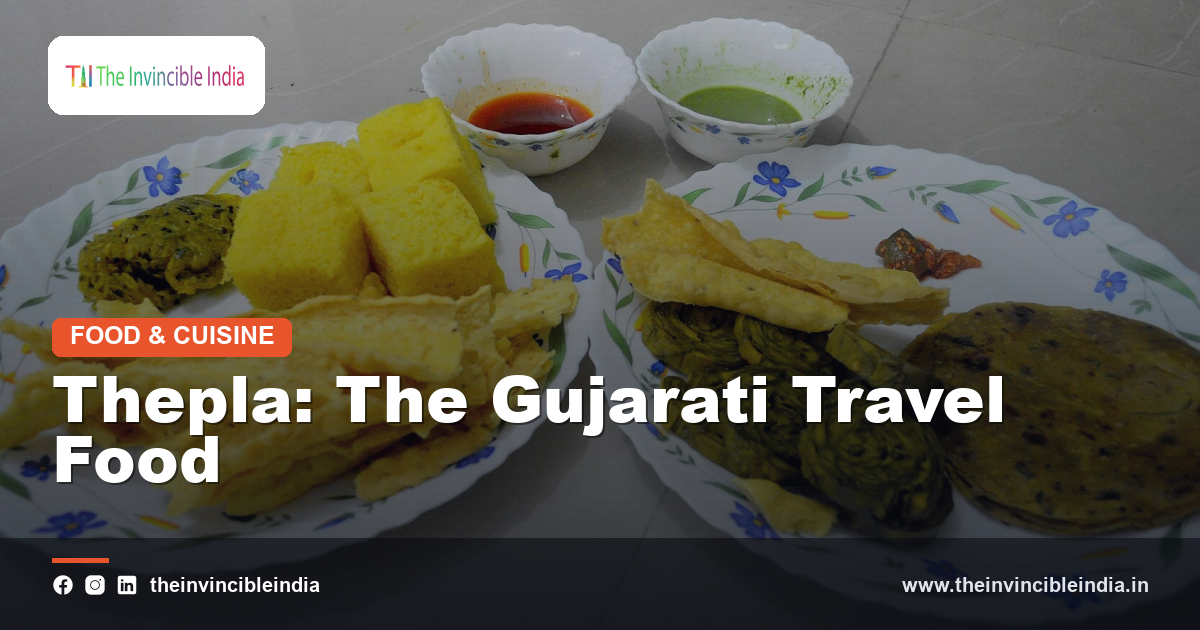
Thepla is a soft, spiced flatbread from Gujarat, made from wheat flour blended with gram flour, yogurt and a mix of spices, and often enriched with finely chopped fenugreek leaves to make the beloved methi thepla. Prized above all for its remarkable ability to stay soft and fresh for days without refrigeration, thepla has become the definitive travel food of Gujarati households, packed for long train journeys, pilgrimages and family trips of every kind. As one of the great regional flatbreads within the wider story of Gujarati cuisine, thepla reflects a culinary culture built around practicality, flavour and careful preservation. This guide explores thepla, its preparation, its varieties and its enduring role as India’s most trusted travel food.
Quick Facts
| Detail | Information |
|---|---|
| Type | A soft, spiced Gujarati flatbread |
| Rooted in | Gujarati household and travel food tradition |
| Famous variety | Methi thepla with fenugreek leaves |
| Key ingredients | Wheat flour, gram flour, yogurt and spices |
| Known for | Staying soft for days without refrigeration |
| Character | Mildly spiced, soft and portable |
What Is Thepla
Thepla is a soft, spiced flatbread from Gujarat, made by combining wheat flour with gram flour, yogurt, oil and a blend of ground spices into a pliable dough that is rolled thin and cooked on a griddle until lightly speckled with golden-brown spots. Unlike many Indian flatbreads that are best eaten fresh and hot, thepla is specifically prized for remaining soft and pleasant even after several days at room temperature, a quality that sets it apart within Indian bread-making. It is typically eaten folded or rolled, often with a pickle or a dollop of yogurt alongside. As a soft, long-lasting and mildly spiced flatbread, thepla occupies a uniquely practical place within Gujarati home cooking.
Origins in Gujarati Kitchens
Thepla developed within the resourceful and thoughtful tradition of Gujarati home cooking, a cuisine long admired for its careful balance of flavour, nutrition and practicality in dishes suited to a largely vegetarian, often mercantile and travelling community. Gujarati households, accustomed to long journeys for trade and pilgrimage, developed thepla as bread that could be prepared in advance and carried comfortably without spoiling or losing its appeal. This practical origin shaped both its ingredients and its method of preparation. Rooted firmly in this tradition of thoughtful, travel-ready Gujarati cooking, thepla reflects a cuisine that values a dish’s usefulness every bit as much as its taste.
Methi Thepla and Fenugreek Leaves
Methi thepla, made with finely chopped fresh fenugreek leaves kneaded directly into the dough, is the most celebrated and widely recognised version of the dish, its slightly bitter, aromatic greens balanced carefully against the sweetness of the wheat and gram flour base. Fenugreek leaves are in season during the cooler months, and methi thepla is especially associated with winter in Gujarati households, when fresh methi is at its most abundant and flavourful. The leaves also lend a faint green fleck to the finished bread. This distinctive combination of fenugreek and spiced dough in methi thepla has made it the signature and most beloved variety among all the forms the dish can take.
The Dough and Spice Blend
The dough for thepla is built from wheat flour blended with a portion of gram flour, which adds both flavour and a subtle binding quality, along with yogurt or buttermilk to keep the finished bread soft. A characteristic spice blend of turmeric, red chilli powder, cumin, ajwain and sometimes sesame seeds is worked into the dough before it is kneaded, giving thepla its warm, mildly spiced flavour throughout rather than only on its surface. A little oil is added directly to the dough as well. This carefully balanced dough and spice blend, consistent across most households with only small personal variations, is what gives thepla its distinctive and immediately recognisable taste.
Rolling and Cooking Technique
Thepla is rolled thin, generally thinner than an everyday roti, using a dusting of flour to prevent sticking, and is then cooked on a hot griddle with a light coating of oil applied to each side as it cooks. This generous but careful use of oil during cooking is part of what helps thepla remain soft and moist for an extended period rather than drying out and turning brittle. The bread is flipped several times to ensure it is evenly cooked without becoming too crisp. This deliberate rolling and cooking technique, balancing thinness with the right amount of oil, is essential to producing thepla that will travel well over the following days.
Why Thepla Travels Well
Thepla’s remarkable ability to remain soft and edible for several days without refrigeration comes from a combination of factors: the yogurt and oil worked into the dough, the thinness of the rolled bread, and the light layer of oil applied during cooking, all of which help prevent the flatbread from drying out. Its mild, well-balanced spicing also means it tastes just as good cold as it does fresh off the griddle, unlike many other Indian breads. These qualities were refined specifically with travel in mind. This unusual and much-valued ability to travel well, staying soft and flavourful for days, is the single quality most responsible for thepla’s enduring reputation across India.
Thepla for Journeys and Pilgrimages
Thepla has long been the food of choice for Gujarati families setting out on long train journeys, road trips and religious pilgrimages, packed in stacks along with pickle, dry snacks and sometimes a jar of chundo for exactly this purpose. Its portability and long shelf life make it far more practical for travel than rice-based dishes or breads that spoil quickly, and generations of Gujarati travellers have relied on it as a dependable, satisfying meal on the move. It requires no reheating or special storage. This established role of thepla in journeys and pilgrimages has earned it a lasting reputation as one of India’s most trusted and beloved travel foods.
Variations: Plain, Masala, and Other Greens
Beyond the classic methi thepla, Gujarati households prepare a range of variations, including plain masala thepla flavoured only with spices and no greens, as well as versions made with other leafy vegetables such as spinach or with grated vegetables like bottle gourd worked into the dough. Each variation retains the same essential dough and cooking method while offering a slightly different flavour and texture suited to the season or the ingredients on hand. Sweet versions flavoured with jaggery are also occasionally made. This range of variations built upon a shared base shows how flexible the thepla concept can be while remaining true to its core identity.
Accompaniments: Pickle, Yogurt and Chundo
Thepla is traditionally paired with tangy Gujarati pickle, a bowl of plain yogurt, and often chundo, a sweet and mildly spiced grated raw mango preserve unique to Gujarati cuisine, together creating a satisfying balance of spice, tang and sweetness. This trio of accompaniments travels just as well as the thepla itself, making the combination especially popular for packed meals and journeys. Some households also serve thepla with a simple potato or vegetable curry when eaten at home. These essential accompaniments of pickle, yogurt and chundo complete the thepla meal and reflect the same thoughtful, well-rounded approach found throughout Gujarati cuisine.
Thepla in Gujarati Daily Life
Beyond its reputation as travel food, thepla is eaten regularly in Gujarati households as breakfast, a light lunch or an evening snack, valued for being quick to prepare in reasonable quantity and satisfying without being heavy. It is often made in larger batches so that some can be set aside for the following day or for unexpected guests, reflecting its practical place in everyday cooking. Children frequently take thepla to school rolled up as a simple, mess-free snack. This everyday role of thepla within Gujarati daily life, well beyond its association with travel, shows its standing as a genuinely versatile household staple.
Nutritional Character
Thepla is generally regarded as a nutritious and well-balanced food, combining the carbohydrates of wheat flour with the protein of gram flour and, in the case of methi thepla, the vitamins and minerals found in fresh fenugreek leaves. Yogurt worked into the dough adds a further measure of protein and helps keep the bread tender. Because it is cooked on a griddle with only a modest amount of oil, thepla remains comparatively light despite its rich flavour. This wholesome combination of grains, greens and yogurt gives thepla a nutritional character well suited to sustaining travellers and busy households alike.
Thepla as Tiffin and Lunchbox Food
Thepla is a common sight in Gujarati lunchboxes and tiffin carriers, valued for staying fresh through the hours between preparation in the morning and eating at midday, unlike softer breads that can turn stiff or unpleasant when packed for several hours. Rolled with a little pickle or a smear of chutney inside, thepla makes for a simple, mess-free lunch that requires no reheating or special handling. Office workers and schoolchildren alike rely on it for exactly this convenience. This dependable role of thepla as tiffin and lunchbox food reflects the same practical qualities that make it such an effective food for longer journeys.
Regional and Family Variations
While thepla is closely associated with Gujarat as a whole, individual families and regions within the state maintain their own particular touches, whether in the exact ratio of wheat to gram flour, the choice of spices, or the addition of sesame seeds or other flavourings to the dough. Some households prefer their thepla thinner and crisper, while others favour a slightly thicker, softer version more suited to immediate eating rather than travel. These small differences are often passed down within families rather than written in any fixed recipe. This gentle regional and family variation across thepla preparations reflects the personal, home-based nature of the tradition.
Thepla in Gujarati Festivals
Thepla appears regularly during Gujarati festivals and family gatherings, often prepared in large batches to feed visiting relatives or to be packed for festival travel, particularly during the winter months when fresh fenugreek is plentiful and methi thepla is at its best. During occasions that involve extended travel or outdoor celebration, thepla’s practicality makes it a natural choice alongside other portable snacks. It is also commonly prepared as part of festive food gifts exchanged between families. This regular presence of thepla during Gujarati festivals highlights its dual identity as both an everyday food and a dish suited to celebration and hospitality.
Thepla Beyond Gujarat
As Gujarati communities have settled across India and around the world, thepla has travelled with them, becoming a familiar sight in Gujarati households far from the state itself and increasingly recognised more broadly as a distinctive and practical Indian flatbread. Indian grocery stores and restaurants outside Gujarat now often stock or serve thepla alongside other regional flatbreads, introducing it to a wider audience unfamiliar with its Gujarati origins. Its practicality has made it popular among busy professionals everywhere. This spread of thepla well beyond Gujarat, carried by migration and growing culinary curiosity, reflects its broad and enduring appeal across the wider landscape of Indian cuisine.
Thepla Today
Today thepla continues to be prepared much as it always has been, its spiced dough and careful cooking technique passed down through Gujarati families and still relied upon for journeys, lunchboxes and everyday meals alike. Methi thepla remains the most celebrated version, though plain and vegetable variations continue to be made according to season and preference. Its reputation as India’s most dependable travel food remains firmly intact. As a soft, spiced and remarkably practical flatbread, thepla stands as one of Gujarati cuisine’s most distinctive and enduring contributions to India’s culinary heritage.
Sources & Further Reading
- Ministry of Tourism, Government of India, on the cuisines of India (tourism.gov.in).
- Culinary references on Gujarati household and travel food traditions.
Frequently Asked Questions
What is thepla made of?
Thepla is made from wheat flour blended with gram flour, yogurt, oil and a mix of spices such as turmeric, chilli and cumin, kneaded into a soft dough and rolled thin before cooking on a griddle.
What is methi thepla?
Methi thepla is the most popular version of thepla, made by kneading finely chopped fresh fenugreek leaves into the spiced dough, giving the flatbread a distinctive aroma and a slightly bitter, savoury flavour.
Why is thepla considered good travel food?
Thepla stays soft for several days without refrigeration thanks to the yogurt and oil in its dough and the light coating of oil used during cooking, making it ideal for long journeys and pilgrimages.
What is thepla eaten with?
Thepla is traditionally eaten with Gujarati pickle, plain yogurt and chundo, a sweet grated mango preserve, though it is also enjoyed at home with a simple vegetable curry.
Is thepla different from roti?
Thepla differs from plain roti in that it includes gram flour, yogurt and spices worked into the dough, giving it more flavour and a longer shelf life than an everyday wheat roti.


