

The tiger is the most magnificent and iconic of all India’s wildlife, a symbol of the country’s natural heritage and its national animal. India is home to the majority of the world’s wild tigers, and the story of their survival and recovery is one of the great conservation successes of our time. From the dense forests of central India to the mangroves of the Sundarbans and the foothills of the Himalayas, tigers roam a remarkable variety of habitats. This guide explores the tigers of India, the best reserves to see them, and the efforts to protect these extraordinary animals.
Quick Facts: Tigers of India
| Detail | Information |
|---|---|
| Species | Bengal tiger (Panthera tigris tigris) |
| Status | National animal of India |
| Share of world tigers | Around 70% of the wild population |
| Conservation programme | Project Tiger, launched in 1973 |
| Latest population (2022) | Estimated around 3,680 |
| Tiger reserves | Over 50 across the country |
The Royal Bengal Tiger
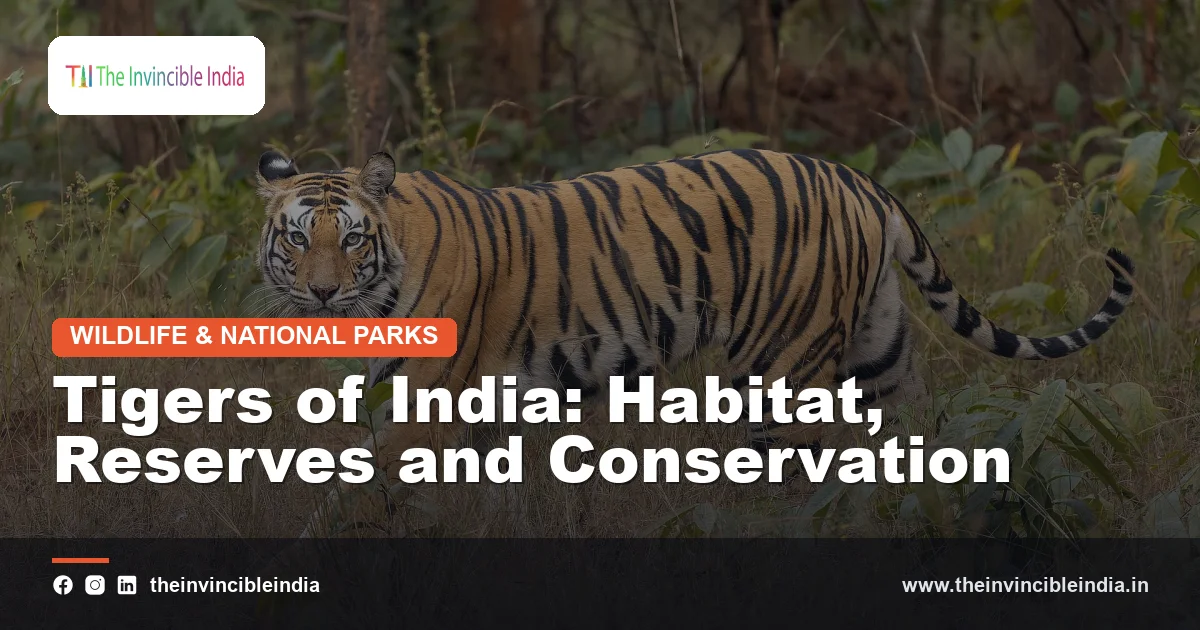
The tiger found in India is the Bengal tiger, one of the largest and most powerful of the big cats, instantly recognisable by its striking orange coat marked with dark vertical stripes, each pattern as unique as a fingerprint. A solitary and territorial predator, the tiger sits at the very top of the food chain and plays a vital role in maintaining the health and balance of its ecosystem. Revered in Indian culture and mythology for centuries, the tiger embodies strength, grace and majesty, and its powerful presence has made it a beloved and iconic symbol of the nation’s wild heart.
Project Tiger and Conservation
By the early 1970s, hunting and habitat loss had brought India’s tigers to the brink, with numbers falling alarmingly. In response, the government launched Project Tiger in 1973, one of the most ambitious wildlife conservation programmes in the world. The initiative established a network of protected tiger reserves, cracked down on poaching, and worked to preserve and restore tiger habitats. Over the following decades, and despite many challenges, these efforts helped stabilise and then steadily increase tiger numbers, turning India into the global stronghold for the species and a model for big-cat conservation.
India’s Tiger Population Today
India conducts a comprehensive tiger census every four years, and the results have been increasingly encouraging. The 2022 estimate placed the country’s tiger population at around 3,680, representing the great majority of all wild tigers left on Earth. This steady growth, from the low numbers of the past, is a remarkable achievement and a source of national pride. It reflects decades of sustained conservation effort, the dedication of forest staff and researchers, and the expansion and better management of protected areas, though continued vigilance remains essential to safeguard these gains.
The Best Tiger Reserves
India has over fifty tiger reserves, offering some of the finest opportunities in the world to see tigers in the wild. Ranthambore in Rajasthan is famous for tigers set against the backdrop of ancient ruins and is one of the best places for sightings. Bandhavgarh and Kanha in Madhya Pradesh boast high tiger densities and beautiful sal forests, with Kanha said to have inspired Rudyard Kipling’s “The Jungle Book”. Jim Corbett in Uttarakhand, India’s oldest national park, Tadoba in Maharashtra, and Nagarhole and Bandipur in Karnataka are all celebrated destinations for tiger safaris.
The Tigers of the Sundarbans
One of the most unique tiger habitats in the world is the Sundarbans, the vast mangrove forest straddling the delta of the Ganga and Brahmaputra rivers in West Bengal. Here, tigers have adapted to a remarkable amphibious way of life, swimming between islands through the tidal creeks and channels of this watery wilderness. The Sundarbans tigers are famous for their strength and their reputation, and the dense, labyrinthine mangroves make sightings rare and thrilling. This extraordinary ecosystem, a UNESCO World Heritage Site, is home to a significant population of these specially adapted tigers.
Going on a Tiger Safari
A tiger safari is an unforgettable experience and one of the great highlights of wildlife tourism in India. Safaris are typically conducted in open jeeps, and in some reserves on elephant back or by boat, accompanied by trained guides and forest staff who track the tigers’ movements. Even when a tiger is not spotted, the reserves teem with other wildlife, including leopards, deer, wild boar, elephants, sloth bears and a dazzling variety of birds. The thrill of searching for a tiger amid the sounds and sights of the jungle, and the possibility of glimpsing one, draws visitors from around the world.
Challenges and the Road Ahead
Despite the success of tiger conservation in India, significant challenges remain. Habitat loss and fragmentation, driven by expanding human settlement and infrastructure, continue to threaten tigers, as does the ever-present danger of poaching for the illegal wildlife trade. Human-wildlife conflict, where tigers stray into villages or attack livestock, poses difficulties for both people and animals. Addressing these challenges requires ongoing effort, including protecting and connecting habitats through wildlife corridors, supporting local communities, and maintaining strong anti-poaching measures to ensure that the recovery of India’s tigers continues.
Why Tigers Matter
Protecting tigers is about far more than saving a single magnificent species. As a top predator, the tiger is an umbrella species, meaning that conserving its large forest habitats also protects countless other plants and animals that share those ecosystems, along with the vital natural resources, such as clean water and healthy forests, on which millions of people depend. The tiger is thus a symbol and a guardian of India’s entire natural heritage. Its survival and recovery stand as a powerful reminder of what dedicated conservation can achieve, and of the importance of preserving the wild for future generations.
The Tiger in Indian Culture
The tiger holds a place of deep reverence in Indian culture, mythology and religion that stretches back thousands of years. In Hindu tradition, the goddess Durga is depicted riding a tiger or lion as she vanquishes evil, symbolising power and divine protection, and the animal features in countless folk tales, legends and works of art across the country. Revered by many tribal communities and celebrated as a symbol of strength, courage and majesty, the tiger was formally adopted as the national animal of India in recognition of its cultural and ecological importance. This profound connection between the tiger and the Indian imagination adds a powerful dimension to the nation’s determination to protect it.
How Tigers Are Counted
Estimating the number of tigers across India’s vast forests is a huge scientific undertaking, carried out through the All India Tiger Estimation conducted every four years. Modern surveys combine extensive fieldwork with advanced technology, most notably camera traps placed throughout the reserves, which photograph passing tigers. Because every tiger’s stripe pattern is unique, researchers can identify individual animals from these images, allowing remarkably accurate population counts. This massive exercise, one of the largest wildlife surveys in the world, has documented the steady recovery of India’s tigers and provides vital data that guides conservation policy and helps measure the health of the country’s forests and ecosystems.
Tiger Behaviour and Life
Tigers are solitary and territorial animals, with each adult maintaining its own range that it marks and defends, the size of which depends on the availability of prey. Powerful and stealthy hunters, they rely on cover and surprise to bring down prey such as deer and wild boar, usually hunting at night. Female tigers give birth to litters of cubs, which remain with their mother for around two years, learning to hunt and survive before establishing territories of their own. Understanding this behaviour, including their need for large territories and abundant prey, is essential to conservation, as it explains why protecting extensive, well-connected habitats is so vital for the species’ survival.
How You Can Help Tiger Conservation
Everyone can play a part in helping to secure the future of India’s tigers. Visiting tiger reserves responsibly supports the local economy and gives communities a stake in conservation, while following park rules ensures that tourism does not disturb the wildlife. Travellers can choose eco-friendly operators, avoid buying any products derived from wildlife, and support the reputable organisations that fund anti-poaching work, habitat protection and community programmes. Spreading awareness about the importance of tigers and the threats they face also makes a difference. Through these collective efforts, visitors and citizens alike can contribute to one of the world’s great conservation success stories and help ensure that tigers continue to roam India’s forests.
Best Time to Visit Tiger Reserves
Timing is important for those hoping to see tigers in the wild. The best months for sightings are generally the hotter, drier period from March to June, when the sparse vegetation and the tigers’ need to visit water sources make them easier to spot, though the heat can be intense. The cooler months from November to February are more comfortable and beautiful, with pleasant weather and lush surroundings, offering excellent wildlife viewing even if tigers are a little harder to see. Most reserves remain closed during the monsoon, roughly from July to September, when the parks are given over to the breeding season, so it is always wise to check opening times before planning a safari.
A Symbol of Hope
The recovery of India’s tigers stands as one of the most inspiring conservation stories in the world, a powerful reminder of what can be achieved through dedication, science and collective will. As their numbers continue to grow across the country’s forests, the tiger remains not only the magnificent national animal of India but also a living symbol of hope for the future of wildlife everywhere. Protecting these great cats and the wild landscapes they roam is a responsibility and a gift, one that promises to enrich the lives of generations yet to come.
Planning a Responsible Tiger Safari
For those planning a tiger safari, booking in advance is essential, as permits for the most popular reserves are limited and fill quickly during peak season. Choose reputable, authorised operators and lodges that follow ethical and eco-friendly practices, and always heed the instructions of your guide and the forest staff. Patience is key, for tigers are elusive and sightings are never guaranteed, but the experience of exploring these magnificent wild landscapes, rich with birds and other animals, is deeply rewarding in itself and directly supports the conservation of one of the world’s most magnificent creatures.
Frequently Asked Questions
How many tigers are there in India?
According to the 2022 census, India is home to around 3,680 tigers, representing roughly 70% of the world’s wild tiger population.
What is Project Tiger?
Project Tiger is a major conservation programme launched by the Indian government in 1973 to protect tigers by creating a network of tiger reserves, curbing poaching and preserving habitats.
Which are the best places to see tigers in India?
Top tiger reserves include Ranthambore in Rajasthan, Bandhavgarh and Kanha in Madhya Pradesh, Jim Corbett in Uttarakhand, Tadoba in Maharashtra, and the Sundarbans in West Bengal.
Why is the tiger important to India’s ecosystems?
As a top predator and umbrella species, the tiger helps maintain the balance of its ecosystem, and protecting its habitat safeguards many other species and vital natural resources.


