

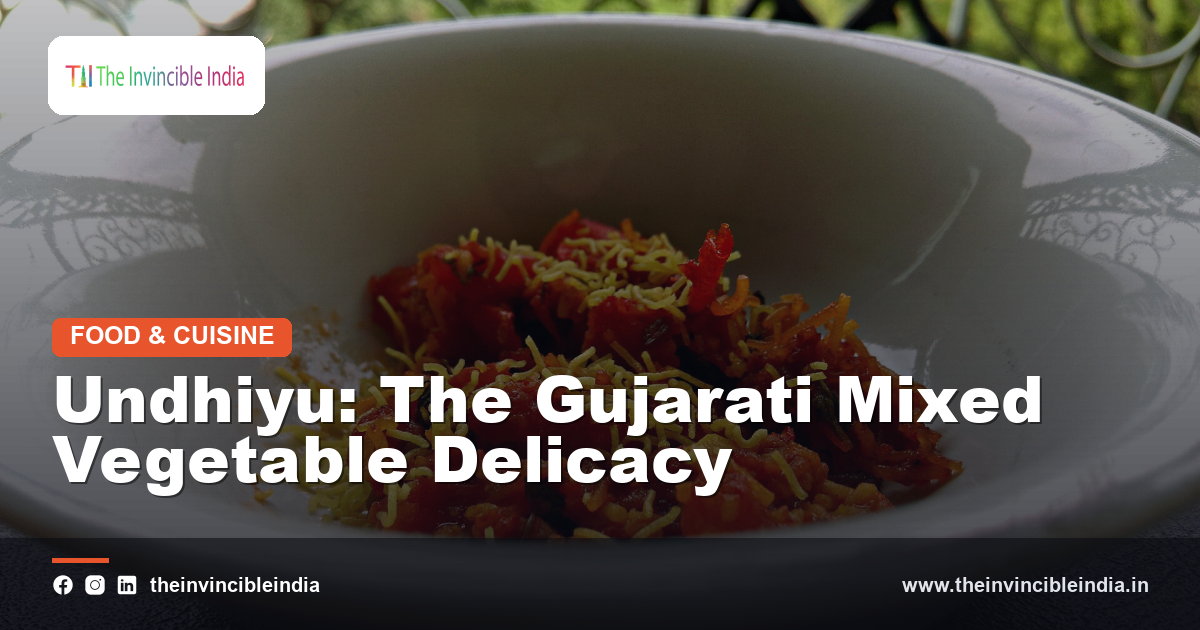
Undhiyu is among the most celebrated dishes of Gujarat, a rich and aromatic medley of winter vegetables cooked with a fresh green masala and golden fenugreek dumplings. Traditionally prepared in the cold months, especially around the kite-flying festival of Uttarayan, it is a dish of abundance, made when the market overflows with tender beans, roots and tubers. Its flavour balances heat, sweetness, herbs and coconut in a way that is distinctly Gujarati, and it occupies a proud position in the wider Gujarati cuisine. This guide explores undhiyu, its name, its ingredients, its method and its enduring cultural importance.
Quick Facts
| Detail | Information |
|---|---|
| Type | Mixed winter vegetable dish |
| Region | Gujarat, western India, especially Surat |
| Main ingredients | Broad beans, roots, tubers, muthia, green masala |
| Season | Winter, linked with Uttarayan |
| Flavour | Herbaceous, mildly spicy, sweet and nutty |
| Served with | Puri, rotli or bajra rotla, often with jalebi |
What Is Undhiyu
Undhiyu is a Gujarati dish made from a generous mixture of winter vegetables, simmered with a fragrant green masala and enriched with fried dumplings of fenugreek and gram flour. It is considered one of the great seasonal specialities of western India, associated with festivity, family gatherings and the pleasure of eating well in the cold months. The dish is rich, colourful and layered, with the sweetness of tubers, the freshness of beans and the aroma of herbs and coconut all present in a single bowl. Few Gujarati preparations carry as much cultural weight. As a showcase of the state’s seasonal produce and its love of balanced flavour, undhiyu remains a true celebration dish.
The Meaning of the Name
The name undhiyu is commonly traced to the Gujarati word undhu, meaning upside down, a reference to the traditional way in which the dish was cooked. In the classic method, vegetables were sealed in an earthen pot that was inverted and placed in a pit, with a fire lit above it, so that the contents cooked slowly in their own steam. The name therefore describes the technique as much as the food. Even though most kitchens no longer cook it underground, the name has stayed unchanged and continues to remind cooks of the dish’s rustic origins. This link between name and method gives undhiyu a story that is as memorable as its taste.
Surat and the Home of Undhiyu
Undhiyu is closely associated with Surat, the historic trading city in southern Gujarat, whose cuisine is famed for its love of food, festivity and fresh farm produce. The fertile land of the surrounding region yields the tender beans, tubers and greens that define the dish, and Surti cooks are widely admired for their skill with it. Although it is now made throughout Gujarat and by Gujarati communities worldwide, the Surti style remains the reference point for many. The city’s food culture, with its emphasis on seasonal abundance and shared meals, helped establish undhiyu as a symbol of Gujarati winter. Surat remains the spiritual home of this beloved preparation.
The Winter Vegetables
The vegetables are the soul of undhiyu, and the dish is traditionally made only when winter produce is at its best. A typical combination includes tender broad beans, often called papdi, along with purple yam, sweet potato, potato, raw banana and small brinjals, usually stuffed or cooked whole. Fresh pigeon pea and green peas may also be added for sweetness and texture. The wide assortment ensures that every spoonful offers a different taste and consistency, from creamy tubers to crisp beans. Because the dish depends so heavily on seasonal produce, it is rarely made out of season. The generous variety of winter vegetables is what gives undhiyu its characteristic richness and appeal.
The Green Masala
The distinctive flavour of undhiyu comes from its green masala, a fresh paste ground from coriander leaves, green chillies, ginger, garlic and grated coconut, often with a little sugar for balance. This herbaceous mixture is used both to stuff the smaller vegetables and to coat the rest, giving the entire dish its vivid colour and bright, layered taste. Dry spice powders such as coriander and cumin, along with sesame seeds and a pinch of asafoetida, support the fresh flavours. The masala is generous and fragrant but not overwhelmingly hot. It is this lively green paste that separates undhiyu from other mixed vegetable preparations and defines its unmistakable character.
Muthia: The Fenugreek Dumplings
An indispensable component of undhiyu is muthia, small dumplings made from fresh fenugreek leaves, gram flour and other flours, seasoned with spices and shaped by hand before being deep-fried until golden. When added to the vegetables near the end of cooking, they absorb the aromatic juices while retaining a pleasant firmness. Their mild bitterness from the fenugreek offsets the sweetness of the tubers, adding depth and contrast to the dish. Muthia are also eaten on their own as a snack in Gujarati homes, steamed or fried. Their inclusion in undhiyu adds both substance and a signature savoury note, making them one of the most important elements of the finished dish.
The Traditional Underground Method
In its original form, undhiyu was cooked in a way that suited an agricultural community and an open-air festive setting. The vegetables and masala were placed in an earthen pot, sealed, turned upside down in a pit and covered, with a gentle fire kept burning on top. The slow, enclosed heat cooked everything in its own steam, concentrating the flavours and giving the dish a distinctive smoky, earthy quality. This method required skill, patience and a communal effort. Although it is now rare in everyday settings, it is still honoured in some places and at special events. The traditional underground method remains the historical heart of undhiyu and the source of its name and mystique.
Cooking Undhiyu in the Modern Kitchen
In contemporary homes, undhiyu is usually prepared in a heavy-bottomed pot or pressure cooker over a regular stove, which makes the dish accessible to far more people. The process still follows the traditional logic, with the firmer vegetables and tubers added first, the stuffed items arranged carefully, and the muthia placed on top toward the end. Oil is used generously, as it carries the flavour of the masala, and the pot is allowed to cook slowly on low heat with minimal stirring so that the vegetables stay whole. While the smoky quality of the underground method is lost, the essential taste is preserved. The modern kitchen version keeps the spirit of undhiyu alive for busy households.
Undhiyu and Uttarayan
Undhiyu is inseparably linked with Uttarayan, the January festival, also known as Makar Sankranti, which is celebrated in Gujarat with vast numbers of kites filling the sky. Families gather on rooftops and terraces for the festivities, and the traditional meal that accompanies the day typically features undhiyu. It is often served with hot puri and followed by sweet jalebi, creating a festive combination of savoury and sweet. Many households prepare it in large quantities to share with relatives and neighbours. The association with the festival gives the dish a joyful, communal meaning. For many Gujaratis, Uttarayan is simply incomplete without a plate of undhiyu.
Serving and Accompaniments
Undhiyu is rich and substantial, so it is served with accompaniments that balance its intensity. Hot, fluffy puri is the classic partner, though soft rotli or the hearty bajra rotla are also popular, particularly in colder weather. A side of fresh buttermilk or a simple salad may be offered to cut the richness, and many diners enjoy it with a sweet such as jalebi or shrikhand. The dish is typically served warm, and many believe that its flavours improve when it rests, so leftovers are often relished the next day. The thoughtful choice of accompaniments shows how undhiyu is meant to be the centrepiece of a generous and celebratory meal.
Regional Styles and Variations
Different regions of Gujarat have their own approaches to undhiyu. The Surti version is known for its fresh green masala, its abundance of beans and tubers and a gentle sweetness, while other styles, such as those found in Saurashtra and Kathiawar, may be spicier or use a different balance of spices. Some families add particular vegetables, and others adjust the quantity of coconut, sesame or sugar. A dry-style and a more gravy-like presentation both exist, depending on local custom. In modern times, quick versions made with frozen vegetables and non-traditional shortcuts also appear. These many interpretations show how a beloved dish continues to evolve while remaining recognisably itself.
Nutritional Value
Undhiyu is a nutritionally diverse dish because it brings together so many different vegetables in one pot. The beans, peas and pigeon pea supply plant protein and fibre, the tubers and roots provide complex carbohydrates and energy, and the herbs and spices contribute flavour along with their traditional digestive benefits. Fenugreek in the dumplings is valued in Indian food culture for its warming character. Although the dish is cooked with a fair amount of oil and is considered rich, it is meant to be eaten seasonally and in moderation as part of a balanced meal. Its variety of vegetables makes undhiyu both a feast and a source of wholesome winter nourishment.
A Vegetarian Feast of Gujarat
Gujarat has a strong vegetarian tradition, and undhiyu is one of the finest expressions of what meatless cooking can achieve. The dish demonstrates that vegetables, when combined with skill, can deliver depth, richness and satisfaction on a festive scale. Its combination of sweet, savoury, herbal and nutty notes mirrors the Gujarati meal’s famous balance of flavours. In the context of a full thali, undhiyu stands out as a luxurious vegetable course that rewards patience and generosity. This status as a vegetarian showpiece has made undhiyu a point of pride for Gujarati cooks and a delight for visitors discovering the cuisine of the region.
Undhiyu in Gujarati Culture
Beyond its taste, undhiyu carries social meaning in Gujarati life. It is a dish prepared for family and community, often cooked in large quantities and shared generously, and the work of cleaning, stuffing and preparing the vegetables is frequently a group effort. Sweet shops and caterers across Gujarat prepare it in season, and many families order it when they cannot cook it themselves, a measure of how deeply it is expected at the winter table. Stories of grandmothers’ recipes and family secrets surround the dish. Undhiyu thus serves as a thread connecting generations, seasons and festivals within the cultural life of Gujarat.
Tips for Making Undhiyu
Those attempting undhiyu at home can benefit from a few traditional pointers. Fresh, seasonal vegetables are essential, and the beans should be tender and carefully cleaned. The green masala should be ground fresh for the brightest flavour, and the vegetables should be cooked on low heat with little stirring to keep them intact. Frying the muthia separately and adding them late prevents them from becoming soggy. Using enough oil is part of the authentic method, as it carries the aromas of the spices through the dish. Patience and respect for seasonal ingredients are the keys to producing a convincing and satisfying undhiyu in any kitchen.
Undhiyu Today
Today, undhiyu is celebrated far beyond Gujarat, appearing on restaurant menus, in festive catering and in the kitchens of Gujarati families around the world. Packaged and ready-to-cook versions make it available to those without the time to prepare it from scratch, while chefs experiment with new presentations that respect its traditional flavours. Even so, the true pleasure of undhiyu remains tied to winter, fresh vegetables and shared meals. As a symbol of seasonal abundance and festive generosity, it continues to represent Gujarati culinary heritage and to delight all who encounter it, ensuring a lasting place for undhiyu in India’s food culture.
Sources & Further Reading
- Ministry of Culture, Government of India (indiaculture.gov.in).
- Gujarat Tourism, Government of Gujarat (gujarattourism.com).
Frequently Asked Questions
What is undhiyu?
Undhiyu is a Gujarati mixed vegetable dish made from winter produce, a fresh green masala and fried fenugreek dumplings called muthia. It is especially associated with the festival of Uttarayan.
Why is it called undhiyu?
The name is commonly linked to the Gujarati word undhu, meaning upside down. It refers to the traditional method of cooking the vegetables in an inverted earthen pot placed in a pit.
Which vegetables are used in undhiyu?
Common ingredients include broad beans, purple yam, sweet potato, raw banana, potato and small brinjals. Fresh pigeon pea and green peas are often added as well.
When is undhiyu eaten?
Undhiyu is a winter dish, traditionally prepared when the seasonal vegetables are at their best. It is closely tied to Uttarayan, also known as Makar Sankranti, in January.
What is undhiyu served with?
It is usually served with hot puri, though rotli and bajra rotla are also common. Many people enjoy it alongside buttermilk, and sometimes with a sweet such as jalebi.


