

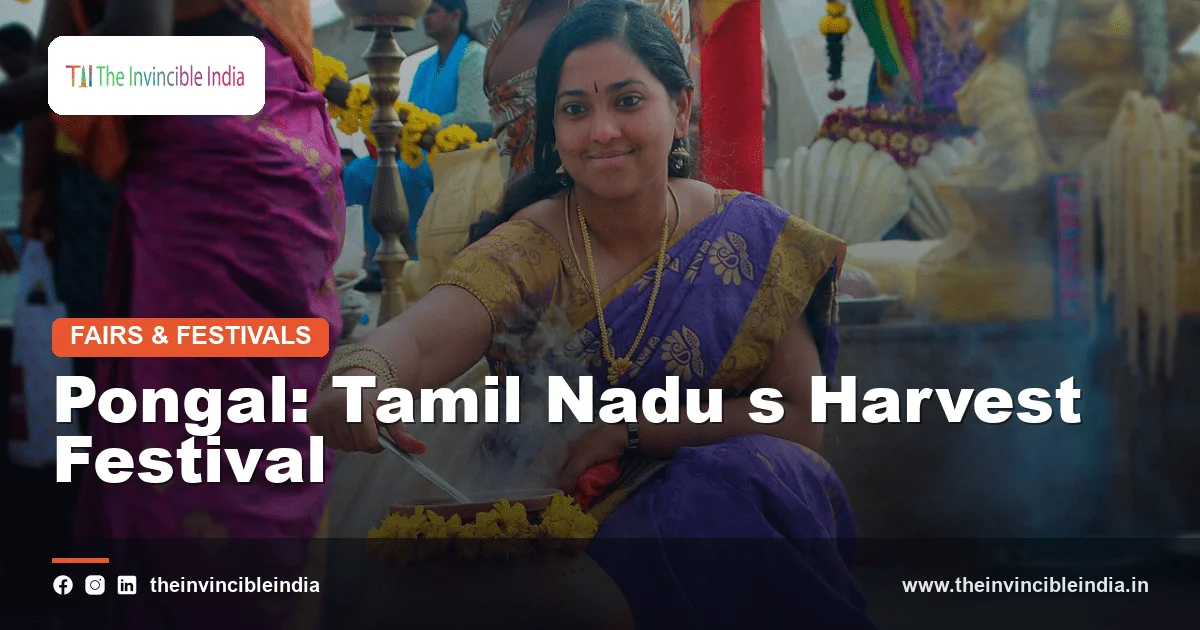
Pongal is the most important festival of Tamil Nadu, a joyous four-day celebration that marks the harvest season and expresses gratitude to nature, the sun and the farm animals that sustain agricultural life. Celebrated in mid-January, it is one of the oldest festivals in the region, with roots stretching back thousands of years. Filled with colourful traditions, delicious food, and warmth, Pongal brings families and communities together in thanksgiving and joy. This guide explores the meaning, rituals and vibrant celebrations of this beloved South Indian harvest festival.
Quick Facts: Pongal
| Detail | Information |
|---|---|
| Region | Tamil Nadu (and Tamil communities worldwide) |
| When | Mid-January (usually 14–17 January) |
| Duration | Four days |
| Marks | The harvest and the sun’s northward journey |
| Signature dish | Pongal (sweet rice cooked with jaggery) |
| Related to | Makar Sankranti, celebrated across India |
The Meaning of Pongal
The word “Pongal” means “to boil over” in Tamil, and refers both to the festival and to the special dish prepared during it, in which freshly harvested rice is boiled with milk and jaggery in a pot until it boils over, symbolising abundance, prosperity and good fortune. The festival celebrates the harvest and honours the Sun God, Surya, whose energy nourishes the crops, as well as the cattle that help work the fields. It coincides with the sun’s transition into the zodiac sign of Capricorn, marking the beginning of the auspicious northward journey of the sun.
The Four Days of Pongal
Pongal is celebrated over four days, each with its own significance. The first day, Bhogi, is dedicated to discarding old belongings and cleaning the home, symbolising renewal, often with bonfires of unwanted items. The second and main day, Thai Pongal, is when the famous sweet Pongal dish is joyfully cooked outdoors in earthen pots and offered to the Sun God. The third day, Mattu Pongal, honours cattle, which are bathed, decorated and worshipped in gratitude for their role in farming. The fourth day, Kaanum Pongal, is a time for family gatherings, outings and strengthening social bonds.
Traditions and Celebrations
Pongal is marked by beautiful and joyful traditions. Homes are cleaned and decorated with colourful kolam (rangoli) patterns drawn with rice flour at their entrances, and sugarcane and turmeric plants adorn the celebrations. People wear new clothes, exchange greetings and share festive meals. In rural areas, the festival takes on an especially vibrant character, with decorated cattle, folk music and dance, and traditional games. The famous and controversial sport of Jallikattu, a form of bull-taming, is held in parts of Tamil Nadu during this period as an ancient test of bravery.
The History and Origins of Pongal
Pongal is one of the oldest festivals in South India, with roots that stretch back thousands of years to the ancient Tamil culture. References to a harvest celebration can be found in classical Tamil literature of the Sangam age, and the festival is believed to have been celebrated for well over a millennium in various forms. Originally an agricultural festival honouring nature’s bounty, it reflects the deep connection between the Tamil people and the cycles of farming that have sustained their civilisation. Over the centuries, Pongal has retained its essentially agrarian and thanksgiving character, making it one of the most authentic and culturally rooted festivals in India, celebrated with the same joy and gratitude as it was in ancient times.
The Making of the Pongal Dish
The preparation of the Pongal dish is the central ritual of the festival and is rich in symbolism. On the main day of Thai Pongal, families gather, often outdoors or in a courtyard, and cook the dish in a traditional earthen pot decorated with turmeric and adorned with a garland, set over a wood fire. Freshly harvested rice is boiled with milk and jaggery, and as it comes to a boil and overflows the pot, everyone joyfully shouts “Pongalo Pongal!”, welcoming the abundance and prosperity that the overflowing symbolises. The dish is first offered to the Sun God along with sugarcane, coconut and bananas, and then shared among family and friends. A savoury version, known as ven pongal, is also prepared.
Kolam and Festive Decorations
One of the most beautiful traditions associated with Pongal is the drawing of kolam, intricate geometric and floral patterns made at the entrances of homes using rice flour, and often coloured powders during the festival. Rising early to draw a fresh kolam each morning is considered auspicious, welcoming prosperity and positive energy into the home, and during Pongal these designs become especially large and elaborate, frequently incorporating images of the sun, sugarcane and pots of boiling Pongal. Homes are also decorated with sugarcane stalks, mango leaves and banana plants, and the doorways are adorned, filling villages and towns with colour and festive cheer.
Mattu Pongal and the Honouring of Cattle
The third day of the festival, Mattu Pongal, is dedicated to cattle, which hold a place of great honour in agricultural life for their vital role in ploughing the fields and providing milk. On this day, cows and bulls are lovingly bathed, their horns painted in bright colours and decorated with garlands, bells and ornaments, and they are fed special treats, including the Pongal dish. This heartfelt expression of gratitude towards animals reflects the deep respect for nature and all living creatures that lies at the core of the festival. In some regions, this day is also associated with the ancient and spirited sport of Jallikattu, a traditional bull-taming event of great cultural significance.
Pongal Across Communities and the World
While Pongal is the great festival of Tamil Nadu, it is part of a broader family of harvest and Makar Sankranti celebrations observed across India in mid-January under different names, such as Makar Sankranti in the north and west, Lohri in Punjab, Bihu in Assam and Uttarayan in Gujarat. Wherever Tamil communities have settled around the world, from Sri Lanka, Malaysia and Singapore to the wider global diaspora, Pongal is celebrated with the same devotion and joy, keeping alive the traditions of the homeland. This universality makes Pongal a wonderful expression of gratitude, cultural identity and the timeless bond between people, nature and the harvest.
Bhogi: The First Day of Renewal
The festival of Pongal begins with Bhogi, a day dedicated to renewal and the discarding of the old to make way for the new. On this day, people clean their homes thoroughly, throw away old and unwanted possessions, and in many places light bonfires in which these discarded items are burnt, symbolising the destruction of the old and negativity and a fresh start. Homes are then decorated and prepared for the main celebrations to follow. The Bhogi day reflects the spirit of renewal that runs through the entire festival, encouraging people to let go of the past and welcome the coming year with hope, positivity and a clean, refreshed home and mind.
Kaanum Pongal and Family Bonds
The fourth and final day of the festival, Kaanum Pongal, is devoted to family, community and social bonds. The word “kaanum” means “to see” or “to visit”, and on this day people go out to visit relatives and friends, strengthening ties and sharing in the festive joy. Families often gather for outings to parks, beaches and scenic spots, enjoying the holiday together. In many households, women perform rituals wishing for the well-being and prosperity of their brothers and families. This emphasis on togetherness, reconciliation and the renewal of relationships makes Kaanum Pongal a heartwarming conclusion to the festival, reinforcing the values of family and community that lie at its heart.
The Enduring Spirit of Pongal
Pongal endures as one of India’s most cherished and authentic festivals because it celebrates the timeless and universal values of gratitude, renewal and connection, to nature, to animals, to family and to community. In an increasingly fast-paced and urban world, Pongal offers a meaningful reminder of the source of our sustenance in the land and the harvest, and of the importance of giving thanks for nature’s bounty. Its joyful traditions, from the boiling over of the sweet Pongal to the decorating of cattle and the drawing of beautiful kolams, connect the Tamil people to their ancient roots and to one another, ensuring that this beloved harvest festival continues to be celebrated with warmth and devotion year after year.
Jallikattu: The Ancient Sport
Associated with the Mattu Pongal day in parts of Tamil Nadu is Jallikattu, an ancient and spirited bull-taming sport with roots stretching back over two thousand years to the classical Tamil age. In this traditional event, participants attempt to hold onto the hump of a released bull for a distance or time, in a test of courage, strength and agility. Deeply embedded in rural Tamil culture, Jallikattu is regarded as a celebration of valour and of the bond between farmers and their cattle, and the finest bulls are prized and carefully reared. The sport is a matter of great cultural pride and draws large, enthusiastic crowds during the Pongal season.
Pongal in the Modern World
Even as Tamil society modernises and urbanises, Pongal continues to be celebrated with great enthusiasm and devotion, both in India and among Tamil communities around the world. In cities, families adapt the traditions to apartment living, cooking the Pongal dish on balconies or in courtyards, while the essential spirit of thanksgiving, renewal and togetherness remains unchanged. Schools, offices and communities organise Pongal celebrations, and the festival remains a powerful expression of Tamil cultural identity and pride. Its enduring popularity across generations and geographies is a testament to the deep and timeless appeal of a festival that honours nature, gratitude and family.
A Festival of Gratitude and Joy
At its core, Pongal is a heartfelt expression of gratitude, to the sun that gives life, to the earth that yields the harvest, to the animals that toil in the fields, and to the family and community that give life meaning. This simple yet profound message of thanksgiving, combined with its joyful traditions of cooking, decorating, feasting and gathering, makes Pongal a festival of enduring beauty and warmth. Celebrated with the same devotion across generations and continents, it continues to connect the Tamil people to their ancient roots, to nature, and to one another, in a spirit of gratitude, renewal and joy.
Frequently Asked Questions
What is Pongal?
Pongal is a four-day harvest festival celebrated primarily in Tamil Nadu, expressing gratitude to the sun, nature and cattle for a bountiful harvest, and marked by the cooking of a special sweet rice dish also called Pongal.
When is Pongal celebrated?
Pongal is celebrated in mid-January, usually from around the 14th to the 17th, coinciding with the sun’s transition into Capricorn and the festival of Makar Sankranti observed across India.
What are the four days of Pongal?
The four days are Bhogi (discarding the old and renewal), Thai Pongal (the main day of thanksgiving to the sun), Mattu Pongal (honouring cattle) and Kaanum Pongal (family gatherings and outings).
What is the significance of the Pongal dish?
The Pongal dish, made of newly harvested rice boiled with milk and jaggery until it boils over, symbolises abundance and prosperity, and is offered to the Sun God in gratitude for the harvest.


