

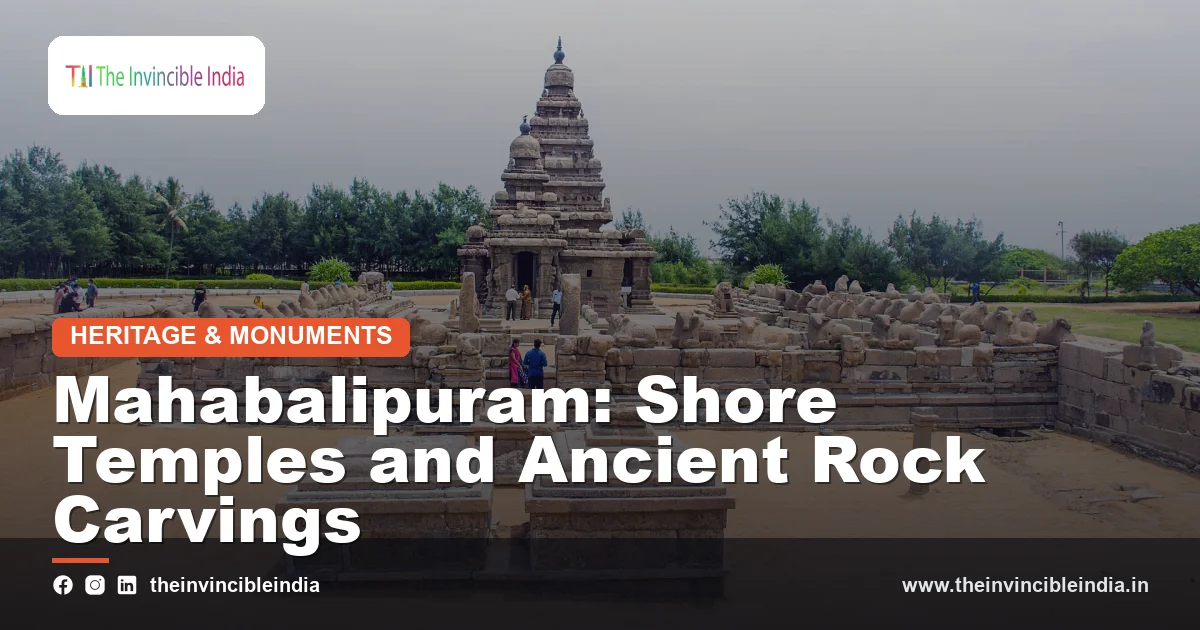
Mahabalipuram, also known as Mamallapuram, is a captivating coastal town in Tamil Nadu, celebrated the world over for its extraordinary rock-cut temples and sculptures carved more than 1,300 years ago. A UNESCO World Heritage Site, this ancient port city of the Pallava dynasty is an open-air museum of some of the finest stone artistry in India, set against the backdrop of the Bay of Bengal. From the iconic Shore Temple to the giant relief of Arjuna’s Penance and the monolithic Five Rathas, this guide explores the timeless wonders of Mahabalipuram.
Quick Facts: Mahabalipuram
| Detail | Information |
|---|---|
| Location | Tamil Nadu, near Chennai |
| Built by | The Pallava dynasty (7th–8th century CE) |
| Status | UNESCO World Heritage Site (1984) |
| Famous for | Rock-cut temples and monolithic sculptures |
| Iconic monument | The Shore Temple |
| Best time to visit | November to February |
The Shore Temple
The most iconic monument of Mahabalipuram is the Shore Temple, a magnificent structure standing majestically on the edge of the Bay of Bengal. Built in the early 8th century during the reign of the Pallava king Narasimhavarman II, it is one of the oldest freestanding stone temples in South India. Its elegant pyramidal towers, silhouetted against the sea and sky, have withstood centuries of wind and waves. Dedicated to both Shiva and Vishnu, the temple is especially beautiful at sunrise and sunset and remains a masterpiece of early Dravidian architecture.
Arjuna’s Penance: A Masterpiece in Stone
One of the greatest treasures of Mahabalipuram is the colossal open-air rock relief known as Arjuna’s Penance, or the Descent of the Ganges. Carved onto the face of two enormous adjacent boulders, this is one of the largest and most intricate rock reliefs in the world, measuring around 27 metres long and 9 metres high. It depicts a vast array of figures, gods, humans, celestial beings and beautifully rendered animals, including a family of life-sized elephants, in a scene of remarkable liveliness and detail that showcases the genius of the Pallava sculptors.
The Five Rathas and Cave Temples
Another highlight is the group of monolithic temples known as the Pancha Rathas, or Five Rathas, each carved from a single large rock in the shape of a chariot and named after the heroes of the Mahabharata epic. Remarkably, each ratha displays a different architectural style, making them an invaluable record of temple design. Mahabalipuram is also dotted with beautiful cave temples (mandapas) cut into the hillside, their interiors adorned with exquisite sculptural panels depicting scenes from Hindu mythology.
Krishna’s Butterball and the Town
Among the town’s many wonders is the famous Krishna’s Butterball, a gigantic natural boulder that balances precariously on a slope, seemingly defying gravity, and has done so for centuries, delighting visitors. Beyond its monuments, Mahabalipuram is a charming town with a lovely beach, a lively arts and stone-carving tradition that continues to this day, and plenty of cafes and shops. It makes an ideal day trip or weekend escape from nearby Chennai, combining history, art and seaside relaxation.
The Pallava Dynasty and Its Legacy
The wonders of Mahabalipuram are the legacy of the Pallava dynasty, which ruled much of southern India from the 4th to the 9th centuries CE and reached its cultural zenith in the 7th and 8th centuries. Great Pallava kings such as Mahendravarman I and Narasimhavarman I, known as Mamalla (from whom the town takes its name Mamallapuram), were enthusiastic patrons of art and architecture. Under their rule, Mahabalipuram flourished as a bustling seaport and a laboratory of artistic experimentation, where sculptors pioneered the techniques of rock-cut and monolithic architecture that would go on to influence temple building across South India and Southeast Asia for centuries to come.
The Evolution of Dravidian Architecture
Mahabalipuram is often described as a living museum of the evolution of Dravidian temple architecture. Here, in a single location, one can trace the development from the earliest cave temples (mandapas) carved into the hillside, to the monolithic rathas hewn from single boulders, and finally to the structural Shore Temple, built from cut and assembled stone. This progression illustrates the remarkable creativity and technical mastery of the Pallava artisans as they moved from carving into rock to constructing freestanding buildings. For students of art and architecture, Mahabalipuram offers an invaluable and fascinating record of this pivotal chapter in the history of Indian temple design.
Legends and the Seven Pagodas
Mahabalipuram is steeped in legend. European sailors long knew it as the “Seven Pagodas”, from a tradition that seven magnificent temples once stood along the shore, of which only the Shore Temple survives, the others said to have been claimed by the sea. This legend gained renewed attention after the 2004 tsunami, which briefly exposed what appeared to be submerged structures and sculptures offshore, lending some credence to the ancient tales. Whether myth or memory, these stories add an air of romance and mystery to the town, inviting visitors to imagine the full grandeur of the ancient port city as it once stood facing the Bay of Bengal.
The Living Craft of Stone Carving
The art that created Mahabalipuram’s monuments has never died. To this day, the town is a thriving centre of stone carving, and the sound of chisels on granite can be heard in workshops throughout its lanes. Skilled sculptors, many trained at the local government college of architecture and sculpture, continue to create magnificent statues of deities, decorative pieces and architectural elements, sold locally and exported around the world. Watching these craftsmen at work, using techniques little changed over the centuries, offers a moving connection to the ancient artisans and makes beautifully carved stonework one of the most special souvenirs a visitor can take home.
Planning Your Visit
The best time to visit Mahabalipuram is during the cooler months from November to February, when the coastal weather is pleasant for exploring the open-air monuments. The town is easily reached from Chennai, about 55 to 60 kilometres away, along the scenic East Coast Road, making it a popular day trip, though an overnight stay allows for a more relaxed experience and a chance to enjoy the beach and seafood. A single day is enough to see the main monuments, ideally with a knowledgeable guide to explain their history and symbolism. Comfortable footwear, sun protection and water are advisable for the walking involved among the sites.
The Beach and Coastal Charm
Beyond its magnificent monuments, Mahabalipuram is blessed with a lovely stretch of coastline along the Bay of Bengal. The beach, dotted with fishing boats and lined with seafood shacks and cafes, offers a relaxed and scenic escape after a day of sightseeing. Visitors can watch local fishermen at work, enjoy fresh catches of the day, and take in beautiful sunrises over the sea. The gentle, laid-back atmosphere of the town, combined with its ancient wonders and coastal setting, gives Mahabalipuram a special charm that appeals to history enthusiasts, art lovers and beachgoers alike.
Nearby Attractions
The area around Mahabalipuram offers several worthwhile excursions along the scenic East Coast Road. The Crocodile Bank, a renowned reptile conservation centre, is home to thousands of crocodiles, alligators and other reptiles, and is both educational and fascinating for families. The DakshinaChitra heritage museum showcases the art, architecture and crafts of South India through beautifully reconstructed traditional houses. Nearby Tiger Cave, an intriguing rock-cut shrine, and the temple town of Kanchipuram, one of the seven sacred cities of Hinduism and famous for its silk sarees, are also within easy reach, making the region rich in cultural and natural attractions.
The UNESCO World Heritage Status
The Group of Monuments at Mahabalipuram was inscribed as a UNESCO World Heritage Site in 1984, in recognition of its outstanding universal value as a masterpiece of Pallava art and architecture. This prestigious status has helped ensure the preservation and continued study of these remarkable monuments, which face challenges from weathering, erosion and the pressures of tourism. The Archaeological Survey of India works to protect and maintain the site, and visitors play their part by treating the ancient sculptures and structures with respect. As a globally recognised treasure, Mahabalipuram stands as a proud testament to India’s extraordinary artistic heritage.
Best Time to Visit and Getting There
The ideal time to visit Mahabalipuram is during the cooler, drier months from November to February, when the coastal climate is pleasant for exploring the open-air monuments and enjoying the beach. The summer months can be hot and humid, while the northeast monsoon brings rain around October and November. Mahabalipuram is easily reached from Chennai, about 55 to 60 kilometres to the north, via the scenic East Coast Road, with taxis, buses and organised tours readily available. The nearest airport and major railway station are in Chennai, making the town a convenient and popular day trip or weekend destination.
Why Visit Mahabalipuram
Mahabalipuram offers a rare and captivating blend of ancient artistry, living tradition and coastal charm. To wander among its 1,300-year-old rock-cut temples and sculptures, to marvel at the genius of the Pallava craftsmen, and to feel the sea breeze at the Shore Temple as the waves have for centuries, is a deeply moving experience. Combined with its thriving stone-carving workshops, its relaxed beach atmosphere, its delicious seafood and its proximity to Chennai and other South Indian attractions, Mahabalipuram is an unmissable destination for anyone interested in India’s extraordinary artistic and cultural heritage.
The Sound and Light Experience
To bring the ancient history of Mahabalipuram vividly to life, a sound-and-light show is presented, narrating the story of the Pallava dynasty and the creation of the monuments against the beautifully illuminated backdrop of the sculptures. This atmospheric experience, combined with the golden light of sunrise and sunset that bathes the Shore Temple and rock reliefs, allows visitors to appreciate the artistry of Mahabalipuram in a variety of moods and settings. Whether explored in the fresh light of early morning or admired in the glow of evening, the timeless monuments of this ancient port city never fail to inspire wonder and admiration.
A Timeless Treasure by the Sea
Mahabalipuram endures as one of India’s most remarkable cultural treasures, a place where the genius of ancient artisans lives on in stone beside the eternal rhythm of the sea. Whether you come for its UNESCO-listed monuments, its living craft traditions, its relaxed coastal charm or its rich connection to the glorious Pallava age, this ancient port town offers an experience of history and beauty that stays with every visitor long after they leave its shores.
Frequently Asked Questions
What is Mahabalipuram famous for?
Mahabalipuram is famous for its ancient rock-cut temples and sculptures from the Pallava era, including the Shore Temple, Arjuna’s Penance, the Five Rathas and the cave temples, together forming a UNESCO World Heritage Site.
Who built the monuments of Mahabalipuram?
The monuments were built by the Pallava dynasty during the 7th and 8th centuries CE, when Mahabalipuram was a thriving port city.
How far is Mahabalipuram from Chennai?
Mahabalipuram is about 55 to 60 kilometres south of Chennai, roughly a 1.5 to 2 hour drive along the scenic East Coast Road, making it a popular day trip.
What is Krishna’s Butterball?
Krishna’s Butterball is a giant natural boulder that appears to balance impossibly on a slope in Mahabalipuram, a famous and much-photographed natural wonder of the town.


