

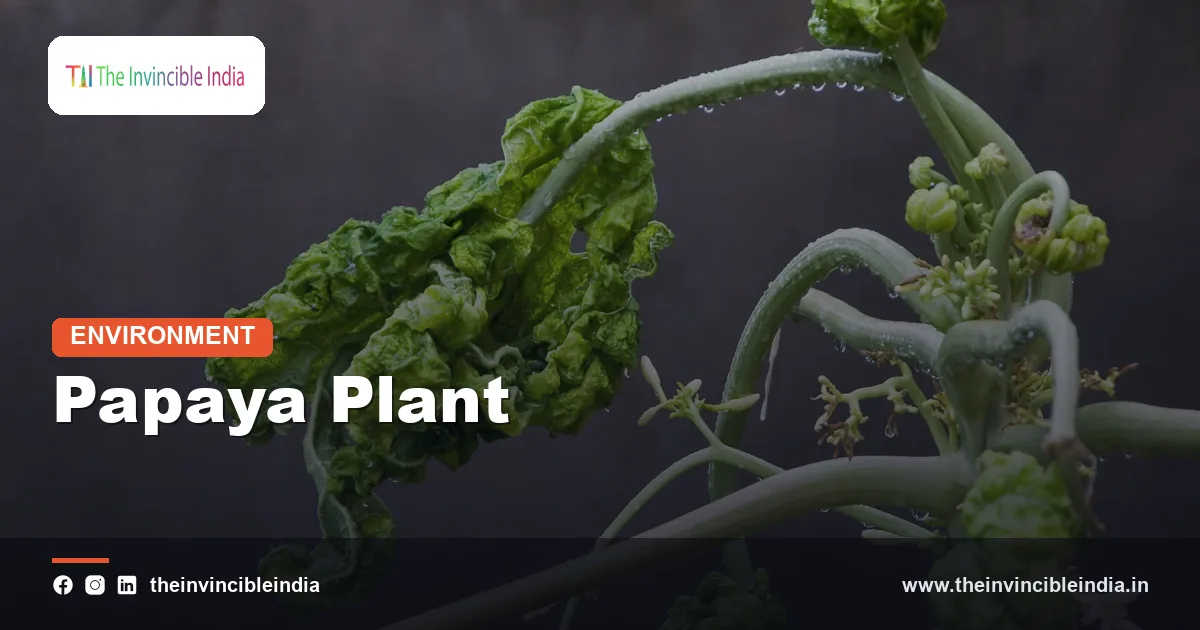
The papaya (Carica papaya), called papita in Hindi, is a fast-growing, single-stemmed tropical fruit plant that bears large, soft, orange-fleshed fruits almost throughout the year, and India is one of the world’s largest papaya producers. Although often described as a tree, the papaya is technically a giant herb with a soft, hollow, unbranched trunk, and it can flower within a few months of planting.
The papaya plant in India is grown on farms, in kitchen gardens and on roadsides across the warmer regions of the country. This explainer covers what the papaya plant is, where it came from, where it is grown, how it is cultivated, what papain is, how ripe and raw papaya are used, and which precautions apply.
Quick Facts
| Attribute | Details |
|---|---|
| Common names | Papaya, pawpaw; papita (Hindi), pappali (Tamil, Malayalam), boppayi (Telugu), parangi hannu (Kannada), popoi (Bengali) |
| Scientific name | Carica papaya |
| Plant family | Caricaceae |
| Origin | Southern Mexico and Central America; introduced to India by European traders, generally dated to the 16th century |
| Plant type | Fast-growing, soft-stemmed, usually unbranched plant, typically 2 to 5 metres tall |
| Time to first fruit | Roughly 9 to 12 months after planting |
| Commercial life of a plant | Typically two to three years, after which it is replanted |
| Main growing states | Andhra Pradesh, Gujarat, Karnataka, Maharashtra, Madhya Pradesh, Chhattisgarh and West Bengal |
| Notable product | Papain, a protein-digesting enzyme from the milky latex of raw fruit |
Key Takeaways
- The papaya (Carica papaya) is a fast-growing, soft-stemmed tropical plant from Central America that reached India roughly 500 years ago and is now grown widely across the country.
- Papaya plants in India begin fruiting about nine to twelve months after planting, and commercial plantations are usually replaced after two to three years.
- Papaya plants can be male, female or hermaphrodite, and growers prefer hermaphrodite or female plants because male plants do not produce good fruit.
- Papain, the enzyme extracted from the latex of raw papaya fruit, is used for tenderising meat, in the food and beverage industry and in some pharmaceutical products.
- Papaya ringspot virus is the most serious disease of papaya in India, and it is spread by aphids from plant to plant.
- Ripe papaya is eaten as a fruit, while raw green papaya is cooked as a vegetable, and raw papaya latex is traditionally avoided during pregnancy on medical advice.
What is the papaya plant?
The papaya plant is a fast-growing, tropical, soft-stemmed plant with a crown of large, deeply lobed leaves at the top of a straight, hollow trunk, and it produces large, juicy, melon-like fruits directly along the trunk. Botanists classify it as Carica papaya in the family Caricaceae, and it is not a true tree because the trunk contains no woody tissue.
The plant typically reaches two to five metres, with each leaf stalk up to a metre long. Fruits hang in clusters close to the trunk, beneath the leaf crown. Unripe fruit is green and firm, and it turns yellow to orange as it ripens, with a sweet, soft, musky flesh around a central cavity of small, round, black seeds.
Papaya is unusual because individual plants may carry different sexes. This affects which plants a grower keeps and shapes how seedlings are selected, as explained in a later section.
How did the papaya reach India?
The papaya reached India from tropical America through European maritime trade, with the introduction generally credited to the Portuguese in the 16th century. From coastal ports, the plant spread quickly because it grows from seed, fruits within a year and thrives in warm conditions.
Within a few generations, papaya became a familiar backyard plant in Indian villages and towns, and it acquired local names in nearly every language. Large-scale commercial cultivation, however, took off mainly in the 20th century, with the development of improved varieties and later hybrids by research institutions, and with the expansion of irrigation and urban markets.
Where is the papaya grown in India?
The papaya is grown across most of the warm, frost-free regions of India, with Andhra Pradesh, Gujarat, Karnataka, Maharashtra, Madhya Pradesh, Chhattisgarh and West Bengal among the major producing states. India is generally ranked among the top papaya-producing countries in the world.
Because papaya fruits throughout the year in tropical climates, production is spread across seasons, and supply is steady compared with seasonal fruits such as mango. Andhra Pradesh and Gujarat have large commercial plantations, and Maharashtra and Karnataka supply major urban markets. In the north and the cooler hills, the plant is limited by frost.
Exact production and area figures change annually and are published by the National Horticulture Board and the Ministry of Agriculture and Farmers’ Welfare, so readers who need current rankings should consult the latest official releases.
What climate and soil does the papaya plant need?
The papaya plant needs a warm, frost-free climate, plenty of sunlight and light, well-drained soil, and it is highly sensitive to waterlogging. Even a short period of standing water around the roots can kill a plant, so drainage matters more than any other soil factor.
- Temperature: Warm temperatures between roughly 21 and 33 degrees Celsius suit growth. Frost kills the plant, and prolonged cold slows fruit ripening and sweetness.
- Soil: Light, fertile, well-drained loam with a neutral to slightly acidic reaction is ideal. Heavy, wet clay is unsuitable.
- Water: Regular irrigation is needed for good fruit, but the soil must never remain waterlogged. Drip irrigation and raised beds are widely used.
- Wind: Strong winds can topple tall, shallow-rooted plants, so shelter belts or staking are helpful in exposed places.
How is the papaya cultivated?
Papaya is cultivated by raising seedlings in a nursery for about one to two months, transplanting them into well-prepared pits or raised beds at close spacing, and feeding and irrigating them regularly through the year. Fruiting begins in under a year, and plants are typically replaced after two to three years when yields and fruit quality decline.
Nursery and planting
Seeds are sown in polybags or nursery beds, and seedlings are transplanted when they are around 20 to 30 centimetres tall. A common spacing is about 1.8 to 2 metres between plants in each direction. Because the sex of a seedling cannot be known until flowering, growers plant two or three seedlings per pit and later remove extra plants.
Sex determination and thinning
Papaya varieties are either dioecious, with separate male and female plants, or gynodioecious, with female and hermaphrodite plants. Hermaphrodite plants are preferred for commercial orchards because they produce elongated, thicker-fleshed fruit and self-pollinate. Male plants are removed, except for a few kept for pollination in dioecious types.
Nutrition and care
Papaya is a heavy feeder. Regular application of organic manure and balanced fertilisers supports its fast growth and continuous fruiting. Mulching conserves moisture, and weeds are controlled around the shallow roots.
Harvest
Fruit is harvested when a streak of yellow appears on the green skin, or when it is fully yellow for local markets. Fruits are picked by hand or with a long pole and handled gently, because they bruise easily. A single healthy plant may yield a substantial quantity of fruit in a season, though yields vary widely with variety and care.
What are the main varieties of papaya in India?
The main varieties of papaya in India include Pusa Delicious, Pusa Dwarf, Pusa Majesty, Coorg Honey Dew, Co series types, Arka Surya, Arka Prabhat and the widely grown hybrid Red Lady (Taiwan 786). They differ in plant height, fruit size, flesh colour and sex type.
| Variety | Notable features |
|---|---|
| Pusa Delicious | Gynodioecious variety from the Indian Agricultural Research Institute (IARI); medium fruit with deep orange, aromatic flesh |
| Pusa Dwarf | A short, dioecious plant that bears fruit low on the stem, convenient for small gardens |
| Pusa Majesty | A gynodioecious variety noted for good keeping quality and some tolerance to nematodes |
| Coorg Honey Dew | A gynodioecious selection with sweet, orange-yellow flesh and an extended bearing period |
| Arka Surya and Arka Prabhat | Hybrids released by the Indian Institute of Horticultural Research (IIHR), Bengaluru, known for good fruit quality |
| Red Lady (Taiwan 786) | A popular hybrid with large, red-fleshed, sweet fruit, widely planted commercially |
Seed of hybrids must be bought afresh from reliable suppliers each season, because seed saved from hybrid fruit does not breed true. The choice of variety should follow local extension advice, market demand and virus pressure in the area.
What is papain and how is it obtained?
Papain is a protein-digesting enzyme found in the milky latex of the papaya plant, and it is collected by lightly scratching the skin of raw, green fruit while it is still on the plant. The white latex that oozes out is collected, dried and processed into a crude powder, which is then purified for different uses.
- Meat tenderising: Papain breaks down tough muscle proteins, which is why raw papaya paste is a traditional meat marinade in Indian kitchens.
- Food and beverage industry: Papain is used in some brewing, baking and protein-processing applications.
- Pharmaceutical and personal care products: Papain appears in some digestive preparations, wound-care products and cosmetics, and in laboratory work.
Latex is tapped from fruits that are about to be harvested for papain, and such fruits are usually of lower market quality, so papain production is mostly a specialised activity in selected areas such as parts of Gujarat and Tamil Nadu. India has been among the countries engaged in papain production.
What diseases and pests affect the papaya plant?
The most serious problem of the papaya plant in India is papaya ringspot virus (PRSV), a disease spread by aphids that causes ring-shaped marks on fruit, mottled leaves and stunted growth. Other major problems include papaya leaf curl virus, root and collar rot, mealybugs and mites.
- Papaya ringspot virus: No cure exists once a plant is infected. Control relies on growing seedlings under net cover, removing infected plants quickly, controlling aphids and, in some areas, avoiding continuous papaya cropping.
- Leaf curl: A virus spread by whiteflies, causing curled, thickened leaves and poor fruit set.
- Root and foot rot: Caused by water-loving fungi in waterlogged soil, and prevented by raised beds and good drainage.
- Mealybug and mites: Sap-sucking pests that weaken plants and are managed through monitoring and, where needed, targeted treatment.
Because of virus pressure, growers often rotate papaya with non-host crops and avoid planting new papaya near older, infected plantings.
How is papaya eaten and used in Indian kitchens?
Ripe papaya is eaten as a sweet fruit, while raw green papaya is cooked as a vegetable in curries, koftas, parathas and stir-fries, and both forms are everyday foods in India. The two stages of the fruit are used in very different ways.
| Stage | Common uses | Notes |
|---|---|---|
| Ripe papaya | Eaten fresh, in fruit salad, juices, smoothies and desserts | Soft, sweet, orange-fleshed fruit; seeds usually discarded |
| Raw green papaya | Cooked as sabzi, koftas, parathas, and grated into salads; used as a meat tenderiser | Contains latex and more papain |
| Dried or candied papaya (tutti-frutti) | Used in cakes, sweets and ice cream | Made by processing raw papaya pieces |
| Leaves and seeds | Leaves traditionally used in home remedies; seeds sometimes used as a peppery garnish | Evidence for medicinal use is limited |
Tutti-frutti, the coloured candied cubes common in bakeries, is traditionally made from raw papaya. The fruit is also used in the food-processing industry as pulp and in beverages.
Is papaya healthy, and what precautions apply?
Ripe papaya is a nutritious fruit that offers vitamin C, vitamin A precursors such as carotenoids, fibre and potassium, and it is commonly eaten as part of a balanced diet. The fruit is relatively low in calories for its volume, though it still contains natural sugars.
- Pregnancy: Raw or semi-ripe papaya, which has more latex, is traditionally avoided during pregnancy, and pregnant women should follow their doctor’s advice. Fully ripe papaya is generally eaten in moderation in many households, but medical guidance should be taken.
- Latex allergy: People with latex allergy may react to papaya, and the milky sap can irritate skin.
- Medicines: People on blood-thinning drugs or with thyroid or digestive conditions should ask a doctor about eating large amounts regularly.
- Papaya leaf juice and dengue: Papaya leaf extract is popularly discussed during dengue outbreaks, but evidence is limited and it is not a substitute for medical care. Anyone with suspected dengue should see a doctor.
Why does the papaya matter for Indian farmers?
The papaya matters because it is a quick-return fruit crop that begins to pay within a year, fruits through most of the year and supplies both fresh and processing markets. Farmers with irrigation can earn income far earlier than from slower orchard crops such as mango.
The crop also has risks. Its short plantation life, sensitivity to waterlogging and vulnerability to ringspot virus mean that returns can swing sharply. Price fluctuations are common because supply is continuous and fruit cannot be stored for long. Extension services therefore emphasise virus-free seedlings, drip irrigation, raised beds and market planning.
Bottom Line
The papaya is India’s fastest-bearing everyday fruit plant, valued as a ripe fruit, a cooked vegetable and the source of papain. It grows well across warm, irrigated regions but demands good drainage and constant vigilance against ringspot virus.
Frequently Asked Questions
What is papaya called in Hindi?
Papaya is called papita in Hindi. In English it is also known as pawpaw in some regions. The scientific name of the plant is Carica papaya.
Is the papaya a tree or a plant?
The papaya is technically a giant herbaceous plant, not a true tree. Its soft, hollow trunk contains no woody tissue. The plant is nevertheless commonly called the papaya tree in everyday speech.
How long does a papaya plant take to bear fruit?
A papaya plant usually bears its first fruit about nine to twelve months after planting. Fruiting then continues through the year in warm climates. Commercial plantations are generally replaced after two to three years.
What is papain?
Papain is a protein-digesting enzyme found in the milky latex of raw papaya fruit. It is collected by lightly scratching green fruit and drying the latex. Papain is used to tenderise meat and in some food, pharmaceutical and personal care products.
Can pregnant women eat papaya?
Pregnant women are traditionally advised to avoid raw or semi-ripe papaya because of its latex content. Fully ripe papaya is considered acceptable in moderation in many households. A doctor should always be consulted for personal advice.
What is the biggest disease of papaya in India?
Papaya ringspot virus is the biggest disease of papaya in India. Aphids spread it from plant to plant, and it causes ring-shaped marks on fruit, mottled leaves and stunted growth. There is no cure, so growers rely on virus-free seedlings, aphid control and quick removal of infected plants.
{“@context”:”https://schema.org”,”@graph”:[{“@type”:”FAQPage”,”mainEntity”:[{“@type”:”Question”,”name”:”What is papaya called in Hindi?”,”acceptedAnswer”:{“@type”:”Answer”,”text”:”Papaya is called papita in Hindi. In English it is also known as pawpaw in some regions. The scientific name of the plant is Carica papaya.”}},{“@type”:”Question”,”name”:”Is the papaya a tree or a plant?”,”acceptedAnswer”:{“@type”:”Answer”,”text”:”The papaya is technically a giant herbaceous plant, not a true tree. Its soft, hollow trunk contains no woody tissue. The plant is nevertheless commonly called the papaya tree in everyday speech.”}},{“@type”:”Question”,”name”:”How long does a papaya plant take to bear fruit?”,”acceptedAnswer”:{“@type”:”Answer”,”text”:”A papaya plant usually bears its first fruit about nine to twelve months after planting. Fruiting then continues through the year in warm climates. Commercial plantations are generally replaced after two to three years.”}},{“@type”:”Question”,”name”:”What is papain?”,”acceptedAnswer”:{“@type”:”Answer”,”text”:”Papain is a protein-digesting enzyme found in the milky latex of raw papaya fruit. It is collected by lightly scratching green fruit and drying the latex. Papain is used to tenderise meat and in some food, pharmaceutical and personal care products.”}},{“@type”:”Question”,”name”:”Can pregnant women eat papaya?”,”acceptedAnswer”:{“@type”:”Answer”,”text”:”Pregnant women are traditionally advised to avoid raw or semi-ripe papaya because of its latex content. Fully ripe papaya is considered acceptable in moderation in many households. A doctor should always be consulted for personal advice.”}},{“@type”:”Question”,”name”:”What is the biggest disease of papaya in India?”,”acceptedAnswer”:{“@type”:”Answer”,”text”:”Papaya ringspot virus is the biggest disease of papaya in India. Aphids spread it from plant to plant, and it causes ring-shaped marks on fruit, mottled leaves and stunted growth. There is no cure, so growers rely on virus-free seedlings, aphid control and quick removal of infected plants.”}}]}]}


