

Phalsa (Grewia asiatica), also spelt falsa and sometimes called the Indian sherbet berry, is a small, purple-black summer fruit of a hardy South Asian shrub that is best known for its sweet-sour taste and its use in cooling drinks. Phalsa berries ripen in the hottest months of the year, mostly from April to June, and are sold briefly in Indian markets because they spoil within a day or two of picking.
The phalsa is a quintessential seasonal fruit of north and central India. This explainer covers the plant, the berry, where and when it is grown, how phalsa sherbet is made, what the fruit contains, how the shrub is cultivated and why the fruit is so hard to find outside its season. It was last updated on 23 October 2026.
Quick Facts
| Scientific name | Grewia asiatica (also written as Grewia subinaequalis) |
|---|---|
| Family | Malvaceae (formerly placed in Tiliaceae, the linden family) |
| Common Indian names | Phalsa, falsa (Hindi, Gujarati, Marathi and others); English: Indian sherbet berry |
| Plant type and height | Bushy deciduous shrub or small tree, usually 2 to 5 metres tall |
| Fruiting season | Summer, mainly April to June, depending on region and pruning time |
| Native range | South Asia, including India, Pakistan, Bangladesh and Sri Lanka |
| Nutrition highlights | Vitamin C, anthocyanin pigments, calcium, phosphorus and iron in modest amounts |
| Main uses | Sherbet and squash, fresh eating with black salt, bark for clarifying sugarcane juice, fibre and fodder |
Key Takeaways
- Phalsa is the fruit of Grewia asiatica, a hardy shrub of the Malvaceae family that is native to South Asia and widely grown in northern and central India.
- The phalsa berry is small, round, about the size of a large pea, and turns from green to red to deep purple-black as it ripens, with a sweet and sour taste.
- Phalsa is a summer fruit that ripens between April and June, and its perishable berries must be sold and consumed within a day or two of picking.
- Phalsa sherbet, made by crushing the berries with sugar, black salt and ice water, is a traditional Indian summer cooler.
- Phalsa shrubs tolerate heat, drought and poor soil, and growers prune them hard in winter so that vigorous new shoots carry the summer crop.
- Phalsa berries provide vitamin C and purple anthocyanin pigments, but claims that the fruit prevents sunstroke or cures disease rest on folk belief, not on firm clinical evidence.
What is phalsa?
Phalsa is a small, tart-sweet berry produced by Grewia asiatica, a bushy shrub or small tree of the family Malvaceae. The fruit is about 1 centimetre across, with thin skin, juicy purple flesh and one or two hard seeds. It is eaten fresh or crushed into a cooling drink, and it is regarded across India as the taste of early summer.
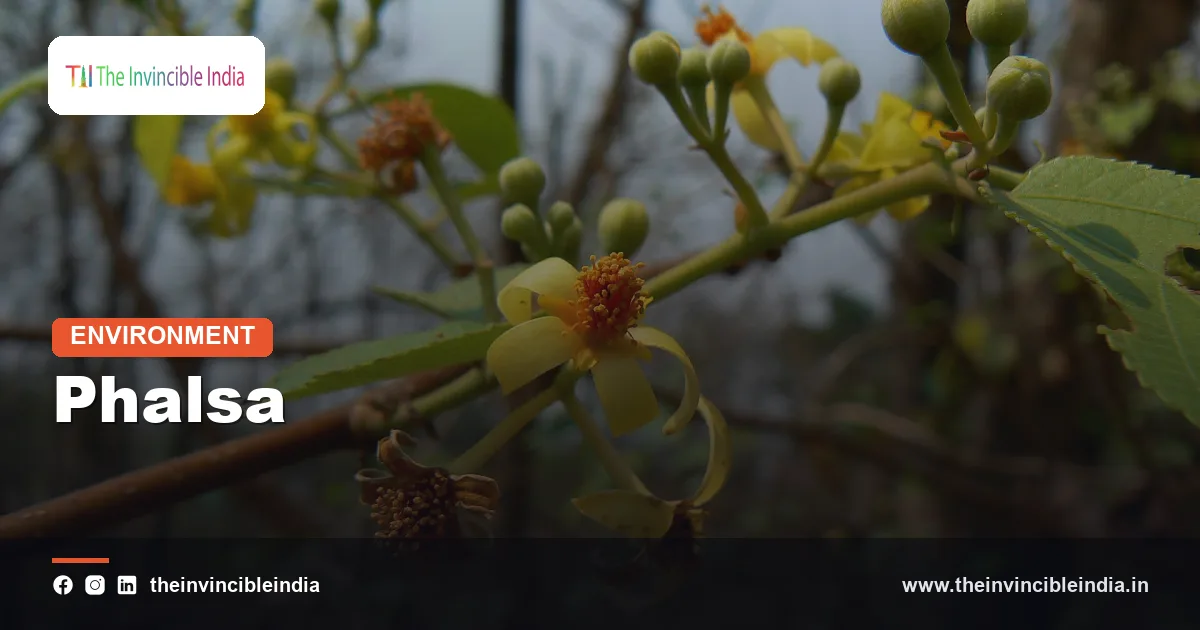
The shrub itself is unassuming. It has broad, rough, heart-shaped leaves with toothed margins, pale and slightly hairy on the underside, and clusters of small yellow flowers with spreading petals. Because the plant is cut down every year when grown for fruit, many people know it only as a short, leafy bush covered in small berries.
The genus Grewia contains many species found across Africa and Asia. In India, other Grewia species such as dhaman (Grewia tiliifolia) are valued for timber, but Grewia asiatica is the species grown for its fruit. In English, the berry is sometimes called the Indian sherbet berry because of its main use.
What does the phalsa plant look like?
The phalsa plant is a bushy, many-stemmed deciduous shrub or small tree, usually 2 to 5 metres tall, with spreading branches and rough, dull green leaves. The leaves are alternate, broadly oval to heart-shaped, and measure about 5 to 20 centimetres in length. They drop in the cooler months, leaving bare branches in winter.
The flowers are small, yellow and arranged in clusters in the angles of the leaves, and they open in spring, shortly before the fruit sets. Bees and other insects visit them. The fruit develops over several weeks and ripens in the heat, changing colour gradually. The green fruits are hard and sour, the reddish ones are tart, and the purple-black ones are the sweetest.
The plant’s bark is fibrous, and the stems are flexible. Rural communities have long used the bark, which is mucilaginous, to clarify sugarcane juice during jaggery making, and the fibre has been used for rope in some places.
Where and when is phalsa grown in India?
Phalsa is grown mainly in northern and central India, with notable cultivation in Uttar Pradesh, Punjab, Haryana, Rajasthan, Gujarat, Madhya Pradesh and Maharashtra. The shrub is well suited to the hot, dry plains where summer temperatures are high and winters are cool, and it is also found as a roadside or boundary plant in many districts.
The fruiting season is short. In most of north India the first berries ripen in April, the main picking occurs in May, and the season ends by June or early July. In slightly cooler locations the season may begin later. After the fruit is gone, the plant sheds its leaves and rests through the cooler months.
| Time of year | Activity on a phalsa farm |
|---|---|
| December to February | Plants are leafless; growers prune the shrubs hard, often back to a short framework near the ground |
| February to March | New shoots grow rapidly and flower buds form on the fresh growth |
| April to June | Fruit ripens; berries are picked every day or two and sent to market |
| July to November | Plants rest or grow vegetatively; light irrigation and weeding follow |
Commercial plantations are generally small and sit near cities, because the berries need to reach markets quickly. This is why phalsa is known mostly as a local, seasonal product rather than a national crop.
How is phalsa sherbet made?
Phalsa sherbet is made by crushing ripe berries, mixing them with sugar and a pinch of black salt (kala namak), and diluting the mixture with cold water and ice. The seeds and skins are strained out, leaving a deep purple-pink drink that is sweet, sharp and mildly salty. It is traditionally served chilled and is a favourite remedy for the heat of the Indian summer.
A simple home method
- Wash fresh, fully ripe phalsa berries and drain them.
- Crush or lightly mash them with sugar and a pinch of black salt, and leave the mixture for a short time to release the juice.
- Add cold water, stir well and strain through a sieve, pressing the pulp.
- Add ice, a squeeze of lemon and, if liked, a pinch of roasted cumin or a mint leaf before serving.
Commercial squash and syrup can be made by cooking the pulp with sugar, but these processed forms lose part of the fresh fragrance. Some people also freeze the pulp so that they can enjoy phalsa drinks outside the short season.
How is phalsa eaten apart from sherbet?
Phalsa is eaten fresh, as a juice, in chaat-style snacks, and in simple preserves and desserts. Street vendors commonly sell the berries in small paper cones, tossed with black salt, chilli powder or a pinch of roasted cumin. This combination of sweet, sour, salty and spicy flavours is the quintessential street-food treat of the Indian summer.
- Fresh with spices: tossed in black salt and chaat masala for a sharp, savoury snack.
- Juice and squash: bottled or homemade, with a deep purple colour.
- Ice lollies and sorbet: the tartness works well in frozen desserts.
- Jam and syrup: sweetened and preserved so that the flavour lasts beyond the summer.
- Milkshakes and mocktails: blended with yoghurt, milk or soda in modern cafes.
The seeds are small and hard but edible, though they are usually strained out of drinks. Because the skin is thin, the berry breaks easily, so careful handling matters from the field to the plate.
What is the nutritional value of phalsa?
Phalsa berries are a source of vitamin C, anthocyanin pigments and small amounts of minerals including calcium, phosphorus and iron. The deep purple colour comes from anthocyanins, the same class of plant pigments found in other dark berries. The fruit is also rich in water, which is why it is felt to be cooling and hydrating on a hot day.
Exact nutrient figures differ between sources and depend on ripeness, variety and soil, so they are best treated as approximate. As a small fruit eaten in modest quantities, phalsa makes a limited contribution to total daily nutrition, though it adds flavour and variety to the summer diet.
Phalsa has a long reputation in Indian folk tradition as a fruit that protects against the heat, and Ayurvedic writers describe the ripe fruit as cooling and the unripe fruit as astringent. Some laboratory studies have found antioxidant activity in the berries and leaves. These findings are preliminary. Phalsa should be seen as a refreshing seasonal food and not as a treatment for sunstroke, anaemia or any other condition.
How is phalsa cultivated?
Phalsa is cultivated by planting seedlings or cuttings in spring or at the start of the rains and then pruning the plants hard each winter so that vigorous new shoots bear the fruit. The crop flowers and fruits on the current season’s growth, which is why pruning is the most important management task. Without pruning, the plant becomes tall and tangled and fruits poorly.
- Climate and soil: hot summers and cool winters suit the shrub, which grows in many soil types, including poor, dry and slightly saline ground.
- Propagation: by seed or by cuttings; growers choose selections with larger, sweeter fruit when possible.
- Pruning: in winter, branches are cut back to a short stub or a low framework, and the new shoots then carry the crop.
- Water and nutrients: light irrigation during flowering and fruit growth, along with manure or compost, improves yield.
- Harvest: berries ripen unevenly, so pickers visit the bushes every day or two and handpick the dark fruit.
The shrub is relatively free of serious pests and diseases, though leaf-eating insects and birds may take some of the crop. A low input requirement and quick return make it attractive to smallholders, who can harvest within about a year of planting.
Why is phalsa so difficult to find outside the season?
Phalsa is hard to find outside its short summer season because the berries are extremely perishable, bruise easily and cannot be stored or transported far without losing quality. A ripe berry begins to deteriorate within a day, and refrigeration only extends its life by a short time. For this reason phalsa has not become a national or export fruit in the way that mango or banana has.
Some methods extend its availability: freezing the pulp, making bottled squash or syrup, and drying the fruit lightly. Researchers and horticulture institutes have also explored better varieties, careful packing and cold-chain handling to carry phalsa to more markets. Until such measures are widespread, the fruit will remain strongly tied to the season and to the places where it grows.
Because the fruit is so local, the arrival of the first phalsa vendors is often seen as a marker of summer in north Indian towns, along with the return of mangoes, lychees and watermelons.
What is the cultural place of phalsa in Indian summers?
Phalsa holds a modest but affectionate place in Indian summer culture as a street-side cooler associated with heat, school holidays and roadside stalls. In many north Indian towns, vendors set out baskets of purple berries beside crushed ice, and a glass of phalsa sherbet is a familiar way to cool off in the afternoon. The fruit is rarely a festival food, but it is closely tied to memories of the season.
The fruit also appears in the broader tradition of home-made summer drinks that includes aam panna, sattu sherbet, jaljeera, bael sherbet and kokum sharbat. Each of these is based on a local seasonal ingredient, a cooling or souring agent, and a pinch of salt or spice. Phalsa fits neatly into this pattern, and its deep colour makes it one of the most striking drinks of the group.
For smallholders, phalsa is also a practical cash crop. It needs little land, begins to bear quickly, and sells at the roadside or in local markets without elaborate packaging. In towns near phalsa-growing areas, the berries can fetch good prices in the short weeks of peak season, even though the crop is never very large in national terms.
How can the berries be chosen and stored?
- Choose berries that are deep purple to almost black, plump and glossy; red berries are usually still tart.
- Avoid fruit that looks wrinkled, leaky or sticky, because it has already begun to ferment.
- Use the berries on the day of purchase if possible.
- If storage is needed, keep them unwashed in a shallow container in the refrigerator for a day, and wash just before use.
- For longer keeping, crush with sugar and freeze the pulp in small portions.
Bottom Line
Phalsa is a small, tangy, purple berry that captures the taste of an Indian summer, best known as the key ingredient in a cooling sherbet. It is a hardy shrub, easy to grow and quick to fruit, but its fragile berries mean that it remains a short, seasonal local treat.
Frequently Asked Questions
What is phalsa called in English?
Phalsa is often called the Indian sherbet berry in English, and its scientific name is Grewia asiatica. In Hindi and many other Indian languages it is called phalsa or falsa. The plant belongs to the family Malvaceae.
When is phalsa in season?
Phalsa is in season from April to June, with the peak of picking in May in most of north India. The berries ripen in the summer heat and the season ends by early July. Outside this window fresh phalsa is rarely available.
What does phalsa taste like?
Phalsa tastes sweet and sour at the same time, with a slightly tangy, berry-like flavour. Fully ripe purple-black fruit is the sweetest, while red or green berries are much more tart. It is usually enjoyed with a pinch of black salt, which sharpens the flavour.
How do you make phalsa sherbet?
You make phalsa sherbet by crushing ripe berries with sugar and a pinch of black salt, adding cold water, straining out the seeds and skins, and serving over ice. A little lemon juice, roasted cumin or mint can be added for extra flavour. It is best drunk fresh on the same day.
Is phalsa good for health?
Phalsa provides vitamin C, anthocyanin pigments, fibre and some minerals, so it can be a refreshing part of a balanced summer diet. Traditional beliefs that it prevents heatstroke or treats disease are not backed by strong clinical evidence. People with medical conditions should rely on their doctors and treat the fruit as food.
Why does phalsa spoil so quickly?
Phalsa spoils quickly because its berries have very thin skin and soft, juicy flesh that bruise and ferment within a day or two of picking. Heat speeds up the deterioration. This is why the fruit is sold locally and rarely transported far, and why it is often turned into squash or syrup.
{“@context”:”https://schema.org”,”@graph”:[{“@type”:”FAQPage”,”mainEntity”:[{“@type”:”Question”,”name”:”What is phalsa called in English?”,”acceptedAnswer”:{“@type”:”Answer”,”text”:”Phalsa is often called the Indian sherbet berry in English, and its scientific name is Grewia asiatica. In Hindi and many other Indian languages it is called phalsa or falsa. The plant belongs to the family Malvaceae.”}},{“@type”:”Question”,”name”:”When is phalsa in season?”,”acceptedAnswer”:{“@type”:”Answer”,”text”:”Phalsa is in season from April to June, with the peak of picking in May in most of north India. The berries ripen in the summer heat and the season ends by early July. Outside this window fresh phalsa is rarely available.”}},{“@type”:”Question”,”name”:”What does phalsa taste like?”,”acceptedAnswer”:{“@type”:”Answer”,”text”:”Phalsa tastes sweet and sour at the same time, with a slightly tangy, berry-like flavour. Fully ripe purple-black fruit is the sweetest, while red or green berries are much more tart. It is usually enjoyed with a pinch of black salt, which sharpens the flavour.”}},{“@type”:”Question”,”name”:”How do you make phalsa sherbet?”,”acceptedAnswer”:{“@type”:”Answer”,”text”:”You make phalsa sherbet by crushing ripe berries with sugar and a pinch of black salt, adding cold water, straining out the seeds and skins, and serving over ice. A little lemon juice, roasted cumin or mint can be added for extra flavour. It is best drunk fresh on the same day.”}},{“@type”:”Question”,”name”:”Is phalsa good for health?”,”acceptedAnswer”:{“@type”:”Answer”,”text”:”Phalsa provides vitamin C, anthocyanin pigments, fibre and some minerals, so it can be a refreshing part of a balanced summer diet. Traditional beliefs that it prevents heatstroke or treats disease are not backed by strong clinical evidence. People with medical conditions should rely on their doctors and treat the fruit as food.”}},{“@type”:”Question”,”name”:”Why does phalsa spoil so quickly?”,”acceptedAnswer”:{“@type”:”Answer”,”text”:”Phalsa spoils quickly because its berries have very thin skin and soft, juicy flesh that bruise and ferment within a day or two of picking. Heat speeds up the deterioration. This is why the fruit is sold locally and rarely transported far, and why it is often turned into squash or syrup.”}}]}]}


