

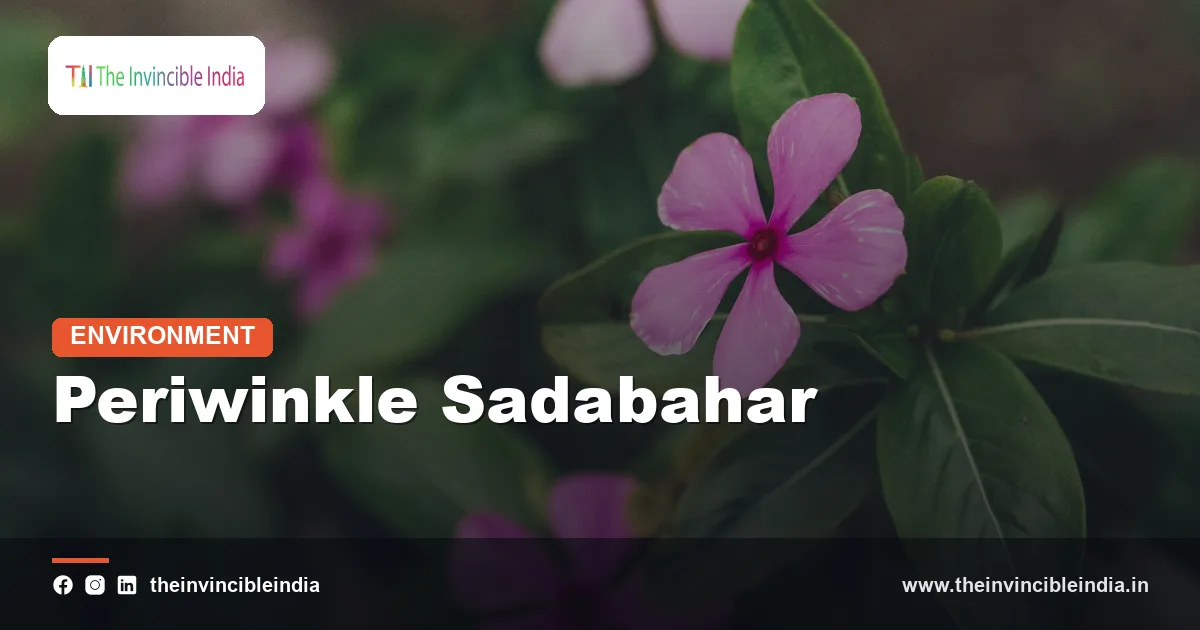
The periwinkle (Catharanthus roseus), known in India as sadabahar, is a small, evergreen, flowering plant with glossy leaves and pink, white or mauve blooms that appear almost every month of the year, and it is also the natural source of the anti-cancer drugs vinblastine and vincristine. Native to the island of Madagascar, the periwinkle has spread through the tropics and is now one of the commonest bedding and pot plants in Indian gardens, roadside plots and balconies.
The Hindi name sadabahar means “always in spring”, a reference to the plant’s habit of flowering through summer heat, monsoon rain and mild winter alike. This article explains what the periwinkle is, how it grows, why its alkaloids matter to medicine, how it is used in India and how to handle it safely.
Quick Facts
| Scientific name | Catharanthus roseus (formerly Vinca rosea) |
|---|---|
| Family | Apocynaceae (the dogbane family) |
| Common Indian names | Sadabahar, sadaphuli, nayantara, nithyakalyani (Tamil), ushamalari (Malayalam) |
| Origin | Madagascar; now naturalised across tropical and subtropical regions worldwide |
| Where grown in India | Nearly all states, in home gardens, pots, borders, roadsides and as a medicinal crop in some areas |
| Flowering season | Almost all year in warm regions; peak in summer and the rainy season |
| Main uses | Ornamental bedding plant, ground cover, source of anti-cancer alkaloids, and subject of traditional folk use |
| Key medicinal compounds | Vinblastine and vincristine (anti-cancer), ajmalicine (used in circulatory medicine) |
| Notable facts | Roughly 130 alkaloids reported; the plant is toxic if eaten raw and should not be used for self-treatment |
Key Takeaways
- Periwinkle, called sadabahar in Hindi, is an evergreen herb of the Apocynaceae family whose scientific name is Catharanthus roseus.
- The periwinkle is native to Madagascar and is grown in India as a hardy ornamental that flowers throughout the year.
- The anti-cancer drugs vinblastine and vincristine were developed from alkaloids found in the leaves of the periwinkle during the 1950s and 1960s.
- Vinblastine and vincristine act by interfering with the cell structures that divide chromosomes, which stops rapidly dividing cancer cells from multiplying.
- The periwinkle contains many alkaloids, and eating or brewing the plant at home can cause serious harm, so it must not be used as a self-prepared remedy.
- Periwinkle thrives in sun, heat and poor soil, needs little water, and reseeds itself freely in Indian gardens.
What is the periwinkle and what does sadabahar mean?
The periwinkle is a short-lived perennial herb or small shrub, usually 30 to 90 centimetres tall, with glossy dark green oval leaves and flat, five-petalled flowers in white, pink or magenta, often with a contrasting eye. Sadabahar is the Hindi name and means “evergreen” or “always in bloom”, and it is also called sadaphuli in Marathi and nayantara in Bengali, among many other regional names.
Botanists now place the plant in the genus Catharanthus, a small group with eight species. Seven of them are found only in Madagascar, while one, Catharanthus pusillus, occurs in India and Sri Lanka. The common garden plant was earlier called Vinca rosea, and many older books and plant labels still use that name. The true Vinca genus, such as the lesser periwinkle (Vinca minor), is a different group of trailing plants from Europe.
The flowers of the garden periwinkle are followed by pairs of slim, cylindrical pods, each containing numerous small dark seeds. Because the plants self-seed readily, new seedlings often appear in pavement cracks, plant pots and neighbouring flower beds.
Where does the periwinkle come from and how did it reach India?
The periwinkle comes from Madagascar, the large island off the south-east coast of Africa, and it reached India and other tropical regions through plant exchange, garden cultivation and natural spread. Colonial-era botanical gardens and trade networks carried the plant widely across Asia, the Caribbean and the Pacific.
In Madagascar’s wild habitat, the plant has been reported as threatened because forests and dry thickets have been cleared, even though it flourishes in cultivation almost everywhere else. The contrast is striking: a plant that is a weed in some countries faces pressure in its original home. Botanists and conservationists point to it as a reason for protecting the genetic diversity of wild plant populations that might hold useful compounds.
In India the periwinkle has found a comfortable home in the warm plains, coastal belts and lower hills. It escapes from gardens easily and grows on wasteland, railway embankments and roadsides, where it is often regarded as a common wild flower.
Why is the periwinkle important in medicine?
The periwinkle is important in medicine because its leaves contain vinblastine and vincristine, two alkaloids that became landmark anti-cancer drugs and are still used in chemotherapy. They were among the first plant-derived drugs shown to be effective against cancer and helped establish natural products as a source of modern medicines.
Research on the plant began after reports that people in several countries used periwinkle leaf tea as a folk remedy for diabetes. Scientists in Canada, led by Robert Noble and Charles Beer, and independent researchers at the pharmaceutical company Eli Lilly in the United States, found that extracts of the plant lowered white blood cell counts in animals. This led to the isolation of vinblastine in the late 1950s and vincristine soon after, and both drugs entered clinical use in the early 1960s.
What vinblastine and vincristine treat
Vinblastine is used in treating Hodgkin lymphoma and certain testicular and other cancers, while vincristine is an important part of treatment regimens for childhood leukaemia and some lymphomas and solid tumours. The drugs are given by trained specialists in hospitals, usually as part of combination therapy, and not in the form of plant extracts.
How the alkaloids work
Vinblastine and vincristine bind to a protein called tubulin and prevent the formation of the microtubules that pull chromosomes apart during cell division. Cancer cells divide rapidly, so they are particularly vulnerable to this effect, but healthy fast-dividing tissues such as bone marrow can also be affected, which explains many side effects of these drugs.
Why the drugs are costly to produce
The leaves contain only tiny amounts of the two key alkaloids, so a very large quantity of plant material is needed to obtain a small amount of the pure drug. This low yield has driven research into improved plant varieties, semi-synthetic production from more abundant precursors, and the engineering of yeast and other organisms to make the compounds.
Which other useful compounds does the periwinkle contain?
The periwinkle contains well over a hundred alkaloids, and besides vinblastine and vincristine the best known are ajmalicine, serpentine, vindoline and catharanthine. These compounds are concentrated in different parts of the plant and have different biological effects.
| Compound | Main plant part | Significance |
|---|---|---|
| Vinblastine | Leaves | Anti-cancer drug; used in treating Hodgkin lymphoma and some other cancers |
| Vincristine | Leaves | Anti-cancer drug; used in treating childhood leukaemia and some lymphomas |
| Vindoline and catharanthine | Leaves | Precursor molecules that are chemically joined to make vinblastine and related drugs |
| Ajmalicine | Roots | Used in medicines related to blood circulation and blood pressure |
| Serpentine | Roots | Alkaloid studied for its effects on the cardiovascular system |
Because the roots and leaves carry different compounds, farms that grow the periwinkle for the pharmaceutical market harvest it according to the product they are targeting. Indian institutes such as the Central Institute of Medicinal and Aromatic Plants (CIMAP) in Lucknow have studied the plant and its cultivation as part of wider work on medicinal species.
How is the periwinkle used in India?
The periwinkle is used in India mainly as an ornamental plant, secondarily as a medicinal crop for pharmaceutical supply, and traditionally as a folk remedy. For most people it is simply the cheerful flower growing in a pot beside the door.
Ornamental use
Gardeners plant the periwinkle in beds, borders, rockeries, hanging baskets and pots because it flowers continuously and tolerates heat, drought and poor soil. Cultivars come in white, pale pink, rose, deep magenta and bicolour forms, and many have a darker eye. Compact bedding types are widely sold by nurseries in city flower shows and weekend markets.
Commercial and research cultivation
In several Indian states, farmers have grown the periwinkle under contract for companies that extract alkaloids. Interest in such cultivation rises and falls with market demand, and the crop is generally grown by smallholders alongside other medicinal and aromatic plants.
Traditional and folk use
In different parts of India and elsewhere, people have used preparations of the plant for conditions such as diabetes, wounds and sore throats, and the flowers appear in some local traditions. Such uses are not backed by sufficient clinical evidence, and the plant’s strong alkaloids make home preparation risky. Doctors warn that leaf extracts can damage the liver and blood cells and that dose cannot be controlled at home.
How do you grow and care for the periwinkle?
The periwinkle is grown from seed or cuttings in a sunny position with well-drained soil, and it needs little watering, feeding or maintenance once established. It is among the easiest flowering plants for beginners.
- Sunlight: Full sun to light shade; at least four to six hours of sun produce the most flowers.
- Soil: Light, sandy or loamy and well drained; the plant dislikes soggy conditions.
- Watering: Moderate; allow the top soil to dry between waterings, and avoid overwatering during the monsoon.
- Feeding: A light dose of balanced fertiliser every month or two is enough.
- Propagation: Seeds germinate readily in warmth, and stem cuttings root easily in sand or water.
- Pruning: Pinching tips of young plants makes them bushier and increases the flower count.
Common problems
The plant’s main enemies are waterlogging, which causes root and stem rot, and fungal leaf spots in very humid weather. Caterpillars of the oleander hawk-moth (Daphnis nerii) sometimes feed on the leaves, and aphids or mealybugs can appear on soft growth. Good drainage, space between plants and hand-picking of caterpillars usually keep problems small.
Is the periwinkle poisonous and can it be used as a home remedy?
The periwinkle is poisonous if eaten or brewed in significant amounts, and it should not be used as a home remedy, because its alkaloids can harm the blood, nerves, liver and digestive system. The same potency that makes vinblastine and vincristine effective against cancer when given under medical supervision makes unsupervised use dangerous.
- Eating leaves or flowers can cause stomach upset, dizziness and other symptoms in humans and animals.
- Pets and livestock that eat large amounts can be seriously affected.
- Making teas or extracts from garden plants cannot give a safe or consistent dose.
- Handling the plant is generally low risk for most people, but washing hands after pruning is sensible.
- Cancer treatment depends on carefully measured, purified drugs, and leaf preparations are not a substitute for treatment prescribed by an oncologist.
Anyone who has swallowed a significant quantity of the plant, or who has a child or pet that has done so, should contact a doctor, veterinarian or poison information centre.
What is the difference between sadabahar and the true Vinca?
Sadabahar (Catharanthus roseus) differs from true Vinca plants such as the lesser periwinkle (Vinca minor) in its upright growth, its tropical origin and its flowers with a flat face and a small, tubular throat. The two groups are related, belong to the same family, and were once classified together, which is why both are called periwinkle in English.
- Catharanthus roseus (sadabahar): Native to Madagascar, upright and bushy, grows in heat, flowers most of the year in the tropics.
- Vinca minor and Vinca major: Native to Europe and nearby areas, trailing and creeping, mainly cool-climate ground covers with blue-violet flowers.
Because the vinca name persists in the phrase “vinca alkaloids”, people sometimes assume the drugs come from the European plant. They come from Catharanthus roseus, though the drug names preserve the older genus name.
Why has the periwinkle become so common in Indian gardens?
The periwinkle has become common in Indian gardens because it is inexpensive, grows fast, flowers continuously and survives heat, drought and neglect better than most ornamentals. Nurseries sell it in very small pots at low prices, and the plant seeds itself so freely that many households receive it without ever buying it.
Its continuous colour makes it useful for border planting at the edges of lawns, along pathways and in school and municipal gardens. The compact types do well in containers on terraces and balconies where space is limited. Gardeners who want a tidy look usually replace tired plants every year or two, since older stems become leggy and flowering declines.
In some warm regions outside India the periwinkle is classed as a weedy species that can spread beyond gardens. Indian gardeners who live near natural habitats are therefore advised to deadhead flowers before pods ripen and to avoid dumping garden waste in forest edges.
Bottom Line
The periwinkle, or sadabahar, is a humble ever-blooming garden flower that also led to some of the most important cancer drugs of the twentieth century. It is easy to grow and brings reliable colour to Indian gardens, but its powerful alkaloids make it a plant to enjoy rather than eat.
Frequently Asked Questions
What is sadabahar called in English?
Sadabahar is called periwinkle in English, and its scientific name is Catharanthus roseus. It is also known as Madagascar periwinkle, rosy periwinkle or vinca, and older books may call it Vinca rosea.
Which cancer drugs come from the periwinkle?
Vinblastine and vincristine come from the periwinkle plant. Vinblastine is used against Hodgkin lymphoma and some other cancers, while vincristine is used in treating childhood leukaemia and certain lymphomas, and both are given in hospitals as purified, measured drugs.
Is the periwinkle plant poisonous?
Yes, the periwinkle is poisonous if eaten or brewed in large amounts because it contains many strong alkaloids. It should not be used as a homemade remedy, and anyone who has swallowed a significant quantity should seek medical advice.
Where does the periwinkle come from?
The periwinkle comes from Madagascar, an island off the south-east coast of Africa. It was carried to India and other tropical countries through plant exchange and garden cultivation and now grows almost everywhere that is warm.
Does sadabahar flower throughout the year?
Sadabahar flowers almost throughout the year in warm parts of India, which is why its name means “always in bloom”. Flowering is heaviest in summer and the rainy season and may slow during cooler winter months in the north.
Can the periwinkle be grown in pots?
Yes, the periwinkle grows well in pots, hanging baskets and balcony planters when it gets several hours of sun and good drainage. Water it only when the top soil is dry, pinch the tips for bushier growth and replace old plants every year or two for the best flowering.
{“@context”:”https://schema.org”,”@graph”:[{“@type”:”FAQPage”,”mainEntity”:[{“@type”:”Question”,”name”:”What is sadabahar called in English?”,”acceptedAnswer”:{“@type”:”Answer”,”text”:”Sadabahar is called periwinkle in English, and its scientific name is Catharanthus roseus. It is also known as Madagascar periwinkle, rosy periwinkle or vinca, and older books may call it Vinca rosea.”}},{“@type”:”Question”,”name”:”Which cancer drugs come from the periwinkle?”,”acceptedAnswer”:{“@type”:”Answer”,”text”:”Vinblastine and vincristine come from the periwinkle plant. Vinblastine is used against Hodgkin lymphoma and some other cancers, while vincristine is used in treating childhood leukaemia and certain lymphomas, and both are given in hospitals as purified, measured drugs.”}},{“@type”:”Question”,”name”:”Is the periwinkle plant poisonous?”,”acceptedAnswer”:{“@type”:”Answer”,”text”:”Yes, the periwinkle is poisonous if eaten or brewed in large amounts because it contains many strong alkaloids. It should not be used as a homemade remedy, and anyone who has swallowed a significant quantity should seek medical advice.”}},{“@type”:”Question”,”name”:”Where does the periwinkle come from?”,”acceptedAnswer”:{“@type”:”Answer”,”text”:”The periwinkle comes from Madagascar, an island off the south-east coast of Africa. It was carried to India and other tropical countries through plant exchange and garden cultivation and now grows almost everywhere that is warm.”}},{“@type”:”Question”,”name”:”Does sadabahar flower throughout the year?”,”acceptedAnswer”:{“@type”:”Answer”,”text”:”Sadabahar flowers almost throughout the year in warm parts of India, which is why its name means “always in bloom”. Flowering is heaviest in summer and the rainy season and may slow during cooler winter months in the north.”}},{“@type”:”Question”,”name”:”Can the periwinkle be grown in pots?”,”acceptedAnswer”:{“@type”:”Answer”,”text”:”Yes, the periwinkle grows well in pots, hanging baskets and balcony planters when it gets several hours of sun and good drainage. Water it only when the top soil is dry, pinch the tips for bushier growth and replace old plants every year or two for the best flowering.”}}]}]}


