

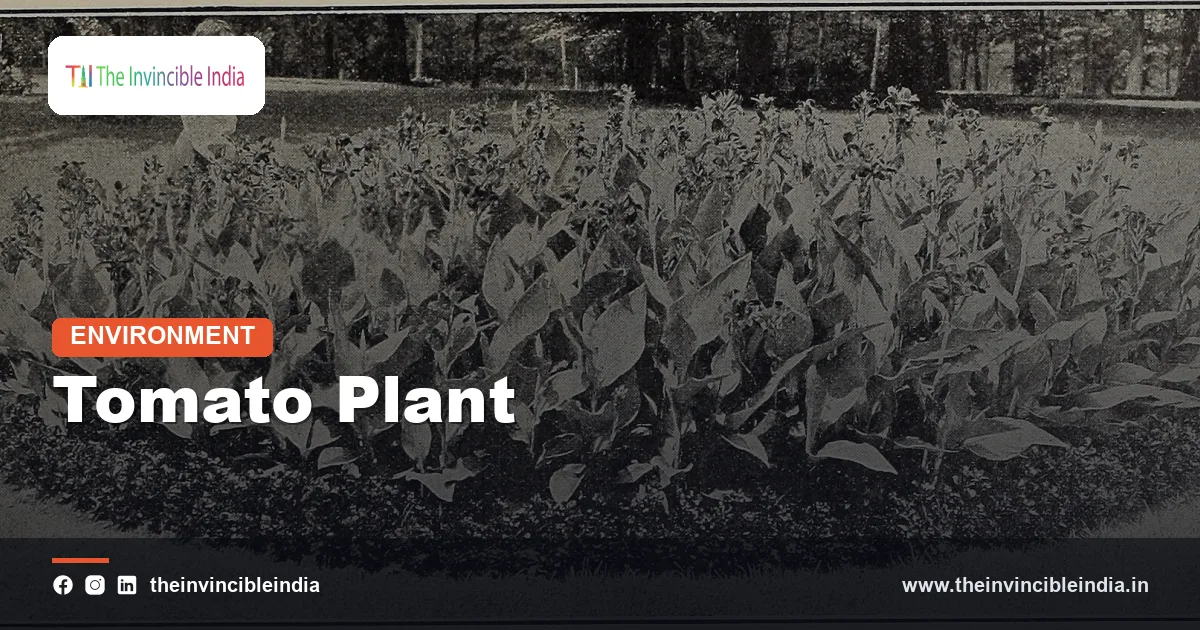
The tomato plant (Solanum lycopersicum) is a warm-season herbaceous plant of the nightshade family, Solanaceae, grown across India for its juicy red fruit, which is botanically a berry but used in the kitchen as a vegetable. The tomato plant is a native of western South America and was brought to India by European traders several centuries ago. Today the fruit is a base for curries, chutneys, soups, sauces and salads in nearly every Indian region.
This explainer describes what the tomato plant is, how it grows and flowers, how it is cultivated in India, which states produce the most, why tomato prices swing so sharply, and how the fruit is used. Facts here are stable botanical and agricultural points, and any figures on output or price are given only as qualified, approximate statements.
| Quick Facts: Tomato Plant | |
|---|---|
| Common names | Tomato plant; tamatar (Hindi) |
| Scientific name | Solanum lycopersicum (formerly Lycopersicon esculentum) |
| Family | Solanaceae, the nightshade family, which also includes potato, brinjal and chilli |
| Origin | Western South America; first domesticated in Mexico and Central America |
| Where grown in India | Andhra Pradesh, Karnataka, Madhya Pradesh, Gujarat, Odisha, West Bengal, Maharashtra, Chhattisgarh and Bihar, among others |
| Season | Grown in several seasons across regions: winter in the plains, and rainy and summer crops in the hills and south |
| Part used | The ripe or green fruit (a berry) |
| Importance | One of India’s major vegetable crops, central to home cooking and a bellwether of food-price inflation |
Key Takeaways
- The tomato plant, Solanum lycopersicum, is a nightshade-family herb whose fruit is botanically a berry but is treated as a vegetable in Indian cooking.
- The tomato plant originated in western South America, was domesticated in Mexico and Central America, and reached India through European traders after the sixteenth century.
- India ranks among the world’s largest tomato producers, and states such as Andhra Pradesh, Karnataka and Madhya Pradesh are among the leading growers in most years.
- A tomato plant grows best at moderate temperatures of about 20 to 27 degrees Celsius, and very high heat, frost or heavy rain can sharply reduce flowering and fruit set.
- Tomato prices in India often rise and fall steeply because the fruit is highly perishable, cannot be stored for long and is sensitive to weather disruptions.
- Leaf curl virus carried by whiteflies, late blight, bacterial wilt and the fruit borer are among the most common threats to the Indian tomato crop.
What Is the Tomato Plant?
The tomato plant is a soft-stemmed, sprawling or climbing herb that is grown as an annual for its fleshy fruit, and it belongs to the same genus, Solanum, as the potato and the brinjal. In the wild its relatives are perennial in warm climates, but in farms and gardens it is treated as a one-season crop that is sown, harvested and replaced.
Botanists call the tomato a fruit, and more precisely a berry, because it develops from the ovary of a flower and contains seeds inside a fleshy wall. In everyday language, and in markets and kitchens, it is a vegetable because it is eaten in savoury dishes rather than as a dessert. Both descriptions are correct, and neither contradicts the other.
The plant has hairy, strongly scented stems and compound leaves with toothed leaflets. All green parts, including the stem and leaves, contain bitter alkaloids and are not eaten. Yellow, star-shaped flowers appear in clusters and develop into fruit that turn from green to red, yellow, orange or other colours as they ripen.
Where Did the Tomato Plant Come From?
The tomato plant came from the Andean region of western South America, where small-fruited wild forms still grow, and it was domesticated into larger-fruited types in Mexico and Central America long before European contact. Spanish explorers carried tomato seeds to Europe in the sixteenth century, from where the plant travelled to Asia.
The crop reached India by way of Portuguese and later British traders. For a long time it remained a minor garden plant, and wide adoption in Indian cooking came gradually, mainly in the nineteenth and twentieth centuries. Today it is hard to picture a north Indian gravy, a south Indian rasam or a Gujarati chutney without it, which shows how thoroughly a foreign plant has been absorbed into local food.
Modern cultivated tomatoes have been bred for many traits, including firmness for transport, resistance to disease, uniform ripening and shelf life. Public institutions such as the ICAR-Indian Institute of Horticultural Research (IIHR) in Bengaluru and the Indian Agricultural Research Institute (IARI) in New Delhi, as well as private seed companies, have released a large number of varieties and hybrids for Indian conditions.
How Does a Tomato Plant Grow and Fruit?
A tomato plant grows from a seed to a flowering plant in about six to eight weeks and produces ripe fruit roughly two to three months after transplanting, depending on the variety and the season. Seedlings are first raised in a nursery bed or tray and then moved to the field when they are about four to five weeks old.
Growth habit divides varieties into two main types. Determinate tomato varieties grow to a limited height, flower and set fruit over a short period and are often grown for processing or for a single large picking. Indeterminate varieties keep growing and flowering as long as conditions allow, and they are usually staked or trained on strings, giving harvests over many weeks. Many Indian hybrids are semi-determinate or indeterminate and are grown under staking.
The tomato flower is self-fertile and is pollinated mostly by wind and by vibration, a process in which bees such as bumblebees shake the pollen free, though in open Indian fields shaking by wind and handling is often sufficient. Temperature has a large effect on fruit set. When night temperatures stay too high, or the day temperature goes above roughly 35 degrees Celsius, pollen becomes less viable and many flowers drop without forming fruit.
Fruit colour changes through stages called mature green, breaker, turning, pink and red. The red pigment is lycopene, which forms best at moderate temperatures and is less efficiently produced in strong heat, which is why fruit ripened in very hot weather may be yellowish-red.
| Growth type | Habit | Typical use in India |
|---|---|---|
| Determinate | Bush-like; stops growing at a set height; fruits ripen in a short window | Processing, open-field cultivation, concentrated harvest |
| Semi-determinate | Intermediate height; moderate staking | Hybrids for fresh market |
| Indeterminate | Vining; continues growing and fruiting; needs staking | Fresh market, polyhouse and protected cultivation |
Where Is the Tomato Plant Grown in India?
The tomato plant is grown in almost every Indian state, and the leading producers in most years include Andhra Pradesh, Karnataka, Madhya Pradesh, Gujarat, Odisha, West Bengal, Maharashtra and Chhattisgarh. Because tomatoes can be grown in several seasons, different regions supply the markets at different times of the year.
In southern India, districts such as Kolar in Karnataka and Chittoor in Andhra Pradesh are well known for large tomato markets that supply other states. In the north, the main crop is grown in the winter and early spring, while the hills of Himachal Pradesh and Uttarakhand supply fruit in summer and the rainy season, when the plains are too hot or wet for good production.
Production figures vary from year to year. India typically harvests many millions of tonnes of tomatoes annually, and it is among the top few producing countries, along with China. The country’s consumption is high and mostly domestic, although some processed products and fresh fruit are exported in small quantities.
How Is the Tomato Plant Cultivated?
The tomato plant is cultivated by raising seedlings in a nursery, transplanting them into well-prepared, well-drained fertile soil, supporting them with stakes, and providing regular irrigation and nutrition until the harvest period. Sandy loam and loam soils rich in organic matter, with a neutral to slightly acidic reaction, are the best.
Nursery and transplanting
Seeds are sown in raised nursery beds or in plug trays filled with a soilless medium such as coco peat. Seedlings are hardened for a few days before being transplanted to the main field at spacing that depends on the growth type. Many commercial growers now buy seedlings from specialised nurseries to improve uniformity and reduce early disease.
Staking, irrigation and nutrition
Staking keeps the fruit off the ground, improves air flow and reduces rot. Irrigation must be regular, because uneven watering causes cracking of fruit and blossom end rot, a calcium-related disorder that makes a dark, sunken patch at the base of the fruit. Drip irrigation with fertigation is increasingly popular, as it saves water and delivers nutrients directly to the roots.
Protected cultivation
Polyhouses and net houses allow tomatoes to be grown through seasons that would otherwise be unsuitable, and they reduce the effect of rain and some pests. They require higher investment and technical skill, so they are used mainly by commercial growers near cities.
- Choose varieties suited to the season and local diseases.
- Raise healthy seedlings in clean media and transplant at four to five weeks.
- Stake or train indeterminate types to improve fruit quality.
- Maintain even soil moisture to avoid cracking and blossom end rot.
- Rotate with non-solanaceous crops to cut soil-borne disease.
What Diseases and Pests Affect the Tomato Plant?
The tomato plant is affected by viral, fungal and bacterial diseases and by several insect pests, and the most serious in India include tomato leaf curl virus, early and late blight, bacterial wilt, fruit borer and, in recent years, the tomato leafminer Tuta absoluta. Because tomato shares its family with potato and brinjal, some of these problems also affect those crops.
Tomato leaf curl virus is spread by the whitefly, Bemisia tabaci, and causes upward curling and yellowing of leaves, stunted plants and little fruit. Control depends on resistant hybrids, healthy seedlings protected under nets, and management of whitefly populations. Early blight shows up as dark rings on older leaves, while late blight, caused by Phytophthora infestans, spreads in cool, humid weather and can destroy a crop quickly.
Bacterial wilt, caused by Ralstonia solanacearum, makes plants wilt suddenly even when the soil is moist, and it persists in the soil for years. Grafting onto resistant rootstock and crop rotation are among the control options. The fruit borer, the caterpillar of Helicoverpa armigera, bores into green fruit, while Tuta absoluta, a leafminer reported in India in the 2010s, mines leaves and fruit.
Agricultural extension services recommend integrated pest management, which combines resistant varieties, field hygiene, yellow sticky traps, pheromone traps, biological agents and selective, need-based spraying. Following the label and the recommended waiting period before harvest is important for food safety.
Why Do Tomato Prices Swing So Sharply?
Tomato prices swing sharply because the fruit is highly perishable, has a short shelf life, is grown in clusters of regions and is very sensitive to weather, so even small changes in supply can cause large changes in price. A glut at harvest can push wholesale prices below the cost of production, while a pest outbreak, heatwave or heavy rain can reduce supply and push prices up several-fold within weeks.
Several features of the tomato market produce these swings. Farmers tend to plant more after a season of high prices, which leads to oversupply the next season. The crop cannot be held for long without processing or cold chain facilities, so farmers must sell soon after picking. Demand, on the other hand, is steady, because tomatoes are an everyday ingredient that households do not easily substitute.
Because tomato is a heavily weighted vegetable in household budgets, price spikes are often reported in news and affect measures of food inflation. Policy responses discussed in this area include better cold storage and transport, more processing capacity for pulp, ketchup and puree, and crop advisories to farmers. The exact price movements change every year, so they are best checked against current market data.
How Is the Tomato Used and What Does It Contain?
The tomato is used fresh in salads and sandwiches, cooked in curries, gravies, soups and chutneys, and processed into puree, paste, ketchup, sauce and dried powder. In Indian kitchens it supplies a mild sourness and colour to dishes such as dal, sambar, rasam, butter chicken and paneer gravies, and raw green tomatoes are also cooked or pickled in some regions.
Nutritionally, the tomato is mostly water, with small amounts of vitamin C, potassium, vitamin K and folate, and it is the best-known dietary source of lycopene, a red carotenoid pigment. Cooking and the addition of a little oil improve the body’s absorption of lycopene, which is why cooked tomato products are considered a good source.
- Fresh eating: salads, raita, sandwiches and garnishes.
- Cooking: gravies, dals, soups, rasam and chutneys.
- Processing: ketchup, puree, paste, sauce and sun-dried products.
- Home gardens: cherry and small-fruited types in pots and terraces.
Household gardeners also grow tomato plants in pots, grow bags and kitchen gardens. Cherry types and compact determinate varieties do well in containers, provided the pot is large enough, gets several hours of direct sunlight and is watered consistently.
What Is the Future of Tomato Growing in India?
The future of tomato growing in India depends on heat-tolerant and disease-resistant varieties, better post-harvest handling and wider processing capacity, because climate variability and market volatility are the main risks to growers. Rising temperatures can shorten the window for good fruit set, and rainfall extremes can damage crops or spread disease.
Plant breeders are working on hybrids that tolerate heat, resist leaf curl virus and bacterial wilt, and keep better after harvest. Wider use of drip irrigation, protected cultivation, grading and cold chains is expected to reduce losses. Farmer producer organisations and contract arrangements with processors are also being used to link growers to more stable markets.
Bottom Line
The tomato plant is a warm-season nightshade crop of American origin that has become one of the most widely grown vegetables in India. Its fruit is a botanical berry used as a vegetable, and its cultivation is shaped by temperature, disease management and perishability. Understanding these features explains why tomato output and prices change so quickly from season to season.
Frequently Asked Questions
What is a tomato plant?
A tomato plant is a herbaceous annual of the species Solanum lycopersicum grown for its juicy fruit. The fruit is botanically a berry, but cooks and markets treat it as a vegetable. The plant belongs to the nightshade family along with potato, brinjal and chilli.
Is the tomato a fruit or a vegetable?
The tomato is botanically a fruit, specifically a berry, because it develops from a flower’s ovary and holds seeds. In cooking and trade it is called a vegetable because it is used in savoury dishes. Both descriptions are accepted, depending on the context.
Which Indian states grow the most tomatoes?
Andhra Pradesh, Karnataka and Madhya Pradesh are usually among the leading tomato-producing states, followed by Gujarat, Odisha, West Bengal, Maharashtra and Chhattisgarh. Rankings change from year to year with weather and prices. Regions such as Kolar and Chittoor are known for large tomato markets.
What temperature does a tomato plant need?
A tomato plant grows best at moderate temperatures of about 20 to 27 degrees Celsius. Flower and fruit set suffer when day temperatures rise above roughly 35 degrees Celsius or nights stay very warm. Frost can kill the plant, so it is not grown in freezing conditions.
Why are tomato prices so volatile in India?
Tomato prices are volatile because the fruit is perishable and cannot be stored for long, while supply depends heavily on weather and disease. A small shortfall can lift prices sharply and a glut can crash them. Limited cold storage and processing capacity add to the swings.
How long does a tomato plant take to fruit?
A tomato plant usually begins to flower about three to four weeks after transplanting and gives ripe fruit roughly two to three months after transplanting. The exact time depends on the variety and the season. Indeterminate varieties continue to fruit for several weeks after the first harvest.
{“@context”:”https://schema.org”,”@graph”:[{“@type”:”FAQPage”,”mainEntity”:[{“@type”:”Question”,”name”:”What is a tomato plant?”,”acceptedAnswer”:{“@type”:”Answer”,”text”:”A tomato plant is a herbaceous annual of the species Solanum lycopersicum grown for its juicy fruit. The fruit is botanically a berry, but cooks and markets treat it as a vegetable. The plant belongs to the nightshade family along with potato, brinjal and chilli.”}},{“@type”:”Question”,”name”:”Is the tomato a fruit or a vegetable?”,”acceptedAnswer”:{“@type”:”Answer”,”text”:”The tomato is botanically a fruit, specifically a berry, because it develops from a flower’s ovary and holds seeds. In cooking and trade it is called a vegetable because it is used in savoury dishes. Both descriptions are accepted, depending on the context.”}},{“@type”:”Question”,”name”:”Which Indian states grow the most tomatoes?”,”acceptedAnswer”:{“@type”:”Answer”,”text”:”Andhra Pradesh, Karnataka and Madhya Pradesh are usually among the leading tomato-producing states, followed by Gujarat, Odisha, West Bengal, Maharashtra and Chhattisgarh. Rankings change from year to year with weather and prices. Regions such as Kolar and Chittoor are known for large tomato markets.”}},{“@type”:”Question”,”name”:”What temperature does a tomato plant need?”,”acceptedAnswer”:{“@type”:”Answer”,”text”:”A tomato plant grows best at moderate temperatures of about 20 to 27 degrees Celsius. Flower and fruit set suffer when day temperatures rise above roughly 35 degrees Celsius or nights stay very warm. Frost can kill the plant, so it is not grown in freezing conditions.”}},{“@type”:”Question”,”name”:”Why are tomato prices so volatile in India?”,”acceptedAnswer”:{“@type”:”Answer”,”text”:”Tomato prices are volatile because the fruit is perishable and cannot be stored for long, while supply depends heavily on weather and disease. A small shortfall can lift prices sharply and a glut can crash them. Limited cold storage and processing capacity add to the swings.”}},{“@type”:”Question”,”name”:”How long does a tomato plant take to fruit?”,”acceptedAnswer”:{“@type”:”Answer”,”text”:”A tomato plant usually begins to flower about three to four weeks after transplanting and gives ripe fruit roughly two to three months after transplanting. The exact time depends on the variety and the season. Indeterminate varieties continue to fruit for several weeks after the first harvest.”}}]}]}


