

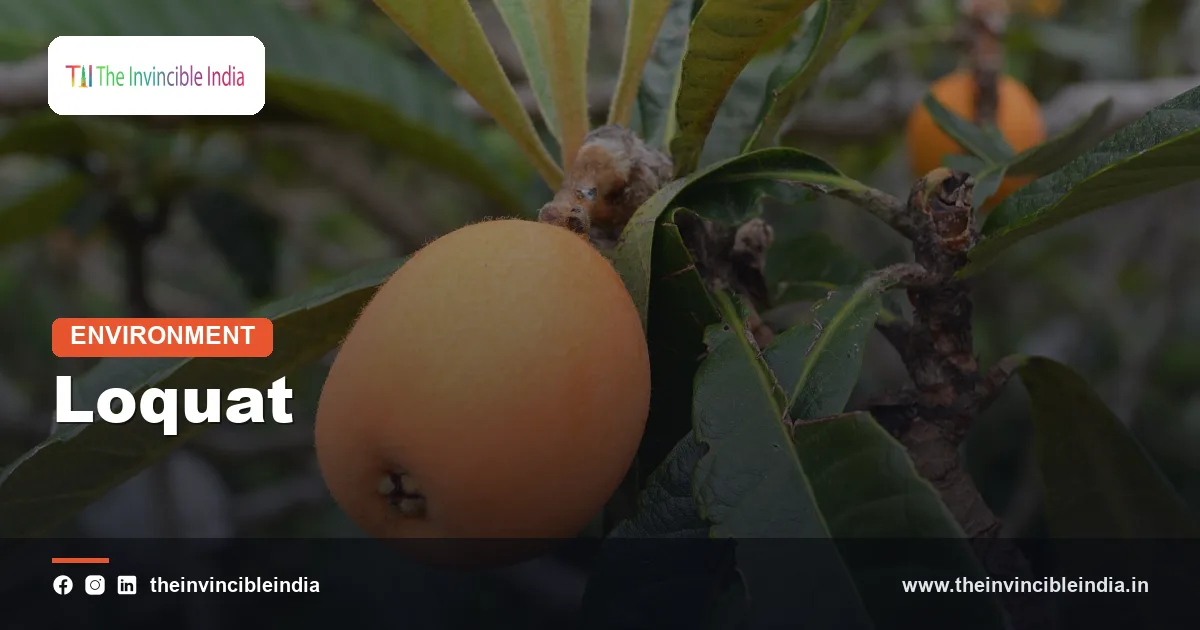
The loquat (Eriobotrya japonica), known in Hindi and Urdu as lokat, is a small evergreen fruit tree of the rose family whose sweet-tart, orange-yellow fruits ripen in spring and are grown in the Indian hills, foothills and subtropical plains. Although the tree is native to south-eastern China, it has been cultivated in India for well over a century and now grows in orchards, gardens and roadside plots, mostly in the north.
The loquat is a minor fruit in India, with no large market and no national industry, but it is well known to people who live in the hills and the northern plains. It is one of the first fresh fruits to arrive after winter, at a time when few other tree fruits are in season. This article explains what the loquat is, where it grows, how the tree behaves through the year, how the fruit is eaten and what cautions apply. It was last reviewed on 30 October 2026.
| Attribute | Detail |
|---|---|
| Scientific name | Eriobotrya japonica |
| Family | Rosaceae (the rose family, which also includes apple, pear and plum) |
| Other names | Lokat (Hindi and Urdu), Japanese plum, Japanese medlar, biwa |
| Where grown in India | Himalayan foothills and hills of Himachal Pradesh, Uttarakhand and Jammu and Kashmir, the Punjab plains, Uttar Pradesh, and scattered plantings in the north-east and the southern hills |
| Season | Flowers in autumn and early winter; fruit ripens in spring, roughly March to May |
| Fruit | Round to pear-shaped, 3 to 5 cm, orange-yellow with a thin downy skin, juicy flesh and one to several large brown seeds |
| Uses | Eaten fresh, and made into jam, jelly, chutney, syrup and wine |
| Notable facts | Native to China; related to the apple; seeds are not edible; fruit does not ripen after picking |
Key Takeaways
- The loquat (Eriobotrya japonica) is an evergreen fruit tree of the rose family, Rosaceae, native to south-eastern China and grown in India as a minor spring fruit.
- The loquat ripens its small, orange-yellow, sweet-tart fruit in spring, usually between March and May in India, after flowering in the preceding autumn and winter.
- The loquat is cultivated mainly in the foothills and hills of north India and in parts of the subtropical plains, where winters are mild.
- The loquat fruit is eaten fresh or made into jam, jelly, chutney and syrup, but its large seeds should not be eaten because they contain a natural cyanide-producing compound.
- The loquat is closely related to the apple and the pear, and its large, leathery, deeply veined leaves make it a handsome shade tree.
- The loquat fruit is delicate and does not ripen after picking, so it is usually sold locally and is seldom transported over long distances.
What is a loquat?
A loquat is the fruit of Eriobotrya japonica, a small evergreen tree in the rose family that produces clusters of sweet, slightly tangy, orange-yellow fruits in spring. Despite the name “Japanese plum” used in some countries, the loquat is not a plum, and despite the species name “japonica”, it did not originate in Japan. Botanists consider south-eastern China to be its home, and it was carried to Japan, where it has been grown for centuries.
The loquat belongs to the same plant family as the apple, the pear, the quince, the plum, the rose and the strawberry. Within the family it sits in the apple tribe, which explains why the fruit has a core with seeds somewhat like a small pear. The flesh is fleshy and juicy rather than mealy, and the flavour is a mix of apricot, mild citrus and a gentle sweetness.
The common name “loquat” comes from the Cantonese words for “rush orange”. In India the fruit is usually called lokat. It is often grown from seed as a garden tree, which gives trees of varying quality, while named grafted varieties are more common in orchards.
What does a loquat tree look like?
A loquat tree is a small to medium evergreen tree, usually 5 to 10 metres tall, with a rounded, dense crown and large, glossy, dark green leaves. Each leaf is long, stiff and deeply veined with toothed edges, and the underside is covered with a rusty, woolly down that gives the tree a distinctive two-toned look.
The flowers appear in autumn and early winter, in stiff, hairy clusters at the tips of the branches. Each flower is small, white and fragrant, and the scent carries on cool evenings. Bees visit the flowers, since little else is in bloom at that time of the year. The fruits develop through winter and early spring and ripen in bunches, which makes the tree easy to recognise in season.
Features of the fruit
- Shape: round, oval or pear-shaped, usually 3 to 5 cm long.
- Skin: thin, slightly fuzzy and yellow to orange, which peels away easily.
- Flesh: juicy, white to orange, and sweet with a light tartness.
- Seeds: one to five large, glossy brown seeds in the centre.
Where is the loquat grown in India?
The loquat is grown in India mainly in the foothills and lower hills of the north, including parts of Himachal Pradesh, Uttarakhand, Jammu and Kashmir and the Punjab and Uttar Pradesh plains, where the climate is mild enough for the tree to survive winters. Smaller plantings and home trees are found in the north-eastern states and in the cooler hills of the south.
The tree prefers a subtropical to mild temperate climate with a cool winter and a warm, dry spring. It cannot tolerate heavy frost at flowering time, because cold damages the blossoms and young fruit. It also performs poorly in very hot, humid lowlands. Because of these limits, the loquat is concentrated in sub-Himalayan belts and in well-drained garden soils at moderate elevations.
The loquat is mostly a household and local-market fruit. In the northern hills it is sold by the roadside in spring, in small baskets or on the branch. Large commercial orchards are rare, and statistics for the loquat are usually folded into the category of minor fruits, so exact acreage is hard to quote.
When is the loquat in season?
The loquat is in season in India from about March to May, depending on altitude and region. In the warmer plains the fruit can ripen as early as March, while in the higher hills it may extend into May or even later, because the fruit takes longer to mature in cooler places.
The flowering-to-fruiting cycle is unusual for a fruit tree, as the tree blooms in the cool months and fruits just before summer. In the northern plains the flowers open from October to December, and the fruit sets slowly through the winter. A warm spell in spring brings the fruit to ripeness within a few weeks.
Fruit ripens in a short window and is often picked in bunches. The fruit does not continue to ripen after it is picked, so growers wait until the skin is fully coloured and the fruit is slightly soft before harvesting. Ripe loquats keep for only a few days, even in a cool place, which is one reason why the fruit is rarely sold far from where it is grown.
How is the loquat eaten and used?
The loquat is eaten mainly as a fresh fruit, and it is also used in jams, jellies, chutneys, stewed desserts, syrups and fermented drinks. To eat it fresh, a person peels off the thin skin, bites into the flesh and discards the seeds and the thin membrane around them.
Common uses
- Fresh: eaten out of hand or added to fruit salads, curds and chaats.
- Preserves: cooked into jam or jelly, often with extra sugar or lemon juice because the fruit is mildly acidic.
- Chutney: cooked with spices, sugar and vinegar to make a sweet and tangy side dish.
- Syrup and drinks: made into cordials, squashes and, in some places, wine.
- Baking: used in tarts, pies and sauces, where it behaves a little like an apricot.
In East Asia the leaves of the loquat tree have also been used in traditional herbal teas and syrups, particularly in Chinese and Japanese practice. These are traditional uses and should not be taken as medical advice, and the leaves are not a common food in India.
Is the loquat healthy, and are the seeds safe?
The loquat flesh is a light, low-calorie fruit that supplies water, natural sugars, dietary fibre, potassium and carotenoid pigments, which give the orange-fleshed fruit its colour. It is a modest source of vitamins and minerals rather than a concentrated one, and it fits comfortably into a varied diet of fruits and vegetables.
The seeds of the loquat are not safe to eat. Like the seeds of apples, apricots and peaches, loquat seeds contain amygdalin, a compound that can release hydrogen cyanide when the seed is crushed or chewed. Crushing or chewing the seeds is dangerous, so the seeds should always be spat out or discarded, and children should be told not to bite them.
A few people are allergic to loquat or to related fruits in the rose family, and the woolly hairs on the leaves and young shoots can irritate the skin. Anyone with a known allergy to apples, pears or stone fruits should be cautious.
How is the loquat tree grown?
The loquat tree is grown from seed, from grafted saplings or, in some cases, from cuttings, and it does best in a sunny spot with deep, well-drained soil and moderate watering. A tree raised from seed may begin to fruit in five to eight years and produces fruit of variable quality, while a grafted tree usually fruits earlier and produces fruit that is true to the parent variety.
Growers usually follow a few basic practices:
- Plant in a sheltered, sunny site with protection from cold winds and frost.
- Choose a soil that drains well, as waterlogging causes root rot.
- Prune lightly after harvest to keep the crown open and the tree to a manageable height.
- Thin the fruit clusters in winter to get larger fruit and prevent the branches from breaking.
- Protect the ripening fruit from birds, which are fond of the sweet flesh, and from fruit flies.
Some named varieties have been grown in India, including types known as Golden Yellow and Pale Yellow. These differ in fruit size, colour and sweetness. The loquat is a fairly hardy and undemanding tree once established, which makes it a good choice for hill gardens and home orchards.
How is the loquat different from similar fruits?
The loquat differs from the other small, orange fruits that appear in Indian markets in being a relative of the apple, in having large seeds and in ripening in spring. The comparison below shows how it differs from some fruits that are sometimes mistaken for it.
| Fruit | Family | Season in India | Key features |
|---|---|---|---|
| Loquat | Rosaceae | Spring (March to May) | Fuzzy orange skin, large brown seeds, sweet-tart juicy flesh |
| Apricot | Rosaceae | Early summer | One large stone, velvety skin, softer and sweeter flesh |
| Plum | Rosaceae | Late spring to summer | Smooth skin, one stone, juicy and often tart |
| Lychee | Sapindaceae | Summer (May to June) | Rough red shell, translucent white flesh, one glossy seed |
| Kumquat | Rutaceae | Winter | Small citrus, eaten whole with the skin |
In taste, the loquat is often described as lying between a peach, a mild citrus and an apricot. It does not taste like a plum, despite its alternative name, and it is less sour than a kumquat.
Why is the loquat a useful tree?
The loquat is a useful tree because it provides early-season fruit, flowers that feed bees in winter, dense evergreen shade and an attractive ornamental form with large glossy leaves. In a garden, it fills a gap in the fruit calendar, since few trees fruit between winter and the first summer fruits.
The tree is also valuable to wildlife. Birds, bats and other animals eat the ripe fruit, and the winter flowers support honeybees and other insects at a time when few other plants are in bloom. In some other countries, loquats have escaped from gardens and spread in the wild because animals disperse the seeds, which shows how easily the tree grows from seed.
In India the tree is not considered invasive. Its main challenge is that its fruit is too delicate and seasonal to compete with larger commercial fruits, so it survives mostly as a garden and homestead species rather than as a field crop.
Bottom Line
The loquat is a small, glossy evergreen tree whose orange, sweet-tart fruit marks the arrival of spring in the Indian hills and northern plains. It is a minor fruit that is best eaten fresh and close to where it is grown, and its seeds should never be eaten. For a home garden in a mild climate, it is an easy and rewarding tree.
Frequently Asked Questions
What is a loquat?
A loquat is the small, orange-yellow fruit of Eriobotrya japonica, an evergreen tree of the rose family. The fruit is sweet and slightly tart, with a thin downy skin and large brown seeds. It is called lokat in Hindi and Urdu.
Where does the loquat grow in India?
The loquat grows mainly in the Himalayan foothills and hills of north India, including Himachal Pradesh, Uttarakhand and Jammu and Kashmir, and in the milder parts of the northern plains. It is also planted in small numbers in the north-east and the cooler southern hills. It dislikes hard frost and very hot, humid lowlands.
When is the loquat season in India?
The loquat season in India runs from roughly March to May. The tree flowers in autumn and early winter, and the fruit ripens in spring. In higher, cooler places the fruit may ripen a little later.
Can you eat loquat seeds?
No, you should not eat loquat seeds. They contain amygdalin, a compound that can release hydrogen cyanide when the seeds are crushed or chewed. The flesh is safe to eat, and the seeds should be spat out or discarded.
What does a loquat taste like?
A loquat tastes sweet with a gentle tartness, often compared to a mix of apricot, peach and mild citrus. The flesh is juicy and slightly firm, and the thin skin can be peeled away. The flavour varies with ripeness and variety.
Is the loquat related to the plum or the apple?
The loquat is related to both, because all three belong to the rose family, Rosaceae. It is more closely related to the apple and the pear than to the plum, since it sits in the same tribe as the apple. Its alternative name Japanese plum is therefore misleading.
{“@context”:”https://schema.org”,”@graph”:[{“@type”:”FAQPage”,”mainEntity”:[{“@type”:”Question”,”name”:”What is a loquat?”,”acceptedAnswer”:{“@type”:”Answer”,”text”:”A loquat is the small, orange-yellow fruit of Eriobotrya japonica, an evergreen tree of the rose family. The fruit is sweet and slightly tart, with a thin downy skin and large brown seeds. It is called lokat in Hindi and Urdu.”}},{“@type”:”Question”,”name”:”Where does the loquat grow in India?”,”acceptedAnswer”:{“@type”:”Answer”,”text”:”The loquat grows mainly in the Himalayan foothills and hills of north India, including Himachal Pradesh, Uttarakhand and Jammu and Kashmir, and in the milder parts of the northern plains. It is also planted in small numbers in the north-east and the cooler southern hills. It dislikes hard frost and very hot, humid lowlands.”}},{“@type”:”Question”,”name”:”When is the loquat season in India?”,”acceptedAnswer”:{“@type”:”Answer”,”text”:”The loquat season in India runs from roughly March to May. The tree flowers in autumn and early winter, and the fruit ripens in spring. In higher, cooler places the fruit may ripen a little later.”}},{“@type”:”Question”,”name”:”Can you eat loquat seeds?”,”acceptedAnswer”:{“@type”:”Answer”,”text”:”No, you should not eat loquat seeds. They contain amygdalin, a compound that can release hydrogen cyanide when the seeds are crushed or chewed. The flesh is safe to eat, and the seeds should be spat out or discarded.”}},{“@type”:”Question”,”name”:”What does a loquat taste like?”,”acceptedAnswer”:{“@type”:”Answer”,”text”:”A loquat tastes sweet with a gentle tartness, often compared to a mix of apricot, peach and mild citrus. The flesh is juicy and slightly firm, and the thin skin can be peeled away. The flavour varies with ripeness and variety.”}},{“@type”:”Question”,”name”:”Is the loquat related to the plum or the apple?”,”acceptedAnswer”:{“@type”:”Answer”,”text”:”The loquat is related to both, because all three belong to the rose family, Rosaceae. It is more closely related to the apple and the pear than to the plum, since it sits in the same tribe as the apple. Its alternative name Japanese plum is therefore misleading.”}}]}]}


