

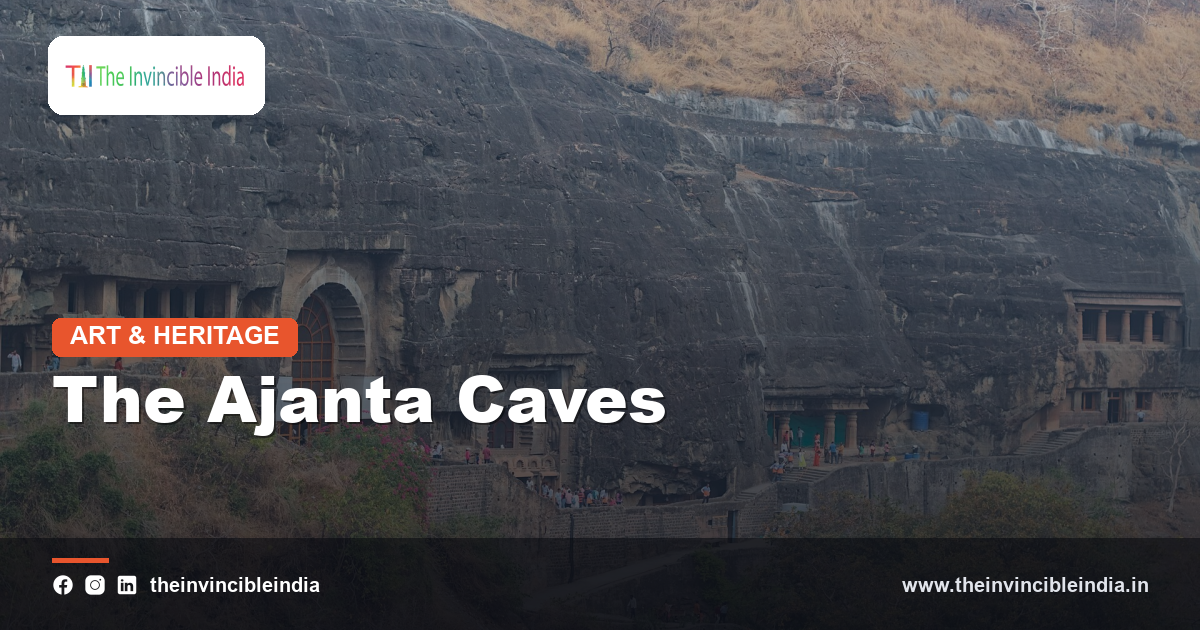
The Ajanta Caves, cut into the curving basalt cliffs above the Waghora river in present-day Maharashtra, form one of the most important surviving complexes of ancient Buddhist art in India. Excavated over two distinct phases separated by several centuries, the site contains monastic halls and prayer chambers whose painted walls preserve some of the finest examples of early Indian mural art to survive into the present day. Alongside the nearby Ellora Caves, Ajanta represents a high point of the region’s long tradition of rock-cut religious architecture. Its caves remain a vital source for understanding both Buddhist monastic life and the visual culture of ancient India.
Quick Facts
| Detail | Information |
|---|---|
| Location | Aurangabad district, Maharashtra |
| Religious tradition | Buddhism |
| Setting | Horseshoe-shaped gorge above the Waghora river |
| Total caves | 29 excavated caves |
| Famous for | Ancient Buddhist murals and paintings |
| Recognition | UNESCO World Heritage Site |
A Hidden River Gorge
The Ajanta Caves are carved into a dramatic, horseshoe-shaped cliff face overlooking a bend in the Waghora river, a secluded setting well suited to the contemplative life of a Buddhist monastic community. The gorge’s natural curve places the caves in a continuous arc, allowing each excavation to open onto the same sweeping river valley below.
This remote and scenic location would have offered monks a degree of isolation from nearby settlements while still remaining accessible along regional travel routes. The dramatic natural setting, combined with the caves themselves, has long been considered part of what makes Ajanta such a distinctive and evocative site.
Two Phases of Excavation
The caves at Ajanta were excavated in two broadly distinct phases separated by a considerable gap in time. The earlier phase, associated with the Satavahana period, produced simpler prayer halls and monastic cells reflecting an earlier stage of Buddhist architectural and artistic development.
The later phase, associated with the Vakataka period, saw a resurgence of activity at the site, during which many of the most elaborate caves and their celebrated paintings were created. This second wave of excavation is responsible for much of what makes Ajanta renowned today, including its most sophisticated architectural and pictorial achievements.
Chaityas and Viharas
The caves at Ajanta fall into two main architectural categories: chaityas, which are worship halls centered on a stupa, and viharas, which are monastic residences containing cells for monks arranged around a central hall. This division reflects the dual function of the site as both a place of communal worship and a home for a resident monastic community.
The chaityas typically feature a vaulted ceiling and a processional path around the stupa, while the viharas are organized more like communal dwellings, often including a shrine at the rear. Together, these two building types illustrate the practical and devotional needs of the Buddhist community that inhabited the site.
The Ajanta Murals
Ajanta’s most celebrated feature is its extensive collection of painted murals, which cover the walls and ceilings of several caves with scenes drawn from Buddhist narrative traditions. These paintings, created using natural pigments applied over a prepared plaster surface, are remarkable for their expressive figures, intricate detail, and sophisticated use of color and composition.
The murals depict a wide range of subjects, including scenes from the Jataka tales, which recount the previous lives of the Buddha, as well as courtly and devotional scenes populated by richly adorned figures. These paintings remain among the most important surviving examples of ancient Indian pictorial art.
The Jataka Tales in Paint
Many of Ajanta’s murals illustrate episodes from the Jataka tales, a body of stories recounting the Buddha’s previous incarnations and the moral lessons embedded within them. These narrative paintings unfold across the cave walls in sequences that would have guided viewers through the stories’ key episodes and teachings.
The choice to render these tales visually reflects their central role in Buddhist teaching and devotion, using vivid imagery to communicate ethical and spiritual lessons to a broad audience, including those who may not have been literate in the textual traditions from which the stories derived.
Sculptural Art at Ajanta
Alongside its paintings, Ajanta also contains significant sculptural work, including carved images of the Buddha, bodhisattvas, and decorative architectural elements integrated into the caves themselves. These sculptures, often set within niches or forming part of the chaitya halls, complement the painted narratives with three-dimensional devotional imagery.
The sculptural style at Ajanta reflects the artistic conventions of its respective excavation periods, showing a progression from simpler forms in the earlier caves toward more refined and expressive figures in the later phase, paralleling the stylistic development seen in the site’s paintings.
Monastic Life at Ajanta
The vihara caves at Ajanta provide insight into the daily life of the Buddhist monastic community that once inhabited the site, with individual cells arranged around communal halls used for teaching, meditation, and gathering. This layout reflects the organized, communal character of monastic Buddhism as it developed in ancient India.
The presence of shrine rooms within several viharas indicates that devotional worship was integrated directly into daily monastic routine, rather than being confined to separate chaitya halls alone. This combination of residential and devotional space illustrates how thoroughly religious practice was woven into the rhythm of monastic community life at the site.
Patronage and Support
The excavation and decoration of the Ajanta caves required substantial patronage, generally understood to have come from a combination of royal sponsorship and support from wealthy merchants and officials of the period. Such patrons often commissioned individual caves or their decoration as acts of religious merit.
This pattern of patronage reflects a broader practice in ancient Indian Buddhism, in which lay supporters played a central role in sustaining monastic communities and their building projects. The scale and artistic quality of Ajanta’s later caves suggest a period of considerable prosperity and sustained patronage during their creation.
Decline and Abandonment
Following the later phase of excavation, activity at Ajanta appears to have gradually diminished, and the site was eventually abandoned as a functioning monastic center. The precise reasons for this decline are not fully established, though shifts in religious patronage and changing regional circumstances are generally considered contributing factors.
Over the following centuries, the caves became overgrown and largely forgotten by the wider world, even as memory of the site persisted among some local communities. This long period of obscurity ultimately helped preserve the caves and their paintings from the kind of alteration or damage that active, continuously used sites often undergo.
Rediscovery in the Colonial Era
Ajanta returned to wider attention in the early nineteenth century, when a British officer on a hunting expedition came across the caves, drawing renewed interest to the long-hidden site. This rediscovery prompted subsequent visits by scholars and artists eager to document the caves and their remarkable murals.
The renewed attention led to efforts to record and study the paintings, though the process of documentation also exposed the murals to new risks, including damage from copying campaigns and environmental exposure. Nonetheless, this period marked the beginning of Ajanta’s transformation into a globally recognized site of artistic and historical importance.
Techniques of Ancient Painting
The murals at Ajanta were created using a technique involving layers of mud, plaster, and pigment applied to the rough-hewn cave walls, allowing artists to achieve fine detail despite the challenging rock surface. Natural mineral and organic pigments provided the palette of colors used throughout the paintings.
This method required considerable technical skill, since the artists had to work within the constraints of the cave’s uneven surfaces and limited natural light. The durability of the murals that survive today, despite centuries of exposure and past neglect, speaks to the sophistication of the techniques employed by the artists who created them.
Conservation of a Fragile Legacy
The Ajanta murals are inherently fragile, vulnerable to humidity, light exposure, and the effects of past interventions such as varnishing attempts made during earlier documentation efforts. Modern conservation work focuses on stabilizing the plaster surfaces, controlling environmental conditions within the caves, and limiting further deterioration.
Visitor management measures, including restrictions on flash photography and controlled access to certain caves, form part of ongoing efforts to protect the murals for future generations. These conservation challenges highlight the delicate balance between preserving Ajanta’s artistic legacy and allowing continued public appreciation of the site.
Ajanta's Influence on Indian Art
The paintings at Ajanta have had a lasting influence on the study and appreciation of Indian art, serving as a key reference point for understanding pictorial traditions in the centuries before and after their creation. Their compositional techniques and narrative approach are often cited in discussions of the broader development of Indian painting.
Artists and scholars in later periods have drawn on Ajanta’s murals as a touchstone for classical Indian aesthetics, and the site continues to inform modern understanding of ancient artistic practice. This enduring influence underscores Ajanta’s significance well beyond its immediate religious and historical context.
UNESCO World Heritage Status
In recognition of its outstanding artistic and historical value, Ajanta has been designated a UNESCO World Heritage Site, affirming its significance as part of the shared cultural heritage of humanity. This status has helped mobilize international support and attention for the site’s conservation.
World Heritage recognition has also contributed to increased scholarly interest in Ajanta, encouraging continued research into its paintings, sculptures, and architectural history. This global attention reinforces the caves’ standing as one of the most important surviving monuments of ancient Buddhist art anywhere in the world.
Visiting Ajanta Today
Visitors to Ajanta today follow a path along the curving gorge, moving from cave to cave to view the paintings and sculptures preserved within. Given the fragility of the murals, several caves have restricted access or controlled lighting to help protect the artwork from further deterioration.
The experience of visiting Ajanta offers a rare, direct encounter with ancient Buddhist visual culture, allowing visitors to appreciate both the technical mastery of the paintings and the tranquil setting that shaped the site’s original monastic purpose. It remains one of the most significant destinations for those interested in ancient Indian art.
Scholarly Study of Ajanta
Since its rediscovery, Ajanta has become a major subject of art-historical and archaeological study, with scholars examining its paintings, sculptures, and inscriptions to reconstruct the religious and artistic life of the community that once inhabited the caves. This body of research has helped clarify the broad chronology separating the site’s two main excavation phases.
Continuing research also explores the techniques used to prepare pigments and plaster, offering insight into the material culture of ancient Indian workshops. This sustained scholarly attention has helped position Ajanta as a central reference point for the study of early Buddhist art across South Asia.
Ajanta Caves Today
The Ajanta Caves continue to stand as one of the most important surviving records of ancient Buddhist art and monastic life in India. Their painted narratives and sculptural work offer a window into a rich devotional and artistic tradition that flourished many centuries ago along the banks of the Waghora river.
As a UNESCO World Heritage Site, Ajanta remains a focus of ongoing conservation, scholarship, and public interest, ensuring that its fragile murals and rock-cut halls continue to be studied and appreciated well into the future as an irreplaceable part of India’s cultural heritage.
Sources & Further Reading
- Archaeological Survey of India (asi.nic.in).
- Ministry of Culture, Government of India (indiaculture.gov.in).
Frequently Asked Questions
Where are the Ajanta Caves located?
The Ajanta Caves are located in a horseshoe-shaped gorge above the Waghora river in Maharashtra, India.
What is Ajanta best known for?
Ajanta is best known for its ancient Buddhist murals depicting Jataka tales and other narrative and devotional scenes.
How many caves make up the Ajanta complex?
The complex consists of 29 excavated caves, including both chaitya prayer halls and vihara monastic residences.
How were the Ajanta caves rediscovered?
The caves returned to wider attention in the early nineteenth century after a British officer came across them during a hunting expedition.
Is Ajanta a UNESCO World Heritage Site?
Yes, Ajanta has been designated a UNESCO World Heritage Site in recognition of its artistic and historical significance.


