


Chhattisgarh, in the heart of central India, is one of the country’s most beautiful and least-explored states, a land of dense forests, thundering waterfalls, ancient temples and vibrant tribal cultures. Carved out as a separate state in 2000, it remains a hidden gem for travellers seeking unspoilt nature and authentic cultural experiences far from the crowds. From the spectacular Chitrakote Falls, often called the “Niagara of India”, to the deep jungles of Bastar and the ancient Buddhist and Hindu heritage sites, this guide explores the many wonders of Chhattisgarh.
Quick Facts: Chhattisgarh
| Detail | Information |
|---|---|
| Capital | Raipur (Naya Raipur/Atal Nagar) |
| Formed | 2000 (from Madhya Pradesh) |
| Famous for | Waterfalls, forests, tribal culture, temples |
| Iconic waterfall | Chitrakote Falls |
| Known as | The “Rice Bowl of India” |
| Best time to visit | October to March |
Chitrakote Falls: The Niagara of India
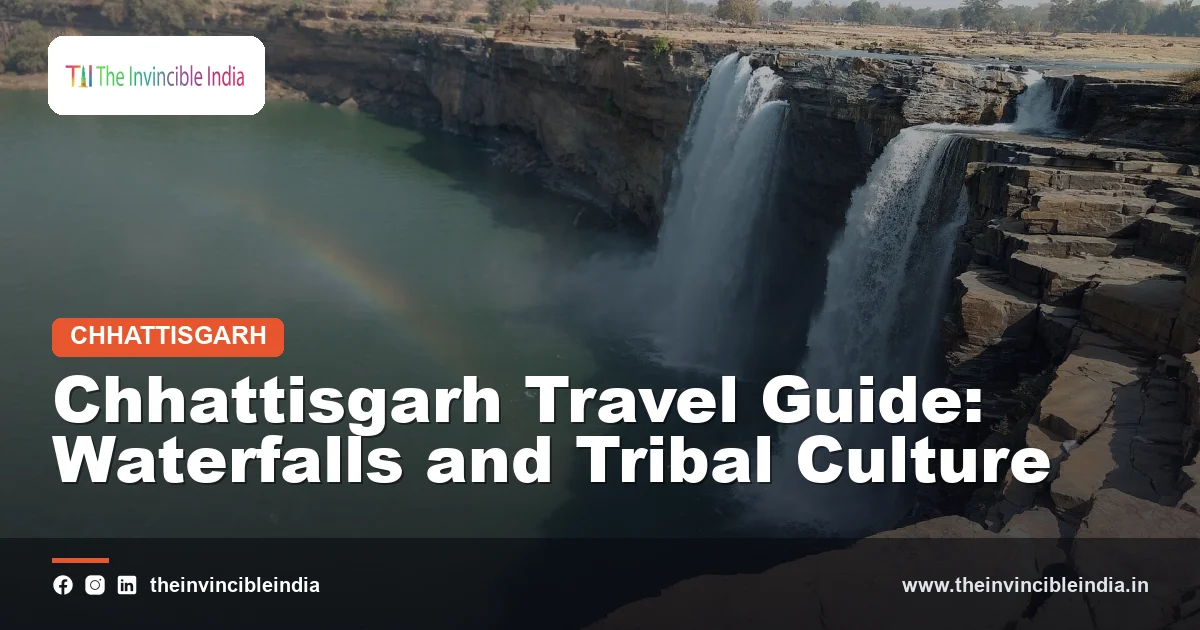
The most famous natural attraction in Chhattisgarh is the magnificent Chitrakote Falls, located near Jagdalpur in the Bastar region. Formed by the Indravati River, it is the widest waterfall in India, and during the monsoon it swells into a thundering, horseshoe-shaped curtain of water that has earned it the nickname the “Niagara of India”. The falls are spectacular in every season, from the mighty muddy torrents of the rains to the gentler, clearer flows of winter, and are especially beautiful at sunset and under the full moon.
Bastar: Land of Tribes and Forests
The Bastar region is the cultural heart of Chhattisgarh, home to some of India’s most ancient and vibrant tribal communities, whose traditions, art, music and festivals have survived for centuries. The region is renowned for its distinctive crafts, including the famous Dhokra metal casting (an ancient lost-wax technique), bell-metal work, wood carving and terracotta. The colourful Bastar Dussehra, one of the longest festivals in the world, lasting several weeks, is a unique tribal celebration quite different from Dussehra elsewhere in India, offering a fascinating window into indigenous culture.
Waterfalls, Caves and Wildlife
Beyond Chitrakote, Chhattisgarh is dotted with stunning waterfalls such as Tirathgarh, set amid forest, and the region around Kanger Valley National Park is famous for its remarkable limestone caves, including Kutumsar and Kailash caves, filled with dramatic stalactite and stalagmite formations. The state’s forests, among the densest in India, shelter national parks and wildlife sanctuaries that are home to tigers, leopards, wild buffalo (the state animal) and rich birdlife, making Chhattisgarh a rewarding destination for nature and wildlife enthusiasts.
Ancient Temples and Heritage
Chhattisgarh has a rich historical and spiritual heritage. Sirpur, on the banks of the Mahanadi River, is an important archaeological site with ancient Buddhist, Hindu and Jain monuments dating back over a thousand years, including the exquisite Lakshmana Temple. The temple town of Rajim, known as the “Prayag of Chhattisgarh”, and the ancient shrines at Bhoramdeo, often called the “Khajuraho of Chhattisgarh” for their fine carvings, reflect the state’s deep and layered history.
The Tribal Heritage of Chhattisgarh
Chhattisgarh is home to one of the largest tribal populations in India, and its indigenous communities are the soul of the state. Tribes such as the Gond, Maria, Muria, Halba and Baiga have preserved ancient ways of life, rich oral traditions, distinctive art forms and deep connections with the forests and land. Their vibrant festivals, ceremonial dances, music played on traditional instruments, and colourful attire offer a fascinating glimpse into cultures that have endured for thousands of years. Visitors to the tribal regions, particularly Bastar, can witness weekly markets (haats) that are social and economic gatherings of great colour and energy, providing an authentic and unforgettable cultural experience.
The Handicrafts of Chhattisgarh
The state is renowned for its exquisite handicrafts, many of which are practised by its tribal artisans using techniques passed down through generations. The most famous is Dhokra, an ancient method of casting metal using the lost-wax technique, producing beautiful figurines, jewellery and ornaments with a distinctive, rustic finish. Chhattisgarh is also known for its bell-metal work, intricate wood carving, terracotta, bamboo crafts and traditional textiles such as the Kosa silk, a rich, natural silk produced in the region and prized across India. These crafts make wonderful, meaningful souvenirs and directly support the livelihoods of local artisans.
Wildlife and National Parks
With some of the densest forests in India, Chhattisgarh is a haven for wildlife. The state boasts several national parks and wildlife sanctuaries, including the Kanger Valley National Park, famous for its caves, waterfalls and the rare bastar hill myna (the state bird), as well as Indravati National Park, a tiger reserve, and Barnawapara and Achanakmar sanctuaries. These protected areas shelter tigers, leopards, wild buffalo, sloth bears, deer and a rich variety of birds. For nature enthusiasts and those seeking wilderness far from the crowds, the forests of Chhattisgarh offer a genuine sense of untouched natural beauty.
Festivals and Culture
The cultural calendar of Chhattisgarh is rich and colourful, with festivals that blend tribal, folk and mainstream Hindu traditions. The most famous is the Bastar Dussehra, an extraordinary celebration lasting around seventy-five days, making it one of the longest festivals in the world, and quite distinct from the Dussehra celebrated elsewhere, being deeply rooted in local tribal customs and the worship of the goddess Danteshwari. Other important festivals include Hareli, Pola and Madai, each marked by unique rituals, dances and community gatherings that reflect the deep bond between the people and their land and deities.
Planning Your Chhattisgarh Trip
The best time to visit Chhattisgarh is during the cool, dry season from October to March, ideal for exploring temples, forests and tribal regions, though the monsoon is the finest time to see the waterfalls in full flow. The state capital Raipur has an airport and good rail connections, serving as the main gateway, with Jagdalpur being the hub for exploring the Bastar region. Hiring a car with a local driver is the most convenient way to reach the more remote attractions. With its unspoilt nature, deep cultural heritage and welcoming people, Chhattisgarh rewards the adventurous traveller with an authentic and off-the-beaten-path Indian experience.
The Temples and Spiritual Heritage
Chhattisgarh possesses a rich spiritual heritage stretching back many centuries. The ancient town of Sirpur, once a great centre of Buddhism, Hinduism and Jainism, preserves remarkable monuments including the brick-built Lakshmana Temple, one of the finest of its kind in India, adorned with intricate carvings. The temple town of Rajim, at the confluence of rivers, is revered as the “Prayag of Chhattisgarh” and hosts a major fair. The eleventh-century temples of Bhoramdeo, celebrated for their erotic sculptures reminiscent of Khajuraho, and the ancient shrines at Ratanpur and Dongargarh, add further depth to the state’s religious and architectural treasures.
The Cuisine of Chhattisgarh
The cuisine of Chhattisgarh is simple, wholesome and rooted in the produce of its fertile land, which has earned it the title of the “Rice Bowl of India”. Rice features prominently, appearing in a variety of dishes, snacks and even sweets. Local specialities include chila (a savoury rice pancake), fara (steamed rice dumplings), muthia, and the tribal delicacies of the Bastar region, which make use of forest produce such as bamboo shoots, mahua flowers and red ants in the famous chapda chutney. Sampling this distinctive and lesser-known regional cuisine offers travellers an authentic taste of the state’s culture and way of life.
Off the Beaten Path
One of the greatest appeals of Chhattisgarh is its unspoilt, off-the-beaten-path character, offering experiences increasingly rare in more touristy parts of India. Here, travellers can explore dense forests and thundering waterfalls without crowds, wander through tribal villages and weekly markets where ancient ways of life continue, and discover ancient temples and caves in tranquil settings. The genuine warmth and hospitality of the local people, undiluted by mass tourism, adds to the sense of authentic discovery. For the adventurous and culturally curious traveller, Chhattisgarh offers a rare opportunity to experience an India that feels timeless and real.
Adventure and Nature Tourism
For the adventurous traveller, Chhattisgarh offers a wealth of experiences amid its unspoilt landscapes. The dense forests and hilly terrain provide excellent opportunities for trekking, nature walks and wildlife safaris, while the numerous waterfalls and rivers invite exploration. The limestone caves of the Kanger Valley, with their dramatic underground formations, are a highlight for the intrepid. Eco-tourism and village tourism initiatives allow visitors to stay amid nature and experience tribal life firsthand. With its combination of forests, waterfalls, caves and wildlife, the state is emerging as an exciting destination for those seeking adventure and a deep connection with nature away from the crowds.
Why Visit Chhattisgarh
Chhattisgarh rewards the curious and adventurous traveller with an authentic, unspoilt slice of India rarely found on the usual tourist trail. Here you can stand before the mighty Chitrakote Falls, explore ancient temples and mysterious caves, immerse yourself in some of the country’s richest and most vibrant tribal cultures, and wander through dense forests teeming with wildlife, all while enjoying the genuine warmth and hospitality of its people. For those seeking to discover a lesser-known but deeply rewarding corner of India, full of natural beauty, cultural richness and a true sense of exploration, Chhattisgarh is a destination waiting to be discovered.
How to Reach Chhattisgarh
Chhattisgarh is well connected to the rest of India. The state capital, Raipur, has the Swami Vivekananda Airport with flights to major cities such as Delhi, Mumbai, Kolkata and Hyderabad, and is an important railway junction on the national network. From Raipur, road and rail links reach the other major towns, while Jagdalpur, the gateway to the Bastar region and its waterfalls, has its own airport and rail connections. Within the state, hiring a car with a local driver is the most convenient and flexible way to reach the more remote natural and cultural attractions, allowing travellers to explore the forests, waterfalls and tribal areas at their own pace.
A Hidden Gem of Central India
Chhattisgarh remains one of India’s best-kept travel secrets, a state where nature, history and culture flourish far from the well-trodden tourist routes. Its thundering waterfalls, ancient temples, mysterious caves, dense forests and vibrant tribal heritage together offer an experience of remarkable depth and authenticity. For the traveller willing to venture off the beaten path, this green and gracious land of central India promises discovery, wonder and the genuine warmth of its people, making every journey through Chhattisgarh a truly rewarding adventure.
Frequently Asked Questions
What is Chhattisgarh famous for?
Chhattisgarh is famous for its spectacular waterfalls such as Chitrakote, dense forests, ancient temples, remarkable caves, and its rich and vibrant tribal cultures, particularly in the Bastar region.
What is the best time to visit Chhattisgarh?
The best time is from October to March, when the weather is pleasant. The monsoon season is ideal for seeing the waterfalls in full, dramatic flow.
Why is Chitrakote Falls called the Niagara of India?
Chitrakote is the widest waterfall in India, and its broad, horseshoe-shaped curtain of water, especially powerful during the monsoon, resembles the famous Niagara Falls.
What is Bastar known for?
Bastar is known for its ancient tribal cultures, distinctive handicrafts such as Dhokra metalwork, dense forests and the unique weeks-long Bastar Dussehra festival.