

Dussehra, also known as Vijayadashami, is one of the great festivals of India, celebrating the triumph of good over evil, one of the most cherished themes of Indian tradition. Falling on the tenth day after the nine nights of Navratri, it marks above all the victory of Rama over the demon king Ravana, and in many regions the victory of the Goddess Durga over a terrible demon, both embodying the triumph of righteousness over wickedness. Celebrated across India in many forms, from the enactment of the story of Rama in the Ramlila to the spectacular burning of great effigies of Ravana, Dussehra is a festival of joy, devotion and the celebration of the victory of good. This guide explores the meaning, the stories, the customs and the celebrations of Dussehra, a great festival of India’s traditions.
Quick Facts
| Detail | Information |
|---|---|
| Also called | Vijayadashami, the tenth day of victory |
| Theme | The triumph of good over evil |
| Marks | The victory of Rama over Ravana |
| Also celebrates | The Goddess Durga’s victory over the demon |
| Falls on | The tenth day after the nine nights of Navratri |
| Famous custom | The burning of great effigies of Ravana |
The Triumph of Good over Evil
Dussehra, also known as Vijayadashami, is one of the great festivals of India, celebrating above all the triumph of good over evil, one of the most cherished and universal themes of Indian tradition. The festival marks the victory of righteousness over wickedness, embodied in the great stories of the victory of Rama over the demon king Ravana and of the Goddess Durga over a terrible demon. It is a festival of joy and celebration, honouring the triumph of good and the ultimate defeat of evil. As the great festival of the triumph of good over evil, celebrated across India with joy and devotion, Dussehra holds a beloved place among the festivals of the country and expresses one of the deepest themes of its culture.
The Meaning of Vijayadashami
Dussehra is also known as Vijayadashami, a name that means the tenth day of victory, referring both to the day on which the festival falls and to the victory it celebrates. Falling on the tenth day after the nine nights of the festival of Navratri, Vijayadashami celebrates the great victories of good over evil that are honoured on this day. The name captures the essence of the festival as a celebration of victory and triumph. This name, Vijayadashami, the tenth day of victory, expresses the meaning of the festival as a celebration of the triumph of good over evil, and it marks the culmination of the festive season that begins with the nine nights of Navratri.
The Victory of Rama
In much of India, Dussehra celebrates above all the victory of Rama, the hero of the epic Ramayana, over the demon king Ravana, a story that embodies the triumph of good over evil. According to the epic, Rama fought a great war to rescue his wife Sita, who had been abducted by Ravana, and on this day he defeated and slew the demon king, thus triumphing over evil and restoring righteousness. This victory of Rama is joyously celebrated during the festival. This celebration of the victory of Rama over Ravana, embodying the triumph of good over evil and drawn from the beloved epic the Ramayana, is one of the central meanings of Dussehra in much of India and a source of its joy and its significance.
The Victory of the Goddess
In many regions, especially in the east, Dussehra also celebrates the victory of the Goddess Durga over a terrible demon, another great story of the triumph of good over evil. Following the nine nights of the worship of the Goddess during Navratri and Durga Puja, the tenth day celebrates her mighty victory over the demon, which she achieved after a great battle, saving the world and destroying evil. This victory of the Goddess is honoured on the same day as the victory of Rama. This celebration of the victory of the Goddess Durga over the demon, another embodiment of the triumph of good over evil, is a central meaning of Dussehra in many regions and connects the festival to the great worship of the Goddess during the preceding nine nights.
The Ramlila
One of the most cherished traditions associated with Dussehra, especially in northern India, is the Ramlila, the dramatic enactment of the story of Rama performed in the days leading up to the festival. In the Ramlila, the episodes of the Ramayana are acted out over several days by performers before the community, bringing the beloved story of Rama to life and building towards the climax of his victory over Ravana on the day of Dussehra. The Ramlila is a beloved communal tradition. This tradition of the Ramlila, the dramatic enactment of the story of Rama performed in the days before Dussehra, is one of the most cherished customs associated with the festival, especially in the north, and it brings the beloved epic vividly to life for whole communities.
The Burning of Ravana
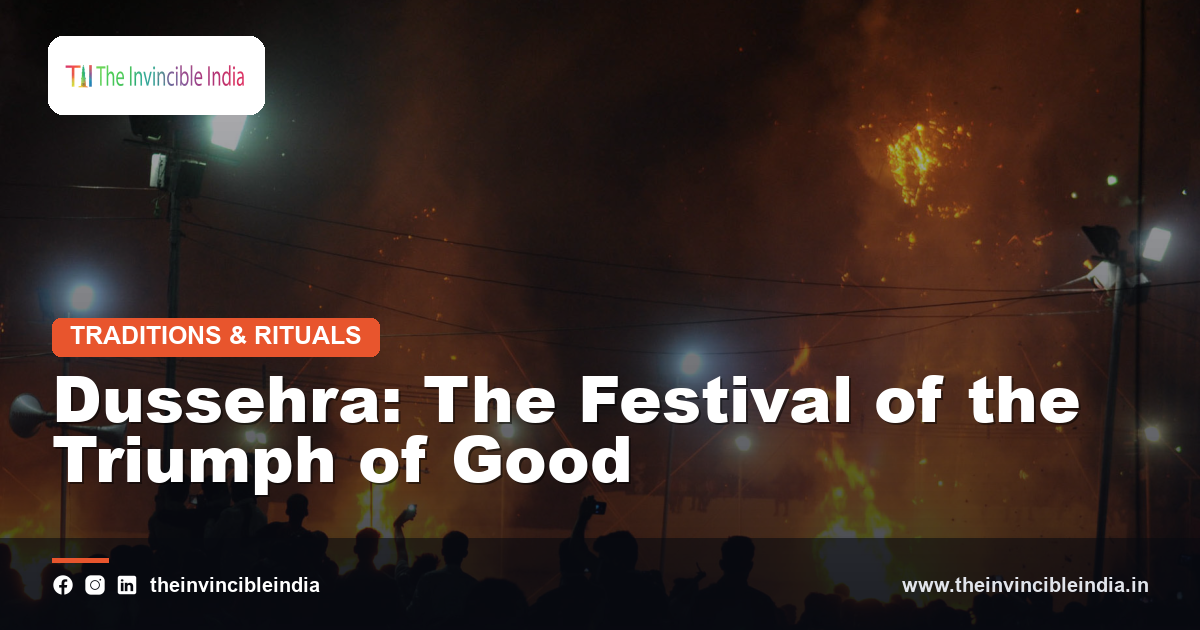
The most spectacular and famous custom of Dussehra, especially in northern India, is the burning of great effigies of the demon king Ravana, which brings the celebration to a dramatic climax. On the day of the festival, huge effigies of Ravana, often along with those of his brother and son, are set alight before great crowds, symbolising the destruction of evil and the triumph of good, in a spectacular display accompanied by fireworks and celebration. The burning of Ravana is a highlight of the festival. This spectacular burning of the effigies of Ravana, symbolising the destruction of evil and the triumph of good, is the most famous and dramatic custom of Dussehra and a joyous climax to the celebration of the victory of righteousness over wickedness.
A Festival Across India
Dussehra is celebrated across India in a rich variety of forms, reflecting the diversity of the country’s traditions, though always with the theme of the triumph of good over evil. In the north it is marked by the Ramlila and the burning of Ravana; in the east it follows the great festival of Durga Puja; in the south and other regions it has its own customs and significance, including in some places the worship associated with learning and new beginnings. Each region celebrates the festival in its own way. This celebration of Dussehra across India in many regional forms, united by the theme of the triumph of good over evil, is a striking feature of the festival and reflects the wonderful diversity of the country’s cultural and religious traditions.
A Day of New Beginnings
Dussehra is considered a highly auspicious day, associated in many regions with new beginnings, undertakings and the start of new ventures. Being a day of victory and triumph, it is regarded as an auspicious time to begin new things, to make new purchases, and to undertake new ventures and journeys, and in some traditions it is associated with the honouring of tools, weapons and the instruments of one’s livelihood. This dimension of auspiciousness and new beginnings is an important part of the festival. This association of Dussehra with auspiciousness and new beginnings, as a day of victory on which to start new ventures and undertakings, is an important aspect of the festival and adds to its significance as a day of triumph and good fortune.
Worship and Devotion
Alongside its celebrations and spectacles, Dussehra is a time of worship and devotion, honouring the deities associated with the festival and the victory of good over evil. Devotees worship Rama, the Goddess Durga, or other deities according to their tradition and region, offering prayers and devotion and giving thanks for the triumph of righteousness. This devotional dimension underlies the festivity and celebration of the festival. This worship and devotion, honouring the deities associated with the festival and giving thanks for the triumph of good over evil, is an important part of Dussehra and expresses the deep religious meaning that underlies the joy and spectacle of the celebrations.
A Festival of Joy
Dussehra is above all a festival of joy and celebration, marking the triumph of good with festivity, community and rejoicing. People gather to watch the Ramlila and the burning of Ravana, dress in festive clothes, enjoy fairs and celebrations, and share in the joy of the festival, and the atmosphere is one of communal celebration and delight. The joy of the festival is a large part of its appeal. This character of Dussehra as a festival of joy and celebration, marking the triumph of good with festivity and community, is one of its most beloved aspects, and the shared joy of the festival, as communities come together to celebrate the victory of good over evil, is central to its enduring appeal.
The Culmination of the Festive Season
Dussehra marks the culmination of the great festive season that begins with the nine nights of Navratri and the festival of Durga Puja, bringing this period of devotion and celebration to a triumphant climax. Following the nine nights of the worship of the Goddess, the tenth day of Dussehra celebrates the victories of good over evil that crown the season, and it leads on, some weeks later, to the great festival of Diwali. Dussehra thus holds a key place in the festive calendar. This role as the culmination of the festive season that begins with Navratri, bringing the period of devotion and celebration to a triumphant climax on the tenth day of victory, is an important aspect of Dussehra and of its place in the great festive season of the Hindu year.
A Message for All Time
Beyond its specific stories and customs, Dussehra carries a timeless and universal message, the assurance that good will ultimately triumph over evil and righteousness over wickedness. This message, embodied in the great stories of the victory of Rama and of the Goddess, offers hope and moral inspiration, reminding people that however powerful evil may seem, it will in the end be overcome by good. This universal message is at the heart of the festival’s enduring appeal. This timeless message of Dussehra, that good will ultimately triumph over evil, is one of the deepest and most inspiring aspects of the festival, and it gives the celebration a meaning and a moral power that resonate across all times and cultures.
Dussehra Today
Today Dussehra remains one of the great festivals of India, celebrated across the country and among Indian communities around the world with joy, devotion and spectacle. The Ramlila and the burning of Ravana, the celebration of the victory of Rama and of the Goddess, the worship and the festivity all continue to be cherished, and the festival brings communities together each year to celebrate the triumph of good over evil. Its timeless message of the victory of righteousness continues to inspire. In its joyous celebration of the triumph of good over evil, embodied in beloved stories and spectacular customs, Dussehra endures as one of the most cherished and meaningful festivals of India.
Sources & Further Reading
- Ministry of Culture, Government of India, on the festivals of India (indiaculture.gov.in).
- The Ramayana and the Devi Mahatmya, the sources of the festival’s stories.
Frequently Asked Questions
What is Dussehra?
Dussehra, also known as Vijayadashami, is a great festival of India celebrating the triumph of good over evil. It marks the victory of Rama over the demon king Ravana and, in many regions, the victory of the Goddess Durga over a terrible demon, and falls on the tenth day after Navratri.
What does Vijayadashami mean?
Vijayadashami means the tenth day of victory, referring both to the day on which the festival falls, the tenth day after the nine nights of Navratri, and to the victories of good over evil that are celebrated on this day.
Why are effigies of Ravana burned on Dussehra?
On Dussehra, especially in northern India, huge effigies of the demon king Ravana are set alight before great crowds to symbolise the destruction of evil and the triumph of good, celebrating the victory of Rama over Ravana in a spectacular climax to the festival.
What is the Ramlila?
The Ramlila is the dramatic enactment of the story of Rama, performed over several days in the period leading up to Dussehra, especially in northern India. It brings the beloved epic the Ramayana to life and builds towards the climax of Rama’s victory over Ravana.
How is Dussehra celebrated across India?
Dussehra is celebrated in many regional forms: in the north with the Ramlila and the burning of Ravana, in the east following the festival of Durga Puja, and in the south and other regions with their own customs, all united by the theme of the triumph of good over evil.


