

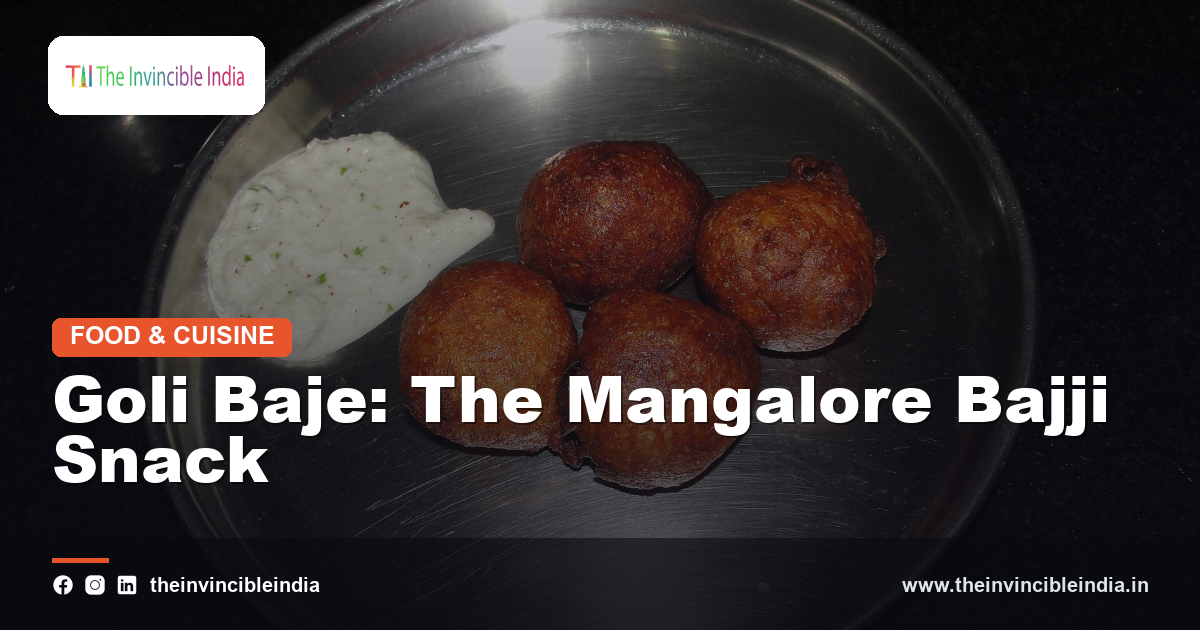
Goli baje, also called Mangalore bajji or Mangalore bonda, is a round, soft, lightly tangy fritter that has become one of the best-known snacks of coastal Karnataka. Unlike the thin-coated vegetable fritters described in our guide to Indian namkeen snacks, it is made from a thick batter of refined flour and sour curd, which puffs in hot oil into a pillowy ball with a crisp, golden shell. It is served in tea shops, hotel canteens and home kitchens across Mangalore and Udupi, usually with coconut chutney and a hot beverage. This guide explains what goli baje is, how it is made and why it holds such a loved place in the cuisine of the region.
Quick answer: Goli baje is a deep-fried fritter of Mangalore and the Tulu Nadu region of coastal Karnataka, made from a batter of refined wheat flour and sour curd, seasoned with green chilli, ginger, coconut pieces and curry leaves. The word goli means ball and baje is the local word for a fritter. It is traditionally eaten as a tea-time snack with coconut chutney.
Key Takeaways
- Goli baje is a round, deep-fried fritter that originates in the Mangalore and Udupi belt of coastal Karnataka.
- The name combines goli, meaning ball, with baje, the local word for a bajji or fritter.
- Its batter is based on refined wheat flour (maida) and sour curd, which gives the snack its soft interior and mild tang.
- Chopped coconut, green chilli, ginger, cumin and curry leaves flavour the batter.
- It is usually served hot with coconut chutney and often sambar, alongside tea or coffee.
- Tea shops and Udupi-style hotels across Karnataka and beyond have made the snack widely familiar.
Read on for the ingredients, method, serving customs, and cultural role in detail.
Quick Facts
| Detail | Information |
|---|---|
| Dish | Goli baje (Mangalore bajji, Mangalore bonda) |
| Type | Deep-fried tea-time fritter |
| Origin | Mangalore and Udupi, coastal Karnataka |
| Region | Tulu Nadu, Dakshina Kannada |
| Main ingredients | Refined flour, sour curd, coconut, green chilli |
| Typical accompaniment | Coconut chutney and tea or coffee |
What is goli baje?
Goli baje is a round fritter made by dropping spoonfuls of a thick, curd-based batter into hot oil and frying them until they are golden and puffed. The snack belongs to the coastal Karnataka region around Mangalore and Udupi, where it is a staple of tea shops and hotel menus. Its interior is soft, slightly spongy and gently sour, while the outside is crisp and lightly browned. The name is Kannada and Tulu in spirit, with goli meaning a ball or small sphere and baje being the local form of the word bajji. Outside Karnataka it is often listed on menus as Mangalore bajji or Mangalore bonda, which can confuse visitors who expect a vegetable-coated fritter. The snack is therefore best understood as a plain, flavoured dough ball of the coast.
Where does goli baje come from?
Goli baje comes from the Mangalore and Udupi area of coastal Karnataka, a region often called Tulu Nadu and administratively known as Dakshina Kannada and Udupi. The area is famous for its Udupi hotels, vegetarian temple-town cooking and a tradition of serving small fried snacks with tea. Goli baje fits naturally into this setting, since it uses refined flour, curd and coconut, all ingredients readily available on the coast. The exact origin of the dish, including who first made it, is not firmly documented, so it is best described as a creation of everyday home and eatery cooking. What is clear is that the snack spread outward with migrants and hotel owners from the region, which explains why it is now known well beyond coastal Karnataka.
What are the main ingredients of goli baje?
The main ingredients of goli baje are refined wheat flour, sour curd, chopped coconut, green chilli, ginger and curry leaves. Maida forms the body of the batter, while the curd supplies moisture, mild acidity and the soft texture that sets the snack apart. Small pieces of fresh coconut give a sweet, chewy contrast, and cumin seeds add a warm aroma. Green chillies and ginger bring gentle heat and freshness, and chopped coriander or curry leaves are often added for fragrance. A pinch of salt and sometimes a little sugar or baking soda completes the mix. Oil, usually a neutral cooking oil or coconut oil, is needed for frying. The short list shows how a handful of pantry ingredients can become a satisfying snack.
How is goli baje made?
Goli baje is made by mixing a thick batter, resting it, and frying small portions in hot oil until they are golden. Flour, curd, salt and flavourings are whisked together with a little water into a batter that is thicker than that used for most bajjis. Many cooks leave it to rest for a few hours, which lets the curd work on the flour and helps the fritters puff. Once the oil is hot, small amounts of batter are dropped in by hand or with a spoon, and they swell into rounds as they cook. The balls are turned until evenly browned and then lifted out to drain. The method is simple, but timing and batter thickness decide whether the result is airy or heavy.
Why does the batter use sour curd?
Sour curd is used in goli baje because it gives the batter a gentle tang, a tender crumb and a natural lift. The lactic acidity of the curd reacts with the flour and, when baking soda is added, produces small bubbles that expand in the hot oil. This is what creates the soft, slightly spongy interior that distinguishes the snack from a dense dough ball. The curd also enriches the flavour, adding a mild sourness that balances the sweetness of coconut and the heat of chilli. Cooks in the region often prefer curd that has aged a day or two, since it carries more acidity. The use of curd places goli baje in a wider family of South Indian preparations in which fermented dairy shapes texture and taste.
What gives goli baje its texture and flavour?
The texture of goli baje is crisp outside and soft inside, and its flavour is mildly tangy, lightly sweet and gently spiced. The crisp shell forms as the surface of the batter sets quickly in hot oil, while the interior stays moist because the thick batter traps steam. Pieces of coconut add small pockets of sweetness and chew, and the green chilli, ginger and curry leaves lend sharp, fresh notes. Cumin contributes warmth, and the sour curd rounds the taste into something both savoury and mellow. The snack is not heavily spiced, which is why it is usually paired with a coconut chutney that brings more heat and aroma. The balance of soft, crisp, sweet and sour is the quality most often praised in this fritter.
How is goli baje served?
Goli baje is served hot, usually in a small plate of three or four fritters with coconut chutney on the side. The chutney is typically ground from fresh coconut, green chilli and roasted gram or a similar thickener, and it provides a cool, spicy contrast. Many eateries also offer a small bowl of sambar, in which the fritters can be dipped, and some serve a tomato or onion chutney as well. Tea and filter coffee are the usual drinks, because the snack is traditionally an afternoon or evening treat. Freshness matters a great deal, since the fritters lose their crispness as they cool. For that reason they are often fried to order or in small batches, and customers expect them to arrive steaming at the table.
How is goli baje different from other bajjis and bondas?
Goli baje differs from other bajjis and bondas mainly in its batter, which is thick, curd-based and mixed with the flavourings instead of being used as a coating. A typical bajji, such as one made from raw banana or onion, dips slices of vegetable into a thin gram flour batter. A bonda in other regions, such as the potato bonda, wraps a spiced filling in a gram flour shell. Goli baje has no such filling, because the flavour is built into the dough itself. Its refined flour base also gives a paler, softer fritter than the darker gram flour versions. The name Mangalore bajji is common on menus, while Mangalore bonda is also used, and both refer to the same round snack.
Why is goli baje important to Mangalore tea-time culture?
Goli baje is important to Mangalore tea-time culture because it is among the most dependable and affordable snacks served with the afternoon cup. In coastal Karnataka, small hotels, canteens and roadside stalls build their evening trade around fried snacks, and goli baje is often at the head of the list. Families also make it at home when guests arrive, since the ingredients are simple and the batter can be prepared in advance. The snack is associated with relaxed conversation, rainy-season evenings and short breaks in the working day. Its popularity has helped define the idea of a Mangalorean tea-time plate, which may include other fried items and sweets. The fritter is therefore part of social life in the region and not merely a menu item.
What role do Udupi hotels play in spreading goli baje?
Udupi hotels have played a major part in spreading goli baje beyond its home region. The Udupi hotel tradition, known across southern and western India, grew from the cooking of the temple town and from families who opened vegetarian restaurants in many cities. These establishments carried a menu of dosas, idlis, vadas, sweets and fried snacks, and goli baje found a place among them. Because the snack is easy to fry in volume and stays popular with tea drinkers, it suited the style of a busy hotel counter. Diners in Bengaluru, Mumbai and other cities came to know it through these restaurants. The Udupi network is thus a key reason why a local fritter became a recognised name in wider Indian snack culture.
What are common variations of goli baje?
Common variations of goli baje adjust the flavourings, the flour mix or the cooking method while keeping the curd-based round shape. Some cooks add a spoon of rice flour or semolina for extra crispness, and others replace part of the maida with wheat flour. A few add grated carrot, chopped onion or fresh coriander for colour and freshness. In some homes the batter is left to ferment slightly for a more pronounced tang. Another approach is to cook the batter in a paniyaram pan, which uses far less oil and gives smaller, lighter balls. Spice levels also differ, with some households using more green chilli and others keeping the taste mild. These variations show that the snack is a flexible home recipe rather than a fixed formula.
Is goli baje healthy?
Goli baje is a deep-fried snack and is best regarded as an occasional treat instead of a daily food. Its main components, refined flour and oil, supply energy but little fibre, and the frying adds to its richness. The coconut, curd and ginger bring some nutritional interest, as curd is a source of protein and calcium and ginger is valued in traditional cooking for its warming properties. Those who wish to enjoy the flavour with less oil can try the paniyaram-pan method, which lets the balls cook with only a small amount of fat. Using fresh oil and draining the fritters well also improves the result. As with most fried tea-time foods, moderation and a balanced diet are the sensible approach to eating goli baje.
Can goli baje be made at home?
Goli baje can be made at home with ordinary kitchen ingredients and a deep pan, and it is considered one of the easier fried snacks to prepare. The main points of care are the thickness of the batter, the temperature of the oil and the resting time. A batter that is too thin spreads and absorbs oil, while one that is too thick yields a heavy fritter. Oil that is too cool produces greasy balls, while oil that is too hot browns the outside before the centre is cooked. Home cooks often test the heat with a small drop of batter, which should rise steadily and puff. Serving the fritters straight from the pan with a fresh coconut chutney captures the intended flavour. With a little practice, the snack becomes a reliable family favourite.
When is goli baje eaten?
Goli baje is eaten mainly in the late afternoon and evening as a tea-time snack, though it also appears at other times. In hotels and canteens it is served through the day, and some people take it as a light breakfast or a mid-morning bite. It is a common offering for guests who arrive unannounced, because it can be fried quickly. The snack is also popular during the monsoon season, when hot fried food and tea are especially welcome. At small gatherings and family functions, it may be placed among a spread of savoury and sweet items. It does not belong to a particular festival or ritual, which is part of its charm, since it is simply a food for ordinary pleasant moments.
What does goli baje say about coastal Karnataka cuisine?
Goli baje reflects the character of coastal Karnataka cuisine, which makes generous use of coconut, curd, green chilli and fresh herbs. The cooking of Mangalore and Udupi is known for its coconut-based gravies, its seafood, its rice dishes and its range of snacks and sweets. Within that tradition, goli baje stands as a vegetarian everyday item that shows how the region turns simple ingredients into popular foods. Its use of curd and coconut ties it to the broader flavours of the Konkan and Malabar coasts, while its refined flour base reflects the influence of hotel and bakery culture. The snack is thus a small but telling example of how regional taste, local produce and eatery tradition combine in one dish.
Goli Baje Today
Goli baje today remains a cherished snack in Mangalore, Udupi and other parts of Karnataka, and it is still served in countless tea shops, hotels and homes. Restaurants outside the state often list it as Mangalore bajji, and food festivals and regional menus continue to feature it as a signature item of the coast. Younger cooks experiment with fillings, air-fryer or paniyaram versions and fusion chutneys, while traditionalists keep to the classic curd-based recipe. Despite these changes, the essential qualities of the snack remain intact: a soft, tangy interior, a crisp shell and a plate of coconut chutney on the side. As a result, goli baje continues to represent the warm, unpretentious hospitality of coastal Karnataka and its long relationship with the shared cup of tea.
Sources & Further Reading
- Ministry of Culture, Government of India (indiaculture.gov.in).
- Ministry of Tourism, Government of India (tourism.gov.in).
Frequently Asked Questions
What is goli baje?
Goli baje is a round, deep-fried fritter from Mangalore and Udupi in coastal Karnataka, made from a batter of refined flour and sour curd. It is soft and tangy inside and crisp outside, and is usually served with coconut chutney.
What is goli baje made of?
Goli baje is made of refined wheat flour (maida), sour curd, chopped coconut, green chilli, ginger, cumin and curry leaves. Salt is added, and some cooks include a pinch of baking soda or sugar.
Is goli baje the same as Mangalore bonda?
Yes, goli baje is commonly sold as Mangalore bonda or Mangalore bajji outside Karnataka. All three names refer to the same round curd-and-flour fritter, which differs from bondas filled with a potato mixture.
What is goli baje served with?
Goli baje is served with coconut chutney, and often with sambar, alongside tea or filter coffee. The chutney adds heat and freshness that balance the mild tang of the fritter.
Why is goli baje soft inside?
Goli baje is soft inside because its thick batter contains sour curd, which tenderises the flour and traps steam during frying. A little baking soda may also create air bubbles that lighten the interior.
Where can you eat authentic goli baje?
Authentic goli baje is found in the tea shops, canteens and Udupi-style hotels of Mangalore and Udupi in coastal Karnataka. Many Udupi restaurants in other Indian cities also serve it.


