

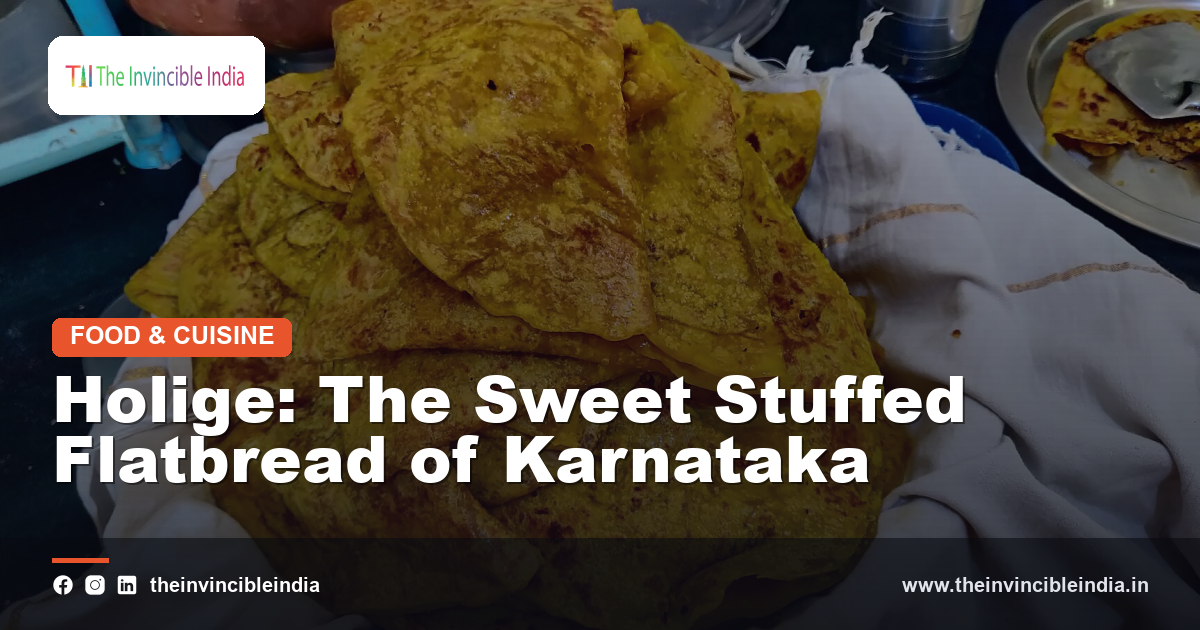
Holige, also called obbattu, bele holige or oligai in neighbouring languages, is a thin, soft flatbread stuffed with a sweet filling and cooked on a griddle. It is among the most beloved festive foods of Karnataka and is closely related to the puran poli of Maharashtra and the bobbatlu of Andhra Pradesh and Telangana. Whereas the sweets covered in our guide to famous sweets of India are often made from milk or sugar syrup, holige gets its sweetness from cooked lentils and jaggery wrapped in a fine dough. This guide explains what holige is, how it is prepared, and why it is central to celebrations across the state.
Quick answer: Holige is a traditional sweet stuffed flatbread of Karnataka, made by wrapping a filling of cooked chana dal and jaggery in a thin dough of refined flour or wheat flour and cooking it on a griddle. It is also known as obbattu and is closely related to puran poli. Holige is a staple of festivals such as Ugadi and is usually eaten with ghee, milk or coconut milk.
Key Takeaways
- Holige is a sweet stuffed flatbread of Karnataka, also known as obbattu and bele holige.
- The classic filling is made from cooked chana dal and jaggery, scented with cardamom.
- The outer dough is thin and soft, made from refined flour or wheat flour with oil and a little turmeric.
- Holige is traditionally served with ghee, and sometimes with milk, coconut milk or a sweet coconut preparation.
- It is a central festive food, especially at Ugadi, Ganesh Chaturthi, weddings and other celebrations.
- Close relatives include puran poli in Maharashtra, bobbatlu in the Telugu states and oligai in Tamil Nadu.
Read on for the ingredients, method, serving customs, and cultural role in detail.
Quick Facts
| Detail | Information |
|---|---|
| Dish | Holige (obbattu, bele holige) |
| Type | Sweet stuffed flatbread |
| State | Karnataka |
| Main filling | Chana dal and jaggery |
| Outer dough | Refined flour or wheat flour, oil, water |
| Typical accompaniment | Ghee, milk or coconut milk |
What is holige?
Holige is a sweet flatbread of Karnataka in which a soft dough surrounds a thick, sweet filling and is rolled out thin before being roasted on a griddle. The name holige is the Kannada word for the dish, and it is often used interchangeably with obbattu, a term common in the Kannada-speaking regions. The most familiar form is bele holige, in which bele means lentil and refers to the cooked chana dal used in the filling. The finished bread is golden, tender and fragrant, with a layer of sweet paste visible through the thin dough. It is usually eaten warm with a generous spoon of ghee. Holige therefore combines the qualities of a bread and a dessert, and it is considered one of the finest festive foods of the state.
Where does holige come from?
Holige comes from the home and festival cooking of Karnataka, and similar sweet stuffed breads are found across the Deccan and southern India. The dish is part of a wider family that includes puran poli of Maharashtra, bobbatlu of Andhra Pradesh and Telangana, and oligai of Tamil Nadu, all of which wrap a sweet lentil filling in a thin dough. Because these foods share a basic idea, historians of food generally treat them as regional expressions of a common tradition and not as copies of one another. The precise origin of holige and the date it appeared are not firmly documented. What is certain is that it has long been a prized preparation in Kannada households, served at occasions when families wish to mark joy and abundance.
What are the main ingredients of holige?
The main ingredients of holige are chana dal, jaggery, refined flour or wheat flour, oil or ghee, and cardamom. The chana dal, a split Bengal gram, is boiled until soft and ground with jaggery to make the sweet filling called hoorna. The outer dough is made from maida, or sometimes a mix with wheat flour, kneaded with water, oil and a pinch of turmeric for colour and softness. Cardamom powder, and occasionally nutmeg or saffron, perfumes the filling, while grated coconut is used in some versions. Ghee is brushed on the griddle and served alongside the finished bread. The ingredient list is short and entirely vegetarian, and the care taken over proportion and texture is what distinguishes a well made holige from an ordinary one.
How is the holige filling prepared?
The holige filling is prepared by boiling chana dal until tender, draining it, and cooking it with jaggery until the mixture thickens into a dry, soft paste. After the dal is cooked, the water is carefully removed, since excess moisture would make the filling sticky and the dough difficult to seal. The dal is then ground or mashed with powdered or grated jaggery, and the mixture is heated gently so that the jaggery melts and combines. Cardamom is stirred in near the end. The paste is cooled and divided into balls, each sized to match a portion of dough. The consistency matters greatly, because a filling that is too wet may burst while rolling, whereas one that is too dry gives a crumbly interior. Patience at this stage determines the final quality.
How is the dough for holige made?
The dough for holige is made by kneading refined flour, or a blend with wheat flour, with water, oil and a little turmeric until it is smooth and very soft. The dough is then rested, often for a few hours and sometimes covered in a layer of oil, so that the gluten relaxes and the dough stretches without tearing. Many traditional cooks soak the dough in oil for an extended period, which gives the bread its characteristic suppleness. A soft dough is essential, because it must hold the sweet filling without breaking when pressed thin. Some households use a combination of maida and a small amount of rice flour or semolina for texture. The resting stage is as important as the kneading, and it is a defining feature of the careful, unhurried technique behind this dish.
How is holige rolled and cooked?
Holige is rolled and cooked by wrapping a ball of filling in dough, flattening it gently into a thin circle and roasting it on a hot griddle. A portion of dough is pressed into a small cup, the filling ball is placed inside, and the edges are drawn up and sealed. The ball is then patted or rolled out, often on an oiled banana leaf or plastic sheet, until it is thin and even. It is transferred to a hot tawa and cooked on both sides with a little ghee or oil until golden brown spots appear. Gentle pressure keeps the filling spread evenly. The skill lies in rolling the bread thin without letting the filling escape, and experienced cooks make the process look almost effortless.
How is holige served?
Holige is served warm with ghee, and it is often accompanied by milk, coconut milk or a preparation of sweetened coconut. A spoon of melted ghee is spread over the bread just before eating, adding richness that complements the sweet lentil paste. In many households a bowl of warm milk or a sweet coconut milk called holige haalu is offered alongside, and the bread may be torn and dipped into it. On festive occasions, holige is served as part of a full meal on a banana leaf, with rice, sambar, payasa and other dishes. It also keeps well for a day or two, so it is often prepared in quantity and shared with relatives and neighbours. Serving it warm with ghee is considered the best way to enjoy its flavour and texture.
Why is holige important at Ugadi?
Holige is important at Ugadi because it is one of the signature foods prepared to welcome the new year in Karnataka. Ugadi, the Kannada and Telugu new year, is marked by a feast that includes the symbolic mixture of neem flowers and jaggery, representing the mingling of bitter and sweet experiences in life. Holige, with its sweet filling, stands for the joyful side of that blend. Families clean their homes, prepare a festive meal and often serve holige as the centrepiece dessert. The bread is shared with guests and neighbours, reinforcing bonds of community. Its place at Ugadi explains why many people in Karnataka associate the smell of roasting holige and cardamom with the arrival of the new year and the spring season.
What are the types of holige?
The types of holige are distinguished mainly by their fillings, and the best known are bele holige, kai holige and several less common regional varieties. Bele holige uses chana dal and jaggery and is the standard version served at festivals. Kai holige, also called coconut holige, uses grated coconut cooked with jaggery or sugar, giving a lighter, more fragrant filling. Other versions use toor dal, groundnuts, sesame, dates or khoya, and some bakeries make holige with dry fruits. Texture also varies, with some cooks making very thin, almost translucent breads and others preferring a thicker, softer result. These types illustrate how a single technique can express many local tastes, and they allow families to adapt the dish to the ingredients and preferences they have at hand.
How is holige different from puran poli?
Holige is different from puran poli mainly in its dough, its size and some details of regional style, though the two dishes share the same basic idea. Puran poli of Maharashtra typically uses a whole wheat or wheat and maida dough and a filling of chana dal and jaggery flavoured with nutmeg and cardamom. Holige of Karnataka commonly uses a maida-based dough that is soaked in oil, producing a thinner and softer bread. The filling in holige is similarly sweet, though flavourings and the proportion of jaggery can vary. Both are served with ghee, and each region treats its version as a festival essential. Calling the two identical overlooks the pride that each community takes in its own method, but they clearly belong to one culinary family.
When is holige eaten besides Ugadi?
Holige is eaten at many festivals and family events beyond Ugadi, including Ganesh Chaturthi, Varamahalakshmi, Deepavali and weddings. It is a customary offering during several religious observances, where it is first presented to the deity as naivedya and then shared as prasada. In many Karnataka homes it is also prepared for engagements, housewarmings, naming ceremonies and other auspicious gatherings. Because the preparation takes time and care, it signals that an occasion is considered important. Some families make it in large quantities for relatives who visit during holidays. Restaurants and sweet shops in cities now offer holige throughout the year, but in traditional households it remains tied closely to festive calendars and rites of passage.
What is the nutritional character of holige?
Holige is a calorie-rich festive food whose nutrition comes from lentils, jaggery, flour and ghee. The chana dal filling provides plant protein and fibre, and jaggery is an unrefined sweetener that retains some minerals, which is why it is preferred in traditional cooking. The refined flour dough and generous ghee increase the energy content, making the dish dense and filling. Because it is sweet and rich, holige is customarily eaten in modest portions, usually as part of a larger festive meal. Those who wish to lighten the dish may use more wheat flour in the dough or reduce the ghee. As with any traditional sweet, it is best enjoyed in moderation and on occasions meant to be savoured.
Can holige be made at home?
Holige can be made at home with patience, and many Karnataka families treat it as a recipe handed down through generations. The key stages are cooking the dal to the right softness, preparing a filling that is neither wet nor dry, resting the dough until it is supple, and rolling the filled ball thin without tearing. Beginners often start with smaller portions and slightly thicker breads, which are easier to handle. Using a little oil on the work surface and the hands prevents sticking, and a heavy griddle gives even browning. Cooling the filling before shaping also helps. While the process takes time, the reward is a fragrant, tender bread that carries the taste of celebration, and many cooks regard the effort as part of the pleasure of the festival.
How should holige be stored and reheated?
Holige can be stored at room temperature for a day or two and reheated gently on a griddle before serving. Because the filling contains jaggery and cooked dal, the bread is perishable in warm weather, so it is best kept in a covered container and refrigerated if it must last longer. To reheat, a light touch of ghee on a warm tawa restores softness and aroma, and a short time on each side is enough. Microwaving is possible but can toughen the dough if overdone. Many families prefer to eat holige fresh, but they also pack it for travel because it is not messy and holds its shape. Proper storage keeps the flavours intact and allows the festive treat to be enjoyed over a few days.
What does holige say about Karnataka's food culture?
Holige says that Karnataka’s food culture values festive sweets made with lentils, jaggery and ghee, prepared at home with skill and shared with the community. The cuisine of the state ranges from the coastal fish curries and coconut gravies of the west to the millet rotis of the north and the rice and ragi dishes of the south, and holige appears across these regions. Its preparation is often a collective activity, with several family members helping to make the dough, filling and rolled breads. The dish also shows the shared heritage of the Deccan, where related sweets are made under different names. In this way holige acts as a link between families, regions and generations, and it expresses the generosity associated with festivals.
Holige Today
Holige today remains a cherished festive sweet in Karnataka and among Kannadigas living elsewhere in India and abroad. It is made at home during major festivals, sold by sweet shops and caterers, and served at weddings and community events. Modern cooks have introduced variations such as dry fruit holige, chocolate fillings and quicker pressure-cooker preparations, while traditionalists continue to follow the long resting and careful rolling that give the bread its character. Restaurants in cities offer it as a seasonal speciality, and food writers regularly highlight it as an example of the state’s culinary heritage. Despite these changes, the essential form of the dish endures: a thin, golden bread filled with lentil and jaggery, served warm with ghee, and eaten in the company of family.
Sources & Further Reading
- Ministry of Culture, Government of India (indiaculture.gov.in).
- Ministry of Tourism, Government of India (tourism.gov.in).
Frequently Asked Questions
What is holige?
Holige is a sweet stuffed flatbread of Karnataka, made by filling a thin dough with a paste of cooked chana dal and jaggery and roasting it on a griddle. It is also known as obbattu and is eaten warm with ghee.
What is the difference between holige and obbattu?
Holige and obbattu are two names for the same dish in Karnataka, and the terms are used interchangeably in many households. The name used often depends on the region and the family.
What is holige made of?
Holige is made of refined flour or wheat flour for the dough and chana dal and jaggery for the filling. Cardamom, oil and ghee are used for flavour and softness.
What is holige served with?
Holige is served with ghee, and often with milk, coconut milk or a sweet coconut preparation. The ghee is spread over the warm bread just before eating.
Is holige the same as puran poli?
No, holige is not identical to puran poli, though the two are close relatives. Puran poli is the Maharashtrian version, usually with a thicker wheat-based dough, while holige is the Karnataka version with a thinner, oil-soaked dough.
When is holige eaten in Karnataka?
Holige is eaten mainly at Ugadi, and also at festivals such as Ganesh Chaturthi, Varamahalakshmi and Deepavali, as well as at weddings. It is a customary dish for auspicious family occasions.


